TEAMS Commentary Series – serie
Visar alla böcker i serien TEAMS Commentary Series. Handla med fri frakt och snabb leverans.
21 produkter
Commentary on the Song of Songs
And Other Kabbalistic Commentaries
Av Rabbi Ezra Ben Solomon of Gerona, Seth Brody
Häftad, 1999
229 kr
Lägg i varukorg
The commentary of Rabbi Ezra ben Solomon of Gerona (d. ca. 1245) on the Song of Songs is one of the most important texts of the first clearly identified circle of Kabbalists, those operating in the Catalonian town of Gerona at the middle of the thirteenth century.
Second Thessalonians
Two Early Medieval Apocalyptic Commentaries
Av Steven R Cartwright, Kevin L Hughs
Häftad, 2011
187 kr
Lägg i varukorg
Apocalyptic speculation, in one form or another, is as persistent at the turn of this millennium as it was at the last. The commentaries of Haimo of Auxerre and Thietland of Einsiedeln offer glimpses of two links in [the] unbroken chain of the apocalyptic tradition.
On the Truth of Holy Scripture
Av John Wyclif, Ian Christopher Levy
Häftad, 2001
304 kr
Lägg i varukorg
Wyclif sought the restoration of an idealized past even if that meant taking revolutionary steps in the present to recover what had been lost. His 1377-78 On the Truth of Holy Scripture represents such an effort in reform: the recognition of the inherent perfection and veracity of the Sacred Page …
Glossa Ordinaria on the Song of Songs
Av Mary Dove
Häftad, 2004
300 kr
Lägg i varukorg
In this translation of glosses on the Song of Songs, Mary Dove offers a readily accessible and inexpensive resource for students and scholars. Anselm of Laon, possibly assisted by his brother Ralph, is credited with compiling the Glossa Ordinaria on the Song of Songs, drawing from earlier …
Seven Seals of the Apocalypse
Medieval Texts in Translation
Av Medieval Institute Publications, Francis X. Gumerlock
Häftad, 2009
219 kr
Lägg i varukorg
Filling today's religious book market are Apocalypse commentaries teaching that the seven seals of Revelation 5-8 describe tragedies that are to take place in the last days. Medieval Europeans, on the other hand, thought very differently about the seven seals. Some used the seven seals for …
Glossa Ordinaria on Romans
Av Medieval Institute Publications, Michael Scott Woodward
Häftad, 2011
349 kr
Lägg i varukorg
The Gloss on Romans is a collection of sources from many periods and places, which accounts for its inconsistencies. And this is what gives the Gloss much of its charm ... The twelfth century was an age of gathering sources and commentaries, in theology (Lombard's Sentences), canon law (Gratian's …
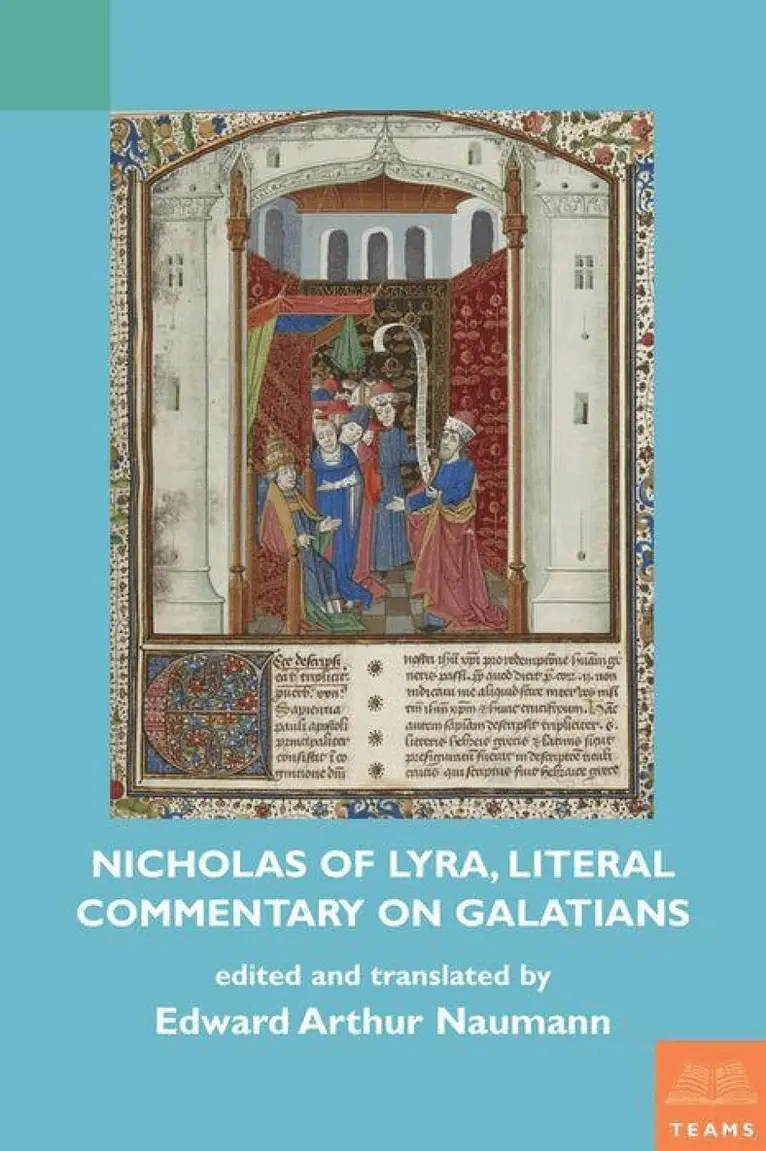
Nicholas of Lyra, Literal Commentary on Galatians
Av Medieval Institute Publications, Edward Naumann
Häftad, 2015
366 kr
Lägg i varukorg
Though little-known today, Nicholas of Lyra's commentaries are arguably among the most widely-read and influential commentaries of all time. For more than two hundred years, from the time of their composition, well into the Reformation era, they were copied and recopied, printed and reprinted, as …
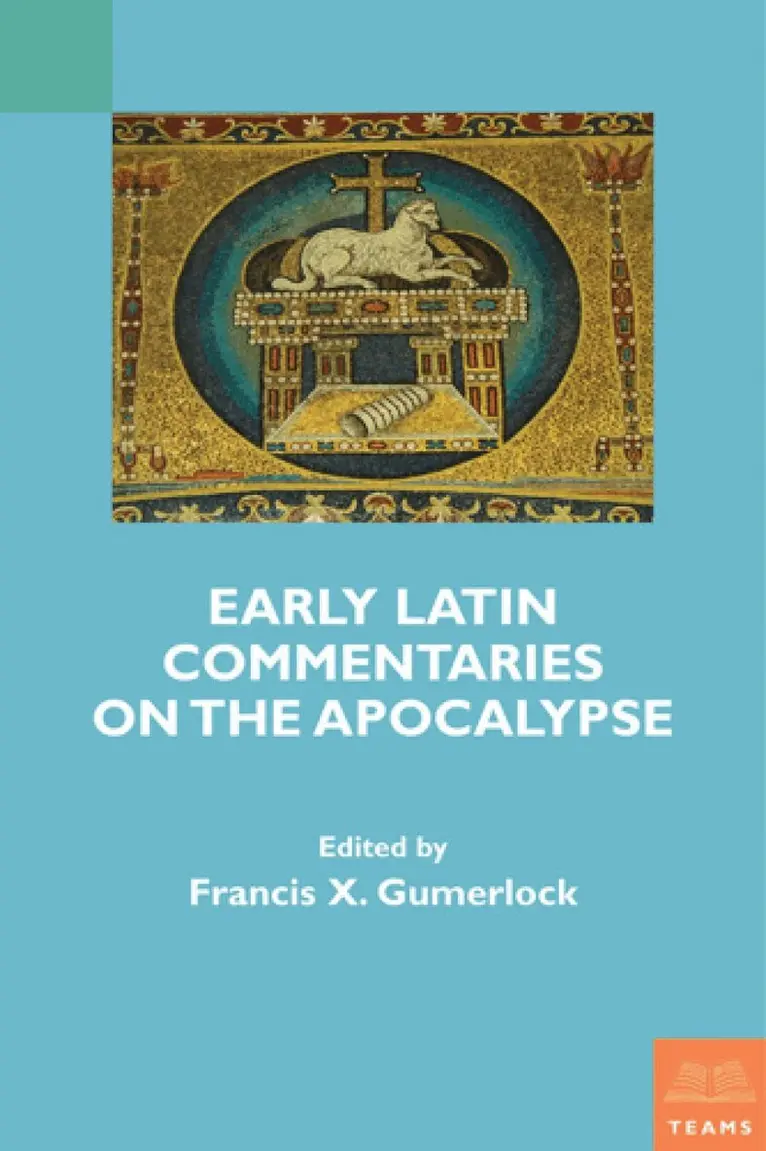
Early Latin Commentaries on the Apocalypse
Av Medieval Institute Publications, Francis X. Gumerlock
Häftad, 2016
470 kr
Lägg i varukorg
Many commentaries on the Apocalypse were produced in the early Middle Ages. This book provides translations of two Apocalypse commentaries from the seventh and eighth centuries. On the Mysteries of the Apocalypse of John is part of a large one-volume "Reference Bible" composed about 750. Written …
Rabbi Eliezer of Beaugency, Commentaries on Amos and Jonah (With Selections from Isaiah and Ezekiel)
Häftad, 2018
359 kr
Lägg i varukorg
Rabbi Eliezer of Beaugency represents the pinnacle of twelfth-century rabbinic exegesis of the Bible. A proponent of the literal school, Eliezer completely abandoned traditional rabbinic midrash in his explication of biblical texts, and innovated a literary approach that anticipated the fruits of …
Rabbi Eliezer of Beaugency, Commentaries on Amos and Jonah (With Selections from Isaiah and Ezekiel)
Inbunden, 2018
990 kr
Lägg i varukorg
Rabbi Eliezer of Beaugency represents the pinnacle of twelfth-century rabbinic exegesis of the Bible. A proponent of the literal school, Eliezer completely abandoned traditional rabbinic midrash in his explication of biblical texts, and innovated a literary approach that anticipated the fruits of …
Carolingian Commentaries on the Apocalypse by Theodulf and Smaragdus
Av Medieval Institute Publications, Francis X. Gumerlock
Häftad, 2019
366 kr
Lägg i varukorg
In the early ninth-century Theodulf of Orleans and Smaragdus of Saint Mihiel served as advisers to Charlemagne. This book provides English translations of a Latin commentary on the Apocalypse written by Theodulf and three homilies on the Apocalypse by Smaragdus. A comprehensive essay introduces …
Carolingian Commentaries on the Apocalypse by Theodulf and Smaragdus
Av Medieval Institute Publications, Francis X. Gumerlock
Inbunden, 2019
990 kr
Lägg i varukorg
In the early ninth-century Theodulf of Orleans and Smaragdus of Saint Mihiel served as advisers to Charlemagne. This book provides English translations of a Latin commentary on the Apocalypse written by Theodulf and three homilies on the Apocalypse by Smaragdus. A comprehensive essay introduces …
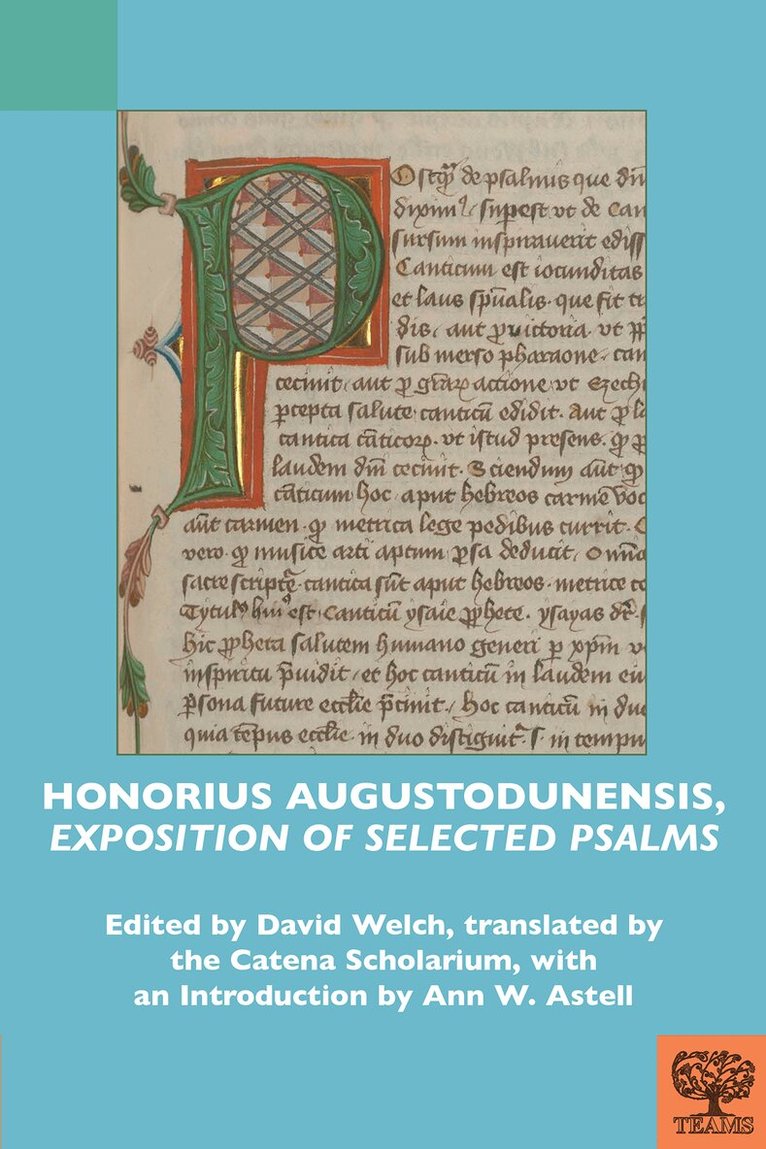
Honorius Augustodunensis, "Exposition of Selected Psalms"
Av David Welch
Häftad, 2023
400 kr
Lägg i varukorg
The abbreviated Psalms commentary by Honorius Augustodunensis (ca. 1070 – ca. 1140)—a redaction of his own, much larger commentary on the entire Psalter—participates in a long tradition of Christian interpretation of the Book of Psalms. A prolific author closely associated with Anselm of …
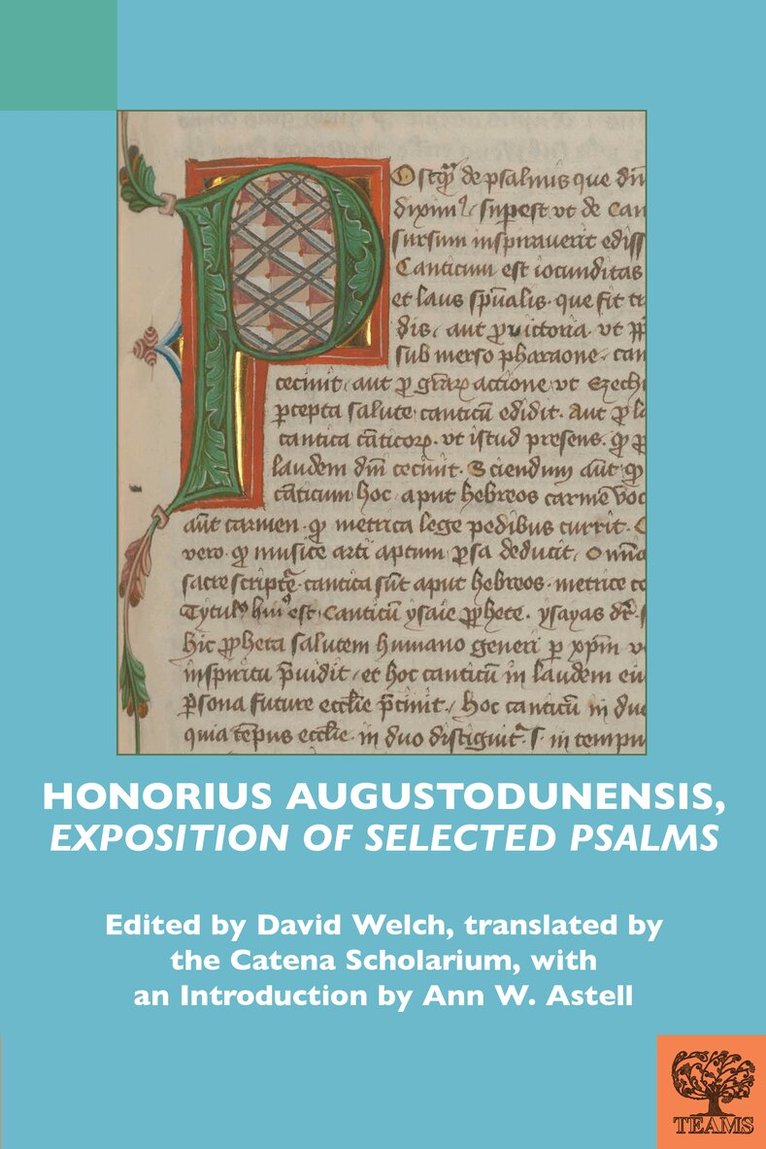
Honorius Augustodunensis, "Exposition of Selected Psalms"
Av David Welch
Inbunden, 2023
901 kr
Lägg i varukorg
The abbreviated Psalms commentary by Honorius Augustodunensis (ca. 1070 - ca. 1140)-a redaction of his own, much larger commentary on the entire Psalter-participates in a long tradition of Christian interpretation of the Book of Psalms. A prolific author closely associated with Anselm of …
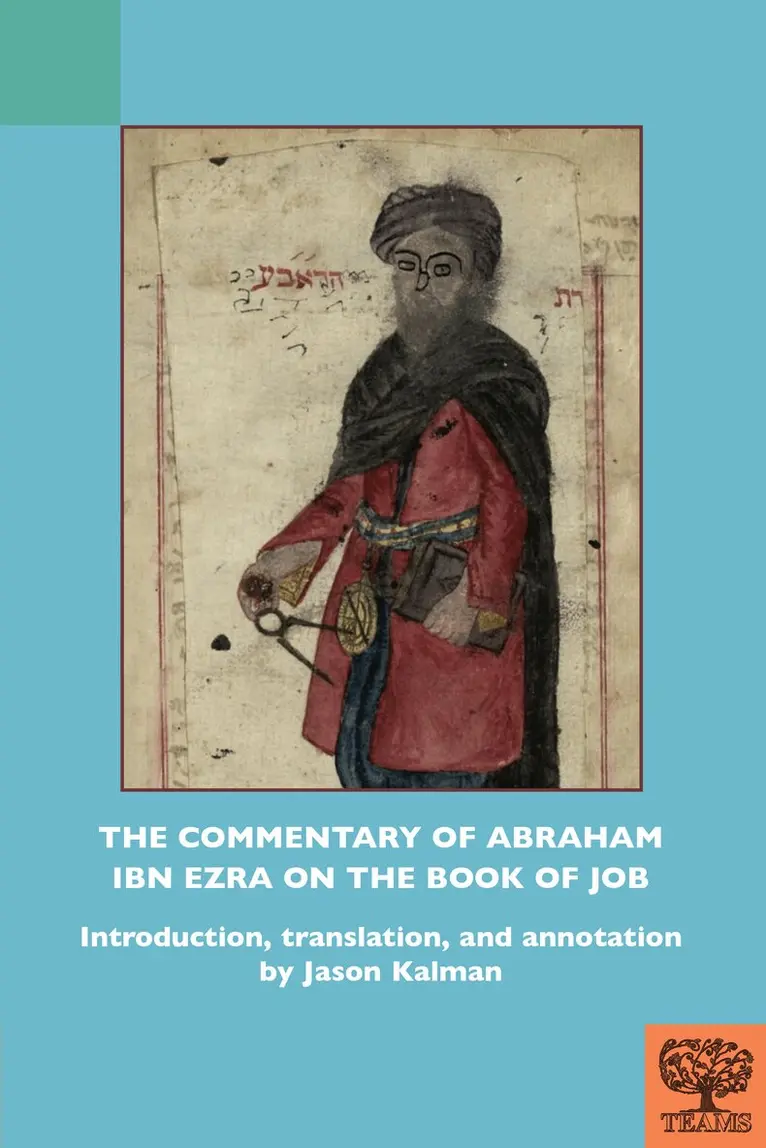
Commentary of Abraham ibn Ezra on the Book of Job
Häftad, 2025
647 kr
Lägg i varukorg
The book of Job was among the most popular books of study for Jewish scholars in the Middle Ages. With its themes of suffering, providence, and theodicy it attracted much attention despite the difficulty of its language.Abraham ibn Ezra (1089-1164) was born in Muslim Spain, but composed his …
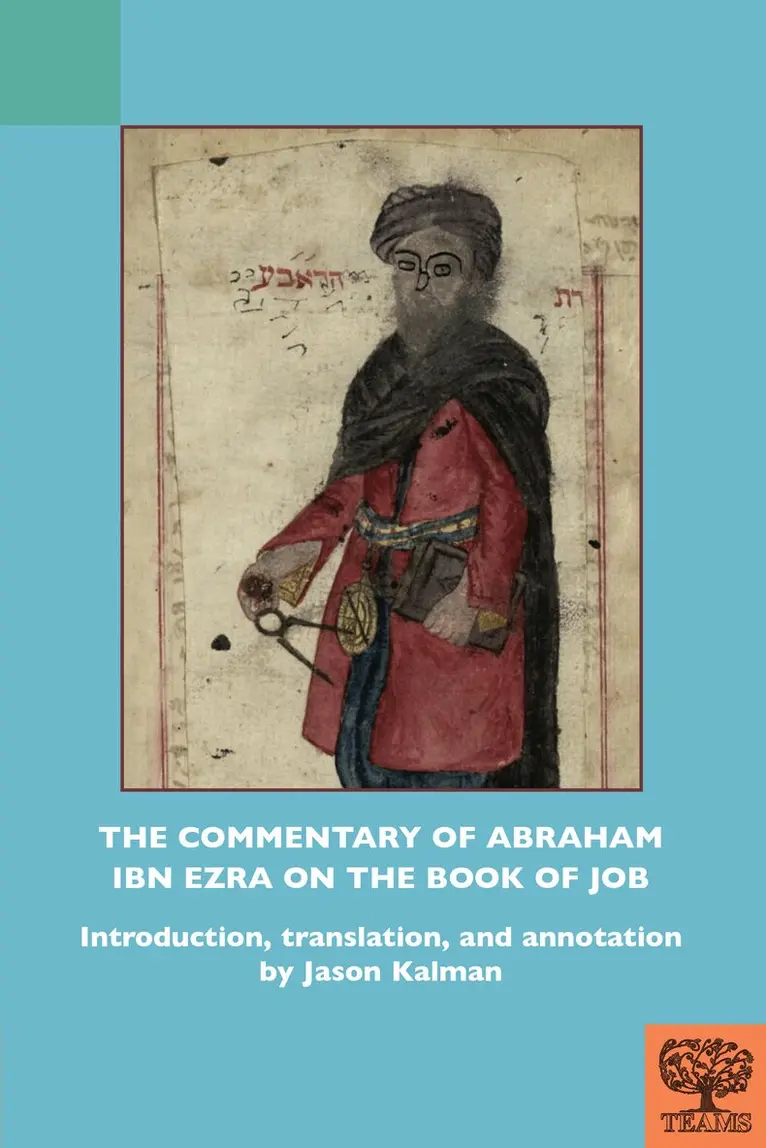
Commentary of Abraham ibn Ezra on the Book of Job
Inbunden, 2024
1610 kr
Lägg i varukorg
The book of Job was among the most popular books of study for Jewish scholars in the Middle Ages. With its themes of suffering, providence, and theodicy it attracted much attention despite the difficulty of its language.Abraham ibn Ezra (1089-1164) was born in Muslim Spain, but composed his …
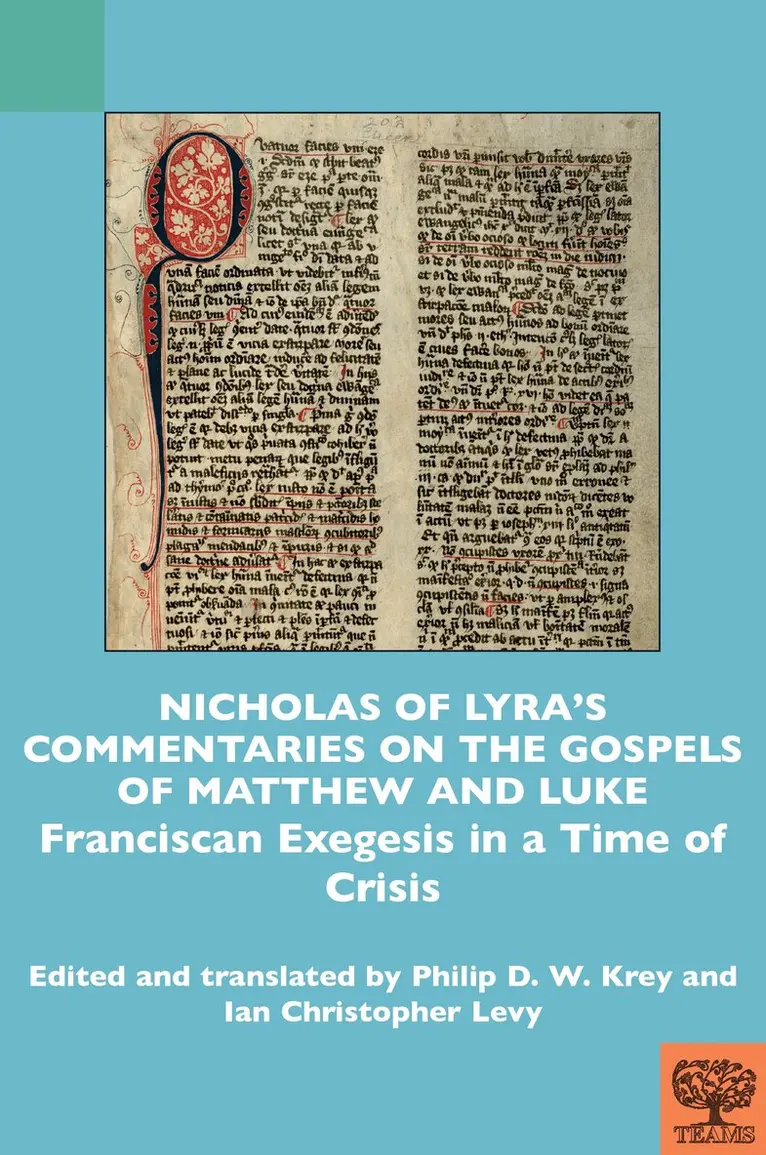
Nicholas of Lyra’s Commentaries on the Gospels of Matthew and Luke
Franciscan Exegesis in a Time of Crisis
Av Philip D. W. Krey, Ian Christopher Levy
Häftad, 2026
570 kr
Lägg i varukorg
This volume provides translations of significant passages in the fourteenth-century Franciscan Nicholas of Lyra's commentaries on the Gospels of Matthew and Luke, addressing such important topics as Franciscan poverty, politics, and eschatology. It places Nicholas of Lyra in dialogue with earlier …
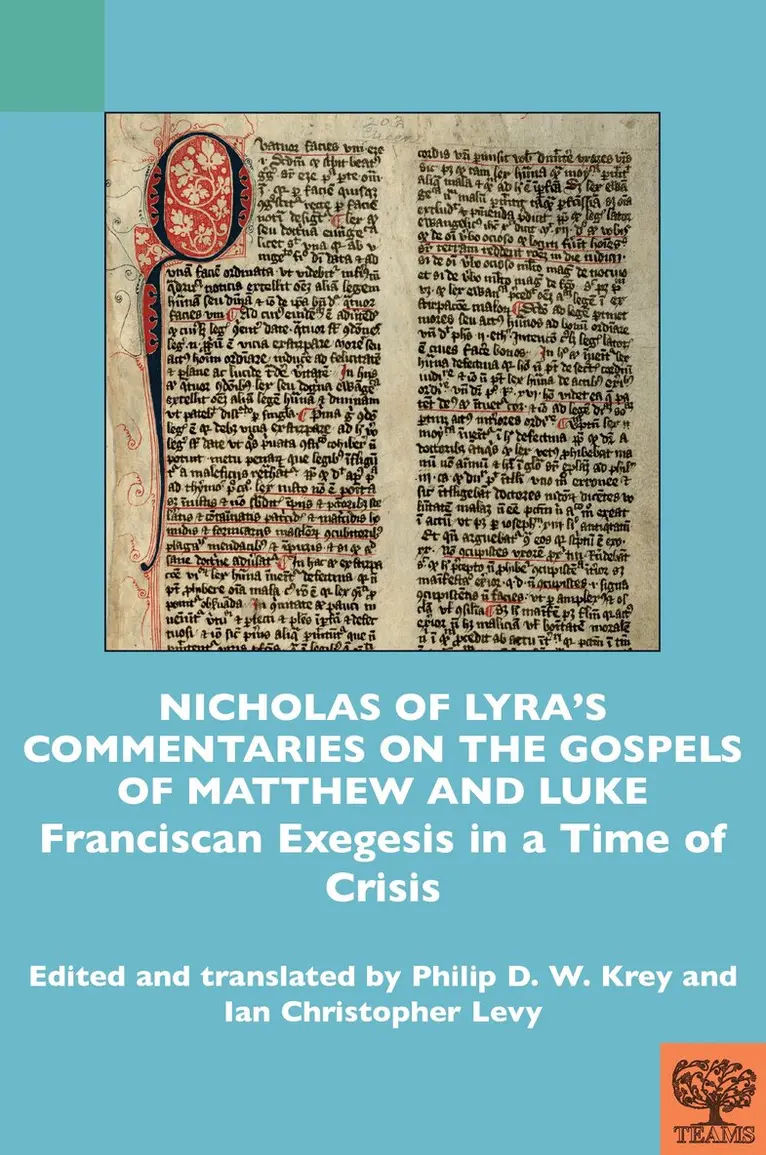
Nicholas of Lyra’s Commentaries on the Gospels of Matthew and Luke
Franciscan Exegesis in a Time of Crisis
Av Philip D. W. Krey, Ian Christopher Levy
Inbunden, 2026
1343 kr
Lägg i varukorg
This volume provides translations of significant passages in the fourteenth-century Franciscan Nicholas of Lyra's commentaries on the Gospels of Matthew and Luke, addressing such important topics as Franciscan poverty, politics, and eschatology. It places Nicholas of Lyra in dialogue with earlier …
Commentary on the Book of Jonah
Haimo of Auxerre
Av Medieval Institute Publications, Deborah Everhart
Häftad, 1993
139 kr
Lägg i varukorg
Haimo of Auxerre's Commentary on the Book of Jonah was probably written as a study text for scholars in the monastery. His basic method is to present a verse from the Book of Jonah, then offer condensed versions of the diverse and occasionally contradictory interpretations of that verse that were …
Medieval Exegesis in Translation
Commentaries on the Book of Ruth
Av Lesley Smith
Häftad, 1997
163 kr
Lägg i varukorg
This book brings together and translates from the medieval Latin a series of commentaries on the biblical book of Ruth, with the intention of introducing readers to medieval exegesis or biblical interpretation. . . . Ruth is the shortest book of the Old Testament, being only four chapters long. It …
Nicholas of Lyra's Apocalypse Commentary
Häftad, 1997
256 kr
Lägg i varukorg
Surveys of the history of biblical exegesis and, in particular, the history of Apocalypse commentaries rarely fail to allude to Nicholas of Lyra O.F.M. (1270-1349) as the greatest biblical exegete of the fourteenth century. Late medieval and Reformation verses were written about him. Nicholas was …