Templeton Science and Religion Series - Böcker
Visar alla böcker i serien Templeton Science and Religion Series. Handla med fri frakt och snabb leverans.
7 produkter
7 produkter
224 kr
Skickas inom 11-20 vardagar
Medicine, Religion, and Health: Where Science and Spirituality Meet will be the first title published in the new Templeton Science and Religion Series, in which scientists from a wide range of fields distill their experience and knowledge into brief tours of their respective specialties. In this, the series' maiden volume, Dr. Harold G. Koenig, provides an overview of the relationship between health care and religion that manages to be comprehensive yet concise, factual yet inspirational, and technical yet easily accessible to nonspecialists and general readers. Focusing on the scientific basis for integrating spirituality into medicine, Koenig carefully summarizes major trends, controversies, and the latest research from various disciplines and provides plausible and compelling theoretical explanations for what has thus far emerged in this relatively young field of study. Medicine, Religion, and Health begins by defining the principal terms and then moves on to a brief history of religion's role in medicine before delving into the current state of research. Koenig devotes several chapters to exploring the outcomes of specific studies in fields such as mental health, cardiovascular disease, and mortality. The book concludes with a review of the clinical applications derived from the research. Koenig also supplies several detailed appendices to aid readers of all levels looking for further information. Medicine, Religion, and Health will shed new light on critical contemporary issues. They will whet readers' appetites for more information on this fascinating, complex, and controversial area of research, clinical activity, and widespread discussion. It will find a welcome home on the bookshelves of students, researchers, clinicians, and other health professionals in a variety of disciplines.
231 kr
Skickas inom 7-10 vardagar
Mathematics and Religion: Our Languages of Sign and Symbol is the sixth title published in the Templeton Science and Religion Series, in which scientists from a wide range of fields distill their experience and knowledge into brief tours of their respective specialties. In this volume, Javier Leach, a mathematician and Jesuit priest, leads a fascinating study of the historical development of mathematical language and its influence on the evolution of metaphysical and theological languages.Leach traces three historical moments of change in this evolution: the introduction of the deductive method in Greece, the use of mathematics as a language of science in modern times, and the formalization of mathematical languages in the nineteenth and twentieth centuries. As he unfolds this fascinating history, Leach notes the striking differences and interrelations between the two languages of science and religion. Until now there has been little reflection on these similarities and differences, or about how both languages can complement and enrich each other.
Ecology and the Environment
The Mechanisms, Marrings, and Maintenance of Nature
Häftad, Engelska, 2011
237 kr
Skickas inom 11-20 vardagar
Ecology and the Environment: The Mechanisms, Marring, and Maintenance of Nature is the ninth title published in the Templeton Science and Religion Series, in which scientists from a wide range of fields distill their experience and knowledge into brief tours of their respective specialties. In this volume, R. J. Berry, a well-known leader in the field of ecology, describes the basic concepts of ecology and seeks to put them into a general context for a reader who lacks any scientific background. Berry explores the implications of these basic concepts and how they affect human life and the decisions we have to make, both as individuals and as members of a species that has colonized and influenced every part of the globe. He points out that we are a part of the animal world, but at the same time, we are apart from it, and he makes it clear that how we relate to our environment affects the quality of our life-indeed, it may affect our very survival. Going beyond a simple introduction of concepts, the book explores wider questions about the nature of humanity and how human ecology relates to humanness. Berry proposes that we are more than machines or even advanced apes-we are Homo divinus, transformed from an organism descended from the same stock as the apes but qualitatively different and able to relate to a creator God. The book argues that those who conclude otherwise are neglecting relevant data. Berry offers the perfect introduction to these philosophical and theological issues, but his work never loses sight of the practical issues either-the kind that is increasingly being addressed by national and international environmental agencies. In order to grasp the full scope of these issues and to more fully understand the ubiquitous news headlines concerning environmental matters, a reader would do well to start with Ecology and the Environment.
224 kr
Skickas inom 11-20 vardagar
Technology is changing all the time, but does it also have the ability to change us and the way we approach religion and spirituality? In Technology and Religion: Remaining Human in a Co-created World, Noreen Herzfeld examines this and other provocative questions as she provides an accessible and fascinating overview of the relationship between religion and the ever-broadening world of technology. In order to consider fully a topic as wide as technology, Herzfeld approaches the field from three different angles: technologies of the human body-such as genetic engineering, stem cells, cloning, pharmaceutical technologies, mechanical enhancement and cyborgs; technologies of the human mind-like human and artificial intelligence, virtual reality and cyberspace; and technologies of the external environment-such as nanotechnology, genetically modified crops and new agricultural technologies, and energy technology. She takes a similarly broad approach to the field of religion, focusing on how these issues interface with the three Abrahamic traditions of Christianity, Islam, and Judaism. Throughout, readers will find nuanced examinations of the moral and ethical issues surrounding new technologies from the perspectives of these faith traditions. The result is a multifaceted look at the ongoing dialogue between these two subjects that are not commonly associated with one another. This volume is the third title published in the new Templeton Science and Religion Series.
237 kr
Skickas inom 11-20 vardagar
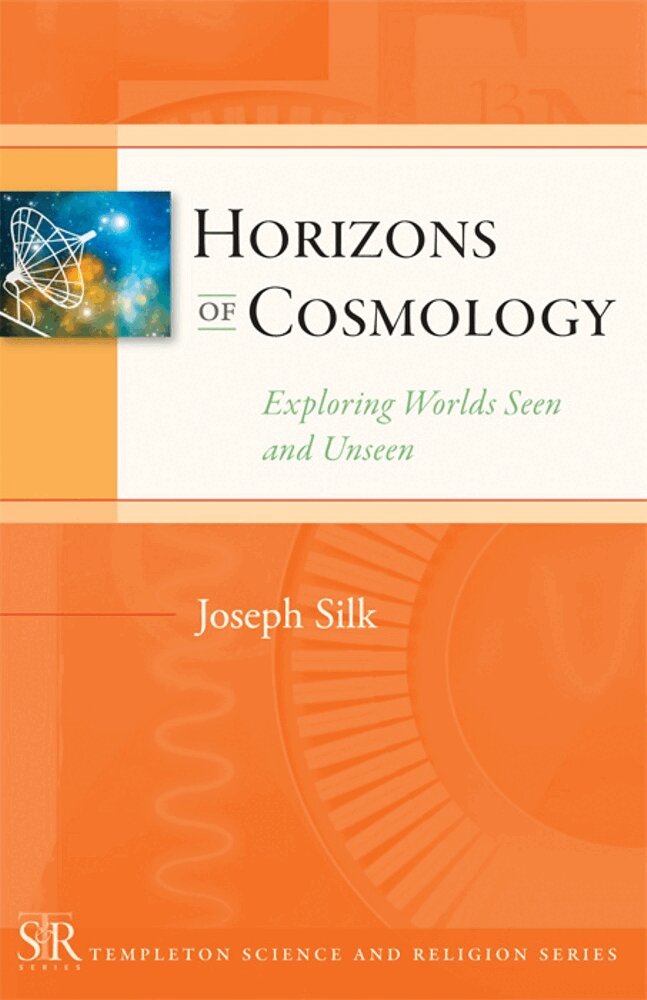
Horizons of Cosmology: Exploring Worlds Seen and Unseen is the fourth title published in the Templeton Science and Religion Series, in which scientists from a wide range of fields distill their experience and knowledge into brief tours of their respective specialties. In this volume, highly esteemed astrophysicist Joseph Silk explores the vast mysteries and speculations of the field of cosmology in a way that balances an accessible style for the general reader and enough technical detail for advanced students and professionals. Indeed, while the physical laws and origins of the universe can be endlessly complex, even Einstein once mused that they could be explained simply enough to be grasped by nonspecialists. To that end Silk begins by introducing the basic story of the major discoveries in cosmology over the past century-wherein we learned that we live in an expanding universe populated with galaxies and stars. The middle chapters examine a number of contemporary puzzles such as dark matter and dark energy. The last third of the book looks at the human side of cosmology and moves to the more philosophical frontiers of the field, such as concepts of multiverses and time travel-areas of exploration where some crossover into speculative territory becomes unavoidable. In the past century alone, our understanding of the universe has expanded exponentially, and it will be fascinating to see what discoveries the next hundred years hold. Few books will provide such a thorough understanding of where we have been and what might lie ahead as Horizons of Cosmology.
231 kr
Skickas inom 7-10 vardagar
"Endlessly absorbing and informative. It would be hard to imagine a better introduction to this most important and fascinating field.”-Bill Bryson, author of A Short History of Nearly EverythingPaleontology: A Brief History of Life is the fifth title published in the Templeton Science and Religion Series, in which scientists from a wide range of fields distill their experience and knowledge into brief tours of their respective specialties. In this volume, Ian Tattersall, a highly esteemed figure in the fields of anthropology, archaeology, and paleontology, leads a fascinating tour of the history of life and the evolution of human beings. Starting at the very beginning, Tattersall examines patterns of change in the biosphere over time, and the correlations of biological events with physical changes in the Earth’s environment. He introduces the complex of evolutionary processes, situates human beings in the luxuriant diversity of Life (demonstrating that however remarkable we may legitimately find ourselves to be, we are the product of the same basic forces and processes that have driven the evolutionary histories of all other creatures), and he places the origin of our extraordinary spiritual sensibilities in the context of the exaptational and emergent acquisition of symbolic cognition and thought. Concise and yet comprehensive, historically penetrating and yet up-to-date, responsibly factual and yet engaging, Paleontology serves as the perfect entrÉe to science's greatest story.
284 kr
Skickas inom 7-10 vardagar
The Language of Genetics: An Introduction is the seventh title published in the Templeton Science and Religion Series, in which scientists from a wide range of fields distill their experience and knowledge into brief tours of their respective specialties. In this volume, Dr. Denis R. Alexander offers readers a basic toolkit of information, explanations, and ideas that can help us grasp something of the fascination and the challenge of the language of genetics.Alexander surveys the big picture, covering such topics as the birth of the field; DNA: what it is, how it works, and how it was discovered; our genetic history; the role of genes in diseases, epigenetics, and genetic engineering. The book assumes the reader has little scientific background, least of all in genetics, and approaches these issues in a very accessible way, free of specialized or overly technical jargon. In the last chapter, Dr. Alexander explores some of the big questions raised by genetics: what are its implications for notions of human value and uniqueness? Is evolution consistent with religious belief? If we believe in a God of love, then how come the evolutionary process, utterly dependent upon the language of genetics, is so wasteful and involves so much pain and suffering? How far should we go in manipulating the human genome? Does genetics subvert the idea that life has some ultimate meaning and purpose?Genetics is a rapidly advancing field; it seems new discoveries make headlines every other week. The Language of Genetics is intended to give the general reader the knowledge he or she needs to assess and understand the next big story in genetics.