Denis R. Alexander - Böcker
Visar alla böcker från författaren Denis R. Alexander. Handla med fri frakt och snabb leverans.
6 produkter
6 produkter
1 005 kr
Skickas inom 7-10 vardagar
Over the course of human history, the sciences, and biology in particular, have often been manipulated to cause immense human suffering. For example, biology has been used to justify eugenic programs, forced sterilization, human experimentation, and death camps, all in an attempt to support notions of racial superiority. By investigating the past, the contributors to "Biology and Ideology from Descartes to Dawkins" hope to better prepare us to discern ideological abuse of science when it occurs in the future. Denis R. Alexander and Ronald L. Numbers bring together fourteen experts to examine the varied ways science has been used and abused for nonscientific purposes from the fifteenth century to the present day. Featuring an essay on eugenics from Edward J. Larson and an examination of the progress of evolution by Michael Ruse, "Biology and Ideology" examines uses both benign and sinister, ultimately reminding us that ideological extrapolation continues today. An accessible survey, this collection will enlighten historians of science, their students, practicing scientists, and anyone interested in the relationship between science and culture.
392 kr
Skickas inom 7-10 vardagar
Over the course of human history, the sciences, and biology in particular, have often been manipulated to cause immense human suffering. For example, biology has been used to justify eugenic programs, forced sterilization, human experimentation, and death camps, all in an attempt to support notions of racial superiority. By investigating the past, the contributors to "Biology and Ideology from Descartes to Dawkins" hope to better prepare us to discern ideological abuse of science when it occurs in the future. Denis R. Alexander and Ronald L. Numbers bring together fourteen experts to examine the varied ways science has been used and abused for nonscientific purposes from the fifteenth century to the present day. Featuring an essay on eugenics from Edward J. Larson and an examination of the progress of evolution by Michael Ruse, "Biology and Ideology" examines uses both benign and sinister, ultimately reminding us that ideological extrapolation continues today. An accessible survey, this collection will enlighten historians of science, their students, practicing scientists, and anyone interested in the relationship between science and culture.
1 139 kr
Skickas inom 7-10 vardagar
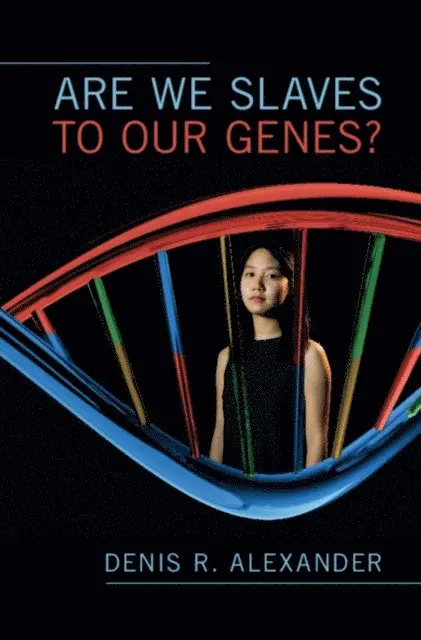
There is a common misconception that our genomes - all unique, except for those in identical twins - have the upper hand in controlling our destiny. The latest genetic discoveries, however, do not support that view. Although genetic variation does influence differences in various human behaviours to a greater or lesser degree, most of the time this does not undermine our genuine free will. Genetic determinism comes into play only in various medical conditions, notably some psychiatric syndromes. Denis Alexander here demonstrates that we are not slaves to our genes. He shows how a predisposition to behave in certain ways is influenced at a molecular level by particular genes. Yet a far greater influence on our behaviours is our world-views that lie beyond science - and that have an impact on how we think the latest genetic discoveries should, or should not, be applied. Written in an engaging style, Alexander's book offers tools for understanding and assessing the latest genetic discoveries critically.
334 kr
Skickas inom 7-10 vardagar
There is a common misconception that our genomes - all unique, except for those in identical twins - have the upper hand in controlling our destiny. The latest genetic discoveries, however, do not support that view. Although genetic variation does influence differences in various human behaviours to a greater or lesser degree, most of the time this does not undermine our genuine free will. Genetic determinism comes into play only in various medical conditions, notably some psychiatric syndromes. Denis Alexander here demonstrates that we are not slaves to our genes. He shows how a predisposition to behave in certain ways is influenced at a molecular level by particular genes. Yet a far greater influence on our behaviours is our world-views that lie beyond science - and that have an impact on how we think the latest genetic discoveries should, or should not, be applied. Written in an engaging style, Alexander's book offers tools for understanding and assessing the latest genetic discoveries critically.
283 kr
Skickas inom 7-10 vardagar
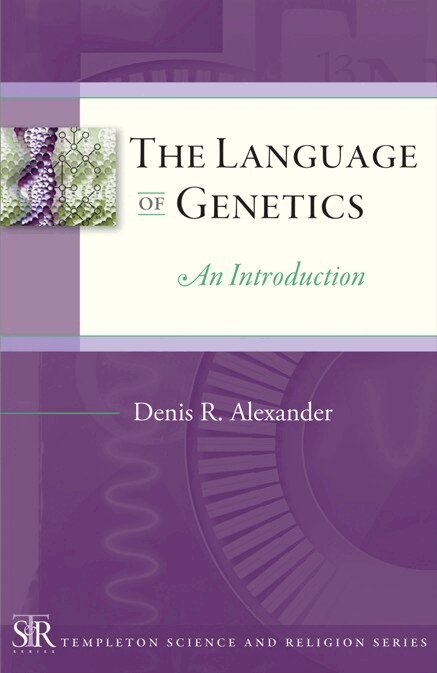
The Language of Genetics: An Introduction is the seventh title published in the Templeton Science and Religion Series, in which scientists from a wide range of fields distill their experience and knowledge into brief tours of their respective specialties. In this volume, Dr. Denis R. Alexander offers readers a basic toolkit of information, explanations, and ideas that can help us grasp something of the fascination and the challenge of the language of genetics.Alexander surveys the big picture, covering such topics as the birth of the field; DNA: what it is, how it works, and how it was discovered; our genetic history; the role of genes in diseases, epigenetics, and genetic engineering. The book assumes the reader has little scientific background, least of all in genetics, and approaches these issues in a very accessible way, free of specialized or overly technical jargon. In the last chapter, Dr. Alexander explores some of the big questions raised by genetics: what are its implications for notions of human value and uniqueness? Is evolution consistent with religious belief? If we believe in a God of love, then how come the evolutionary process, utterly dependent upon the language of genetics, is so wasteful and involves so much pain and suffering? How far should we go in manipulating the human genome? Does genetics subvert the idea that life has some ultimate meaning and purpose?Genetics is a rapidly advancing field; it seems new discoveries make headlines every other week. The Language of Genetics is intended to give the general reader the knowledge he or she needs to assess and understand the next big story in genetics.
3 147 kr
Skickas inom 10-15 vardagar
This book provides an up-to-date and comprehensive overview of protein phosphatase research, a rapidly evolving field with increasing importance in our understanding of the molecular basis of cell biology and of pathological processes. The book covers dephosphorylation processes involving serine/threonine, as well as tyrosine and histidine residues, and aims to be a useful resource for both the advanced reader as well as the newcomer to the field. It is also valuable for those working in the pharmaceutical and Biotech industries.