Texas Linguistics Series - Böcker
Visar alla böcker i serien Texas Linguistics Series. Handla med fri frakt och snabb leverans.
7 produkter
7 produkter
207 kr
Skickas inom 10-15 vardagar
In the minds of many, black street speech-the urban dialect of black Americans-bespeaks illiteracy, poverty, and ignorance. John Baugh challenges those prejudices in this brilliant new inquiry into the history, linguistic structure, and survival within white society of black street speech. In doing so, he successfully integrates a scholarly respect for black English with a humanistic approach to language differences that weds rigor of research with a keen sense of social responsibility. Baugh's is the first book on black English that is based on a long-term study of adult speakers. Beginning in 1972, black men and women in Los Angeles, Philadelphia, Chicago, Austin, and Houston were repeatedly interviewed, in varied social settings, in order to determine the nature of their linguistic styles and the social circumstances where subtle changes in their speech appear. Baugh's work uncovered a far wider breadth of speaking styles among black Americans than among standard English speakers. Having detailed his findings, he explores their serious implications for the employability and education of black Americans. Black Street Speech is a work of enduring importance for educators, linguists, sociologists, scholars of black and urban studies, and all concerned with black English and its social consequences.
583 kr
Skickas inom 10-15 vardagar
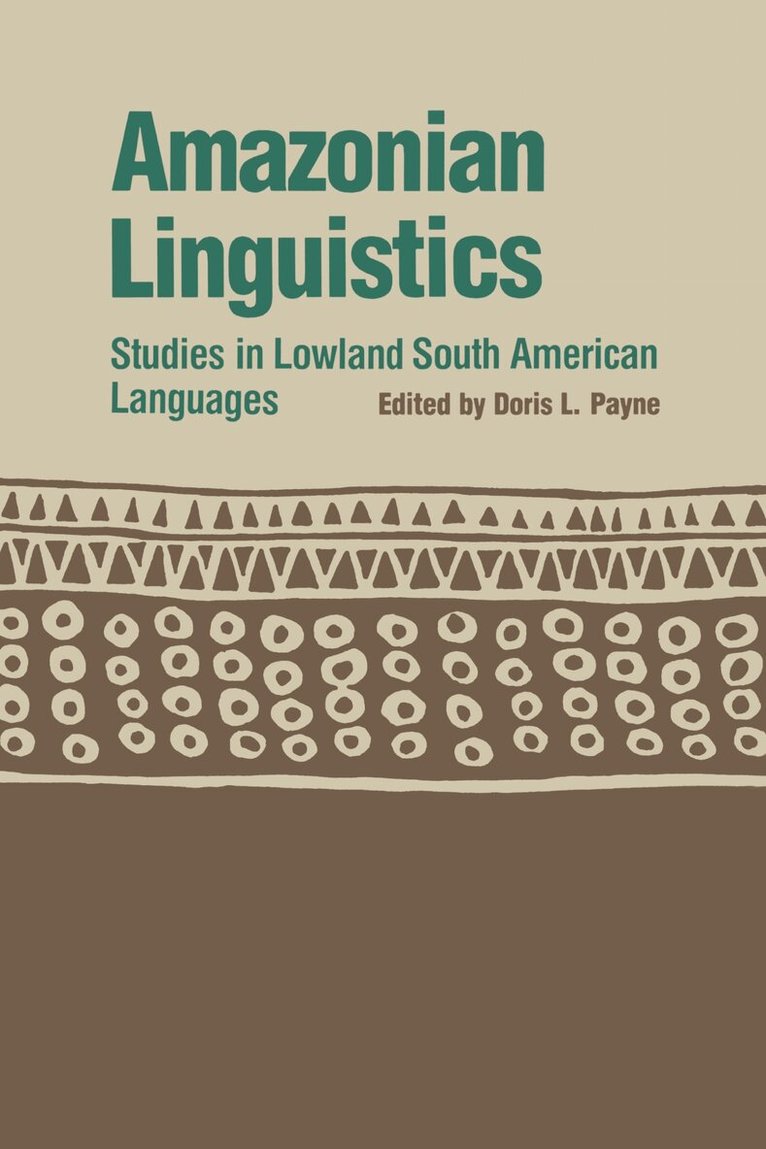
Lowland South American languages have been among the least studied ln the world. Consequently, their previous contribution to linguistic theory and language universals has been small. However, as this volume demonstrates, tremendous diversity and significance are found in the languages of this region.These nineteen essays, originally presented at a conference on Amazonian languages held at the University of Oregon, offer new information on the Tupian, Cariban, Jivaroan, Nambiquaran, Arawakan, Tucanoan, and Makuan languages and new analyses of previously recalcitrant TupÍ-GuaranÍ verb agreement systems.The studies are descriptive, but typological and theoretical implications are consistently considered. Authors invariably indicate where previous claims must be adjusted based on the new information presented. This is true in the areas of nonlinear phonological theory, verb agreement systems and ergativity, grammatical relations and incorporation, and the uniqueness of Amazonian noun classification systems. The studies also contribute to the now extensive interest in grammatical change.
350 kr
Skickas inom 10-15 vardagar
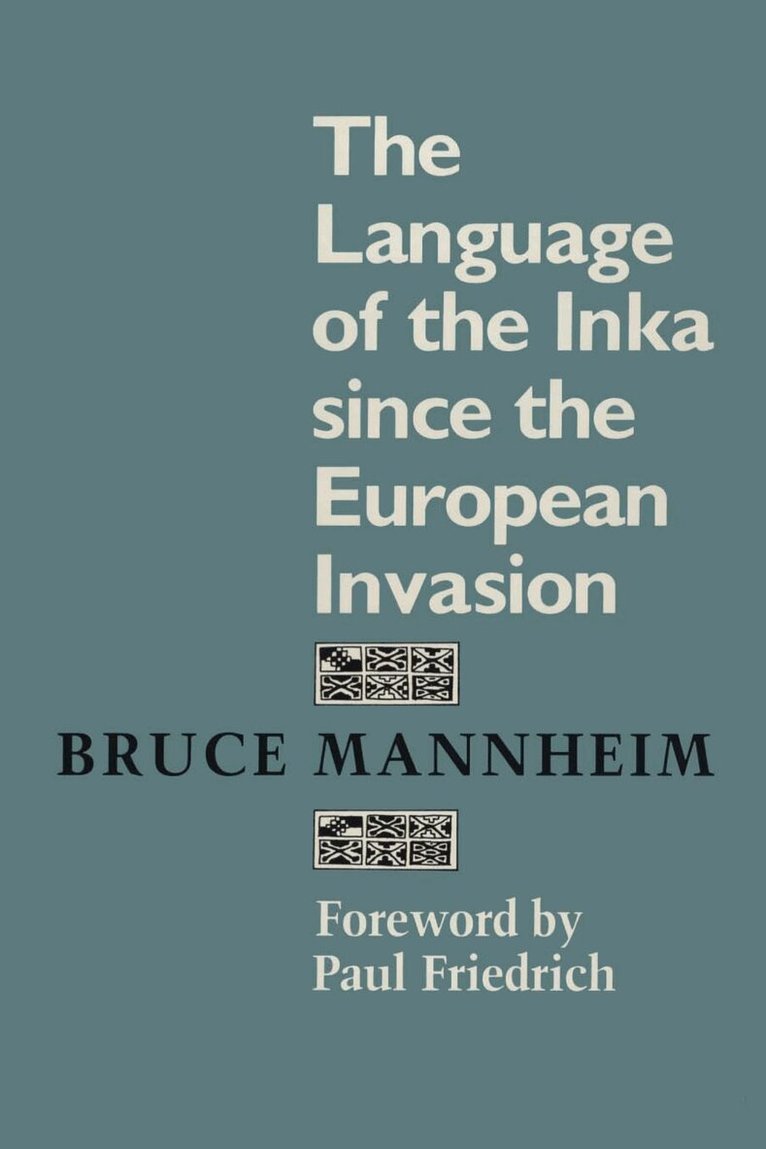
The Inka empire, Tawantinsuyu, fell to Spanish invaders within a year's time (1532-1533), but Quechua, the language of the Inka, is still the primary or only language of millions of Inka descendants throughout the southern Andes. In this innovative study, Bruce Mannheim synthesizes all that is currently known about the history of Southern Peruvian Quechua since the Spanish invasion, providing new insights into the nature of language change in general, into the social and historical contexts of language change, and into the cultural conditioning of linguistic change.Mannheim first discusses changes in the social setting of language use in the Andes from the time of the first European contact in the sixteenth century until today. He reveals that the modern linguistic homogeneity of Spanish and Quechua is a product of the Spanish conquest, since multilingualism was the rule in the Inka empire. He identifies the social and political forces that have influenced the kinds of changes the language has undergone. And he provides the first synthetic history of Southern Peruvian Quechua, making it possible at last to place any literary document or written text in a chronological and social context.Mannheim also studies changes in the formal structure of Quechua. He finds that changes in the sound system were motivated primarily by phonological factors and also that the changes were constrained by a set of morphological and syntactic conditions. This last conclusion is surprising, since most historical linguists assume that sound change is completely independent of other aspects of language. Thus, The Language of the Inka since the European Invasion makes an empirical contribution to a general theory of linguistic change.Written in an engaging style that is accessible to the nonlinguist, this book will have a special appeal to readers interested in the history and anthropology of native South America.
377 kr
Skickas inom 10-15 vardagar
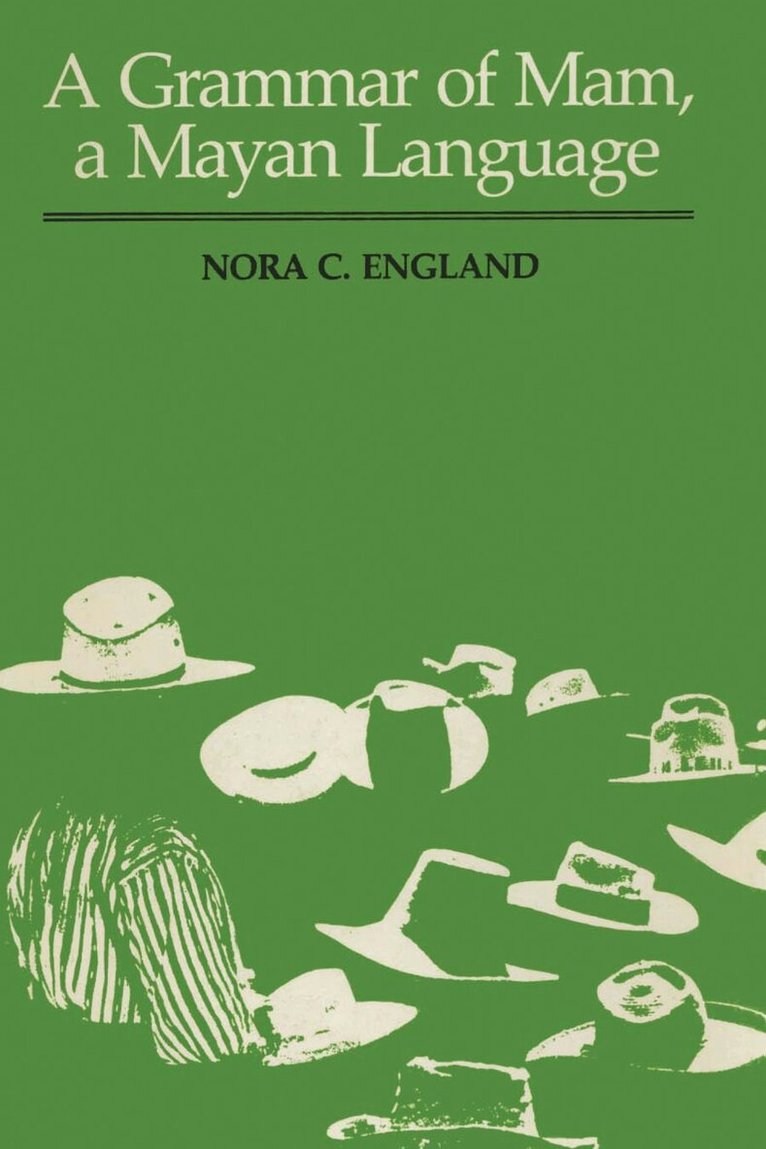
This is the first full-length reference grammar of Mam, a Mayan language spoken today by over 400,000 people in the western highlands of Guatemala and the state of Chiapas, Mexico. The result of over three years of extensive fieldwork in Guatemala, A Grammar of Mam, a Mayan Language is based on the dialect of Mam spoken by 12,000 people in San Ildefonso Ixtahuacan in the department of Huehuetenango, Guatemala. England organizes A Grammar of Mam according to two complementary principles: to analyze Mam following basically traditional levels of grammatical description and to present material in such a way that the background information necessary for understanding each topic of discussion shall have been previously provided. Accordingly, England's analysis of the sound system and morphophonemic processes of Mam is followed by a description of the characteristics of root, inflectional, and derivational morphology. Chapters on phrase structure precede two chapters on sentence-level syntax. A Grammar of Mam is of particular interest in analyzing a Mayan language that is both syntactically and morphologically ergative and that is innovative in the direction of strengthening the ergative system. Indeed at all levels of linguistic organization Mam is innovative, and for this reason it is uniquely interesting both historically and theoretically.
506 kr
Skickas inom 7-10 vardagar
In this pathfinding study, Suzanne Fleischman brings together theory and methodology from various quarters to shed important new light on the linguistic structure of narrative, a primary and universal device for translating our experiences into language.Fleischman sees linguistics as laying the foundation for all narratological study, since it offers insight into how narratives are constructed in their most primary context: everyday speech. She uses a linguistic model designed for "natural" narrative to explicate the organizational structure of "artificial" narrative texts, primarily from the Middle Ages and the postmodern period, whose seemingly idiosyncratic use of tenses has long perplexed those who study them. Fleischman develops a functional theory of tense and aspect in narrative that accounts for the wide variety of functions-pragmatic as well as grammatical-that these two categories of grammar are called upon to perform in the linguistic economy of a narration.
788 kr
Skickas inom 10-15 vardagar
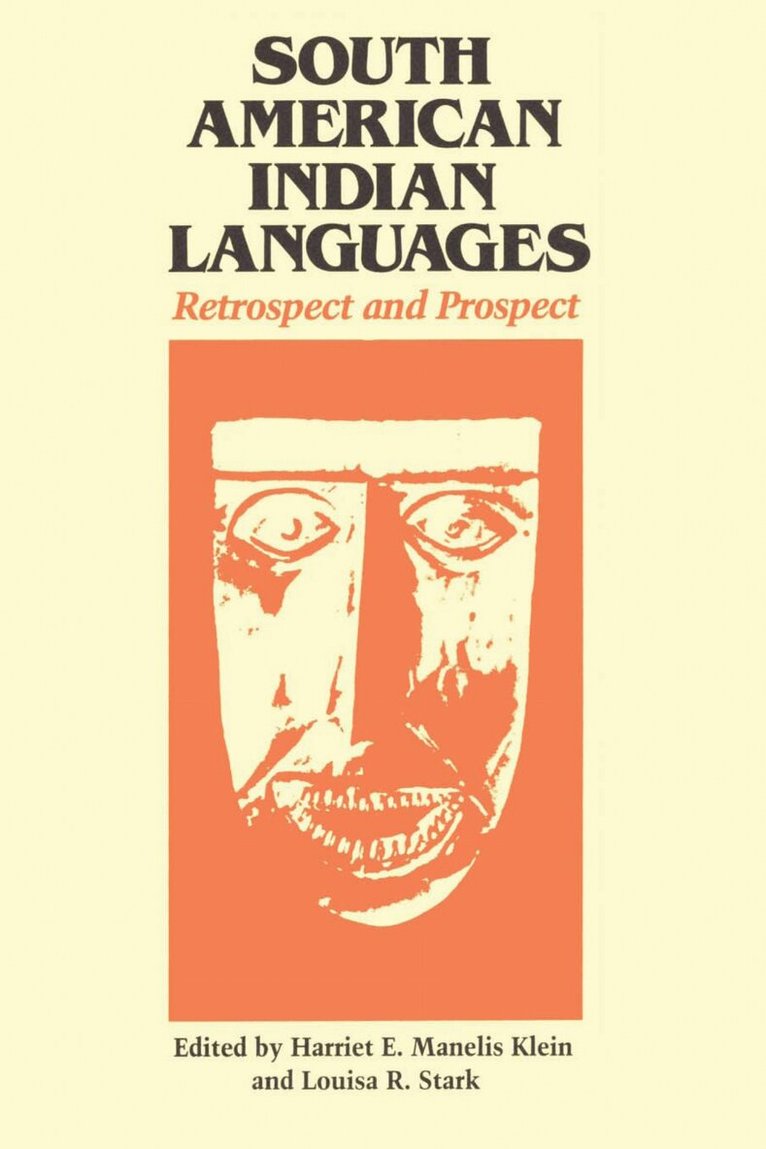
This book fills the crucial need for a single volume that gives broad coverage and synthesizes findings for both the general reader and the specialist. This collection of twenty-two essays from fifteen well-known scholars presents linguistic research on the indigenous languages of South America, surveying past research, providing data and analysis gathered from past and current research, and suggesting prospects for future investigation. Of interest not only to linguists but also to anthropologists, historians, and geographers, South American Indian Languages offers a wide perspective, both temporal and regional, on an area noted for its enormous linguistic diversity and for the lack of knowledge of its indigenous languages. An invaluable source book and reference tool, its appearance is especially timely when exploitation of the rich natural resources in a number of areas in South America must surely result in the demise and/or acculturation of some indigenous groups.
213 kr
Skickas inom 10-15 vardagar
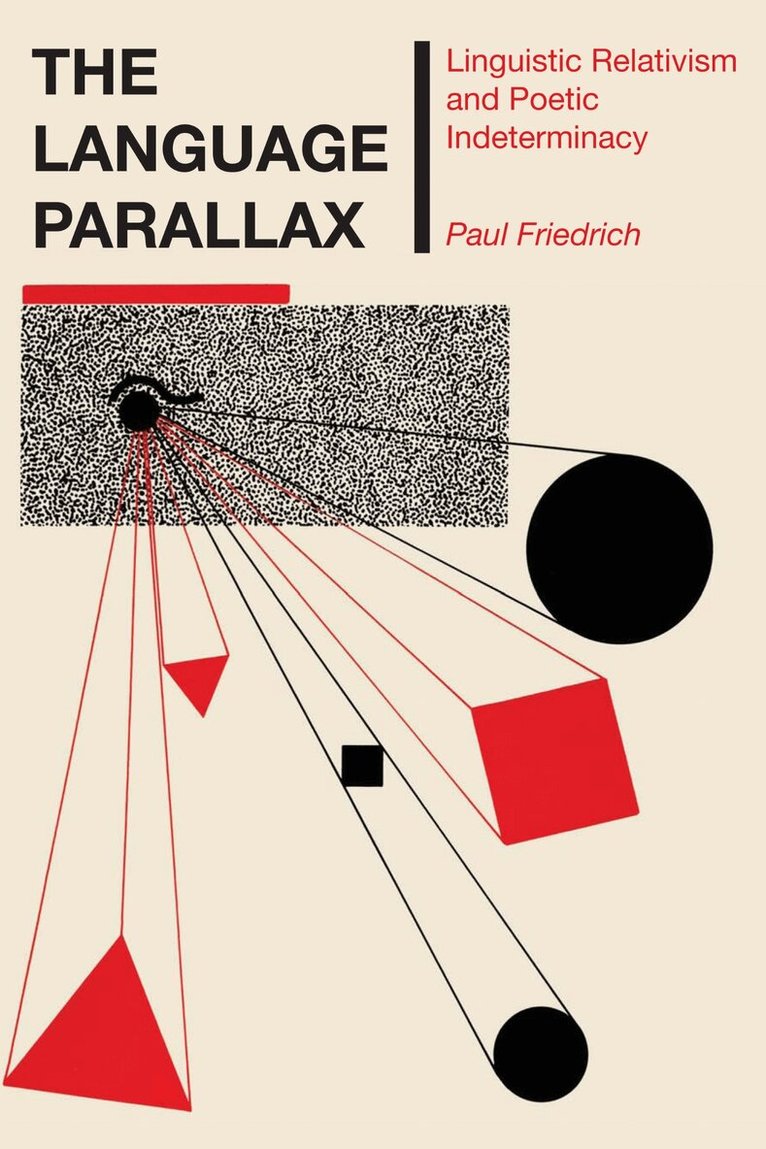
Humankind has always been fascinated and troubled by the way languages and dialects differ. Linguistically based differences in point of view have preoccupied many original minds of the past, such as Kant, and remain at the forefront of language study: in philosophy, anthropology, literary criticism, and other fields.Paul Friedrich's The Language Parallax argues persuasively that the "locus and focus" of differences among languages lies not so much in practical or rational aspects as in the complexity and richness of more poetic dimensions-in the nuances of words, or the style and voice of an author. This poetic reformulation of what has been called "linguistic relativism" is grounded in the author's theory of the imagination as a main source of poetic indeterminacy. The reformulation is also based on the intimate relation of the concentrated language of poetry to the potential or possibilities for poetry in ordinary conversation, dreams, and other experiences. The author presents challenging thoughts on the order and system of language in their dynamic relation to indeterminacy and, ultimately, disorder and chaos.Drawing on his considerable fieldwork in anthropology and linguistics, Friedrich interweaves distinct and provocative elements: the poetry of language difference, the indeterminacy in dialects and poetic forms, the discovery of underlying orders, the workings of different languages, the strength of his own poetry. The result is an innovative and organic whole.The Language Parallax, then, is a highly original work with a single bold thesis. It draws on research and writing that has involved, in particular, English, Russian, and the Tarascan language of Mexico, as well as the personal and literary study of the respective cultures. Anthropologist, linguist, and poet, Friedrich synthesizes from his experience in order to interrelate language variation and structure, the creative individual, ideas of system-in-process, and questions of scientific and aesthetic truth. The result is a new view of language held to the light of its potentially creative nature.