The Bible and the Humanities - Böcker
Visar alla böcker i serien The Bible and the Humanities. Handla med fri frakt och snabb leverans.
10 produkter
10 produkter
2 040 kr
Skickas inom 5-8 vardagar
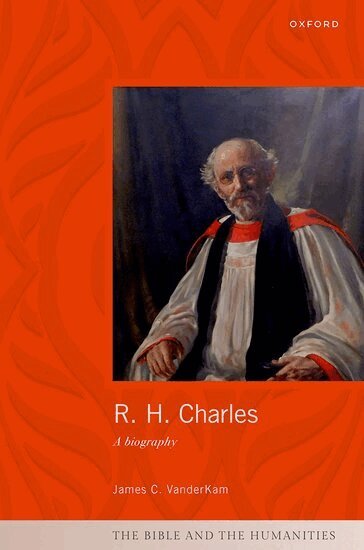
R.H. Charles: A Biography first situates Charles's work in the history of biblical scholarship. The remainder of the book is divided into three parts that draw on material stored in several archives and other sources. The first provides an account of his early life and education in Ireland. Part two is devoted to his Oxford years (1890-1913). Within a chronological framework, the chapters regarding the Oxford period focus on his pioneering work with Jewish apocalypses as evident in his many textual editions, translations, and commentaries. For all of his major publications an attempt is made to assess how his work was received at the time and how it continues to affect the field of early Judaism. The third part furnishes a biographical overview of his work as a canon of Westminster (1913-31). At the Abbey, he carried out pastoral duties but also published books that made contributions to publicly debated issues such as divorce, while at the same time continuing his scholarly endeavours. The volume includes bibliographies of Charles's many publications and of works cited.
334 kr
Kommande
The rabbinic sages of antiquity are known for their sophisticated and creative reading of Scripture. But beginning in the third century CE, these sages also took on extensive commentary on another kind of text: the sages' own teachings. Focusing on the first collection attesting to this branch of scholarship, the oft-neglected Talmud Yerushalmi, The Rise of Talmud argues that this new project presented a wide-ranging transformation of the sages' scholarly practice and self-perception. On the one hand, it engaged premises and methods distinct from those the sages applied to Scripture, such as textual criticism and the interpretation of texts in light of the individuals to whom they were attributed. On the other hand, this book shows, this distinct approach did not stem from preexisting differences in the conceptions of Scripture and rabbinic teachings: it reflected a broad reconceptualization of the tradition, diverging from how these teachings were construed by earlier generations. Recognizing these unique aspects of ancient Talmudic scholarship centers its development as a pivotal moment in Jewish intellectual history and offers a richer picture of rabbinic hermeneutics; it also allows us to situate it better among other scholarly traditions of the Greco-Roman world and to examine how different ideas, aims, and contexts shape textual scholarship—including our own.
1 200 kr
Skickas inom 5-8 vardagar
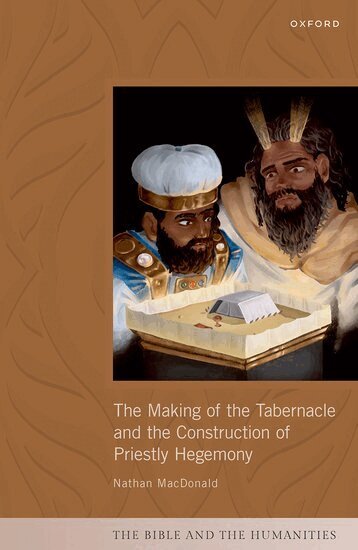
How did the Jerusalem high priests go from being cultic servants in the sixth century BCE to assuming political supremacy at some point during the third or second century? The Making of the Tabernacle and the Construction of Priestly Hegemony examines how the conditions were created for the priesthood's rise to power by examining the most important ideological texts for the high priests: the description of the wilderness tabernacle and the instructions for the ordination ritual found in the Biblical books of Exodus and Leviticus. Although neglected by many modern readers, who often find them technical and repetitive, the tabernacle accounts excited considerable interest amongst early scribes and readers, as is evidenced by the survival of them in no fewer than four versions. Untangling this intricate compositional history helps shed light on how these chapters in the Pentateuch shaped-and were shaped by-the perception of the priesthood's powers and competencies during the Persian and early Hellenistic periods. The hierarchy that is developed is more nuanced and multifaceted than previously appreciated, with Israelite artisans, community leaders, Levites and women incorporated into a complex vision of society. The ordination ritual was also transformed by scribal elites during the Persian period, appearing in no fewer than five variant forms as the role of the high priesthood and its relationship to other groups was negotiated. Using a broad, plural methodological approach that incorporates insights from sociology, ritual studies, textual and literary criticism, early interpretation, manuscript studies, and philology, Nathan MacDonald's study shines new light on the historical development, theology, and ideology of priestly texts in the Pentateuch.
1 037 kr
Skickas inom 5-8 vardagar
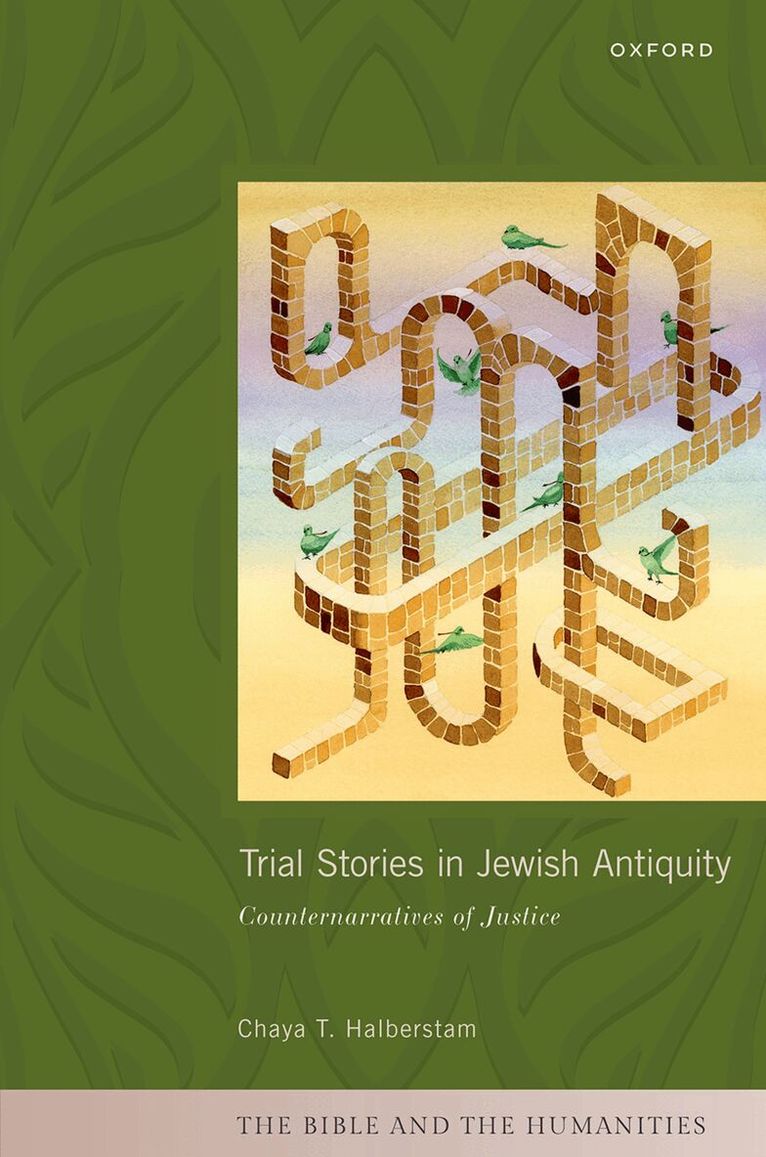
What can early Jewish courtroom narratives tell us about the capacity and limits of human justice? By exploring how judges and the act of judging are depicted in these narratives, Trial Stories in Jewish Antiquity: Counternarratives of Justice challenges the prevailing notion, both then and now, of the ideal impartial judge. As a work of intellectual history, the book also contributes to contemporary debates about the role of legal decision-making in shaping a just society. Chaya T. Halberstam shows that instead of modelling a system in which lofty, inaccessible judges follow objective and rational rules, ancient Jewish trial narratives depict a legal practice dependent upon the individual judge's personal relationships, reactive emotions, and impulse to care. Drawing from affect theory and feminist legal thought, Halberstam offers original readings of some of the most famous trials in ancient Jewish writings alongside minor case stories in Josephus and rabbinic literature. She shows both the consistency of a counter-tradition that sees legal practice as contingent upon relationship and emotion, and the specific ways in which that perspective was manifest in changing times and contexts.
1 146 kr
Skickas inom 5-8 vardagar
This is an open access title available under the terms of a CC BY-NC-ND 4.0 International licence. It is free to read on the Oxford Academic platform and offered as a free PDF download from OUP and selected open access locations.Scriptural Vitality challenges the view that the Persian and Hellenistic periods constitute a time of decay, a period of 'late Judaism', languishing between an original, vibrant Judaism and the birth of Christianity. Instead, Hindy Najman argues that the Second Temple period was one of untethered creativity and poetic imagination, of dynamism exemplified through philosophical translation, poetic composition, and a convergence of ancient Mediterranean cultures that gave birth to hermeneutic innovation. Building on Nietzsche's critique of classical philology and drawing on new ways of reading the Dead Sea Scrolls, the author carries out a radical rethinking of biblical studies. Instead of seeking to reconstruct the original text and to find its original author or at least the original context of its production, Najman celebrates textual pluriformity and transformation, tracing ways in which texts and meanings proliferated within interpretive communities through new performances and fresh articulations of the past. Engaging with thinkers such as Friedrich Schlegel and Peter Szondi, whom biblicists have rarely considered, biblical philology is reimagined as the forward-moving study of the poetic processes by which Jewish communities re-created their past and revitalized their present. The Second Temple period emerges as a golden age of creativity, whose traces may still be discerned in Judaism and Christianity today.
1 037 kr
Skickas inom 5-8 vardagar
A Christian imagination of colonial discovery permeated the early modern world, but legal histories developed in very different ways depending on imperial jurisdictions. Indigenous Rights and the Legacies of the Bible: From Moses to Mabo explores the contradictions and ironies that emerged in the interactions between biblical warrants and colonial theories of Indigenous natural rights. The early debates in the Americas mutated in the British colonies with a range of different outcomes after the American Revolution, and tracking the history of biblical interpretation provides an illuminating pathway through these historical complexities.A ground-breaking legal judgement in the High Court of Australia, Mabo v. Queensland (1992), demonstrates the enduring legacies of debates over the previous five centuries. The case reveals that the Australian colonies are the only jurisdiction of the English common law tradition within which no treaties were made with the First Nations. Instead, there is a peculiar development of terra nullius ideology, which can be traced back to the historic influences of the book of Genesis in Puritan thought in the seventeenth century. Having identified both similarities and differences between various colonial arguments, and their overt dependence on early modern theological reasoning, Mark G. Brett examines the paradoxical permutations of imperial and anti-imperial motifs in the biblical texts themselves.Concepts of rights shifted over the centuries from theological to secular frameworks, and more recently, from anthropocentric assumptions to ecologically embedded concepts of Indigenous rights and responsibilities. Bearing in mind the differences between ancient and modern notions of indigeneity, a fresh understanding of this history proves timely as settler colonial states reflect on the implications of the United Nations Declaration on the Rights of Indigenous Peoples (2007). Brett's illuminating insights in this detailed study are particularly relevant for the four states that initially voted against the Declaration: the USA, Canada, New Zealand, and Australia.
1 417 kr
Skickas inom 5-8 vardagar
This is an open access title available under the terms of a CC BY-NC-ND 4.0 International licence. It is free to read on Oxford Academic and offered as a free PDF download from OUP and selected open access locations.Two Models of Biblical Purity: The Science of Ritual investigates the ancient Israelite and early Jewish purity systems, proposing a framework that distinguishes between two conceptual approaches to ritual pollution: the qualitative and quantitative models. In the qualitative model, forms of pollution differ fundamentally in type, like distinct illnesses with unique symptoms and treatments. The quantitative model, on the other hand, views pollution as varying in intensity or degree, similar to temperature, where different sources simply make one "more" or "less" impure. The book argues that the Hebrew Bible primarily reflects a qualitative model, where impurities are categorized by type rather than severity. Through careful philological analysis, the study develops "litmus tests" to detect these models within biblical and late Second Temple texts, showing a gradual shift toward quantitative thought in later Jewish sources. Each chapter applies these methods to pivotal texts, including the Priestly literature, the Temple Scroll, and other late Second Temple and rabbinic writings, revealing the complex evolution of purity laws. This approach provides insights into the inner logic and diachronic development of ritual systems, offering a foundational perspective for comparative studies across diverse ritual traditions. Finally, it examines the historical contexts that may have instigated the shift and considers the advantages of the "fundamental science" approach to the study of biblical purity.
1 620 kr
Skickas inom 5-8 vardagar
The rabbinic sages of antiquity are known for their sophisticated and creative reading of Scripture. But beginning in the third century CE, these sages also took on extensive commentary on another kind of text: the sages' own teachings. Focusing on the first collection attesting to this branch of scholarship, the oft-neglected Talmud Yerushalmi, The Rise of Talmud argues that this new project presented a wide-ranging transformation of the sages' scholarly practice and self-perception. On the one hand, it engaged premises and methods distinct from those the sages applied to Scripture, such as textual criticism and the interpretation of texts in light of the individuals to whom they were attributed. On the other hand, this book shows, this distinct approach did not stem from preexisting differences in the conceptions of Scripture and rabbinic teachings: it reflected a broad reconceptualization of the tradition, diverging from how these teachings were construed by earlier generations. Recognizing these unique aspects of ancient Talmudic scholarship centers its development as a pivotal moment in Jewish intellectual history and offers a richer picture of rabbinic hermeneutics; it also allows us to situate it better among other scholarly traditions of the Greco-Roman world and to examine how different ideas, aims, and contexts shape textual scholarship—including our own.
1 349 kr
Skickas inom 5-8 vardagar
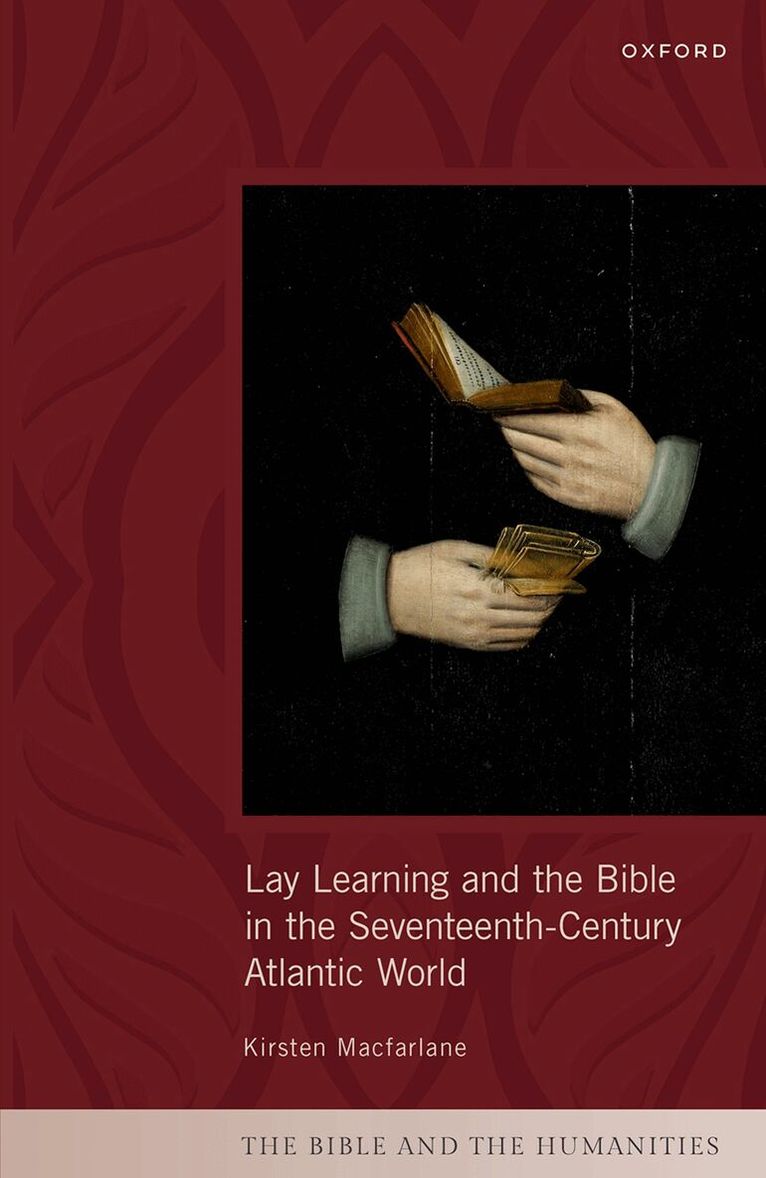
Early modernity has long been seen as a crucial period in the history of biblical scholarship, witnessing rapid advances in studies of Hebrew, Greek, and the ancient Jewish and Christian past. Historians have devoted much attention to how these developments were received by the academic and clerical elite, and yet there is little research on their reception beyond such exclusive circles. Some have even argued that ordinary believers had no interest in the demanding world of elite scholarship. According to current narratives, the Protestant laity were preoccupied by practical piety, scripture-reading, and devotional exercises, all of which were far removed from the dazzling polyglot erudition of the scholar.Lay Learning and the Bible in the Seventeenth-Century Atlantic World offers an alternative account of popular religion in early modernity by reconstructing a striking and unstudied community of seventeenth-century puritan immigrants to North America. Composed of tradespeople without a university education, this community offers unparalleled evidence for lay engagement with even the most abstruse and challenging concerns of contemporaneous biblical scholarship. Drawing on whatever resources they could find, this group taught themselves the languages of biblical criticism; immersed themselves in the most specialized questions of controversial theology; and then promulgated, through their hard-earned learning, an unprecedentedly inclusive vision of education, society, and the church. By recovering their lives and interests, this book presents a new vision of lay puritanism in the Atlantic world, one marked by far greater ambition, critical thought, and intellectual boldness than ever before suspected.
1 417 kr
Skickas inom 5-8 vardagar
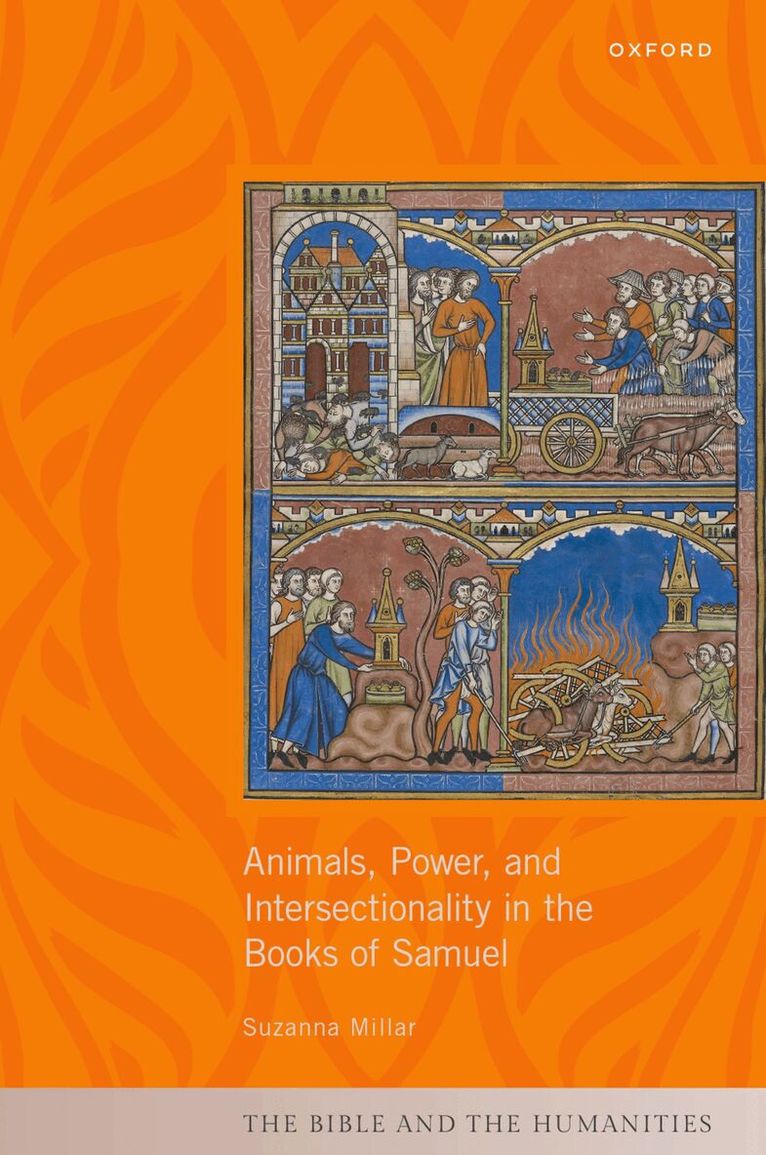
Animals pervade the books of Samuel. Though their presence often goes unnoticed, they are integral players in the society narrated. What's more, they are caught up in societal power dynamics and are treated in ways that intersect with the treatment of marginalized humans, such as women, foreigners, and children. Working with a robust analytic framework, Animals, Power, and Intersectionality in the Books of Samuel draws on scholars of animal studies, power, and intersectionality, to examine selected texts from the books of Samuel to highlight these oft-overlooked players. Suzanna Millar shows how animals are utilized by certain humans in their power-play as their deaths are ritualized through sacrificial killing; killings which have pivotal significance in the shifts of power between Eli, Samuel, and Saul. It explores how animals are subordinated alongside certain humans, as both groups are taken by kings vying for power: animals and humans are plundered, taxed, and stolen by kings like David as they develop, consolidate, and abuse their sovereignty. The book further considers how animals can become images to represent certain humans; specifically, they become implicated in the construction and delegitimization of the masculinities of Goliath, Absalom, and Mephibosheth. Finally, it examines how animals interact with certain humans in specific times and places and thereby might express their own agency and power (though they are recursively brought back under human control). In these and other ways, Millar robustly demonstrates the role of animals in the intersectional power dynamics of Samuel.