The Johns Hopkins Series in Constitutional Thought – Serie
Visar alla böcker i serien The Johns Hopkins Series in Constitutional Thought. Handla med fri frakt och snabb leverans.

17 produkter
17 produkter
363 kr
Skickas inom 5-8 vardagar
All constitutions are ultimately about power, Sheldon Wolin writes: about how power is used and by whom, according to what understandings, and to whose advantage. The provisions of our own Constitution regarding slavery—and disregarding women—show that even a liberal constitution does not legitimate all types of politics. What is constituted, rather, are conditions that favor certain forms of politics over others.The Presence of the Past explores the relationship between present-day American politics and the COnstitution of 1787. Wolin does not attempt to establish the "real" meaning of the document or the "intent" of the Founders. ("A constitution is not a revelation and the Philadelphia Convention was not an epiphanic moment.") Instead, he examines the Constitution from a breathtaking variety of perspectives, drawing meanings from the text that is our richest source of American values, myths, ideologies, and theories. And he shows how the Constitution created the American version of the modern state and how the ideology of bicentennialism works to obscure the contradictions between the state and democracy.In a variety of ways, The Presence of the Past concerns itself with kinds of loss—the loss of democratic values, the weakening of democratic elements in our institutions, the stifling of democratic hopes. In the explorations of our constitutional culture, Wolin connects a wide range of topics, from a discussion of the Federalist Papers to the Irangate scandal, from the dieas of Montesquieu and Tocqueville to the political implications of Allan Bloom's polemic on education.
386 kr
Skickas inom 7-10 vardagar
Do political scientists in a liberal democracy bear a special responsibility that goes beyond their academic pursuits? Ceaser, a scholar of American political parties, argues that they do, and he challenges colleagues and students to reexamine what they do as political scientists. He observes that liberal democracy is a compound of two elements not easily wed: constitutionalism and republicanism. The role of political science is to perform the "superintendent" function of keeping these parts together.
365 kr
Skickas inom 7-10 vardagar
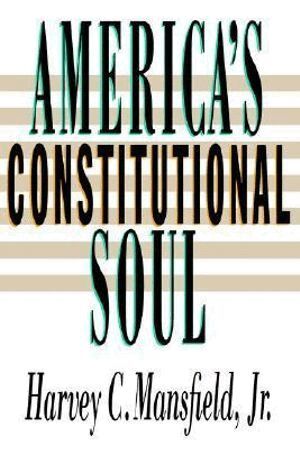
Focusing on the elections of 1980, 1982, and 1984, Mansfield critiques contemporary conservatism for its ignorance of the political theory implicit in the Constitution.
254 kr
Tillfälligt slut
With the end of the Cold War, says Thomas L. Pangle, liberal democracy was deprived of its traditional enemy, and forced to re-examine its internal structure and fundamental aims. One result has been the moral-relativist "postmodernism" of mainstream Western intellectuals. Focusing on Lyotard, Vattimo, and Rorty, The Ennobling of Democracy offers a searching critique of postmodernism and its implications for political life and thought. Pangle carefully examines the political dimensions of postmodernist teachings, including the rejection of the natural-rights doctrines of the Enlightenment, the discounting of public purposefulness, and the disenchantment with claims of civic virtue and reason. He argues that a serious challenge has been posed to postmodernism by the emerging democracies of Eastern Europe, which have directly experienced heroic political leadership, maintained a prominent place for religion, and preserved a belief in the virtues and duties of citizenship. They consequently make demands on Western thought that postmodernism has been unable to meet. Drawing on the classical republican ideal, Pangle opens the door to a bold new synthesis in political philosophy.He argues that by reappropriating classical civic rationalism-and especially classical philosophy of education-a framework may be established to integrate the most significant findings of modern rationalism into a conception of humanity that encompasses, in an unprecedented way, the entire scope of the human condition.
384 kr
Skickas inom 5-8 vardagar
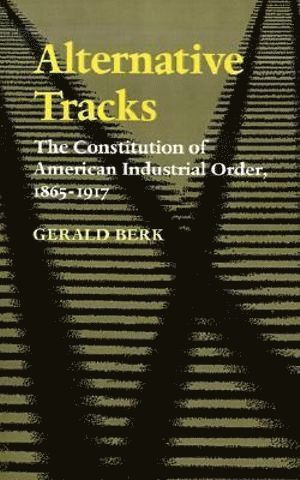
"Gerald Berk's Alternative Tracks is a lean but provocative, timely, insightful, and forcefully written challenge to the conventional wisdom about industrial America's political economy". -- Review of Politics At the heart of Alternative Tracks is the historical relationship between democracy. and the modern corporation. Gerald Berk uses the case of the railroad industry to show that industrial centralization and corporate hierarchy did not follow a course solely determined by the efficiency imperatives of modern technology. Rather, collective choice and the state had lasting influence on the development of corporate capitalism. Moreover, the role of government depended less on the exercise of interest-group or class power than it did on the protracted struggle over constitutional norms of fairness and justice relating to corporation and the market. Mediated through the court, Congress, and the bureaucracy, this struggle had profound effects on the organization of railroads, the pattern of urbanization, and the practice of business regulation. "A very impressive work ...Offers the reader real insight into the technical factors and financial arrangements involved in the development of American railroads".-- Perspectives on Political Science "Berk has offered some powerful questions for future scholars to keep in mind, and no student of railroad history or the history of business can afford to overlook this book". -- American Historical Review "An ambitious effort to make sense of how the modern American state was fashioned". -- American Political Science Review
483 kr
Tillfälligt slut
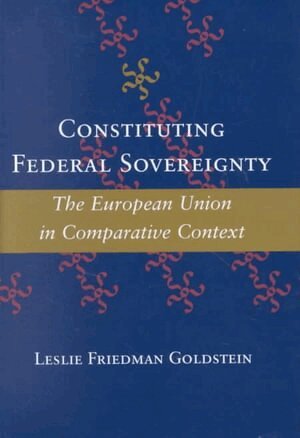
Starting from the premise that the system of independent, sovereign, territorial states, which was the subject of political science and international relations studies in the twentieth century, has entered a transition toward something new, noted political scientist Leslie F. Goldstein examines the development of the European Union by blending comparative and historical institutionalist approaches. She argues that the most useful framework for understanding the kinds of "supra-state" formations that are increasingly apparent in the beginning of the third millennium is comparative analysis of the formative epochs of federations of the past that formed voluntarily from previously independent states. In Constituting Federal Sovereignty: The European Union in Comparative Context Goldstein identifies three significant predecessors to today's European Union: the Dutch Union of the 17th century, the United States of America from the 1787 Constitution to the Civil War, and the first half-century of the modern Swiss federation, beginning in 1848. She examines the processes by which federalization took place, what made for its success, and what contributed to its problems.She explains why resistance to federal authority, although similar in kind, varied significantly in degree in the cases examined. And she explores the crucial roles played by such factors as sovereignty-honoring elements within the institutional structure of the federation, the circumstances of its formation (revolt against distant empire versus aftermath of war among member states), and notably, the internal culture of respect for the rule of law in the member states.
564 kr
Tillfälligt slut
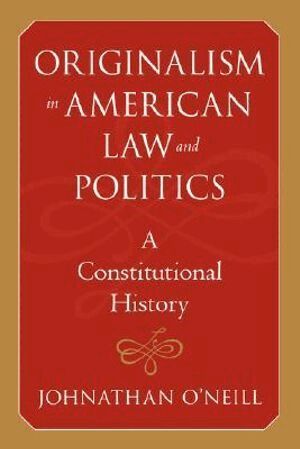
This book explains how the debate over originalism emerged from the interaction of constitutional theory, U.S. Supreme Court decisions, and American political development. Refuting the contention that originalism is a recent concoction of political conservatives like Robert Bork, Johnathan O'Neill asserts that recent appeals to the origin of the Constitution in Supreme Court decisions and commentary, especially by Justices Antonin Scalia and Clarence Thomas, continue an established pattern in American history. Originalism in American Law and Politics is distinguished by its historical approach to the topic. Drawing on constitutional commentary and treatises, Supreme Court and lower federal court opinions, congressional hearings, and scholarly monographs, O'Neill's work will be valuable to historians, academic lawyers, and political scientists.
489 kr
Tillfälligt slut
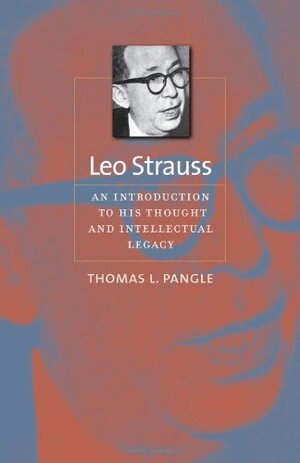
Leo Strauss's controversial writings have long exercised a profound subterranean cultural influence. Now their impact is emerging into broad daylight, where they have been met with a flurry of poorly informed, often wildly speculative, and sometimes rather paranoid pronouncements. This book, written as a corrective, is the first accurate, non-polemical, comprehensive guide to Strauss's mature political philosophy and its intellectual influence. Thomas L. Pangle opens a pathway into Strauss's major works with one question: How does Strauss's philosophic thinking contribute to our democracy's civic renewal and to our culture's deepening, critical self-understanding? This book includes a synoptic critical survey of writings from scholars who have extended Strauss's influence into the more practical, sub-philosophic fields of social and political science and commentary. Pangle shows how these analysts have in effect imported Straussian impulses into a "new" kind of political and social science.
267 kr
Tillfälligt slut
Leo Strauss's controversial writings have long exercised a profound subterranean cultural influence. Now their impact is emerging into broad daylight, where they have been met with a flurry of poorly informed, often wildly speculative, and sometimes rather paranoid pronouncements. This book, written as a corrective, is the first accurate, non-polemical, comprehensive guide to Strauss's mature political philosophy and its intellectual influence. Thomas L. Pangle opens a pathway into Strauss's major works with one question: How does Strauss's philosophic thinking contribute to our democracy's civic renewal and to our culture's deepening, critical self-understanding? This book includes a synoptic critical survey of writings from scholars who have extended Strauss's influence into the more practical, sub-philosophic fields of social and political science and commentary. Pangle shows how these analysts have in effect imported Straussian impulses into a "new" kind of political and social science.
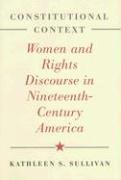
Constitutional Context
Women and Rights Discourse in Nineteenth-Century America
Inbunden, Engelska, 2007
450 kr
Tillfälligt slut
While the United States was founded on abstract principles of certain "unalienable rights," its legal traditions are based in British common law, a fact long decried by progressive reformers. Common law, the complaint goes, ignores abstract rights principles in favor of tradition, effectively denying equality to large segments of the population. The nineteenth-century women's rights movement embraced this argument, claiming that common law rules of property and married women's status were at odds with the nation's commitment to equality. Conventional wisdom suggests that this tactic helped pave the way for voting rights and better jobs. In Constitutional Context, Kathleen S. Sullivan presents a fresh perspective. In revisiting the era's congressional debates, state legislation, judicial opinions, news accounts, and work of political activists, Sullivan finds that the argument for universal, abstract rights was not the only, or best, path available for social change.Rather than erecting a new paradigm of absolute rights, she argues, women's rights activists unwittingly undermined common law's ability to redress grievances, contributing heavily to the social, cultural, and political stagnation that characterizes the place of women and the movement today. A challenging and thoughtful study of what is commonly thought of as an era of progress, Constitutional Context provides the groundwork for a more comprehensive understanding and interpretation of constitutional law.
463 kr
Skickas inom 5-8 vardagar
This book explains how the debate over originalism emerged from the interaction of constitutional theory, U.S. Supreme Court decisions, and American political development. Refuting the contention that originalism is a recent concoction of political conservatives like Robert Bork, Johnathan O'Neill asserts that recent appeals to the origin of the Constitution in Supreme Court decisions and commentary, especially by Justices Antonin Scalia and Clarence Thomas, continue an established pattern in American history. Originalism in American Law and Politics is distinguished by its historical approach to the topic. Drawing on constitutional commentary and treatises, Supreme Court and lower federal court opinions, congressional hearings, and scholarly monographs, O'Neill's work will be valuable to historians, academic lawyers, and political scientists.
551 kr
Tillfälligt slut
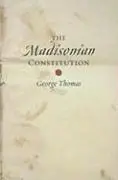
Today, we think of constitutional questions as being settled by the Supreme Court.But that is not always the case, nor is it what the framers intended in constructing the three-branch federal government. This volume examines four crucial moments in the United States' political history-the Civil War and Reconstruction, the Progressive Era, Franklin Delano Roosevelt's presidency and the New Deal, and the Reagan revolution-to illustrate the Madisonian view that the present rise of judicial supremacy actually runs counter to the Constitution as established at the nation's founding. George Thomas opens by discussing how the Constitution encourages an antagonistic approach to settling disputes, thereby preserving itself as the nation's fundamental law rather then ceding that role to the president, Congress, or Supreme Court.In considering the four historical case studies, he focuses on judicial interpretations and the political branches' responses to them to demonstrate that competing conceptions of constitutional authority and meaning, as well as intergovernmental disputes themselves-rather than any specific outcome-strengthen the nature of the nation's founding document as a political instrument. Engagingly written and soundly argued, this study clarifies and highlights the political origins of the nation's foundational document and argues that American constitutionalism is primarily about countervailing power not legal limits enforced by courts.
528 kr
Tillfälligt slut
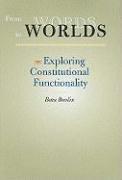
In the 225 years since the United States Constitution was first drafted, no single book has addressed the key questions of what constitutions are designed to do, how they are structured, and why they matter. In From Words to Worlds, constitutional scholar Beau Breslin corrects this glaring oversight, singling out the essential functions that a modern, written constitution must incorporate in order to serve as a nation's fundamental law. Breslin lays out and explains the basic functions of a modern constitution-including creating a new citizenry, structuring the institutions of government, regulating conflict between layers and branches of government, and limiting the power of the sovereign. He also discusses the theoretical concepts behind the fundamentals of written constitutions and examines in depth some of the most important constitutional charters from around the world. In assaying how states put structural ideas into practice, Breslin asks probing questions about why-and if-constitutions matter. Solidly argued and engagingly written, this comparative study in constitutional thought demonstrates clearly the key components that a state's foundational document must address.Breslin draws a critically important distinction between constitutional texts and constitutional practice.
443 kr
Tillfälligt slut
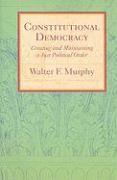
Constitutional democracy is a political hybrid, the product of an uneasy union between, on the one hand, the normative theories of constitutionalism and democracy and, on the other, the desire to live under what James Madison called "free government." In this engaging and provocative work, Walter F. Murphy combines a lifetime's study of constitutions and democracy with traditional storytelling to answer fundamental questions about constitutional democracy: How is it created? How is it maintained? How can it be adapted to changing circumstances? Murphy begins with a definitional section on constitutions, constitutional texts, constitutionalism, and democracy. Next, he tells the story of how a democracy is established within the context of a fictional constitutional convention for a fictional country. He follows delegates-many of whose arguments track those of real-life political, economic, and legal theorists-as they debate and draft the components of a constitution. Here, the reader comes to understand and appreciate the components of a constitutional text and the contingency and potential of the constitution-making process.Murphy then offers an expository analysis of constitutional maintenance, adaptation, and, essentially, constitutional change.
661 kr
Skickas
Since 1981, when Joseph M. Bessette and Jeffrey K. Tulis first published The Presidency in the Constitutional Order, the study of the constitutional powers of the presidency has advanced considerably. Bessette and Tulis continue the conversation almost 30 years later, presenting original research on the most significant issues regarding presidential power and the Constitution. After introducing and identifying the main approaches to the study of the constitutional presidency and the nature of executive power, Bessette and Tulis, along with other constitutional scholars, cover a wide range of topics. These include the logic and meaning of Article II of the Constitution; the constitutional and political debate over Washington's Proclamation of Neutrality of 1793; the contribution of Theodore Roosevelt and William Howard Taft to the constitutional foundations of the modern presidency; the controversy over the presidential election of 2000 and the Supreme Court's decision in Bush v. Gore; military tribunals and the war on terrorism; executive orders; growing presidential influence over the budgeting process; executive privilege; impeachment; and demagoguery in democratic regimes.The book conjoins political and legal modes of analysis and shows how constitutional interpretation is indispensable to an adequate description of political behavior and serves as the source of standards for evaluating presidential conduct. The contributors offer new and distinctive arguments, especially in light of the renewed debate over executive power during the George W. Bush administration.
365 kr
Skickas inom 7-10 vardagar
Since 1981, when Joseph M. Bessette and Jeffrey K. Tulis first published The Presidency in the Constitutional Order, the study of the constitutional powers of the presidency has advanced considerably. Bessette and Tulis continue the conversation almost 30 years later, presenting original research on the most significant issues regarding presidential power and the Constitution. After introducing and identifying the main approaches to the study of the constitutional presidency and the nature of executive power, Bessette and Tulis, along with other constitutional scholars, cover a wide range of topics. These include the logic and meaning of Article II of the Constitution; the constitutional and political debate over Washington's Proclamation of Neutrality of 1793; the contribution of Theodore Roosevelt and William Howard Taft to the constitutional foundations of the modern presidency; the controversy over the presidential election of 2000 and the Supreme Court's decision in Bush v. Gore; military tribunals and the war on terrorism; executive orders; growing presidential influence over the budgeting process; executive privilege; impeachment; and demagoguery in democratic regimes.The book conjoins political and legal modes of analysis and shows how constitutional interpretation is indispensable to an adequate description of political behavior and serves as the source of standards for evaluating presidential conduct. The contributors offer new and distinctive arguments, especially in light of the renewed debate over executive power during the George W. Bush administration.
587 kr
Tillfälligt slut
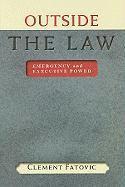
The origins of presidential claims to extraconstitutional powers during national crises are contentious points of debate among constitutional and legal scholars. The Constitution is silent on the matter, yet from Abraham Lincoln's suspension of habeas corpus during the Civil War to George W. Bush's creation of the "enemy combatants" label, a number of presidents have invoked emergency executive power in defense of actions not specifically endorsed in the Constitution or granted by Congress. Taking up the debate, Clement Fatovic digs into the intellectual history of the nation's founding to argue that the originators of liberal constitutional theory explicitly endorsed the use of extraordinary, extralegal measures to deal with genuine national emergencies. He traces the evolution of thought on the matter through the writings of John Locke, David Hume, William Blackstone, and the founding fathers, finding in them stated support for what Locke termed "prerogative," tempered by a carefully construed concept of public-oriented virtues.Fatovic maintains that the founders believed that moral character and republican decency would restrain the president from abusing this grant of enhanced authority and ensure that it remained temporary. This engaging, carefully considered survey of the conceptions of executive power in constitutional thought explains how liberalism's founders attempted to reconcile the principles of constitutional government with the fact that some circumstances would demand that an executive take normally proscribed actions. Scholars of liberalism, the American founding, and the American presidency will find Fatovic's reasoned arguments against the conventional wisdom enlightening.