The MICCAI Society book Series - Böcker
1 603 kr
Skickas inom 7-10 vardagar
Computational Retinal Image Analysis: Tools, Applications and Perspectives gives an overview of contemporary retinal image analysis (RIA) in the context of healthcare informatics and artificial intelligence. Specifically, it provides a history of the field, the clinical motivation for RIA, technical foundations (image acquisition modalities, instruments), computational techniques for essential operations, lesion detection (e.g. optic disc in glaucoma, microaneurysms in diabetes) and validation, as well as insights into current investigations drawing from artificial intelligence and big data. This comprehensive reference is ideal for researchers and graduate students in retinal image analysis, computational ophthalmology, artificial intelligence, biomedical engineering, health informatics, and more.
Provides a unique, well-structured and integrated overview of retinal image analysis Gives insights into future areas, such as large-scale screening programs, precision medicine, and computer-assisted eye care Includes plans and aspirations of companies and professional bodiesMedical Image Recognition, Segmentation and Parsing
Machine Learning and Multiple Object Approaches
1 351 kr
Skickas inom 7-10 vardagar
This book describes the technical problems and solutions for automatically recognizing and parsing a medical image into multiple objects, structures, or anatomies. It gives all the key methods, including state-of- the-art approaches based on machine learning, for recognizing or detecting, parsing or segmenting, a cohort of anatomical structures from a medical image.
Written by top experts in Medical Imaging, this book is ideal for university researchers and industry practitioners in medical imaging who want a complete reference on key methods, algorithms and applications in medical image recognition, segmentation and parsing of multiple objects.
Learn:
Research challenges and problems in medical image recognition, segmentation and parsing of multiple objects Methods and theories for medical image recognition, segmentation and parsing of multiple objects Efficient and effective machine learning solutions based on big datasets Selected applications of medical image parsing using proven algorithms Provides a comprehensive overview of state-of-the-art research on medical image recognition, segmentation, and parsing of multiple objects Presents efficient and effective approaches based on machine learning paradigms to leverage the anatomical context in the medical images, best exemplified by large datasets Includes algorithms for recognizing and parsing of known anatomies for practical applications
1 238 kr
Skickas inom 7-10 vardagar
Machine Learning and Medical Imaging presents state-of- the-art machine learning methods in medical image analysis. It first summarizes cutting-edge machine learning algorithms in medical imaging, including not only classical probabilistic modeling and learning methods, but also recent breakthroughs in deep learning, sparse representation/coding, and big data hashing. In the second part leading research groups around the world present a wide spectrum of machine learning methods with application to different medical imaging modalities, clinical domains, and organs.
The biomedical imaging modalities include ultrasound, magnetic resonance imaging (MRI), computed tomography (CT), histology, and microscopy images. The targeted organs span the lung, liver, brain, and prostate, while there is also a treatment of examining genetic associations. Machine Learning and Medical Imaging is an ideal reference for medical imaging researchers, industry scientists and engineers, advanced undergraduate and graduate students, and clinicians.
Demonstrates the application of cutting-edge machine learning techniques to medical imaging problems Covers an array of medical imaging applications including computer assisted diagnosis, image guided radiation therapy, landmark detection, imaging genomics, and brain connectomics Features self-contained chapters with a thorough literature review Assesses the development of future machine learning techniques and the further application of existing techniques1 238 kr
Skickas inom 7-10 vardagar
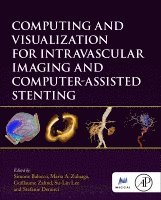
Computing and Visualization for Intravascular Imaging and Computer-Assisted Stenting
1 578 kr
Skickas inom 7-10 vardagar
Computing and Visualization for Intravascular Imaging and Computer-Assisted Stenting presents imaging, treatment, and computed assisted technological techniques for diagnostic and intraoperative vascular imaging and stenting. These techniques offer increasingly useful information on vascular anatomy and function, and are poised to have a dramatic impact on the diagnosis, analysis, modeling, and treatment of vascular diseases.
After setting out the technical and clinical challenges of vascular imaging and stenting, the book gives a concise overview of the basics before presenting state-of-the-art methods for solving these challenges.
Readers will learn about the main challenges in endovascular procedures, along with new applications of intravascular imaging and the latest advances in computer assisted stenting.
Brings together scientific researchers, medical experts, and industry partners working in different anatomical regions Presents an introduction to the clinical workflow and current challenges in endovascular Interventions Provides a review of the state-of-the-art methodologies in endovascular imaging and their applications Poses outstanding questions and discusses future research1 490 kr
Skickas inom 7-10 vardagar
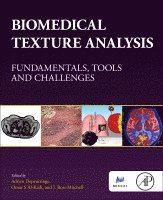
Biomedical Texture Analysis: Fundamentals, Applications, Tools and Challenges describes the fundamentals and applications of biomedical texture analysis (BTA) for precision medicine. It defines what biomedical textures (BTs) are and why they require specific image analysis design approaches when compared to more classical computer vision applications.
The fundamental properties of BTs are given to highlight key aspects of texture operator design, providing a foundation for biomedical engineers to build the next generation of biomedical texture operators. Examples of novel texture operators are described and their ability to characterize BTs are demonstrated in a variety of applications in radiology and digital histopathology. Recent open-source software frameworks which enable the extraction, exploration and analysis of 2D and 3D texture-based imaging biomarkers are also presented.
This book provides a thorough background on texture analysis for graduate students and biomedical engineers from both industry and academia who have basic image processing knowledge. Medical doctors and biologists with no background in image processing will also find available methods and software tools for analyzing textures in medical images.
Defines biomedical texture precisely and describe how it is different from general texture information considered in computer vision Defines the general problem to translate 2D and 3D texture patterns from biomedical images to visually and biologically relevant measurements Describes, using intuitive concepts, how the most popular biomedical texture analysis approaches (e.g., gray-level matrices, fractals, wavelets, deep convolutional neural networks) work, what they have in common, and how they are different Identifies the strengths, weaknesses, and current challenges of existing methods including both handcrafted and learned representations, as well as deep learning. The goal is to establish foundations for building the next generation of biomedical texture operators Showcases applications where biomedical texture analysis has succeeded and failed Provides details on existing, freely available texture analysis software, helping experts in medicine or biology develop and test precise research hypothesis1 364 kr
Skickas inom 7-10 vardagar
1 202 kr
Skickas inom 7-10 vardagar
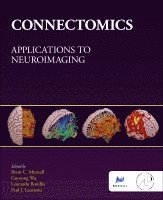
Connectomics: Applications to Neuroimaging is unique in presenting the frontier of neuro-applications using brain connectomics techniques. The book describes state-of-the-art research that applies brain connectivity analysis techniques to a broad range of neurological and psychiatric disorders (Alzheimer's, epilepsy, stroke, autism, Parkinson's, drug or alcohol addiction, depression, bipolar, and schizophrenia), brain fingerprint applications, speech-language assessments, and cognitive assessment.
With this book the reader will learn:
Basic mathematical principles underlying connectomics How connectomics is applied to a wide range of neuro-applications What is the future direction of connectomics techniques.
This book is an ideal reference for researchers and graduate students in computer science, data science, computational neuroscience, computational physics, or mathematics who need to understand how computational models derived from brain connectivity data are being used in clinical applications, as well as neuroscientists and medical researchers wanting an overview of the technical methods.
Features:
Combines connectomics methods with relevant and interesting neuro-applications Covers most of the hot topics in neuroscience and clinical areas Appeals to researchers in a wide range of disciplines: computer science, engineering, data science, mathematics, computational physics, computational neuroscience, as well as neuroscience, and medical researchers interested in the technical methods of connectomics Combines connectomics methods with relevant and interesting neuro-applications Presents information that will appeal to researchers in a wide range of disciplines, including computer science, engineering, data science, mathematics, computational physics, computational neuroscience, and more Includes a mathematics primer that formulates connectomics from an applied point-of-view, thus avoiding difficult to understand theoretical perspective Lists publicly available neuro-imaging datasets that can be used to construct structural and functional connectomes
1 250 kr
Skickas inom 7-10 vardagar
Imaging Genetics presents the latest research in imaging genetics methodology for discovering new associations between imaging and genetic variables, providing an overview of the state-of the-art in the field. Edited and written by leading researchers, this book is a beneficial reference for students and researchers, both new and experienced, in this growing area. The field of imaging genetics studies the relationships between DNA variation and measurements derived from anatomical or functional imaging data, often in the context of a disorder. While traditional genetic analyses rely on classical phenotypes like clinical symptoms, imaging genetics can offer richer insights into underlying, complex biological mechanisms.
Contains an introduction describing how the field has evolved to the present, together with perspectives on its future direction and challenges Describes novel application domains and analytic methods that represent the state-of-the-art in the burgeoning field of imaging genetics Introduces a novel, large-scale analytic framework that involves multi-site, image-wide, genome-wide associations2 218 kr
Skickas inom 7-10 vardagar
Handbook of Medical Image Computing and Computer Assisted Intervention presents important advanced methods and state-of-the art research in medical image computing and computer assisted intervention, providing a comprehensive reference on current technical approaches and solutions, while also offering proven algorithms for a variety of essential medical imaging applications. This book is written primarily for university researchers, graduate students and professional practitioners (assuming an elementary level of linear algebra, probability and statistics, and signal processing) working on medical image computing and computer assisted intervention.
Presents the key research challenges in medical image computing and computer-assisted intervention Written by leading authorities of the Medical Image Computing and Computer Assisted Intervention (MICCAI) Society Contains state-of-the-art technical approaches to key challenges Demonstrates proven algorithms for a whole range of essential medical imaging applications Includes source codes for use in a plug-and-play manner Embraces future directions in the fields of medical image computing and computer-assisted interventionRadiomics and Its Clinical Application
Artificial Intelligence and Medical Big Data
1 238 kr
Skickas inom 7-10 vardagar
The rapid development of artificial intelligence technology in medical data analysis has led to the concept of radiomics. This book introduces the essential and latest technologies in radiomics, such as imaging segmentation, quantitative imaging feature extraction, and machine learning methods for model construction and performance evaluation, providing invaluable guidance for the researcher entering the field.
It fully describes three key aspects of radiomic clinical practice: precision diagnosis, the therapeutic effect, and prognostic evaluation, which make radiomics a powerful tool in the clinical setting.
This book is a very useful resource for scientists and computer engineers in machine learning and medical image analysis, scientists focusing on antineoplastic drugs, and radiologists, pathologists, oncologists, as well as surgeons wanting to understand radiomics and its potential in clinical practice.
An introduction to the concepts of radiomics In-depth presentation of the core technologies and methods Summary of current radiomics research, perspective on the future of radiomics and the challenges ahead An introduction to several platforms that are planned to be built: cooperation, data sharing, software, and application platformsVisualization, Visual Analytics and Virtual Reality in Medicine
State-of-the-art Techniques and Applications
1 452 kr
Skickas inom 7-10 vardagar
Visualization, Visual Analytics and Virtual Reality in Medicine: State-of-the-art Techniques and Applications describes important techniques and applications that show an understanding of actual user needs as well as technological possibilities. The book includes user research, for example, task and requirement analysis, visualization design and algorithmic ideas without going into the details of implementation. This reference will be suitable for researchers and students in visualization and visual analytics in medicine and healthcare, medical image analysis scientists and biomedical engineers in general.
Visualization and visual analytics have become prevalent in public health and clinical medicine, medical flow visualization, multimodal medical visualization and virtual reality in medical education and rehabilitation. Relevant applications now include digital pathology, virtual anatomy and computer-assisted radiation treatment planning.
Combines visualization, virtual reality and analytics Written by leading researchers in the field Gives the latest state-of-the-art techniques and applications1 250 kr
Skickas inom 7-10 vardagar
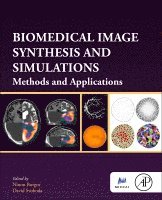
Biomedical Image Synthesis and Simulation: Methods and Applications presents the basic concepts and applications in image-based simulation and synthesis used in medical and biomedical imaging. The first part of the book introduces and describes the simulation and synthesis methods that were developed and successfully used within the last twenty years, from parametric to deep generative models. The second part gives examples of successful applications of these methods. Both parts together form a book that gives the reader insight into the technical background of image synthesis and how it is used, in the particular disciplines of medical and biomedical imaging. The book ends with several perspectives on the best practices to adopt when validating image synthesis approaches, the crucial role that uncertainty quantification plays in medical image synthesis, and research directions that should be worth exploring in the future.
Gives state-of-the-art methods in (bio)medical image synthesis Explains the principles (background) of image synthesis methods Presents the main applications of biomedical image synthesis methods1 074 kr
Skickas inom 7-10 vardagar
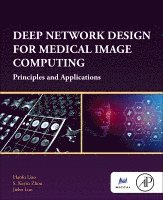
Deep Network Design for Medical Image Computing: Principles and Applications covers a range of MIC tasks and discusses design principles of these tasks for deep learning approaches in medicine. These include skin disease classification, vertebrae identification and localization, cardiac ultrasound image segmentation, 2D/3D medical image registration for intervention, metal artifact reduction, sparse-view artifact reduction, etc. For each topic, the book provides a deep learning-based solution that takes into account the medical or biological aspect of the problem and how the solution addresses a variety of important questions surrounding architecture, the design of deep learning techniques, when to introduce adversarial learning, and more.
This book will help graduate students and researchers develop a better understanding of the deep learning design principles for MIC and to apply them to their medical problems.
Explains design principles of deep learning techniques for MIC Contains cutting-edge deep learning research on MIC Covers a broad range of MIC tasks, including the classification, detection, segmentation, registration, reconstruction and synthesis of medical images1 226 kr
Skickas inom 7-10 vardagar
1 175 kr
Skickas inom 7-10 vardagar
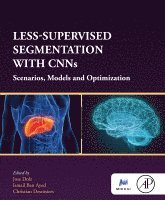
Less-Supervised Segmentation with CNNs: Scenarios, Models and Optimization reviews recent progress in deep learning for image segmentation under scenarios with limited supervision, with a focus on medical imaging. The book presents main approaches and state-of-the-art models and includes a broad array of applications in medical image segmentation, including healthcare, oncology, cardiology and neuroimaging. A key objective is to make this mathematical subject accessible to a broad engineering and computing audience by using a large number of intuitive graphical illustrations. The emphasis is on giving conceptual understanding of the methods to foster easier learning.
This book is highly suitable for researchers and graduate students in computer vision, machine learning and medical imaging.
Presents a good understanding of the different weak-supervision models (i.e., loss functions and priors) and the conceptual connections between them, providing an ability to choose the most appropriate model for a given application scenarioProvides knowledge of several possible optimization strategies for each of the examined losses, giving the ability to choose the most appropriate optimizer for a given problem or application scenarioOutlines the main strengths and weaknesses of state-of-the-art approachesGives the tools to understand and use publicly-available code, as well as customize it for specific objectives1 263 kr
Skickas inom 7-10 vardagar
Federated Learning for Medical Imaging
Principles, Algorithms, and Applications
1 377 kr
Skickas inom 7-10 vardagar
Federated Learning for Medical Imaging: Principles, Algorithms, and Applications gives a deep understanding of the technology of federated learning (FL), the architecture of a federated system, and the algorithms for FL. It shows how FL allows multiple medical institutes to collaboratively train and use a precise machine learning (ML) model without sharing private medical data via practical implantation guidance. The book includes real-world case studies and applications of FL, demonstrating how this technology can be used to solve complex problems in medical imaging. The book also provides an understanding of the challenges and limitations of FL for medical imaging, including issues related to data and device heterogeneity, privacy concerns, synchronization and communication, etc.This book is a complete resource for computer scientists and engineers, as well as clinicians and medical care policy makers, wanting to learn about the application of federated learning to medical imaging.
Presents the specific challenges in developing and deploying FL to medical imagingExplains the tools for developing or using FLPresents the state-of-the-art algorithms in the field with open source software on GithubGives insight into potential issues and solutions of building FL infrastructures for real-world applicationInforms researchers on the future research challenges of building real-world FL applications1 691 kr
Skickas inom 7-10 vardagar
Trustworthy AI in Medical Imaging brings together scientific researchers, medical experts, and industry partners working in the field of trustworthiness, bridging the gap between AI research and concrete medical applications and making it a learning resource for undergraduates, masters students, and researchers in AI for medical imaging applications.The book will help readers acquire the basic notions of AI trustworthiness and understand its concrete application in medical imaging, identify pain points and solutions to enhance trustworthiness in medical imaging applications, understand current limitations and perspectives of trustworthy AI in medical imaging, and identify novel research directions.Although the problem of trustworthiness in AI is actively researched in different disciplines, the adoption and implementation of trustworthy AI principles in real-world scenarios is still at its infancy. This is particularly true in medical imaging where guidelines and standards for trustworthiness are critical for the successful deployment in clinical practice. After setting out the technical and clinical challenges of AI trustworthiness, the book gives a concise overview of the basic concepts before presenting state-of-the-art methods for solving these challenges.
Introduces the key concepts of trustworthiness in AI.Presents state-of-the-art methodologies for trustworthy AI in medical imaging.Outlines major initiatives focusing on real-world deployment of trustworthy principles in medical imaging applications.Presents outstanding questions still to be solved and discusses future research directions.