Then an Now - Böcker
Visar alla böcker i serien Then an Now. Handla med fri frakt och snabb leverans.
7 produkter
7 produkter
266 kr
Skickas
Stalingrad was not only the most-crucial battle on the Eastern Front, it was the main turning point of the whole Second World War in Europe. The Third Reich had suffered setbacks earlier, notably at El Alamein in North Africa in October 1942, but the scale of the fighting on the Eastern Front was incomparably larger than any of the other war fronts and it was the fate of the armies there that decided the outcome of the global conflict. After the demise of the German 6. Armee at Stalingrad in February 1943 it was clear that Nazi Germany would lose the war.This book brings together three After the Battle stories devoted to that historic struggle. It opens with a detailed account of the fight for the city of Voronezh. Lying on the great Don river, it was a prime initial objective of the German summer offensive towards the Caucasus launched on June 28, 1942. Possession of Voronezh would secure an eastern anchor point for a northern defensive line needed for the southward advance to Stalingrad. The city was taken with relative ease in early July but, when the Soviets launched a counter-offensive, the Heeresgruppe S d commander, Generalfeldmarschall Fedor von Bock, allowed his panzer and motorised divisions to be drawn into the protracted fight. This week-long delay which infuriated Hitler severely disrupted the timetable for the main offensive, and fatally contributed to the failure to seize Stalingrad in a surprise raid.The main part of the book is taken up by a comprehensive description of the gargantuan seven-month battle for Stalingrad itself. All stages are described in detail: the advance of the German armies to the city in August, the stubborn and heroic defence of the besieged Soviet 62nd Army against overwhelming German superiority in September-November; and the subsequent encirclement and annihilation of the doomed 6. Armee in the winter, ending in total capitulation on February 2, 1943.Due to the wholesale destruction of the embattled city, it was long thought impossible to apply After the Battle s then and now format to Stalingrad but with the help of a local expert and acknowledged student of the battle, Alexander Trofimov, we managed to match up numerous combat photos taken all over the city, giving full treatment to the months-long struggle for the city on the Volga. The same goes for Voronezh where we found another local expert, Sergey Popov, who achieved equally astounding comparisons. Without them, this book could not have been made.The German catastrophe at Stalingrad, with around 150,000 men killed or succumbing to the winter cold and around 100,000 taken prisoner (of whom only some 5,000 survived captivity), remained a national trauma in Germany. Coming to terms with the event proved difficult, the sorrow over the loss of so many German lives being surmounted by guilt over the fact that Germany had been the aggressor. In many ways, Stalingrad became a taboo, remembered in silence but avoided in public discussion. Illustrative of this is the fact that it took a full 50 years before a major feature film on Stalingrad could be produced in Germany. It was only in 1992 that the German film industry felt the time was ripe and produced and released Stalingrad, the first full-fledged war movie on the battle. We include the story of the making of this film as an epilogue to the main story.
214 kr
Skickas
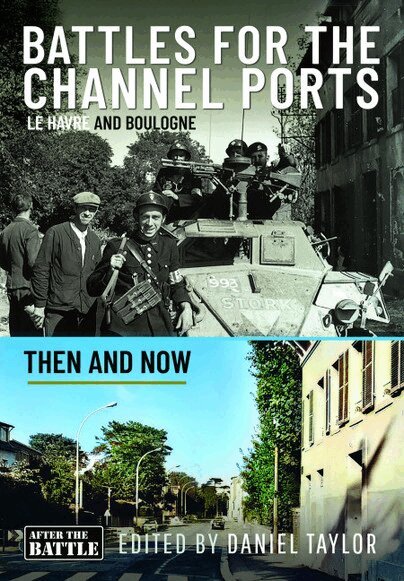
When the Allied armies broke out from the Normandy bridgehead in late July 1944, it became of paramount importance that they quickly capture new harbours to sustain the rapid northward advance. All the Allies supplies and reinforcements were still coming in through just two places the Mulberry artificial harbour at Arromanches and the port of Cherbourg captured by the Americans and with supply lines lengthening by the day, it was essential to speedily open up ports nearer the armies. For Field-Marshal Montgomery s 21st Army Group this meant first of all the channel ports of Le Havre and Boulogne. Both cities had been declared a Festung (Fortress) by Hitler and were to be defended to the last man. The attack on Le Havre (Operation Astonia ) was launched on September 10 and was a classic example of a successful set-piece battle. After the German defences had been softened up by colossal aerial and naval bombardment and artillery shelling, a siege-train of specialised armour broke through the outer crust of the German defensive perimeter and allowed two British infantry divisions the 49th (West Riding) Division and the 51st (Highland) Division to push through the gap and methodically reduce the enemy strongholds before driving into the heart of the city. The attack on Boulogne (Operation Wellhit ) began a week later and was the task of the 3rd Canadian Infantry Division. Another set-piece assault, it was again preceded by a devastating bombardment by RAF heavy bombers, which reduced large parts of the city to ruins, and a massive artillery barrage. Supported by specialised armour, two Canadian brigades then moved forward but the Germans resisted stubbornly and it took six days of heavy fighting before the Canadians had subdued all strongpoints and finally forced the garrison to surrender.Although both ports were now in Allied hands, it brought no immediate alleviation to the Allies logistical problems. Harbour installations had been extensively damaged by German demolitions and Allied bombardments and it would take many weeks of rehabilitation before the ports could be brought into use. Le Havre (which had meanwhile been assigned to the Americans) did not see the few first ships arriving until October 2 and Boulogne not until on October 12.As is our hallmark, all phases of the battles for the two Channel ports are illustrated with Then and Now comparison photographs.The book contains the following two stories from ATB magazine:Issue 139: The Capture of Le HavreAuthor: Karel Margry. 17,441 words, 76 black & white photos.Issue 86: Operation Wellhit The Capture of BoulogneAuthor: Ian Galbraith. 9,099 words,. 80 black & white photos
214 kr
Skickas
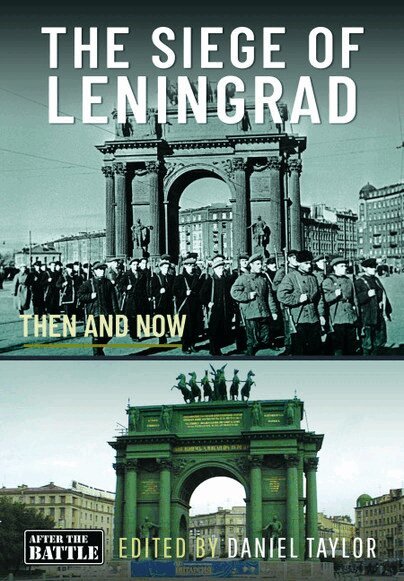
The siege of Leningrad was the longest ever endured by a modern city, and the deadliest siege in recorded history. It lasted for nearly 900 days, from late August 1941 to late January 1944, bringing unparalleled hardship to the population. Out of over three million persons in the city more than one million lost their lives through cold, disease and starvation, bombs and artillery fire. The severe winter of 1941-42 was by far the worst period of the siege, when food reserves ran out, rations dropped to a little over three ounces of bread per person per day and regular supplies of water, fuel, and electricity stopped. Its epic suffering and endurance earned Leningrad the title of Hero City of the Soviet Union .This book is from an article in issue 123 of After the Battle magazine, the joint authors were Karel Margry and Ron Hogg.
266 kr
Skickas
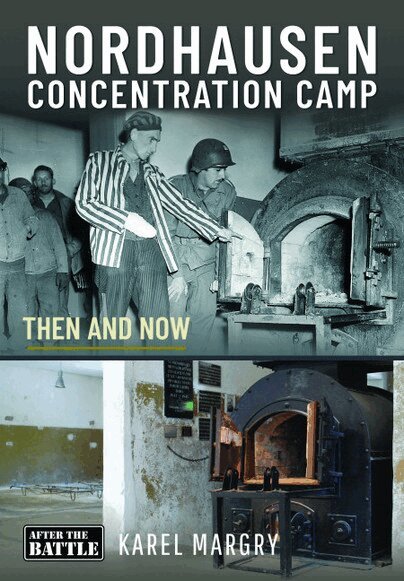
In the history of Nazi concentration camps, and particularly labour camps, there is probably no place that bears the same stigma of wretchedness as 'Dora-Mittelbau' at Nordhausen. Located in the Harz mountains in central Germany, next to a quarry tunnel system in the Kohnstein mountain, it served to house thousands of slave workers for an underground factory known as the Mittelwerk, which produced three of Germany's best-known secret weapons: the V1 flying bomb, the V2 rocket and jet engines for the Me 262 and Ar 234 fighters. With over 20 kilometres of underground galleries, it was the largest underground factory in the world. Many of the inmates died in indescribable misery, being forced to extend the tunnels with meagre equipment and under ghastly conditions, sometimes not seeing daylight for weeks on end. Started in August 1943, Dora-Mittelbau in due course became the centre of a whole complex of underground factories in the Nordhausen area, with several subsidiary camps being set up. In all, of some 60,000 prisoners sent there between 1943 and 1945, 20,000 were driven to extinction to implement Nazi Germany's secret weapons programme, but they laboured late and in vain, for the products they yielded had little impact on the war. The V1 and V2 are the only weapons which cost more lives in production than in deployment: far more people died producing them than were killed from their impact in London, Antwerp and elsewhere.The history of Nordhausen, already gruesome in itself, ended in a crescendo of violence when, in the final weeks of the war, the surviving inmates were evacuated from the camps in death marches . One group of over a thousand men then became victim of one of the most horrendous of all Nazi atrocities. On April 13, 1945, just outside the town of Gardelegen, their SS camp guards, helped by local troops and Hitlerjugend, locked the prisoners in a big barn and set fire to the inside, burning those inside, killing them with hand-grenades, and shooting anyone who tried to escape from the burning, smoke-filled building. A total of 1,016 men died as a result. When discovered by American troops two days later, Gardelegen quickly became known as the site of one most notorious war crimes committed by the Nazis.In this book, Karel Margry recounts the history of Nordhausen concentration camp and of the Gardelegen massacre in full detail. Both stories are illustrated with unique Then and Now comparison photographs.The book contains the following two stories from ATB magazine:Issue 101: NordhausenAuthor: Karel Margry. 18,165 words, 118 black and white photos.Issue 111: The Gardelegen MassacreAuthor: Karel Margry. Text: 16,189 words, 78 black and white photos.Note:After the Battle s account of Nordhausen, when first published in 1998, was considered so accurate and comprehensive that the Nordhausen Camp Memorial asked whether they could translate it into German and use it as one of their brochures. Thus a special German edition of issue 101 appeared under the title Damals und Heute, which has been reprinted several times.
355 kr
Skickas
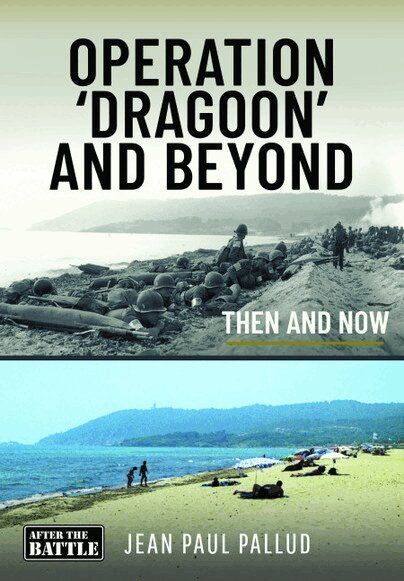
From the Riviera, to the Rhine and on to the Colmar pocket, all three operations are covered in this volume by Jean Paul Pallud, and each show the action and locations in our unique then and now style.The project of a landing operation in southern France was debated between American and British Allies from mid-1943, the Americans favouring the idea, the British expressing doubts on the value of such an operation. The Russians intervened in November when, at the Eureka conference at Teheran Joseph Stalin, the leader of the Soviet state, declared he was much interested in an operation in southern France. President Franklin D. Roosevelt and Prime Minister Winston Churchill agreed to launch Operation Anvil in southern France at the same time as Operation 'Overlord', the Normandy landings.Convinced that the Allied forces in the Mediterranean would better be used in the Italian campaign, Churchill appealed directly to Roosevelt in June to cancel 'Anvil' but Roosevelt answered that he was definitely for 'Anvil'. On July 2, the Combined Chiefs-of-Staff directed General Sir Henry Maitland Wilson, the C-in-C Mediterranean Theatre, to launch Operation 'Dragoon', a three-division assault against the coast of southern France by August 14.Under the shield of a large naval task force the US VI Corps and French forces landed on the beaches of the Riviera on August 15. Opposition from scattered German forces was weak. As the swiftly defeated German forces withdrew to the north through the Rh ne valley, pressed by the leaders of VI Corps, the French captured the ports of Marseille and Toulon, soon bringing them into operation. Troops from Operation 'Dragoon' met with the Allied units from Operation 'Overlord' on September 15. At the same time Headquarters of the US 6th Army Group, under Lieutenant General Jacob L. Devers, became operational taking command of the US Seventh Army and the French 1 re Arm e.The swift campaign soon came to a stop at the Vosges mountains, where Armeegruppe G was able to establish a stable defence line.The leaders of the 6th Army Group reached the Rhine in mid-November but there would be no crossing. Eisenhower ordered Devers to use whatever force necessary to clear the area between the Vosges and the Rhine and to turn the Seventh Army north as quickly as possible, attacking west and east of the Low Vosges.In spite of its uncertain antecedents, the well-planned Operation 'Dragoon' and the forces involved along with German unpreparedness and disarray contributed to a surprisingly rapid success that liberated most of southern France in just four weeks.
318 kr
Skickas
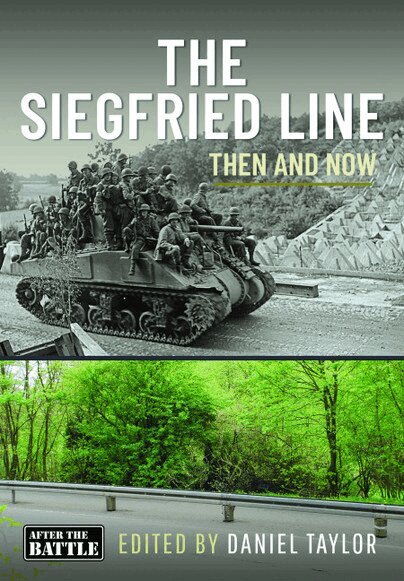
Lead author Karel Margry, with material by Winston Ramsey and Charles P StaceyEditor: Daniel TaylorText: Approx 63,000 words in main account plus 31,000 word in captions.Up to 700 images including maps, photographs and illustrations. Of these, around 120 may be in a colour section making up the concluding section of the book.The book comes in three distinct sections the first is an in-depth analysis of the German 'Westwall' defence system built between 1936 and 1944. This includes the build phases, the organisation of the workforce and the political background. The second section looks at the Allied campaign to overcome the defences of the Siegfried Line through the winter of 1944/45, focussing on three major operations by the US, British and Canadian armies. The third section deals with the perception of the Westwall in the eighty years since the war and then outlines a battlefield tour guide of those elements that still survive.
266 kr
Skickas
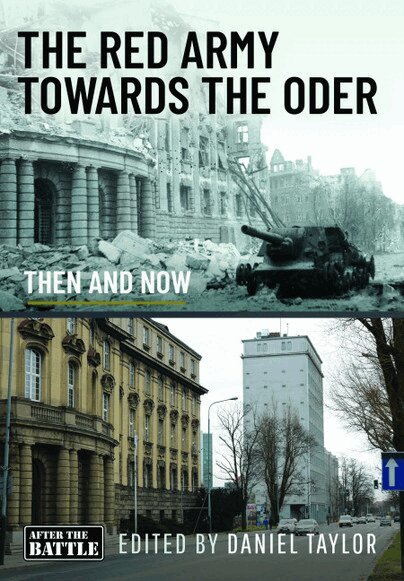
On January 12, 1945, the Soviet Red Army unleashed its winter offensive, launching strong forces on either side of Warsaw, and within a couple of days crushed the German forces defending the line of the river Vistula and began streaming westwards. The Russian Army began a great dash across Poland, leaving behind a few small pockets of enemy resistance and cities proclaimed fortresses by Adolf Hitler. Within a little over two weeks the Soviet forces reached the river Oder and established several bridgeheads on its western bank. The Oder was the last great river crossing barring the way to Berlin, just 60 kilometres away, and the Germans mobilised everything in a desperate effort to defend the river line and prevent a Soviet march on the capital. This book brings together three After the Battle articles by Tomasz Zgoda, documenting the advance on the Oder and the long-draw-out struggles for the bridgeheads over it. It has been re-edited and enhanced by Daniel Taylor and features 152 pages lavishly illustrated with maps, wartime photographs and their modern equivalents.