Thinking Theory - Böcker
Visar alla böcker i serien Thinking Theory. Handla med fri frakt och snabb leverans.
10 produkter
10 produkter
1 352 kr
Skickas inom 10-15 vardagar
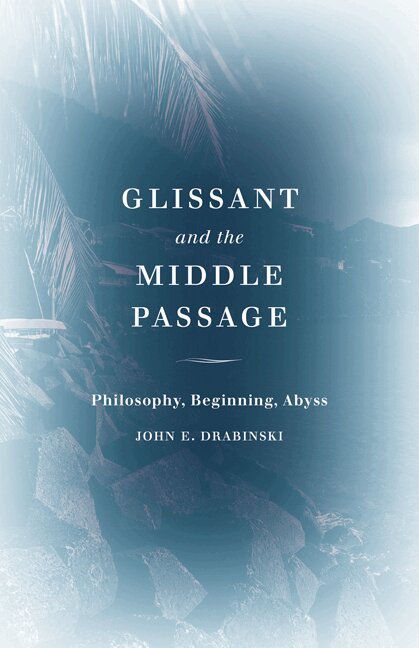
A reevaluation of Édouard Glissant that centers on the catastrophe of the Middle Passage and creates deep, original theories of trauma and Caribbeanness While philosophy has undertaken the work of accounting for Europe’s traumatic history, the field has not shown the same attention to the catastrophe known as the Middle Passage. It is a history that requires its own ideas that emerge organically from the societies that experienced the Middle Passage and its consequences firsthand. Glissant and the Middle Passage offers a new, important approach to this neglected calamity by examining the thought of Édouard Glissant, particularly his development of Caribbeanness as a critical concept rooted in the experience of the slave trade and its aftermath in colonialism.In dialogue with key theorists of catastrophe and trauma-including AimÉ CÉsaire, Frantz Fanon, George Lamming, Gilles Deleuze, FÉlix Guattari, Derek Walcott, as well as key figures in Holocaust studies-Glissant and the Middle Passage hones a sharp sense of the specifically Caribbean varieties of loss, developing them into a transformative philosophical idea. Using the Plantation as a critical concept, John E. Drabinski creolizes notions of rhizome and nomad, examining what kinds of aesthetics grow from these roots and offering reconsiderations of what constitutes intellectual work and cultural production.Glissant and the Middle Passage establishes Glissant’s proper place as a key theorist of ruin, catastrophe, abyss, and memory. Identifying his insistence on memories and histories tied to place as the crucial geography at the heart of his work, this book imparts an innovative new response to the specific historical experiences of the Middle Passage.
332 kr
Skickas inom 10-15 vardagar
A reevaluation of Édouard Glissant that centers on the catastrophe of the Middle Passage and creates deep, original theories of trauma and Caribbeanness While philosophy has undertaken the work of accounting for Europe’s traumatic history, the field has not shown the same attention to the catastrophe known as the Middle Passage. It is a history that requires its own ideas that emerge organically from the societies that experienced the Middle Passage and its consequences firsthand. Glissant and the Middle Passage offers a new, important approach to this neglected calamity by examining the thought of Édouard Glissant, particularly his development of Caribbeanness as a critical concept rooted in the experience of the slave trade and its aftermath in colonialism.In dialogue with key theorists of catastrophe and trauma-including AimÉ CÉsaire, Frantz Fanon, George Lamming, Gilles Deleuze, FÉlix Guattari, Derek Walcott, as well as key figures in Holocaust studies-Glissant and the Middle Passage hones a sharp sense of the specifically Caribbean varieties of loss, developing them into a transformative philosophical idea. Using the Plantation as a critical concept, John E. Drabinski creolizes notions of rhizome and nomad, examining what kinds of aesthetics grow from these roots and offering reconsiderations of what constitutes intellectual work and cultural production.Glissant and the Middle Passage establishes Glissant’s proper place as a key theorist of ruin, catastrophe, abyss, and memory. Identifying his insistence on memories and histories tied to place as the crucial geography at the heart of his work, this book imparts an innovative new response to the specific historical experiences of the Middle Passage.
1 176 kr
Skickas inom 10-15 vardagar
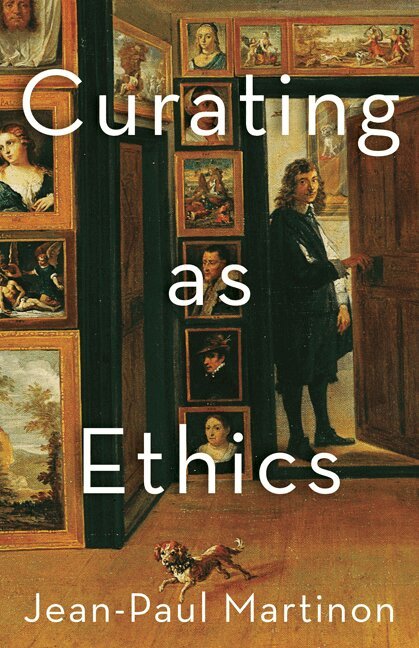
A new ethics for the global practice of curating Today, everyone is a curator. What was once considered a hallowed expertise is now a commonplace and global activity. Can this new worldwide activity be ethical and, if yes, how? This book argues that curating can be more than just selecting, organizing, and presenting information in galleries or online. Curating can also constitute an ethics, one of acquiring, arranging, and distributing an always conjectural knowledge about the world. Curating as Ethics is primarily philosophical in scope, evading normative approaches to ethics in favor of an intuitive ethics that operates at the threshold of thought and action. It explores the work of authors as diverse as Heidegger, Spinoza, Meillassoux, Mudimbe, Chalier, and Kofman. Jean-Paul Martinon begins with the fabric of these ethics: how it stems from matter, how it addresses death, how it apprehends interhuman relationships. In the second part he establishes the ground on which the ethics is based, the things that make up the curatorial-for example, the textual and visual evidence or the digital medium. The final part focuses on the activity of curating as such-sharing, caring, preparing, dispensing, and so on. With its invigorating new approach to curatorial studies, Curating as Ethics moves beyond the field of museum and exhibition studies to provide an ethics for anyone engaged in this highly visible activity, including those using social media as a curatorial endeavor, and shows how philosophy and curating can work together to articulate the world today.
285 kr
Skickas inom 7-10 vardagar
A new ethics for the global practice of curating Today, everyone is a curator. What was once considered a hallowed expertise is now a commonplace and global activity. Can this new worldwide activity be ethical and, if yes, how? This book argues that curating can be more than just selecting, organizing, and presenting information in galleries or online. Curating can also constitute an ethics, one of acquiring, arranging, and distributing an always conjectural knowledge about the world. Curating as Ethics is primarily philosophical in scope, evading normative approaches to ethics in favor of an intuitive ethics that operates at the threshold of thought and action. It explores the work of authors as diverse as Heidegger, Spinoza, Meillassoux, Mudimbe, Chalier, and Kofman. Jean-Paul Martinon begins with the fabric of these ethics: how it stems from matter, how it addresses death, how it apprehends interhuman relationships. In the second part he establishes the ground on which the ethics is based, the things that make up the curatorial-for example, the textual and visual evidence or the digital medium. The final part focuses on the activity of curating as such-sharing, caring, preparing, dispensing, and so on. With its invigorating new approach to curatorial studies, Curating as Ethics moves beyond the field of museum and exhibition studies to provide an ethics for anyone engaged in this highly visible activity, including those using social media as a curatorial endeavor, and shows how philosophy and curating can work together to articulate the world today.
1 067 kr
Skickas inom 7-10 vardagar
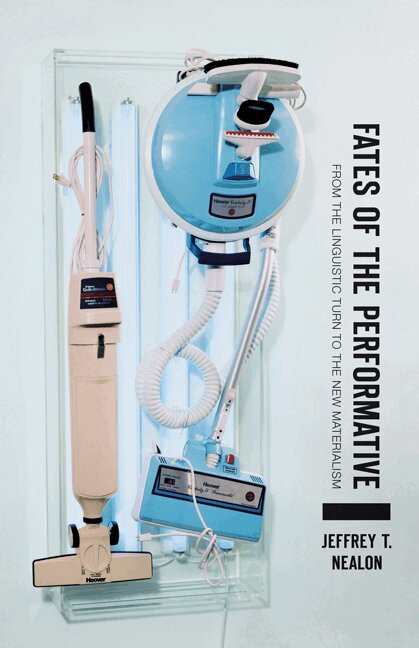
A powerful new examination of the performative that asks “what’s next?” for this well-worn conceptFrom its humble origins in J. L. Austin’s speech-act theory of the 1950s, the performative has grown to permeate wildly diverse scholarly fields, ranging from deconstruction and feminism to legal theory and even theories about the structure of matter. Here Jeffrey T. Nealon discovers how the performative will remain vital in the twenty-first century, arguing that it was never merely concerned with linguistic meaning but rather constitutes an insight into the workings of immaterial force.Fates of the Performative takes a deep dive into this “performative force” to think about the continued power and relevance of this wide-ranging concept. Offering both a history of the performative’s mutations and a diagnosis of its present state, Nealon traces how it has been deployed by key writers in the past sixty years, including foundational thinkers like Jacques Derrida, Eve Kosofsky Sedgewick, and Judith Butler; contemporary theorists such as Thomas Piketty and Antonio Negri; and the “conceptual poetry” of Kenneth Goldsmith.Ultimately, Nealon’s inquiry is animated by one powerful question: what’s living and what’s dead in performative theory? In deconstructing the reaction against the performative in current humanist thought, Fates of the Performative opens up important conversations about systems theory, animal studies, object-oriented ontology, and the digital humanities. Nealon’s stirring appeal makes a necessary declaration of the performative’s continued power and relevance at a time of neoliberal ascendancy.
259 kr
Skickas inom 7-10 vardagar
A powerful new examination of the performative that asks “what’s next?” for this well-worn conceptFrom its humble origins in J. L. Austin’s speech-act theory of the 1950s, the performative has grown to permeate wildly diverse scholarly fields, ranging from deconstruction and feminism to legal theory and even theories about the structure of matter. Here Jeffrey T. Nealon discovers how the performative will remain vital in the twenty-first century, arguing that it was never merely concerned with linguistic meaning but rather constitutes an insight into the workings of immaterial force.Fates of the Performative takes a deep dive into this “performative force” to think about the continued power and relevance of this wide-ranging concept. Offering both a history of the performative’s mutations and a diagnosis of its present state, Nealon traces how it has been deployed by key writers in the past sixty years, including foundational thinkers like Jacques Derrida, Eve Kosofsky Sedgewick, and Judith Butler; contemporary theorists such as Thomas Piketty and Antonio Negri; and the “conceptual poetry” of Kenneth Goldsmith.Ultimately, Nealon’s inquiry is animated by one powerful question: what’s living and what’s dead in performative theory? In deconstructing the reaction against the performative in current humanist thought, Fates of the Performative opens up important conversations about systems theory, animal studies, object-oriented ontology, and the digital humanities. Nealon’s stirring appeal makes a necessary declaration of the performative’s continued power and relevance at a time of neoliberal ascendancy.
1 082 kr
Skickas inom 10-15 vardagar
An intensely personal, and philosophical, account of why white America’s racial unconscious is not so unconsciousAn Essay for Ezra is a critique of terror that begins but by no means ends with the presidency of Donald J. Trump. A father addresses his son and a boy shares his observations in a dynamic dialogistic exchange that is a commentary of and for its time, taking the measure of racial terror and of white supremacy both in our moment and as a historical phenomenon.Framed through the experiences of the author’s biracial son, An Essay for Ezra is intensely personal while also powerfully universal. Drawing on the social and political thought of James Baldwin and Martin Luther King, Grant Farred examines the temptation and the perils of essentialism and the need to discriminate-to engage the black mind as much as the black body. With that dialectic as his starting point, Farred engages the ideas of Jameson, Barthes, Derrida, Adorno, Kant, and other thinkers to derive an ethics of being in our time of social peril. His antiessentialist racial analysis is salient, especially when he deploys Dave Chappelle as a counterpoint to Baldwin-and Chappelle’s brilliant comic philosophic voice jabs at both racial and gender identity.Standing apart for its willingness to explore terror in all its ambivalence, this theoretical reflection on racism, knowledge, ethics, and being in our neofascist present brings to bear the full weight of philosophical inquiry and popular cultural critique on black life in the United States.
199 kr
Skickas
An intensely personal, and philosophical, account of why white America’s racial unconscious is not so unconsciousAn Essay for Ezra is a critique of terror that begins but by no means ends with the presidency of Donald J. Trump. A father addresses his son and a boy shares his observations in a dynamic dialogistic exchange that is a commentary of and for its time, taking the measure of racial terror and of white supremacy both in our moment and as a historical phenomenon.Framed through the experiences of the author’s biracial son, An Essay for Ezra is intensely personal while also powerfully universal. Drawing on the social and political thought of James Baldwin and Martin Luther King, Grant Farred examines the temptation and the perils of essentialism and the need to discriminate-to engage the black mind as much as the black body. With that dialectic as his starting point, Farred engages the ideas of Jameson, Barthes, Derrida, Adorno, Kant, and other thinkers to derive an ethics of being in our time of social peril. His antiessentialist racial analysis is salient, especially when he deploys Dave Chappelle as a counterpoint to Baldwin-and Chappelle’s brilliant comic philosophic voice jabs at both racial and gender identity.Standing apart for its willingness to explore terror in all its ambivalence, this theoretical reflection on racism, knowledge, ethics, and being in our neofascist present brings to bear the full weight of philosophical inquiry and popular cultural critique on black life in the United States.
1 244 kr
Skickas inom 10-15 vardagar
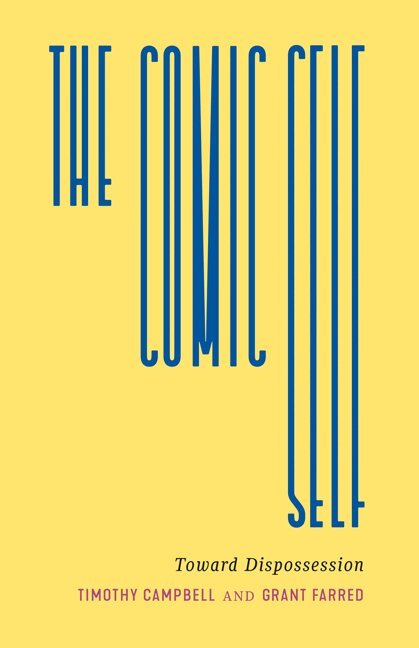
A provocative and unconventional call to dispossess the self of itself Challenging the contemporary notion of “self-care” and the Western mania for “self-possession,” The Comic Self deploys philosophical discourse and literary expression to propose an alternate and less toxic model for human aspiration: a comic self. Timothy Campbell and Grant Farred argue that the problem with the “care of the self,” from Foucault onward, is that it reinforces identity, strengthening the relation between I and mine. This assertion of self-possession raises a question vital for understanding how we are to live with each other and ourselves: How can you care for something that is truly not yours?The answer lies in the unrepresentable comic self. Campbell and Farred range across philosophy, literature, and contemporary comedy-engaging with Socrates, Burke, Hume, Hegel, Marx, Nietzsche, Heidegger, Derrida, Deleuze, and Levinas; Shakespeare, Cervantes, Woolf, Kafka, and Pasolini; and Stephen Colbert, David Chappelle, and the cast of Saturday Night Live. They uncover spaces where the dispossession of self and, with it, the dismantling of the regime of self-care are possible. Arguing that the comic self always keeps a precarious closeness to the tragic self, while opposing the machinations of capital endemic to the logic of self-possession, they provide a powerful and provocative antidote to the tragic self that so dominates the tenor of our times.
297 kr
Skickas inom 7-10 vardagar
A provocative and unconventional call to dispossess the self of itself Challenging the contemporary notion of “self-care” and the Western mania for “self-possession,” The Comic Self deploys philosophical discourse and literary expression to propose an alternate and less toxic model for human aspiration: a comic self. Timothy Campbell and Grant Farred argue that the problem with the “care of the self,” from Foucault onward, is that it reinforces identity, strengthening the relation between I and mine. This assertion of self-possession raises a question vital for understanding how we are to live with each other and ourselves: How can you care for something that is truly not yours?The answer lies in the unrepresentable comic self. Campbell and Farred range across philosophy, literature, and contemporary comedy-engaging with Socrates, Burke, Hume, Hegel, Marx, Nietzsche, Heidegger, Derrida, Deleuze, and Levinas; Shakespeare, Cervantes, Woolf, Kafka, and Pasolini; and Stephen Colbert, David Chappelle, and the cast of Saturday Night Live. They uncover spaces where the dispossession of self and, with it, the dismantling of the regime of self-care are possible. Arguing that the comic self always keeps a precarious closeness to the tragic self, while opposing the machinations of capital endemic to the logic of self-possession, they provide a powerful and provocative antidote to the tragic self that so dominates the tenor of our times.