Topics in Developmental Psychobiology - Böcker
Visar alla böcker i serien Topics in Developmental Psychobiology. Handla med fri frakt och snabb leverans.
5 produkter
5 produkter
1 540 kr
Skickas inom 10-15 vardagar
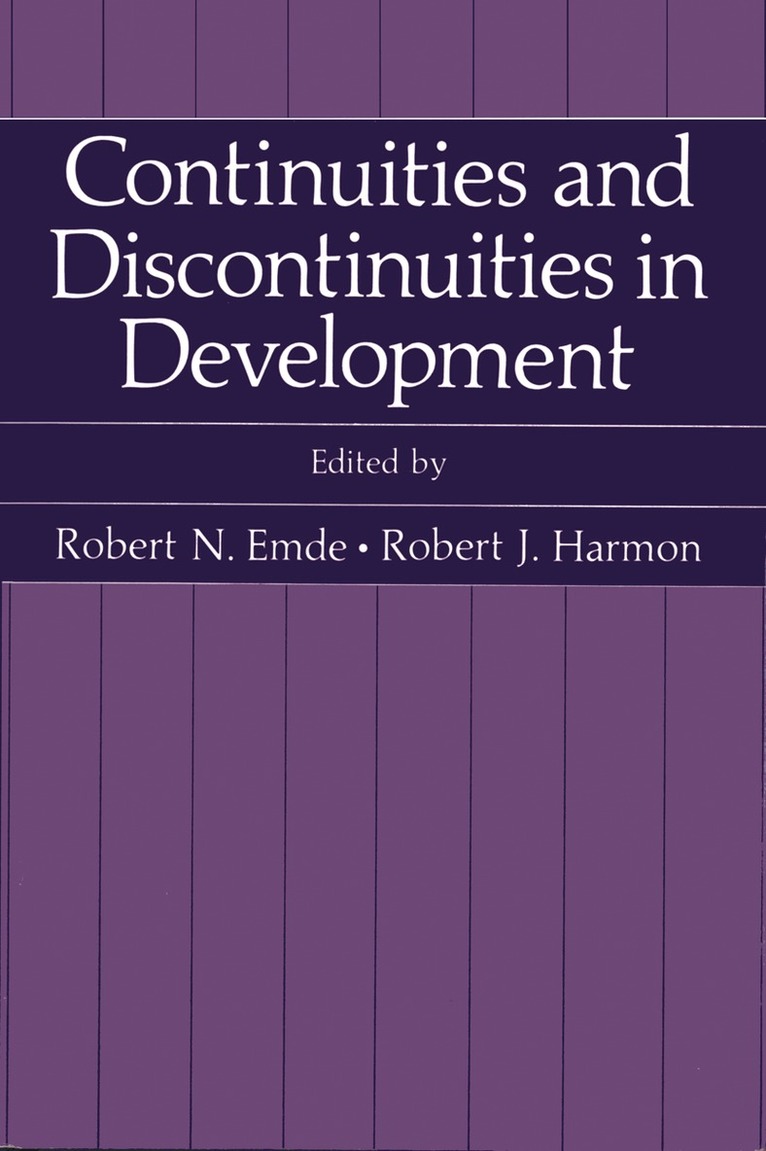
"Continuities and Discontinuities in Development" was the theme for the Second Biennial DPRG Retreat, a three-day meeting held at Estes Park, Colorado, in June 1982. The meeting was sponsored by the Devel opmental Psychobiology Research Group (DPRG) of the Department of Psychiatry at the University of Colorado School of Medicine. The DPRG is a group of individuals conducting research in many areas of develop ment who meet on a regular basis to present and discuss their work and receive feedback and encouragement. In 1974, this group was awarded an endowment fund by the Grant Foundation, the aims of which were to facilitate the research of young investigators, to encourage new re search, and to provide seed money for collaborative ventures. Much of the work reported in this volume and in the earlier volume from the First DPRG Retreat is the result of that support. In addition to the work of the members of the DPRG, a select group of guests was invited to participate in the meeting and contribute to this volume. The chapters by William Greenough, Jerome Kagan, and Michael Rutter result from the participation of these scholars at the retreat. We would like to acknowledge the support of a number of indi viduals who have been instrumental in supporting the DPRG as a whole, as well as those who contributed directly to the Second Biennial Retreat and to the volume.
1 632 kr
Skickas inom 10-15 vardagar
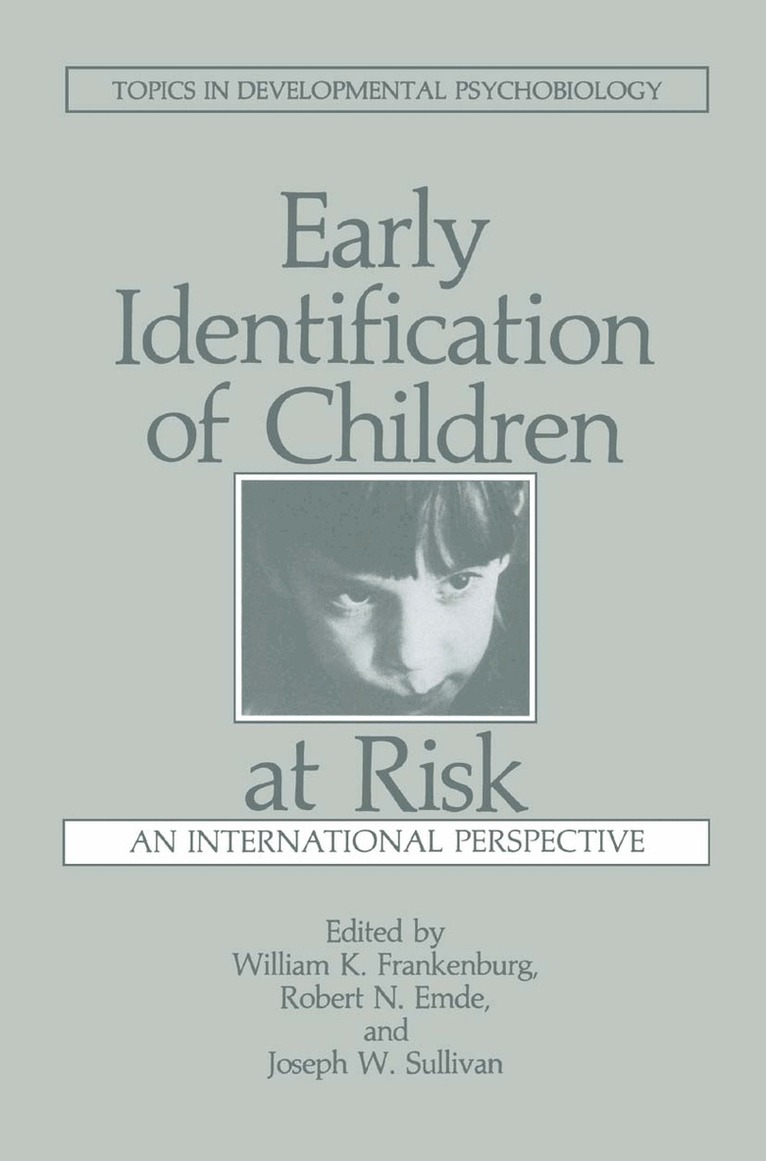
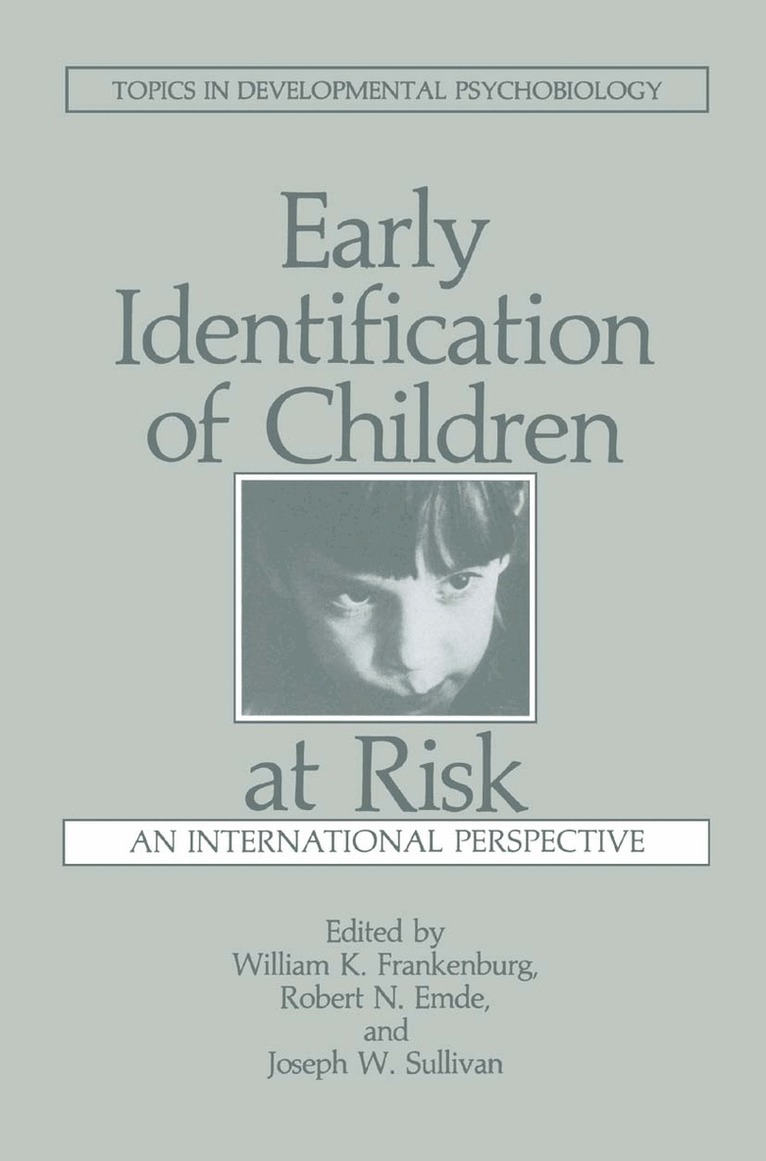
This volume contains contributions that are interdisciplinary and inter national. The editors believe this is an especially timely and promising enterprise, for both sources of diversity are needed for improving our abilities to identify the young child at risk and to prevent disability. In terms of diSciplines, the volume brings together papers by health care providers (such as pediatricians and public health nurses) as well as educators and psychologists. Each of these groups works in dissimilar settings and faces dissimilar problems: Health care providers seek sim ple identification procedures for use in busy primary care settings; psy chologists emphasize well-constructed research designs; and educators reflect the need for early identification and education. Each of these spe cialist groups has something to offer the other, but too often each tends to limit its publications and readings to its own discipline, thus failing to capitalize on a wider scope. of knowledge and practice. We hope that this selection of papers will allow all readers addressing the early iden tification of children at risk to generate a more integrated interdiscipli nary perspective. We also hope this volume reflects the sense of excitement that we feel from a sharing of international perspectives. There is no single ap proach to the early identification of children at risk that is universally applicable to all countries. In addition, approaches within each country vary because of availability of financial and human resources and dif fering expectations of local communities.
1 585 kr
Skickas inom 10-15 vardagar
"Continuities and Discontinuities in Development" was the theme for the Second Biennial DPRG Retreat, a three-day meeting held at Estes Park, Colorado, in June 1982. The meeting was sponsored by the Devel opmental Psychobiology Research Group (DPRG) of the Department of Psychiatry at the University of Colorado School of Medicine. The DPRG is a group of individuals conducting research in many areas of develop ment who meet on a regular basis to present and discuss their work and receive feedback and encouragement. In 1974, this group was awarded an endowment fund by the Grant Foundation, the aims of which were to facilitate the research of young investigators, to encourage new re search, and to provide seed money for collaborative ventures. Much of the work reported in this volume and in the earlier volume from the First DPRG Retreat is the result of that support. In addition to the work of the members of the DPRG, a select group of guests was invited to participate in the meeting and contribute to this volume. The chapters by William Greenough, Jerome Kagan, and Michael Rutter result from the participation of these scholars at the retreat. We would like to acknowledge the support of a number of indi viduals who have been instrumental in supporting the DPRG as a whole, as well as those who contributed directly to the Second Biennial Retreat and to the volume.
518 kr
Skickas inom 10-15 vardagar
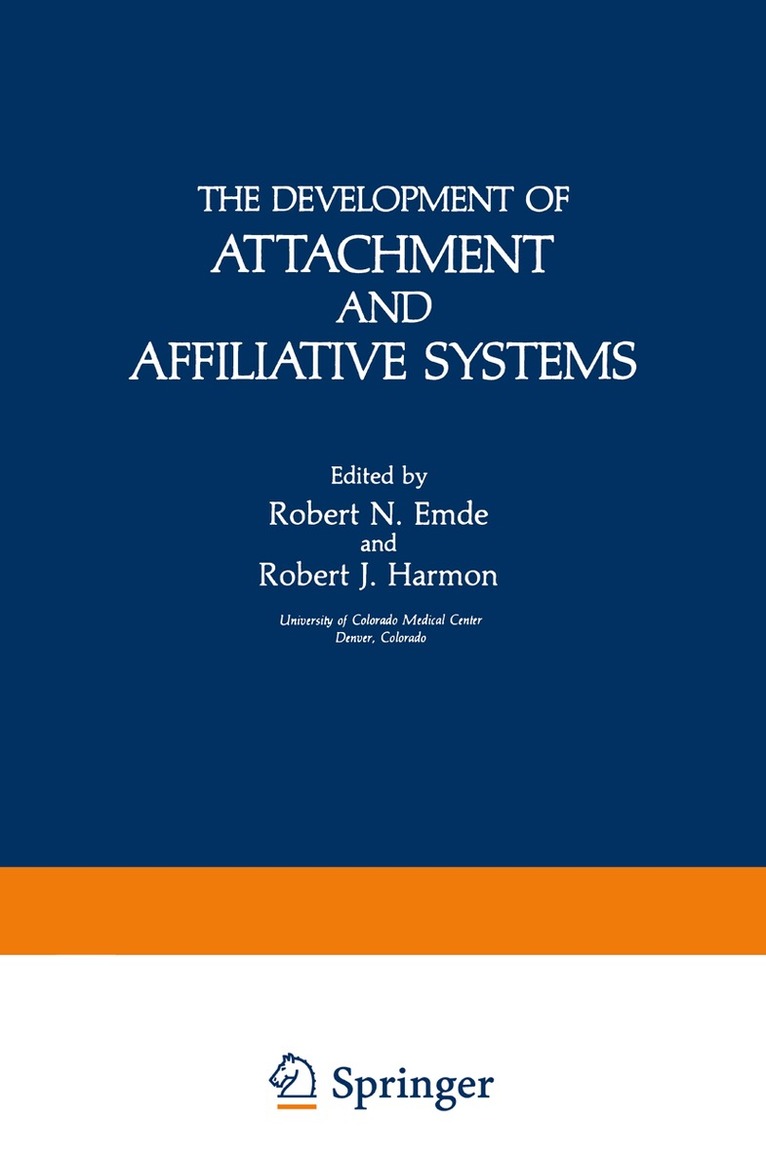
The "Development of Attachment and Affiliative Systems" was selected as the topic for a three-day workshop held at Estes Park, Colorado, in May, 1980. The papers which resulted from this effort not only reflect a recent intensity of research in this area, but also highlight a mounting need for ask ing questions across disciplines and for integrating theories. The sponsor of the workshop was the Developmental Psychobiology Research Group (DPRG) of the Department of Psychiatry, University of Colorado Medical School, a group which itself is interdisciplinary and which has met regularly since 1969 to criticize research, ask questions, and discuss findings. In 1974, the Group was awarded an endowment fund by the Grant Foundation after a request for a proposal initiated by Philip Sapir and Douglas Bond. The aims of this fund are to facilitate the research of young investigators, to encourage new research, and to provide seed money for collaborative ventures. Much of what is reported here results from that support. Thus, happily, not only are the contributions timely by virtue of converging on an important topic, but they also commemorate more than five years of Grant Foundation support. Once the topic was chosen, a small number of guests were invited to participate. The papers of Timiras, Sackett, Konner, and Lamb represent dif fering perspectives from neurobiology, primatology, cultural anthropology, and social psychology.
1 632 kr
Skickas inom 10-15 vardagar
This volume contains contributions that are interdisciplinary and inter national. The editors believe this is an especially timely and promising enterprise, for both sources of diversity are needed for improving our abilities to identify the young child at risk and to prevent disability. In terms of diSciplines, the volume brings together papers by health care providers (such as pediatricians and public health nurses) as well as educators and psychologists. Each of these groups works in dissimilar settings and faces dissimilar problems: Health care providers seek sim ple identification procedures for use in busy primary care settings; psy chologists emphasize well-constructed research designs; and educators reflect the need for early identification and education. Each of these spe cialist groups has something to offer the other, but too often each tends to limit its publications and readings to its own discipline, thus failing to capitalize on a wider scope. of knowledge and practice. We hope that this selection of papers will allow all readers addressing the early iden tification of children at risk to generate a more integrated interdiscipli nary perspective. We also hope this volume reflects the sense of excitement that we feel from a sharing of international perspectives. There is no single ap proach to the early identification of children at risk that is universally applicable to all countries. In addition, approaches within each country vary because of availability of financial and human resources and dif fering expectations of local communities.