Topics in Gastroenterology - Böcker
Visar alla böcker i serien Topics in Gastroenterology. Handla med fri frakt och snabb leverans.
9 produkter
9 produkter
550 kr
Skickas inom 10-15 vardagar
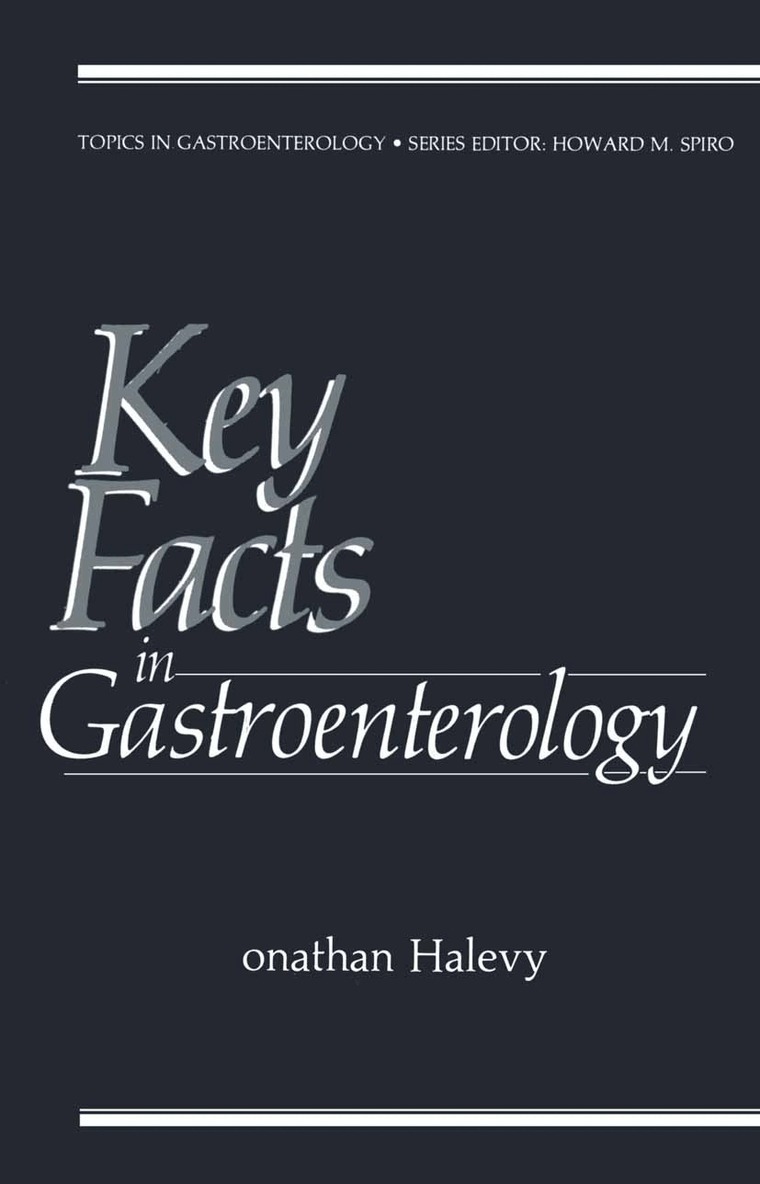
This book is an extraordinary achievement by Jonathan Halevy. To condense the material of three major gastrointestinal textbooks would be triumph enough, but to add a distillate of the contents of ten journals, from 1980 to 1985, requires Herculean vigor. To reorganize all the material under headings which extract concise "facts" from wheat and chaff requires a passionate interest in pa tients together with an understanding of physiology. Fortunately, Jonathan Halevy has just the right combination of clinical and lab oratory interest for him to select the details of what is important. Such compulsive dedication has now made it possible for the prac ticing phYSician, gastroenterologist, or house officer, interested in preparing for board examinations or simply browsing in the field, to have at his fingertips a series of definitions and to put in his pocket the key facts for diagnosis and therapy. Of course, facts by themselves are something of which to be a little wary. Scientists first, doctors regard facts the way farmers look at sheep-to be sheared for their utility. Medicine too often is only a fact-gathering occupation (some lectures send me to wool gathering), in which having the facts sometimes clouds clinical judgment about what is important for the individual patient. - vii viii FOREWORD tionalism and romanticism lie at the two poles of medical practice, but rationalism rules in the 1980s.
876 kr
Skickas inom 10-15 vardagar
550 kr
Skickas inom 10-15 vardagar
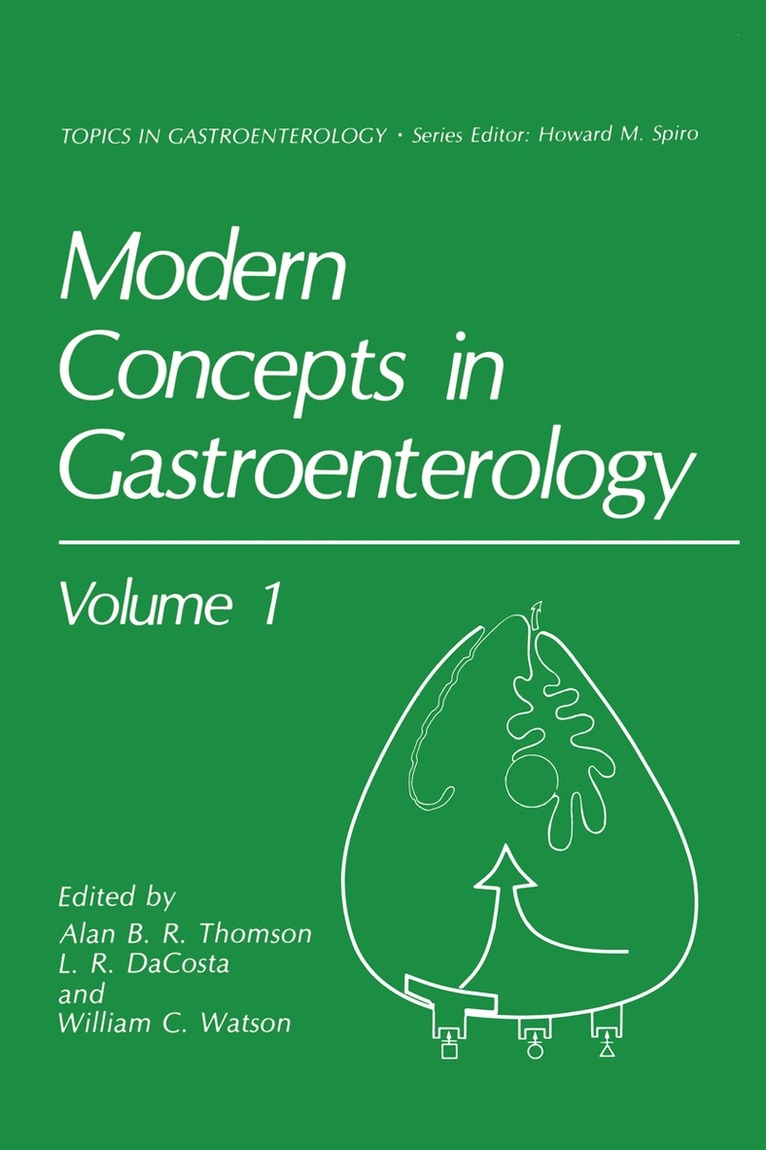
A fine team of state-of-the-art researcher/clinicians who know their fields, have contributed to the advancement of knowledge, and are in a position to judge what is truly important have here pooled their thoughts in a series of chapters on the cutting edges of gastroenterology. Four attributes render this volume superior to other update-oriented publications. The first striking feature, which is immediately evident upon scanning the table of contents, is the imaginative choice of subjects, ranging from trav eler's diarrhea and sexually transmitted GI infections through TPN and interventional endoscopy to geriatrics and iatrogenic disease. A second outstanding feature of this volume is its success in balanc ing basic pathophysiology with practical considerations of clinical man agement. This is achieved in the discussions of such diverse topics as acid-peptic diseases, infectious and other diarrheal syndromes, and hep atitis immunization. Throughout the book we are led smoothly from basic science principles to specific recommendations for diagnosis and therapy. This practical emphasis appears repeatedly and sometimes pro duces a delightful surprise, such as a chapter on radiology that is not tech nology-based but instead problem-oriented.
550 kr
Skickas inom 10-15 vardagar
Presenting patient- and problem-oriented review articles, this series is designed to keep the internist, general surgeon, and specialist in gastroenterology and hepatology abreast of the latest advances in the field.
1 094 kr
Skickas inom 10-15 vardagar
Dietary therapy has always been important to medical practice even if it has more often been sacramental than physiological in effect. "You are what you eat" meant a lot to primitive tribes whose new leader had to eat part of his predecessor, and giving diets brought out the priest in the physician even if he or she had heard that "nothing that enters into a man defiles a man. " What people eat began to take on new meaning, however, a generation ago when Schoenheimer and others made clear that body fat and muscle protein were not the sluggish unchanging masses they had appeared but instead were store houses of energy and material influenced by food, activity, and metabolic pro cesses. Fiber, or residue as it was then still called, however, seemed unimpor tant; even the gastroenterologist concerned with keeping the bowels open by three cooked fruits, three cooked vegetables, and twelve glasses of water each day sometimes felt like a shaman if his cure for constipation worked. Nobody any longer read Arbuthnot Lane's charming Victorian book, The Way Out, which placed the blame for most human ailments on constipation; Lane even removed the bowel to cure the costive ills. Burkitt revived a scientific interest in fiber and the possible connection between diet. constipation, and many physical disorders by observing the vol ume and frequency of stools on an African diet and on an English diet.
1 094 kr
Skickas inom 10-15 vardagar
A physician with a broad consultative practice, Dr. Floch combines his clinical experience with a zeal for exploring what has been written by others. Chief of Medicine at the Norwalk Hospital for the past decade and still an active consult ing gastroenterologist, Dr. Floch has given us a volume which every clinician dealing with digestive disorders will want to have at his or her desk. Not everyone will agree with all that Dr. Floch has prescribed in the way of detailed dietary help for the common afflictions of mankind's gut, but in this book the reader can get at the background of the controversy. All clinicians have had problems in assessing when to use elemental diets, how to apply advances in peripheral and intravenous alimentation, and in many other matters which are discussed in detail in this fine volume. Dr. Floch displays what is available in dietary therapy, evaluates the nutritional inadequacies surrounding most diges tive disturbances, and calmly evaluates competing claims. He gives a brief overview of gastrointestinal physiology pertaining to an understanding of nutri tional complications as well as the genesis of the major gastrointestinal dis orders. In this sense his book can be read as a mini-physiological text. I am delighted to have this book in our gastrointestinal series and I hope that the reader will profit from it as much as I have.
550 kr
Skickas inom 10-15 vardagar
In their second year in medical school, students begin to learn about the differences between "disease" and "illness." In their studies of pathology they learn to understand disease as pertubations of molecular biological events. And we clinicians can show disease to them by our scans, lay it out even on our genetic scrolls, and sometimes even point out the errant nucleotide. Disease satisfies them and us; at Yale, lectures on the gastrointestinal tract run from achalasia to proctitis. There is, alas, little mention of functional bowel disease or of the irritable or spastic colon, for that is not easy to show on hard copy. Functional bowel disease represents "illness," the response of the person to distress, to food, to the environment, and to the existential problems of living. In real life such matters are most important. Richard Cabot first found out at the Massachusetts General Hospital almost a century ago that 50% of the patients attending the outpatient clinic had "functional" complaints. The figure had grown to over 80% when the very same question was reexamined 60 years later.
1 094 kr
Skickas inom 10-15 vardagar
The functional and organic alterations of the colon constitute one of the leading reasons why patients consult gastroenterologists. The irritable colon is one of the most com mon causes of discomfort in human beings. The organic pathology of the large bowel (malignancy and chronic inflammatory disease) contributes, particularly among Occi dental peoples, to discouragingly high levels of morbidity and mortality. One realizes the importance of having a thorough physiologic knowledge of the colon in order to scientifically plan the functional treatment of organic colonic dis eases. If we consider the large amount of material published on the physiology of the esophagus, stomach, small bowel, pancreas, and liver, we realize that the colon has been relatively neglected. The chapters in this book have been written by people who have done their utmost to alter this imbalance. I want to thank all the contributors for their generous collaboration that allows me to present in one volume virtually all the information known about the structure and function of the colon, and to record my deep graditude to Dr. Howard Spiro for his willingness to include this volume in his series. I would also like to express my sincere appreciation to Plenum Publishing Corporation for making this book possible. A spe cial thanks goes to Dr.
534 kr
Skickas inom 10-15 vardagar
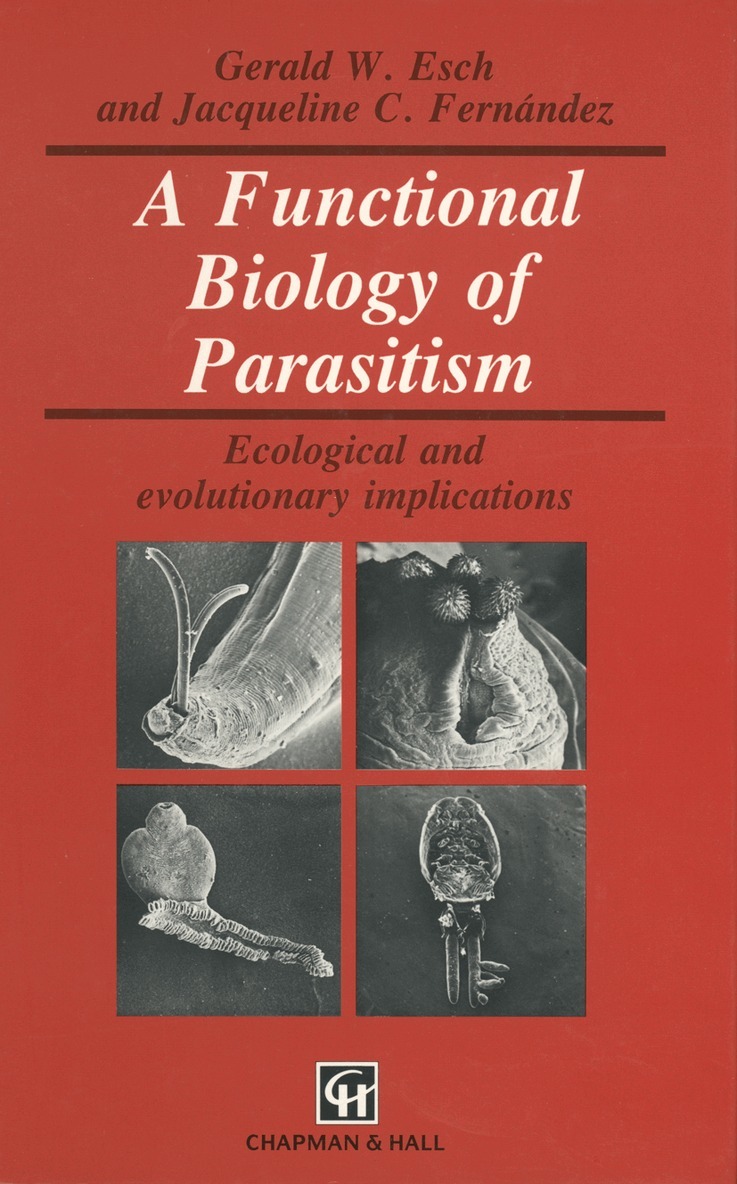
Series Editor: Peter Calow, Department of Zoology, University of Sheffield, England The main aim of this series will be to illustrate and to explain the way organisms 'make a living' in nature. At the heart of this - their functional biology - is the way organisms acquire and then make use of resources in metabolism, movement, growth, reproduction, and so on. These processes will form the fundamental framework of all the books in the series. Each book will concentrate on a particular taxon (species, family, class or even phylum) and will bring together information on the form, physiology, ecology and evolutionary biology of the group. The aim will be not only to describe how organisms work, but also to consider why they have come to work in that way. By concentration on taxa which are well known, it is hoped that the series will not only illustrate the success of selection, but also show the constraints imposed upon it by the physiological, morphological and developmental limitations of the groups. Another important feature of the series will be its organismic orientation. Each book will emphasize the importance of functional integration in the day to-day lives and the evolution of organisms. This is crucial since, though it may be true that organisms can be considered as collections of gene determined traits, they nevertheless interact with their environment as integrated wholes and it is in this context that individual traits have been subjected to natural selection and have evolved.