Topics in Inclusion Science - Böcker
Visar alla böcker i serien Topics in Inclusion Science. Handla med fri frakt och snabb leverans.
11 produkter
11 produkter
1 593 kr
Skickas inom 10-15 vardagar
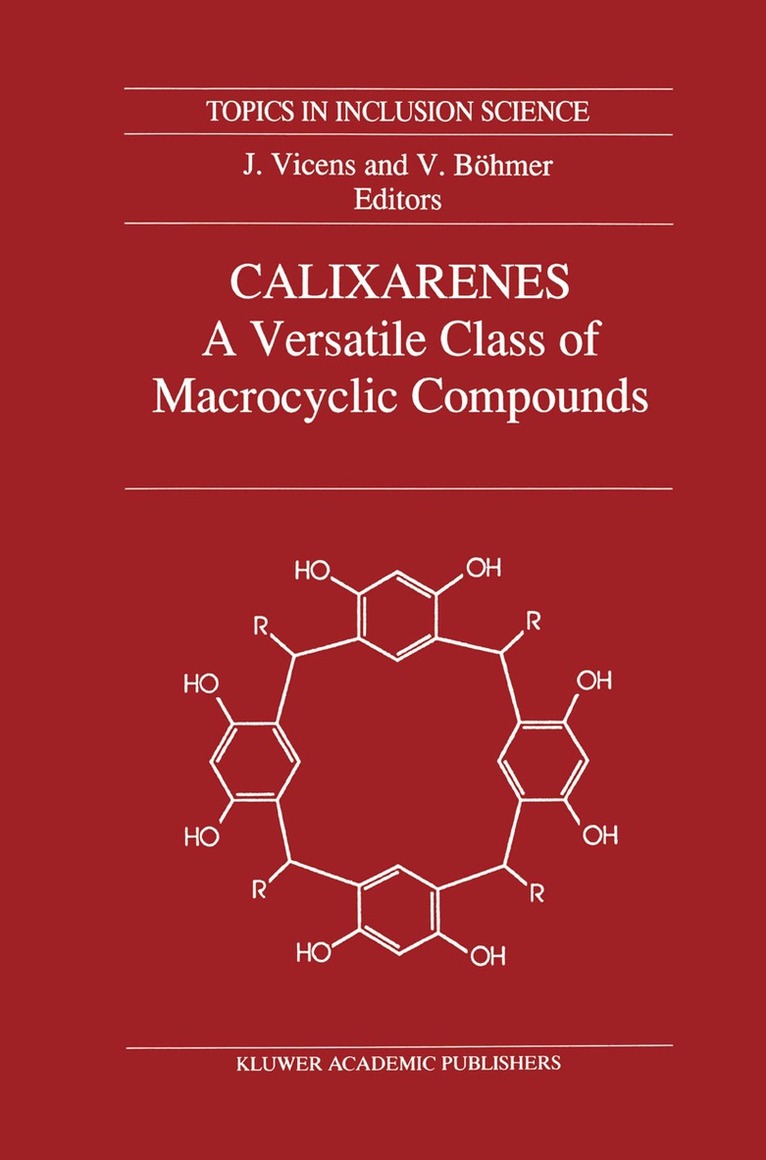
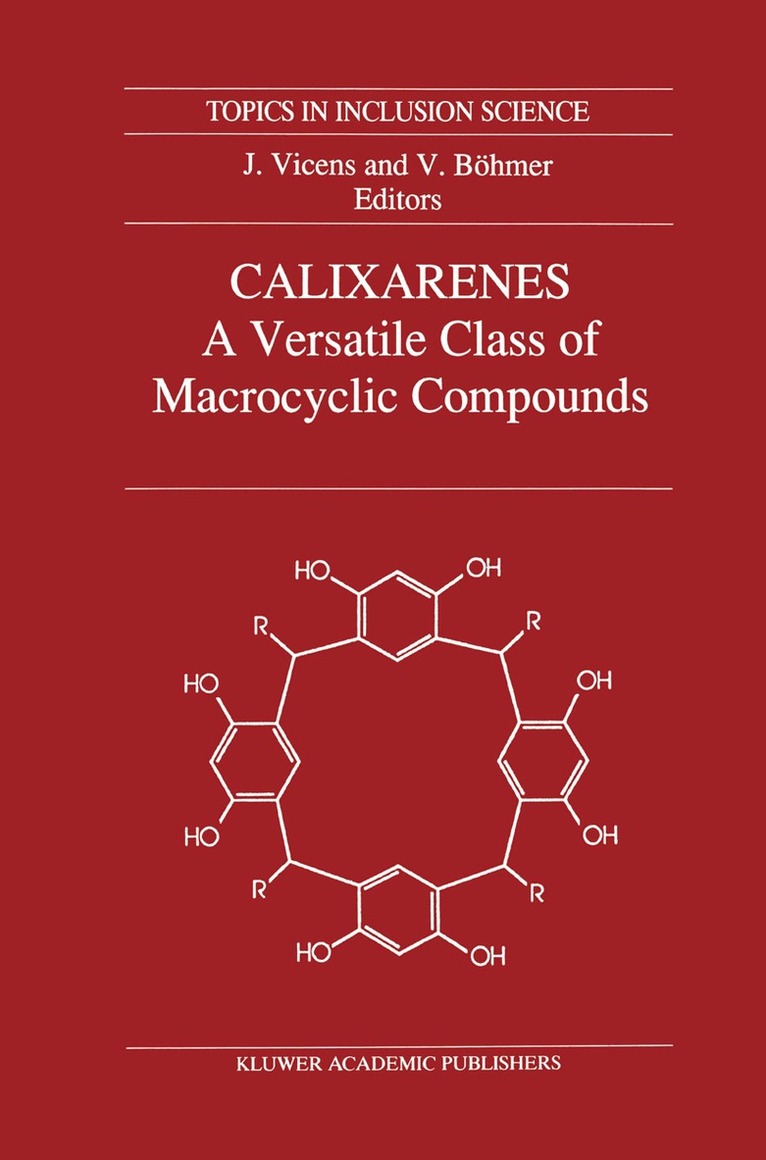
The tenn "calixarenes", introduced in 1978 by D. Gutsche to describe the cyclic oligomers produced by condensation of p-substituted phenols with fonnaldehyde, is now universally accepted in the chemical community. The condensation of phenol with fonnaldehyde was studied in the last century by A. von Baeyer. Early in this century, L. Baekeland produced the first entirely synthetic polymers from phenol-fonnaldehyde condensates and the possibility that cyclic condensation products could be obtained from t-butylphenol, and fonnaldehyde was mentioned as early as in the beginning of the 1940's by A. Zinke. Despite their long history, the realisation that calixarenes may have very significant applications and uses in supramolecular chemistry is a relatively recent phenomenon. Calixarene chemistry, in contrast to their discovery, started slowly in the 1970's but rapidly gained momentum throughout the 1980's. Following C. Pedersens discovery of the crown ethers and the seminal developments of J. -M. Lehn and D.Cram with cryptands and spherands - all three honoured with the 1987 Nobel Chemistry Prize - the time was right for a surge of interest in research areas, frequently referred to as host-guest chemistry, receptor or supramolecular chemistry, and including important comparisons with biological processes and the development of new advanced materials. Now, the cyclic, bowl or basket-shaped calixarene molecules were looked on in a different light. Rather than "having developed from harmful by-products of phenoplasts manufacture" they were now seen as potentially valuable macrocyclic receptor molecules.
1 593 kr
Skickas inom 10-15 vardagar
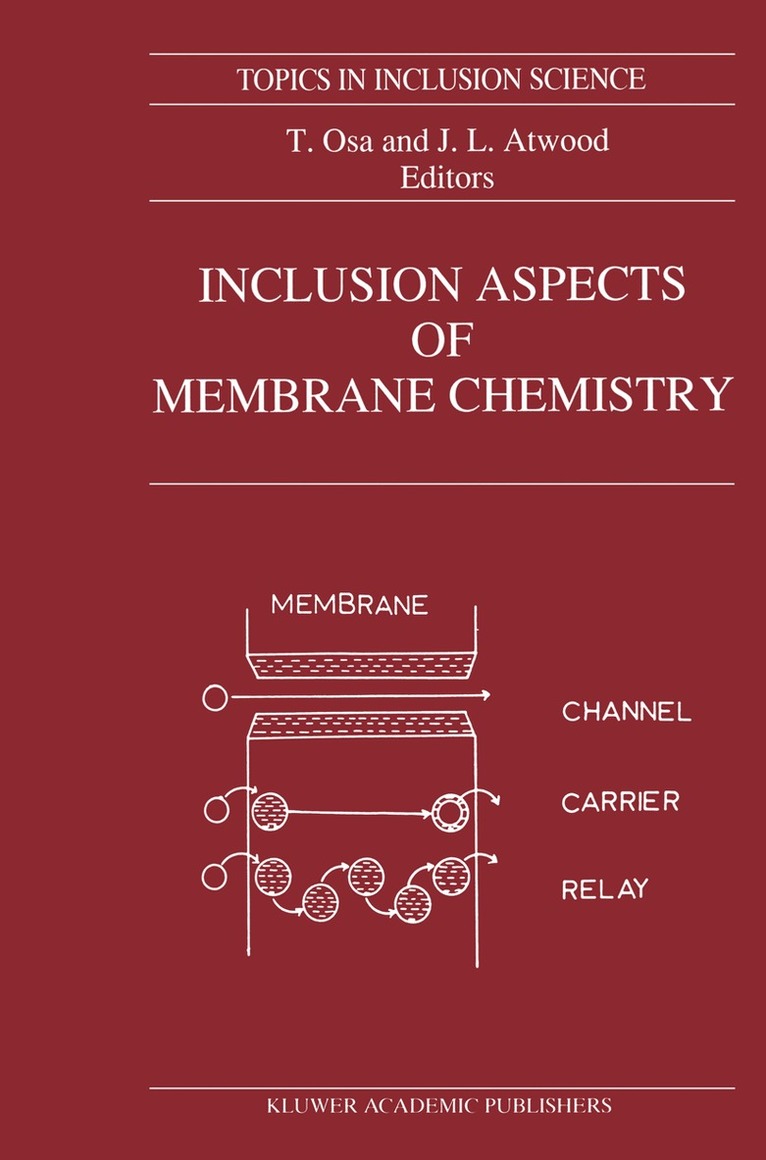
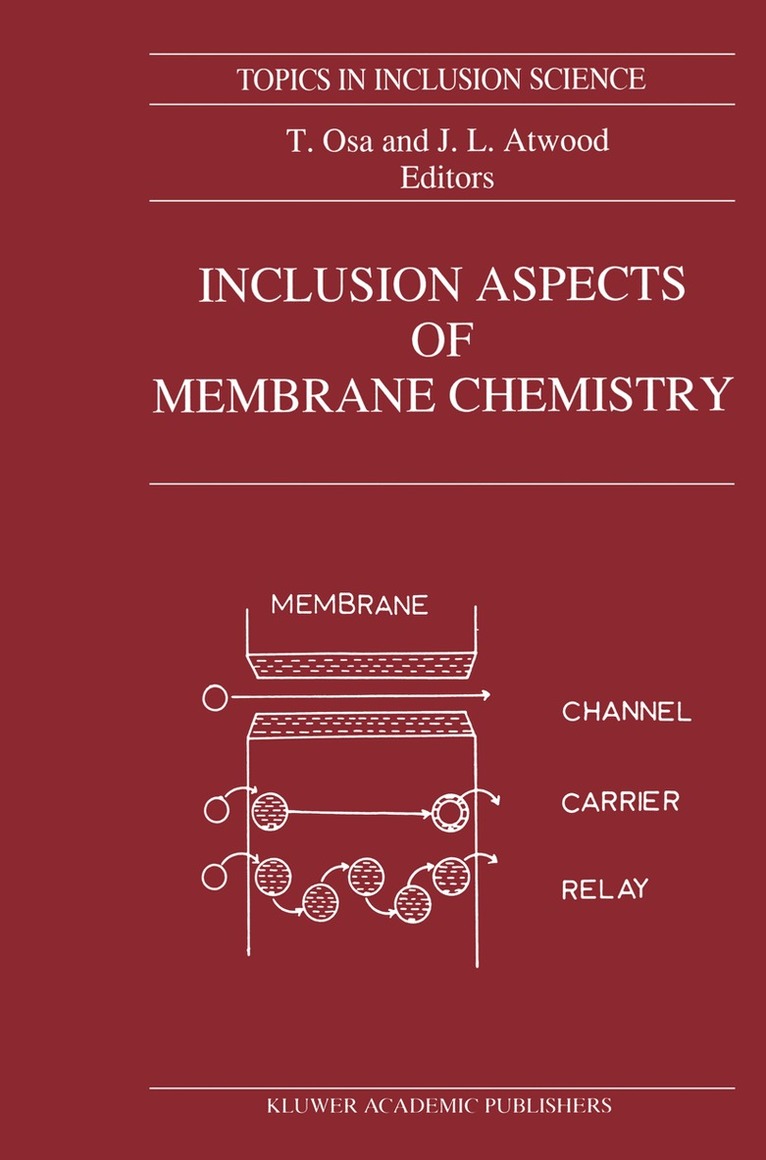
There is no doubt that the field of artificial membrane transport using synthetic ionophores has advanced remarkably in the past 15 years due primarily to the synthesis of new ionophores. Even though the theoretical framework substantially predated this activity, the merging of theory with transport experiment has often been sketchy. The purpose of this outline has been to examine key examples to illustrate the underlying principles and to suggest how experimental variables dominate the results obtained. To a very good approximation the assumption of a "diffusion" regime is often justified, is easily confirmed experimentally and provides a clear framework for exploitation of the inherent selectivity of a given ionophore. Thus for synthetic chemists who wish a "quick and nasty" experiment to examine the question of selectivity, the recipe is clear: a mixture containing all ions of interest in a standard experiment for each ligand of interest using a moderately stirred (100-200 rpm) cell and analysis of the mixture produced on the OUT side of the cell at a fixed, small extent of transport. Together with duplicates and controls, this modest set of experiments will place the results on an unambiguous footing from which clear conclusions about each ionophore's characteristics are readily obtained. For those with more detailed interests in the transport process the demands are correspondingly higher.
1 593 kr
Skickas inom 10-15 vardagar
Physical techniques such as X-ray crystallography, IR spectroscopy and solution-phase NMR spectrosocopy have played key roles in the development of supramolecular chemistry. In recent years other spectroscopic techniques have been applied, expanding the range of information abtainable. The most widely used technique is solid-state NMR spectroscopy but techniques such as neutron scattering and NQR spectroscopy can yield significant information. Computational approaches are now becoming powerful complementary methods to experimental techniques and this book reviews the application of these methods to supramolecular systems.The ten chapters provide up-to-date information on the applications of spectroscopic and computational techniques to a wide range of supra-molecular systems: solid state NMR studies of host - guest materials, infrared studies of zeolite complexes, NQR studies of inclusion compounds, neutron scattering studies of zeolite complexes, solid state NMR studkes of catalytic reactions on molecular sieves, recent advances in computational studies of zeolites, theoretical studies of cyclodextrins and their inclusion complexes, computer modelling of the structures of host-guest complexes, computational studies of clathrate hydrates, "Ag initio" electronic structure calculations on endohedral complexes of the C60 cluster. This time book will prove to be of great value to supramolecular researchers who are familiar with the spectroscopic techniques but who wish to extend their knowledge of the computational methods (and vice versa), to supramolecular researchers working in allied areas whose work would benefit from applying spectroscopic and computational methods, and finally to workers just entering the fascinating area of supramolecular chemistry.
2 185 kr
Skickas inom 10-15 vardagar
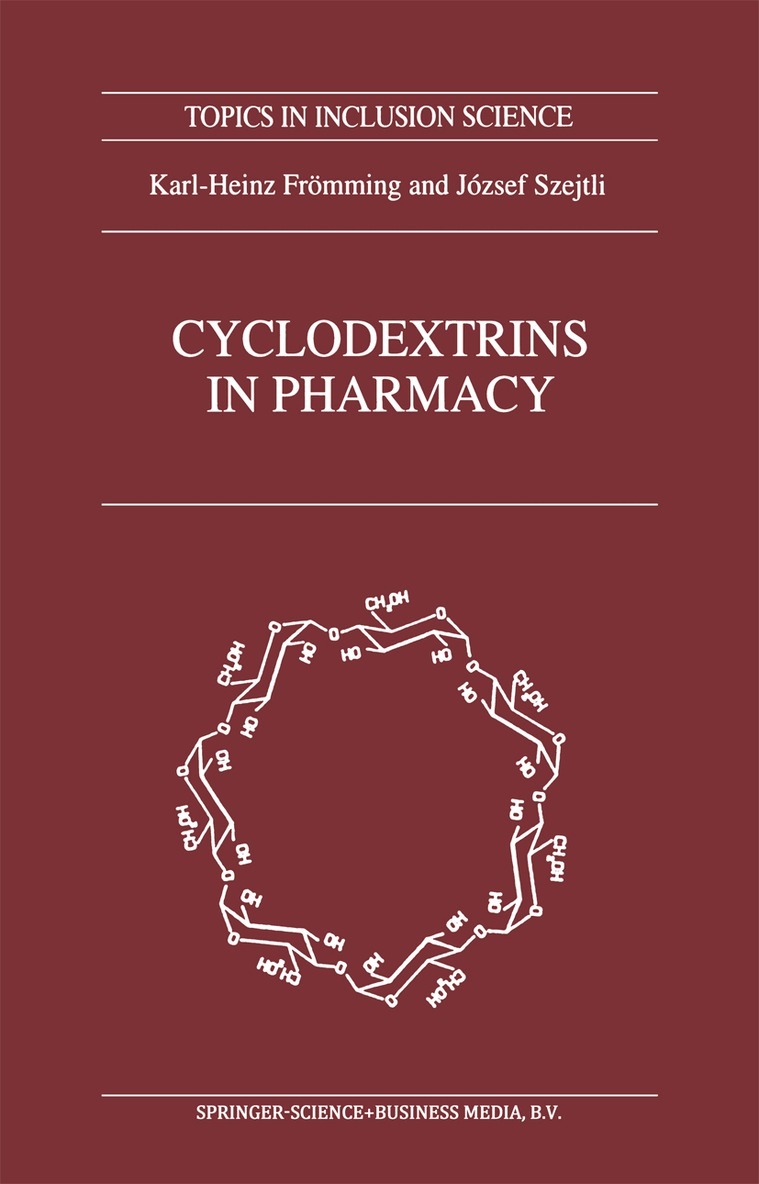
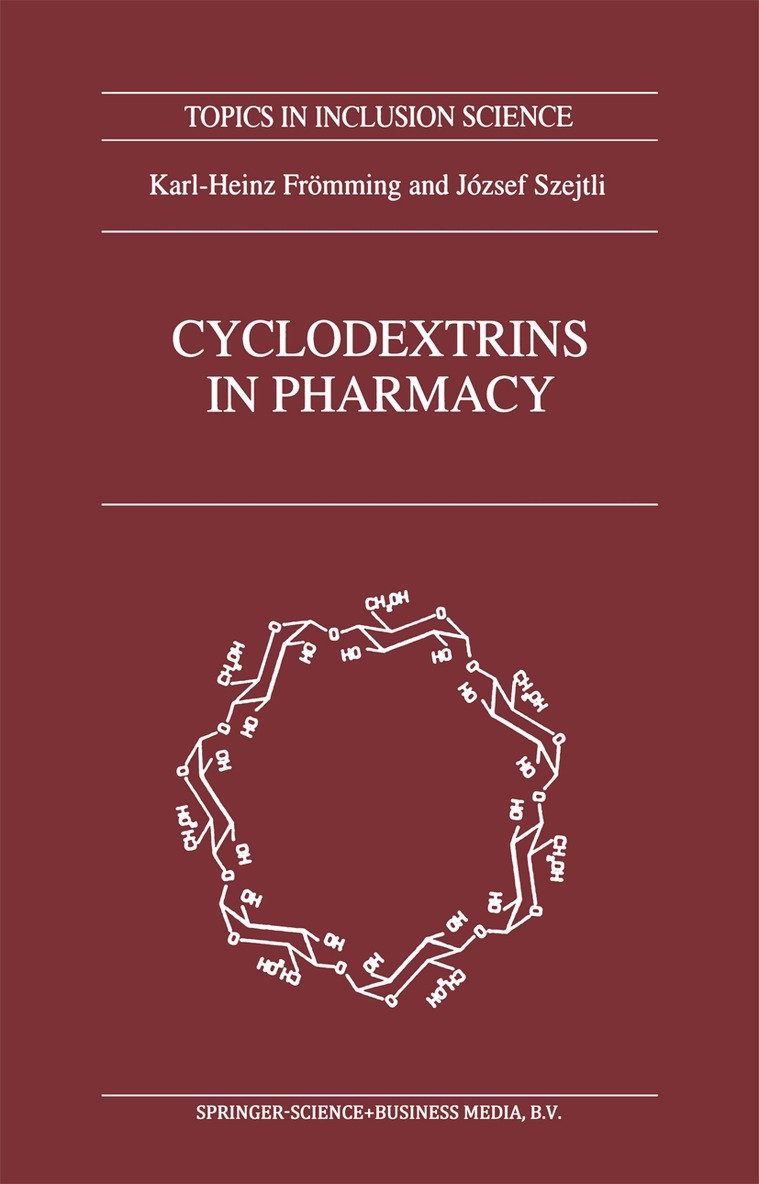
Nearly 3000 papers and patents are dedicated to the actual or potential uses of cyclodextrins in pharmacy and pharmaceutical formulations. This book, written for pharmacists and pharmaceutical technologists, not only critically summarizes the literature available, but can also be used as a handbook when looking for solutions to practical problems. The fundamentals, chemistry of cyclodextrins and their derivatives, their physical and chemical properties are condensed to the most relevant items in Chapters 1 and 2. Chapter 3 deals with the adsorption, metabolism and toxicological properties of cyclodextrins. Chapter 4 explains the formulation, structure, composition and advantageous effects of the cyclodextrin inclusion complexes. Chapter 5 describes the methods for preparation and characterization of drug/cyclodextrin complexes. Chapters 6 and 7 are dedicated to the pharmacokinetics, biopharmaceutical and technological aspects of drug/CD complexes. Chapter 8 treats the application and effects of cyclodextrins in various drug formulations. The Appendix comprises a collection of recipes for any type of drug formulation.This book is aimed at those who use cyclodextrins in drug formulations, to improve the properties of existing drug formulations, or who want to prepare new formulations.
3 707 kr
Skickas inom 10-15 vardagar
1 593 kr
Skickas inom 10-15 vardagar
Physical techniques such as X-ray crystallography, IR spectroscopy and solution-phase NMR spectroscopy have played key roles in the development of supramolecular chemistry. In recent years other spectroscopic techniques have been applied, expanding the range of information obtainable. The most widely used technique is solid-state NMR spectroscopy but techniques such as neutron scattering and NQR spectroscopy can yield significant information. Computational approaches are now becoming powerful complementary methods to experimental techniques and this book reviews the application of these methods to supramolecular systems. The ten chapters provide up-to-date information on the applications of spectroscopic and computational techniques to a wide range of supramolecular systems: Solid State NMR Studies of Host-Guest Materials Infrared Studies of Zeolite Complexes NQR Studies of Inclusion Compounds Neutron Scattering Studies of Zeolite Complexes Solid State NMR Studies of Catalytic Reactions on Molecular Sieves Recent Advances in Computational Studies of Zeolites Theoretical Studies of Cyclodextrins and their Inclusion Complexes Computer Modelling of the Structures of Host-Guest Complexes Computational Studies of Clathrate Hydrates Ab initio Electronic Structure Calculations on Endohedral Complexes of the C60 Cluster. This timely book will prove to be of great value to supramolecular researchers who are familiar with the spectroscopic techniques but who wish to extend their knowledge of the computational methods (and vice versa), to supramolecular researchers working in allied areas whose work would benefit from applying spectroscopic and computational methods, and finally to workers just entering the fascinating area of supramolecular chemistry.
2 185 kr
Skickas inom 10-15 vardagar
Nearly three thousand papers and patents are dedicated to the actual or potential uses of cyclodextrins in pharmacy and pharmaceutical formulations. This is the first book written for pharmacists and pharmaceutical technologists which not only critically summarizes the enormous amount of literature available, but which can be used as a handbook when looking for solutions to practical problems. The fundamentals -- chemistry of cyclodextrins and their derivatives -- their physical and chemical properties are condensed to the most relevant items in Chapters 1 and 2. Chapter 3 deals with the adsorption, metabolism and toxicological properties of cyclodextrins. Chapter 4 explains the formulation, structure, composition and advantageous effects of the cyclodextrin inclusion complexes. Chapter 5 describes the methods for preparation and characterization of drug/cyclodextrin complexes. Chapters 6 and 7 are dedicated to the pharmacokinetics, biopharmaceutical and technological aspects of drug/CD complexes. Chapter 8 treats the application and effects of cyclodextrins in various drug formulations. The Appendix comprises a collection of recipes for any type of drug formulation. This book is aimed at those who use cyclodextrins in drug formulations, to improve the properties of existing drug formulations, or who want to prepare quite new formulations.
3 707 kr
Skickas inom 10-15 vardagar
Del 6 - Topics in Inclusion Science
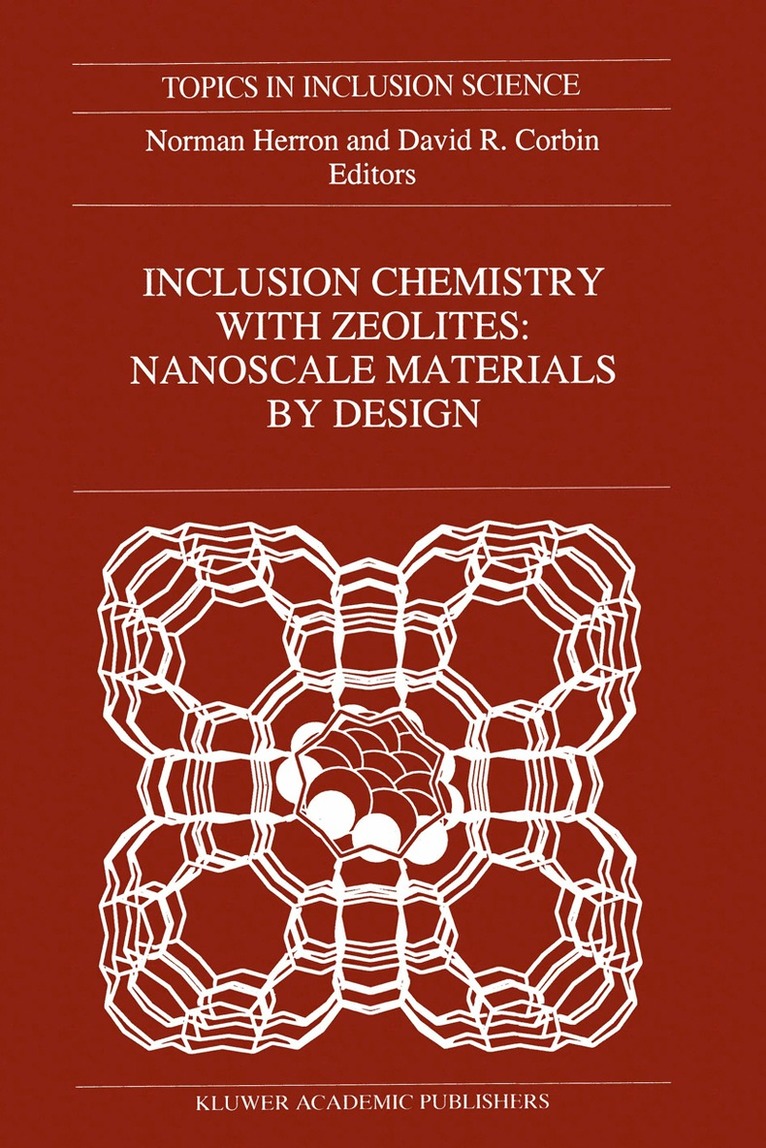
Inclusion Chemistry with Zeolites: Nanoscale Materials by Design
Häftad, Engelska, 2012
536 kr
Skickas inom 10-15 vardagar
Zeolites, with their crystalline microporous structures, are cordial hosts to a wide variety of guests. However, it was the abrupt and unexpected departure of one of these guests (water) from a host (stilbite) on heating which led Cronstedt, in 1756, to coin the term "zeolite" (from the Greek meaning "boiling stone") to describe this material. Since that time, approximately 40 different naturally-occurring zeolites have been discovered on earth. Recent studies of meteorite compositions have shown that these guest-host materials (e. g. , sodalite) occur in other parts of the universe as well. However, it wasn't until the twentieth century that synthetic routes to zeolites and other non-aluminosilicate molecular sieves were discovered. In addition, with the development of X-ray diffraction and the various spectroscopies, better understanding of the nature of the cavities, cages, and channels of these materials has led to the industrial exploitation of their guest-host properties. The world of zeolites has now expanded into a greater than 2 billion pound per year business, with major applications in detergent formulations, catalysis, and as adsorbents and desiccants. Their economic impact is difficult to determine; however, the improvement in gasoline yields alone (from catalytic cracking) must account for hundreds ofbillions ofdollars in increased GDP. In this volume, we have brought together a sampling of recent developments in various areas of guest-host or inclusion chemistry in zeolites.
1 593 kr
Skickas inom 10-15 vardagar
There is no doubt that the field of artificial membrane transport using synthetic ionophores has advanced remarkably in the past 15 years due primarily to the synthesis of new ionophores. Even though the theoretical framework substantially predated this activity, the merging of theory with transport experiment has often been sketchy. The purpose of this outline has been to examine key examples to illustrate the underlying principles and to suggest how experimental variables dominate the results obtained. To a very good approximation the assumption of a "diffusion" regime is often justified, is easily confirmed experimentally and provides a clear framework for exploitation of the inherent selectivity of a given ionophore. Thus for synthetic chemists who wish a "quick and nasty" experiment to examine the question of selectivity, the recipe is clear: a mixture containing all ions of interest in a standard experiment for each ligand of interest using a moderately stirred (100-200 rpm) cell and analysis of the mixture produced on the OUT side of the cell at a fixed, small extent of transport. Together with duplicates and controls, this modest set of experiments will place the results on an unambiguous footing from which clear conclusions about each ionophore's characteristics are readily obtained. For those with more detailed interests in the transport process the demands are correspondingly higher.
1 593 kr
Skickas inom 10-15 vardagar
The tenn "calixarenes", introduced in 1978 by D. Gutsche to describe the cyclic oligomers produced by condensation of p-substituted phenols with fonnaldehyde, is now universally accepted in the chemical community. The condensation of phenol with fonnaldehyde was studied in the last century by A. von Baeyer. Early in this century, L. Baekeland produced the first entirely synthetic polymers from phenol-fonnaldehyde condensates and the possibility that cyclic condensation products could be obtained from t-butylphenol, and fonnaldehyde was mentioned as early as in the beginning of the 1940's by A. Zinke. Despite their long history, the realisation that calixarenes may have very significant applications and uses in supramolecular chemistry is a relatively recent phenomenon. Calixarene chemistry, in contrast to their discovery, started slowly in the 1970's but rapidly gained momentum throughout the 1980's. Following C. Pedersens discovery of the crown ethers and the seminal developments of J. -M. Lehn and D.Cram with cryptands and spherands - all three honoured with the 1987 Nobel Chemistry Prize - the time was right for a surge of interest in research areas, frequently referred to as host-guest chemistry, receptor or supramolecular chemistry, and including important comparisons with biological processes and the development of new advanced materials. Now, the cyclic, bowl or basket-shaped calixarene molecules were looked on in a different light. Rather than "having developed from harmful by-products of phenoplasts manufacture" they were now seen as potentially valuable macrocyclic receptor molecules.