Topics in the Earth Sciences - Böcker
Visar alla böcker i serien Topics in the Earth Sciences. Handla med fri frakt och snabb leverans.
6 produkter
6 produkter
534 kr
Skickas inom 10-15 vardagar
1 062 kr
Skickas inom 10-15 vardagar
Part of a series, "Geology of Construction Materials" aims to show the connections between academic geology and the needs of the extractive industry by recognising that there is a direct relationship between the processes of mineral formation in the Earth's crust and the mode of occurrence and essential properties of the mineral. This book is intended to be useful to undergraduates in geology and related disciplines and the young graduate working in the extractive industry, although it is not intended as a working handbook. The book draws its information from many scientific, technical and trade journals and includes many examples from the United Kingdom. The differences between these examples and those in western Europe, northern America and developing countries are noted.
549 kr
Skickas inom 10-15 vardagar
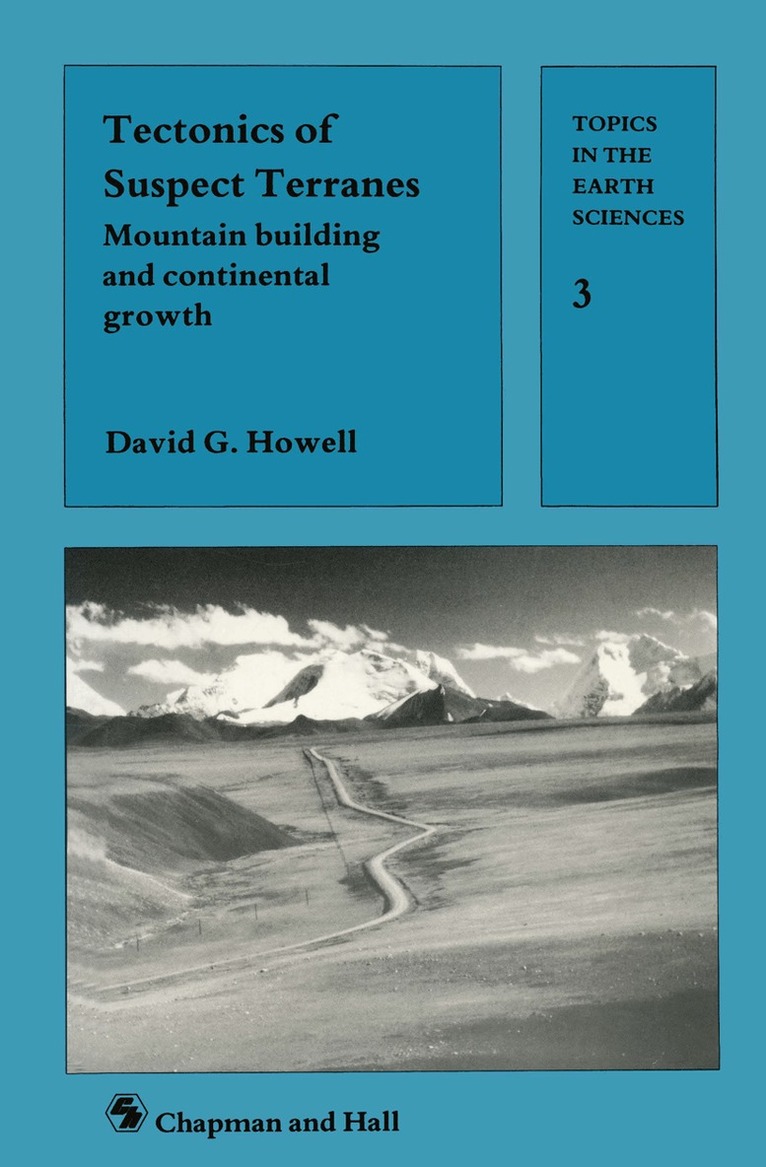
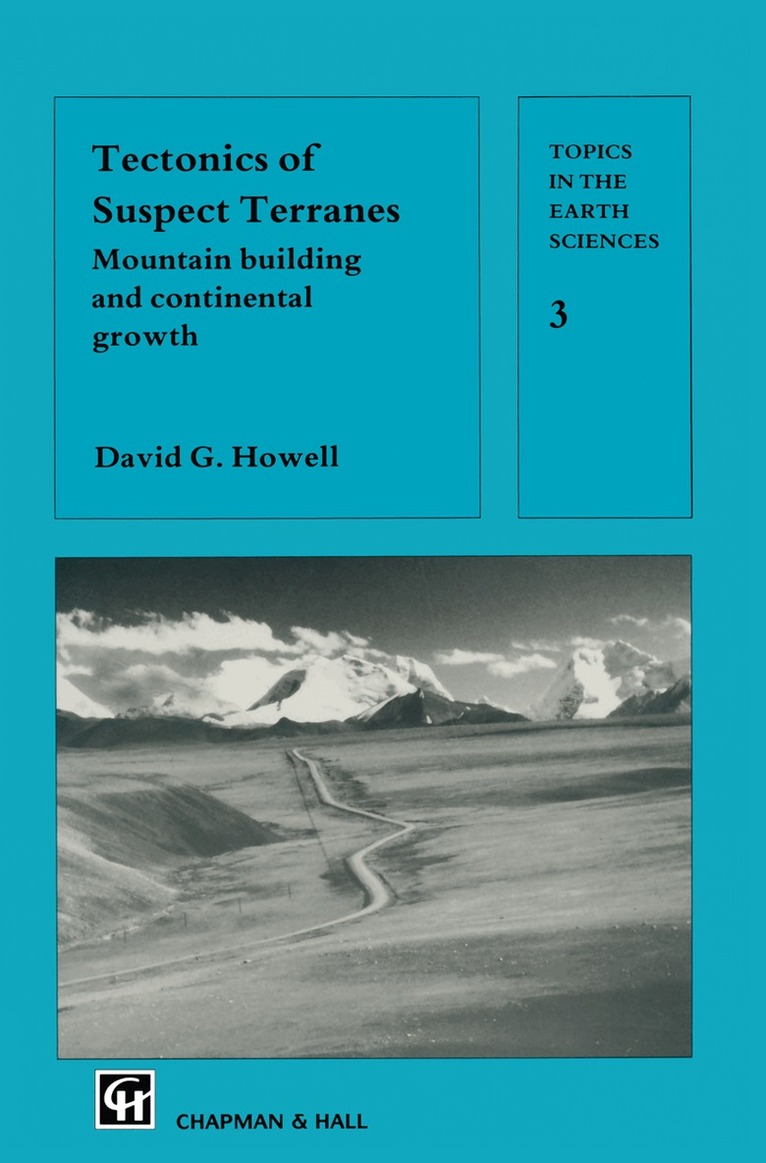
Since the 1960s, the general theory of plate tectonics has provided a clear link between the geological processes of seafloor spreading, subduction and mountain building. But details are still unclear and the nature of the theory may depend upon the recent interpretation of "suspect terranes", areas of apparently unrelated geology comprising single orogenic belts. This books introduces the reader to the concept of suspect terranes, how they relate to classic plate tectonics theory and what they represent in terms of tectonic processes. The book is amed at research and academic structural geologist, and student in the earth sciences.
534 kr
Skickas inom 10-15 vardagar
Year by year the Earth sciences grow more diverse, with an inevitable increase in the degree to which rampant specialization isolates the practitioners of an ever larger number of sub fields. An increasing emphasis on sophisticated mathematics, physics and chemistry as well as the use of advanced technology have. set up barriers often impenetrable to the uninitiated. Ironically, the potential value of many specialities for other, often non-contiguous once has also increased. What is at the present time quiet, unseen work in a remote corner of our discipline, may tomorrow enhance, even revitalize some entirely different area. The rising flood of research reports has drastically cut the time we have available for free reading. The enormous proliferation of journals expressly aimed at small, select audiences has raised the threshold of access to a large part of the literature so much that many of us are unable to cross it. This, most would agree, is not only unfortunate but downright dangerous, limiting by sheer bulk of paper or difficulty of comprehension, the flow of information across the Earth sciences because, after all it is just one earth that we all study, and cross fertilization is the key to progress. If one knows where to obtain much needed data or inspiration, no effort is too great. It is when we remain unaware of its existence (perhaps even in the office next door) that stagnation soon sets in.
534 kr
Skickas inom 10-15 vardagar
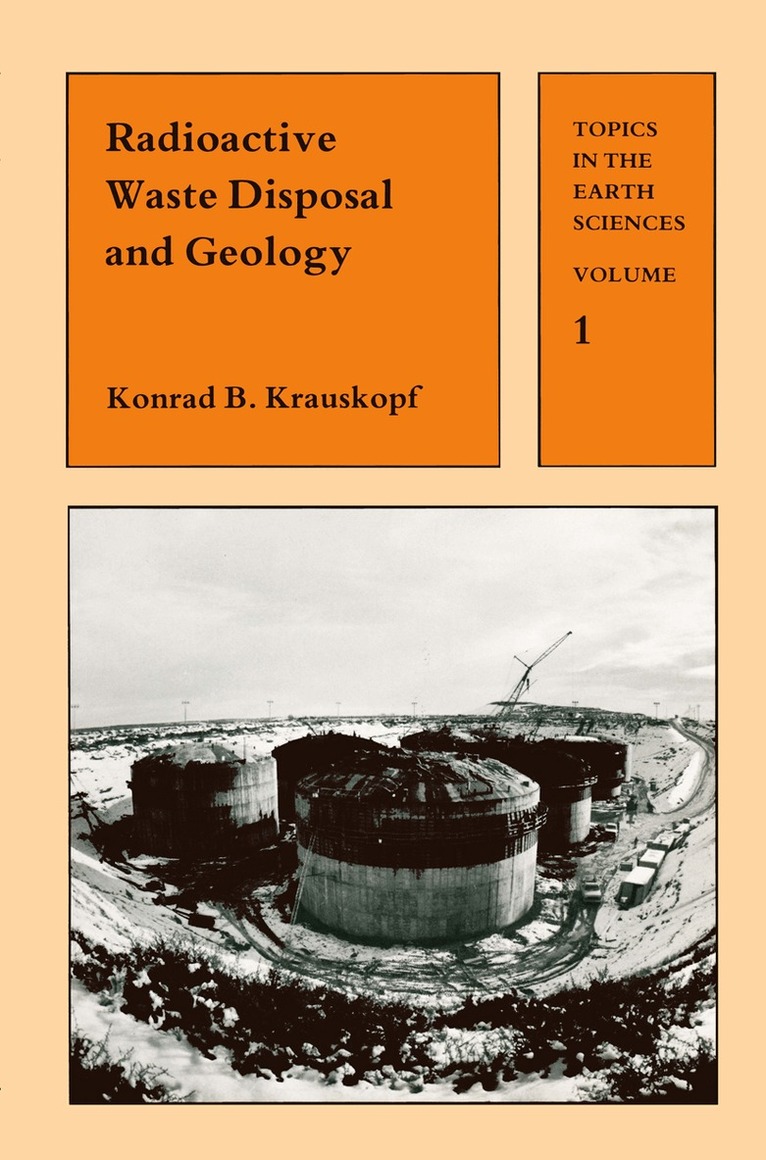
The perception of radioactive waste as a major problem for the industrial world has developed only recently. Four decades ago the disposal of such waste was regarded as a relatively minor matter. Those were the heady days when nuclear fission seemed the answer to the world's energy needs: the two wartime bombs had demonstrated its awesome power, and now it was to be harnessed for the production of electricity, the excavation of canals, even the running of cars and airplanes. In all applications of fission some waste containing radioactive elements would be generated of course, but it seemed only a trivial annoyance, a problem whose solution could be deferred until the more exciting challenges of constructing reactors and devising more efficient weapons had been mastered. So waste accumulated, some in tanks and some buried in shallow trenches. These were recognized as only temporary, makeshift measures, because it was known that the debris would be hazardous to its surroundings for many thousands of years and hence that more permanent disposal would someday be needed. The difficulty of accomplishing this more lasting disposal only gradually became apparent. The difficulty has been compounded by uncertainty about the physiological effects oflow-Ievel radiation, by the inadequacy of detailed knowledge about the behavior of engineered and geologic materials over long periods under unusual conditions, and by the sensitization of popular fears about radiation in all its forms following widely publicized reactor accidents and leaks from waste storage sites.
534 kr
Skickas inom 10-15 vardagar
Year by year the Earth sciences grow more diverse, with an inevitable increase in the degree to which rampant specialization isolates the practitioners of an ever larger number of subfields. An increasing emphasis on sophisticated mathematics, physics and chemistry as well as the use of advanced technology have set up barriers often impenetrable to the uninitiated. Ironically, the potential value of many specialities for other, often non-contiguous ones has also increased. What is at the present time quiet, unseen work in a remote corner of our discipline, may tomorrow enhance, even revitalize some entirely different area. The rising flood of research reports has drastically cut the time we have available for free reading. The enormous proliferation of journals expressly aimed at small, select audiences has raised the threshold of access to a large part of the literature so much that many of us are unable to cross it. This, most would agree, is not only unfortunate but downright dangerous, limiting by sheer bulk of paper or difficulty of compre hension, the flow of information across the Earth sciences because, after all it is just one earth that we all study, and cross fertilization is the key to progress. If one knows where to obtain much needed data or inspiration, no effort is too great. It is when we remain unaware of its existence (perhaps even in the office next door) that stagnation soon sets in.