Triangulations: Lesbian/Gay/Queer/Trans Theater/Dance/Performance – serie
Visar alla böcker i serien Triangulations: Lesbian/Gay/Queer/Trans Theater/Dance/Performance. Handla med fri frakt och snabb leverans.
8 produkter
8 produkter
Häftad, Engelska, 2011
353 kr
Skickas inom 5-8 vardagar
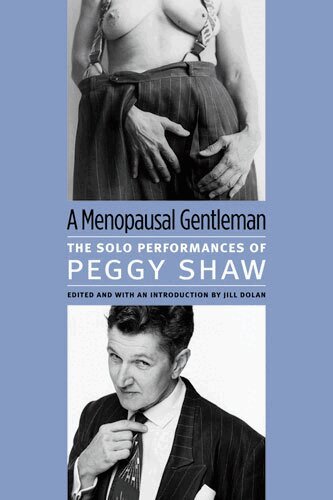
"With classic butch finesse---that handsome combination of vulnerability and toughness---Peggy Shaw pieces together the challenges of growing up butch in the 1950s. Shaw is an engaging performer and inspired writer."---Gay Community NewsObie-award-winning performer and writer Peggy Shaw has been playing her gender-bending performances on Off Broadway, regional, and international stages for three decades. Co-founder of the renowned troupe Split Britches, Shaw has gone on to create memorable solo performances that mix achingly honest introspection with campy humor, reflecting on everything from her Irish-American working-class roots to her aging butch body. This collection of Shaw's solo performance scripts evokes a 54-year-old grandmother who looks like a 35-year-old man (in her classic Menopausal Gentleman); a mother's ambivalent ministrations to a daughter she treated like a son (in the raw You're Just Like My Father); Shaw's love for her biracial grandson, for whom she models masculinity (in the musically punctuated To My Chagrin); and a mapping of her body's long, bittersweet history (in the lyrical Must: The Inside Story, a collaboration with the UK's Clod Ensemble). The book also includes a selection of Shaw's other classic monologues and an extensive introduction by Jill Dolan, Professor of English and Theater and Dance at Princeton University and the blogger behind The Feminist Spectator website.A volume in the series Triangulations: Lesbian/Gay/Queer Theater/Drama/PerformanceCover photos by Eva Weiss (top) and Robin Holland/robinholland.com (bottom).
Häftad, Engelska, 2021
431 kr
Skickas inom 5-8 vardagar
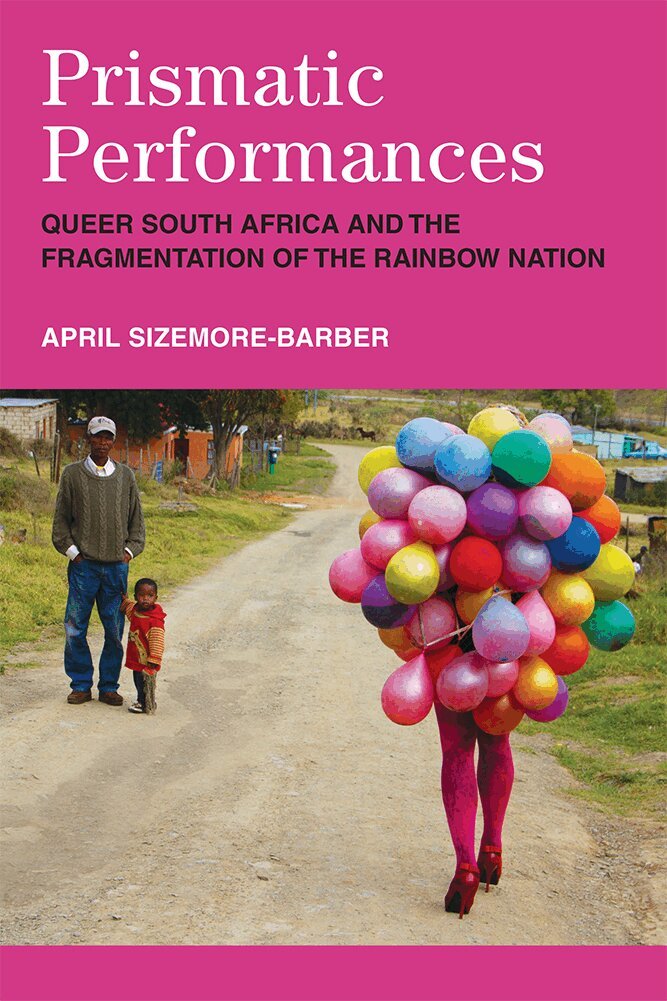
Listed as one of Lambda Literary's Most Anticipated LGBTQ Books for September 2020At his 1994 inauguration, South African president Nelson Mandela announced the “Rainbow Nation, at peace with itself and the world.” This national rainbow notably extended beyond the bounds of racial coexistence and reconciliation to include “sexual orientation” as a protected category in the Bill of Rights. Yet despite the promise of equality and dignity, the new government’s alliance with neoliberal interests and the devastation of the AIDS epidemic left South Africa an increasingly unequal society. Prismatic Performances focuses on the queer embodiments that both reveal and animate the gaps between South Africa’s self-image and its lived realities. It argues that performance has become a key location where contradictions inherent to South Africa’s post-apartheid identity are negotiated. The book spans 30 years of cultural production and numerous social locations and includes: a team of black lesbian soccer players who reveal and redefine the gendered and sexed limitations of racialized “Africanness;” white gay performers who use drag and gender subversion to work through questions of racial and societal transformation; black artists across the arts who have developed aesthetics that place on display their audiences’ complicity in the problem of sexual violence; and a primarily heterosexual panAfrican online soap opera fandom community who, by combining new virtual spaces with old melodramatic tropes allow for extended deliberation and new paradigms through which African same-sex relationships are acceptable. Prismatic Performances contends that when explicitly queer bodies emerge onto public stages, audiences are made intimately aware of their own bodies’ identifications and desires. As the sheen of the New South Africa began to fade, these performances revealed the inadequacy and, indeed, the violence, of the Rainbow Nation as an aspirational metaphor. Simultaneously they created space for imagining new radical configurations of belonging.
Häftad, Engelska, 2011
368 kr
Skickas inom 5-8 vardagar
"A rich and detailed picture of a particular historical moment that has now passed . . . I found myself immersed in the world of the East Village theatre scene and its connections to the larger world of feminism, theatre, and politics. Davy's long-standing association with this world pays off handsomely---it is impossible to imagine that anyone could write a more informative portrait."---Charlotte Canning, University of Texas at Austin"After hosting two annual international women's performance festivals in 1980 and '81, Peggy Shaw, Lois Weaver, and comrades put on such extravaganzas as the Freudian Slip party and the Debutante Ball (a coming-out party if ever there was one) to raise the first several months' rent for a narrow vestibule on East 11th Street, where they could keep the creativity going year-round. There, on a stage no bigger than a queen-sized mattress, . . . artists honed their craft, giving birth to a celebratory feminist-and-tinsel-tinged queer aesthetic. By the mid '80s . . . the rent quadrupled, and WOW moved to a city-owned building on East 4th Street, where it has flourished ever since, presenting hundreds---if not thousands---of plays, solo shows, concerts, dance pieces, cabarets, and sundry performances that defy classification." ---Alisa Solomon, Village VoiceOut of a small, hand-to-mouth, women's theater collective called the WOW Café located on the lower east side of Manhattan, there emerged some of the most important theater troupes and performance artists of the 1980s and 1990s, including the Split Britches Company, the Five Lesbian Brothers, Carmelita Tropicana, Holly Hughes, Lisa Kron, Deb Margolin, Reno, Peggy Shaw, and Lois Weaver. The WOW (Women's One World) Café Theatre appeared on the cultural scene at a critical turning point in both the women's movement and feminist theory, putting a witty, hilarious, gender-bending and erotically charged aesthetic on the stage for women in general and lesbians in particular. The storefront that became the WOW Café Theatre saw dozens of excitingly original and enormously funny performances created, performed, and turned over at lightning speed---a kind of "hit and run" theater. As the demands on the space increased, the women behind WOW organized as a collective and moved their theater to an abandoned doll factory where it continues to operate today. For three decades the WOW Café has nurtured fledgling women writers, designers, and performers who continue to create important performance work. Lady Dicks and Lesbian Brothers provides a critical history of this avant-garde venture whose ongoing "system of anarchy" has been largely responsible for its thirty-year staying power, after dozens of other women's theaters have collapsed. WOW artists were creating a wholly original cultural landscape across which women could represent themselves on their own terms. Parody, cross-dressing, zany comedy, and an unbridled eroticism are hallmarks of WOW's aesthetic, combined---importantly and powerfully---with a presumptive address to the audience as if everyone onstage, in the audience, and in the world is lesbian. Author Kate Davy's extensive research included in-depth interviews with WOW veterans; newspaper reviews of the earliest productions; and rare, unpublished photographs. The book also includes a chronology of productions that have highlighted WOW's performance schedule since the early '80s. Kate Davy is currently Provost and Vice Chancellor for Academic Affairs at the University of Michigan-Dearborn. Her previous books include Richard Foreman: Plays and Manifestos and Richard Foreman and the Ontological-Hysteric Theatre.
Häftad, Engelska, 2017
323 kr
Skickas inom 5-8 vardagar
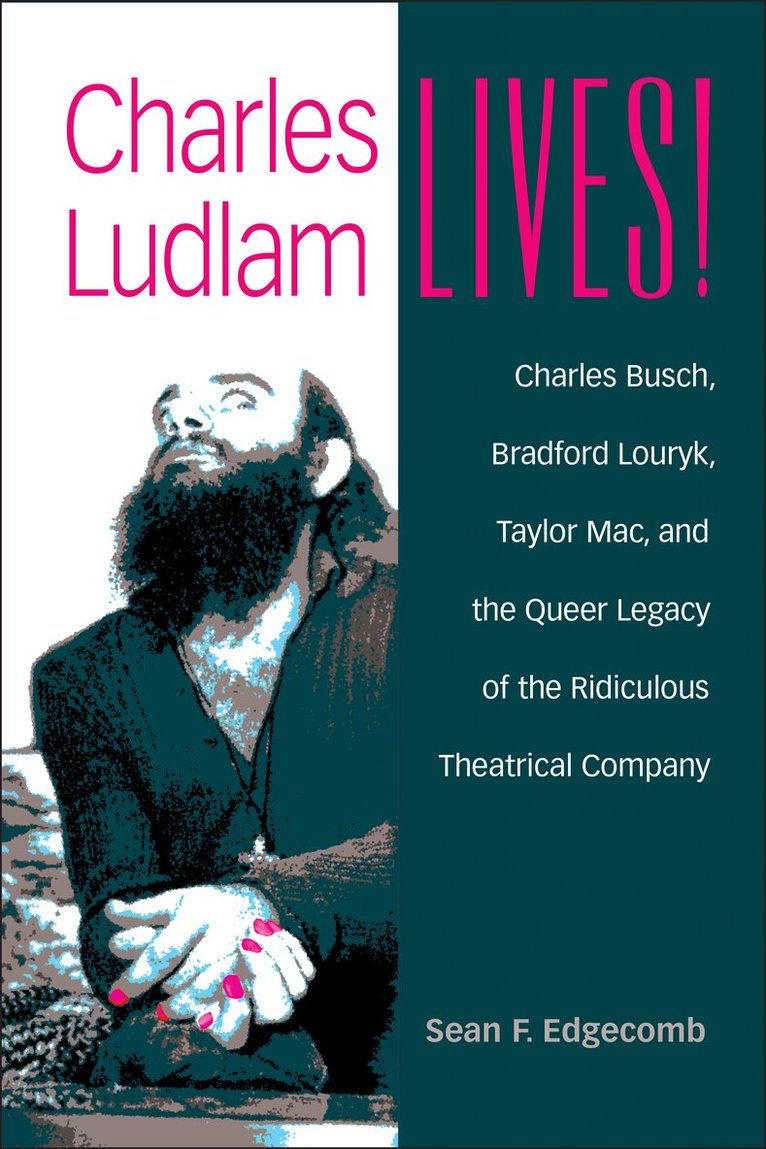
Playwright, actor and director Charles Ludlam (1943–1987) helped to galvanize the Ridiculous style of theater in New York City starting in the 1960s. Decades after his death, his place in the chronicle of American theater has remained constant, but his influence has changed. Although his Ridiculous Theatrical Company shut its doors, the Ludlamesque Ridiculous has continued to thrive and remain a groundbreaking genre, maintaining its relevance and potency by metamorphosing along with changes in the LGBTQ community. Author Sean F. Edgecomb focuses on the neo-Ridiculous artists Charles Busch, Bradford Louryk, and Taylor Mac to trace the connections between Ludlam’s legacy and their performances, using alternative queer models such as kinetic kinship, lateral historiography, and a new approach to camp. Charles Ludlam Lives! demonstrates that the queer legacy of Ludlam is one of distinct transformation—one where artists can reject faithful interpretations in order to move in new interpretive directions.
Häftad, Engelska, 2021
504 kr
Skickas inom 5-8 vardagar
The mass shooting at a queer Latin Night in Orlando in July 2016 sparked a public conversation about access to pleasure and selfhood within conditions of colonization, violence, and negation. Queer Nightlife joins this conversation by centering queer and trans people of color who apprehend the risky medium of the night to explore, know, and stage their bodies, genders, and sexualities in the face of systemic and social negation. The book focuses on house parties, nightclubs, and bars that offer improvisatory conditions and possibilities for “stranger intimacies,” and that privilege music, dance, and sexual/gender expressions. Queer Nightlife extends the breadth of research on “everynight life” through twenty-five essays and interviews by leading scholars and artists. The book’s four sections move temporally from preparing for the night (how do DJs source their sounds, what does it take to travel there, who promotes nightlife, what do people wear?); to the socialities of nightclubs (how are social dance practices introduced and taught, how is the price for sex negotiated, what styles do people adopt to feel and present as desirable?); to the staging and spectacle of the night (how do drag artists confound and celebrate gender, how are spaces designed to create the sensation of spectacularity, whose bodies become a spectacle already?); and finally, how the night continues beyond the club and after sunrise (what kinds of intimacies and gestures remain, how do we go back to the club after Orlando?).
Häftad, Engelska, 2003
383 kr
Skickas inom 5-8 vardagar
In engaging, accessible prose, leading theater critic and cultural commentator David Savran explores the intersections between art and culture, offering smart, compelling interpretations of the economic and social contexts of theatrical texts and practices. Acknowledging theater's marginal status in U.S. culture, A Queer Sort of Materialism takes on "the trouble-makers--the ghost, closeted homosexual, masochist, drag king, Third World laborer, even the white male as victim"--who figure more prominently in theater than in other cultural forms. In impeccably researched and argued essays that range in subject matter from Rodgers and Hammerstein to Paula Vogel, from Suddenly Last Summer to Iron John, Savran uncovers the ways that such troublemakers both challenge and reinforce orthodox social practices. The selections presented here are by turns entertaining, informative, sophisticated, and polemical, reflecting the author's dual citizenship as rigorous scholar and engaging theater critic. This book also provides a model for a kind of queer historical materialism that will prove useful to a wide range of disciplines, including theater and performance, gender and sexuality, queer/gay/lesbian/transgender studies, American studies, and popular culture. David Savran is Professor of Theater, the Graduate Center, the City University of New York, and author of Cowboys, Communists, and Queers and Taking It Like a Man.
Inbunden, Engelska, 2019
1 126 kr
Skickas inom 5-8 vardagar
The Bodies of Others explores the politics of gender in motion. From drag ballerinas to faux queens, and from butoh divas to the club mothers of modern dance, the book delves into four decades of drag dances on American stages. Drag dances take us beyond glittery one-liners and into the spaces between gender norms. In these backstage histories, dancers give their bodies over to other selves, opening up the category of realness. The book maps out a drag politics of embodiment, connecting drag dances to queer hope, memory, and mourning. There are aging étoiles, midnight shows, mystical séances, and all of the dust and velvet of divas in their dressing-rooms. But these forty years of drag dances are also a cultural history, including Mark Morris dancing the death of Dido in the shadow of AIDS, and the swans of Les Ballets Trockadero de Monte Carlo sketching an antiracist vision for ballet. Drawing on queer theory, dance history, and the embodied practices of dancers themselves, The Bodies of Others examines the ways in which drag dances undertake the work of a shared queer and trans politics.
Inbunden, Engelska, 2020
1 126 kr
Skickas inom 5-8 vardagar
Ishtyle follows queer South Asian men across borders into gay neighborhoods, nightclubs, bars, and house parties in Bangalore and Chicago. Bringing the cultural practices they are most familiar with into these spaces, these men accent the aesthetics of nightlife cultures through performance. Kareem Khubchandani develops the notion of “ishtyle” to name this accented style, while also showing how brown bodies inadvertently become accents themselves, ornamental inclusions in the racialized grammar of desire. Ishtyle allows us to reimagine a global class perpetually represented as docile and desexualized workers caught in the web of global capitalism. The book highlights a different kind of labor, the embodied work these men do to feel queer and sexy together. Engaging major themes in queer studies, Khubchandani explains how his interlocutors’ performances stage relationships between: colonial law and public sexuality; film divas and queer fans; and race, caste, and desire. Ultimately, the book demonstrates that the unlikely site of nightlife can be a productive venue for the study of global politics and its institutional hierarchies.