Urban Education Studies Series - Böcker
Visar alla böcker i serien Urban Education Studies Series. Handla med fri frakt och snabb leverans.
14 produkter
14 produkter
579 kr
Skickas inom 7-10 vardagar
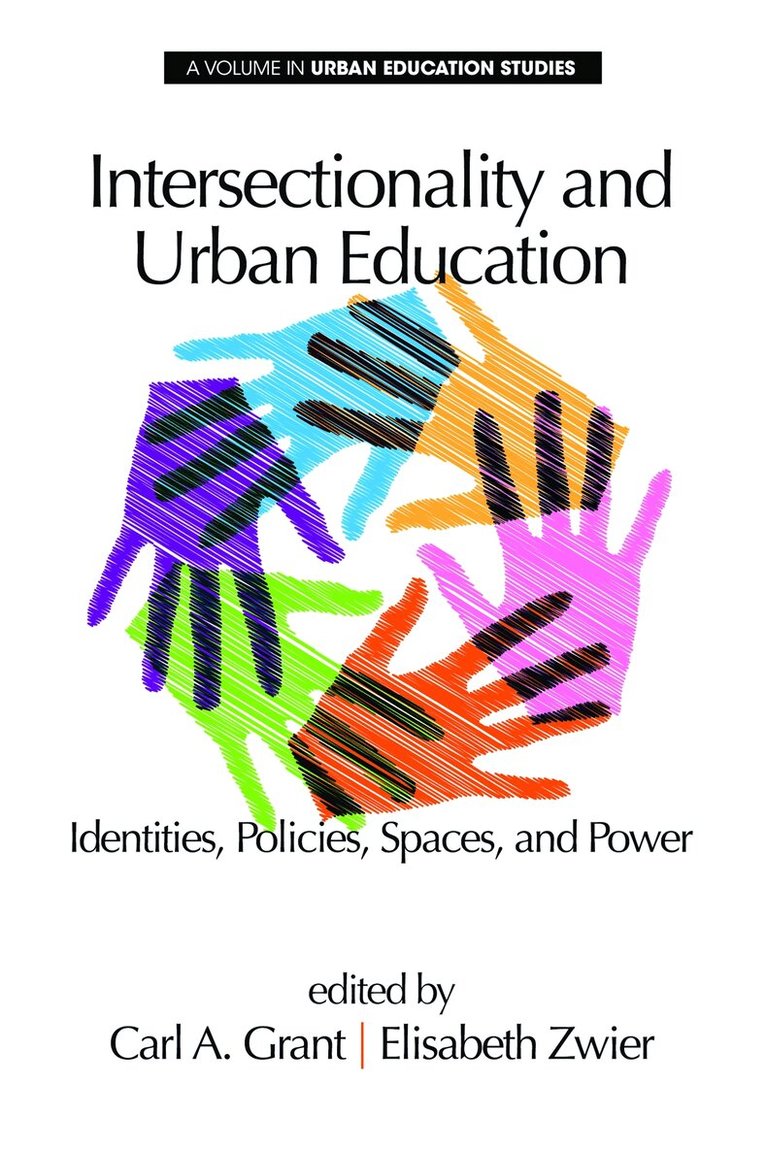
In urban education, “urban” is a floating signifier that is imbued with meaning, positive or negative by its users. “Urban” can be used to refer to both the geographical context of a city and a sense of “less than,” most often in relation to race and/or socioeconomic status (Watson, 2011). For Noblit and Pink (2007), “Urban, rather, is a generalization as much about geography as it is about the idea that urban centers have problems: problems of too many people, too much poverty, too much crime and violence, and ultimately, too little hope” (p. xv). Recently, urban education scholars such as Anyon (2005), Pink and Noblit (2007), Blanchett, Klinger and Harry (2009), and Lipman (2013) have elucidated the social construction of oppression and privilege for urban students, teachers, schools, families, and communities using intersectionality theories. Building on their work, we see the need for an edited collection that would look across the different realms of urban education—theorizing identity markers in urban education, education in urban schools and communities, thinking intersectionally in teacher education & higher education, educational policies & urban spaces—seeking to better understand each topic using an intersectional lens. Such a collection might serve to conceptually frame or provide methodological tools, or act as a reference point for scholars and educators who are trying to address urban educational issues in light of identities and power. Secondly, we argue that education questions and/or problems beg to be conceptualized and analyzed through more than one identity axis. Policies and practices that do not take into account urban students’ intertwining identity markers risk reproducing patterns of privilege and oppression, perpetuating stereotypes, and failing at the task we care most deeply about: supporting all students’ learning across a holistic range of academic, personal, and justice-oriented outcomes.Can educational policies and practices address the social justice issues faced in urban schools and communities today? We argue that doing intersectional research and implementing educational policies and practices guided by these frameworks can help improve the “fit.” Particular attention needs to be paid to intersectionality as a lens for educational theory, policy, and practice. As urban educators we would be wise to consider the intertwining of these identity axes in order to better analyze educational issues and engage in teaching, learning, research, and policymaking that are better-tuned to the needs of diverse students, families, and communities.
822 kr
Skickas
In urban education, “urban” is a floating signifier that is imbued with meaning, positive or negative by its users. “Urban” can be used to refer to both the geographical context of a city and a sense of “less than,” most often in relation to race and/or socioeconomic status (Watson, 2011). For Noblit and Pink (2007), “Urban, rather, is a generalization as much about geography as it is about the idea that urban centers have problems: problems of too many people, too much poverty, too much crime and violence, and ultimately, too little hope” (p. xv). Recently, urban education scholars such as Anyon (2005), Pink and Noblit (2007), Blanchett, Klinger and Harry (2009), and Lipman (2013) have elucidated the social construction of oppression and privilege for urban students, teachers, schools, families, and communities using intersectionality theories. Building on their work, we see the need for an edited collection that would look across the different realms of urban education—theorizing identity markers in urban education, education in urban schools and communities, thinking intersectionally in teacher education & higher education, educational policies & urban spaces—seeking to better understand each topic using an intersectional lens. Such a collection might serve to conceptually frame or provide methodological tools, or act as a reference point for scholars and educators who are trying to address urban educational issues in light of identities and power. Secondly, we argue that education questions and/or problems beg to be conceptualized and analyzed through more than one identity axis. Policies and practices that do not take into account urban students’ intertwining identity markers risk reproducing patterns of privilege and oppression, perpetuating stereotypes, and failing at the task we care most deeply about: supporting all students’ learning across a holistic range of academic, personal, and justice-oriented outcomes.Can educational policies and practices address the social justice issues faced in urban schools and communities today? We argue that doing intersectional research and implementing educational policies and practices guided by these frameworks can help improve the “fit.” Particular attention needs to be paid to intersectionality as a lens for educational theory, policy, and practice. As urban educators we would be wise to consider the intertwining of these identity axes in order to better analyze educational issues and engage in teaching, learning, research, and policymaking that are better-tuned to the needs of diverse students, families, and communities.
464 kr
Skickas inom 7-10 vardagar
Drawing from over 20 years of teaching experience in the U.S., ranging from pre-kindergarten to post-graduate, Affolter illustrates personal, practical, and theoretical ways for teachers to grapple with the complexities of race and racism within their own schools and communities and develop as inclusive anti-racist teachers. The work aims to take into account the deeply human dimensions of inclusive anti- racist teaching, while drawing attention to the threat of burnout, inviting closer inspection of curricula development, and exploring tangible ways to sustain this important work for teaching.Resisting racism, agitating for change, and walking an inclusive anti-racist path requires commitment to unflinchingly look at one's failures and examine silences. It is work that must be done in all settings: rural, urban, suburban. This book offers all pre-teachers and in-service teachers some perspectives and reflections on engaging anti-racist inclusive practice. The questions raised here ask each of us to consider our own positioning and interrogate the stories we tell ourselves about "the other." The book seeks to call in white teachers in particular to carefully examine our own biases and the ways we may replicate white supremacist ideology within our pedagogy and curricula. The questions posed here and the work ahead is not easy. This is work best taken on with those that can challenge with love and help support one other as we imagine and work towards a more just world.
642 kr
Skickas inom 7-10 vardagar
Drawing from over 20 years of teaching experience in the U.S., ranging from pre-kindergarten to post-graduate, Affolter illustrates personal, practical, and theoretical ways for teachers to grapple with the complexities of race and racism within their own schools and communities and develop as inclusive anti-racist teachers. The work aims to take into account the deeply human dimensions of inclusive anti- racist teaching, while drawing attention to the threat of burnout, inviting closer inspection of curricula development, and exploring tangible ways to sustain this important work for teaching.Resisting racism, agitating for change, and walking an inclusive anti-racist path requires commitment to unflinchingly look at one's failures and examine silences. It is work that must be done in all settings: rural, urban, suburban. This book offers all pre-teachers and in-service teachers some perspectives and reflections on engaging anti-racist inclusive practice. The questions raised here ask each of us to consider our own positioning and interrogate the stories we tell ourselves about "the other." The book seeks to call in white teachers in particular to carefully examine our own biases and the ways we may replicate white supremacist ideology within our pedagogy and curricula. The questions posed here and the work ahead is not easy. This is work best taken on with those that can challenge with love and help support one other as we imagine and work towards a more just world.
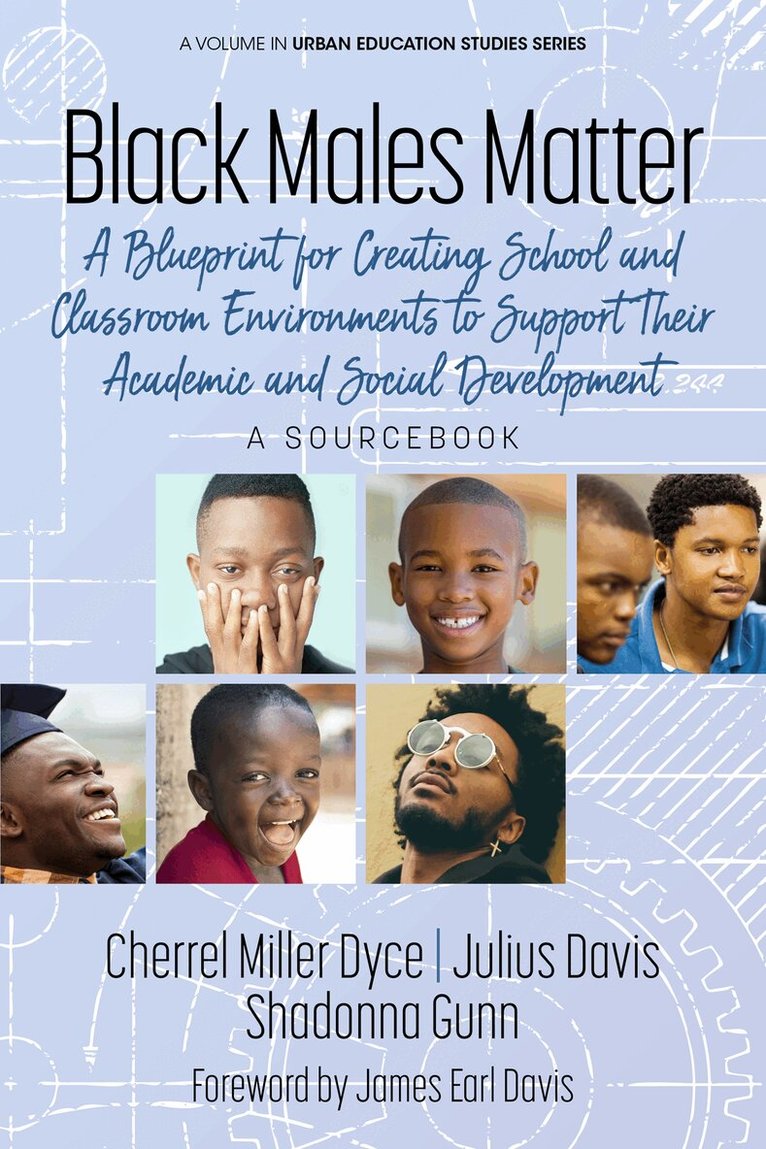
Black Males Matter
A Blueprint for Creating School and Classroom Environments to Support Their Academic and Social Development A Sourcebook
Häftad, Engelska, 2021
452 kr
Skickas inom 7-10 vardagar
A major premise of the book is that teachers, school leaders, and school support staff are not taught how to create school and classroom environments to support the academic and social success of Black male students. The purpose of this book is to help champion a paradigmatic shift in educating Black males.This books aims to provide an asset and solution-based framework that connects the educational system with community cultural wealth and educational outcomes. The text will be a sourcebook for in-service and pre-service teachers, administrators, district leaders, and school support staff to utilize in their quest to increase academic and social success for their Black male students. Adopting a strengths-based epistemological stance, this book will provide concerned constituencies with a framework from which to engage and produce success.
Black Males Matter
A Blueprint for Creating School and Classroom Environments to Support Their Academic and Social Development A Sourcebook
Inbunden, Engelska, 2021
833 kr
Skickas inom 7-10 vardagar
A major premise of the book is that teachers, school leaders, and school support staff are not taught how to create school and classroom environments to support the academic and social success of Black male students. The purpose of this book is to help champion a paradigmatic shift in educating Black males.This books aims to provide an asset and solution-based framework that connects the educational system with community cultural wealth and educational outcomes. The text will be a sourcebook for in-service and pre-service teachers, administrators, district leaders, and school support staff to utilize in their quest to increase academic and social success for their Black male students. Adopting a strengths-based epistemological stance, this book will provide concerned constituencies with a framework from which to engage and produce success.
452 kr
Skickas inom 7-10 vardagar
'A school is only as good as its principal'. This quip forms the thesis of Better Principals as it provides a bird’s eye view on the enactment of Haberman’s eleven core functions of a star principal. Better Principals is imperative for two main reasons.First, the achievement gap between 20 million children in poverty and their mainstream counterparts is continuing to become even wider. Many students are constantly subjected to inequality of educational opportunity, which limits their future opportunities. Second, Haberman is one of the most prolific producers of administrators of the twentieth century (and into the twenty-first century). He reminds us that quality school systems, with quality leaders, benefit our society. Haberman explained that there is often selection blindness when it comes to identifying school leaders, and this deficiency has many negative consequences for education in general, and learners in particular. Haberman has generated theories, training programs and tools to engender substantive changes needed to produce better schools. Each chapter in this volume contains reflection questions for discussion to remind us all why selecting quality principals must be paramount when hiring school leaders. These illustrative book chapters emphasize the execution of Haberman's star principal ideology.
833 kr
Skickas inom 7-10 vardagar
'A school is only as good as its principal'. This quip forms the thesis of Better Principals as it provides a bird’s eye view on the enactment of Haberman’s eleven core functions of a star principal. Better Principals is imperative for two main reasons.First, the achievement gap between 20 million children in poverty and their mainstream counterparts is continuing to become even wider. Many students are constantly subjected to inequality of educational opportunity, which limits their future opportunities. Second, Haberman is one of the most prolific producers of administrators of the twentieth century (and into the twenty-first century). He reminds us that quality school systems, with quality leaders, benefit our society. Haberman explained that there is often selection blindness when it comes to identifying school leaders, and this deficiency has many negative consequences for education in general, and learners in particular. Haberman has generated theories, training programs and tools to engender substantive changes needed to produce better schools. Each chapter in this volume contains reflection questions for discussion to remind us all why selecting quality principals must be paramount when hiring school leaders. These illustrative book chapters emphasize the execution of Haberman's star principal ideology.
515 kr
Skickas inom 7-10 vardagar
Analyzing experiences of White mothers of daughters and sons of color across the U. S., Chandler provides an insider’s view of the complex ways in which Whiteness norms appear and operate. Through uncovering and analyzing Whiteness norms occurring across motherhood stages, Chandler has developed a model of three common ways of interacting with the norms of Whiteness: colluding, colliding, and contending. Chandler’s results suggest that collisions with Whiteness norms are a necessary step to increasing one’s racial literacy which is essential for effective contentions with norms of Whiteness. She proposes steps for applying her model in education settings, which can also be applied in other organizational contexts.
950 kr
Skickas inom 7-10 vardagar
Analyzing experiences of White mothers of daughters and sons of color across the U. S., Chandler provides an insider’s view of the complex ways in which Whiteness norms appear and operate. Through uncovering and analyzing Whiteness norms occurring across motherhood stages, Chandler has developed a model of three common ways of interacting with the norms of Whiteness: colluding, colliding, and contending. Chandler’s results suggest that collisions with Whiteness norms are a necessary step to increasing one’s racial literacy which is essential for effective contentions with norms of Whiteness. She proposes steps for applying her model in education settings, which can also be applied in other organizational contexts.
464 kr
Skickas inom 7-10 vardagar
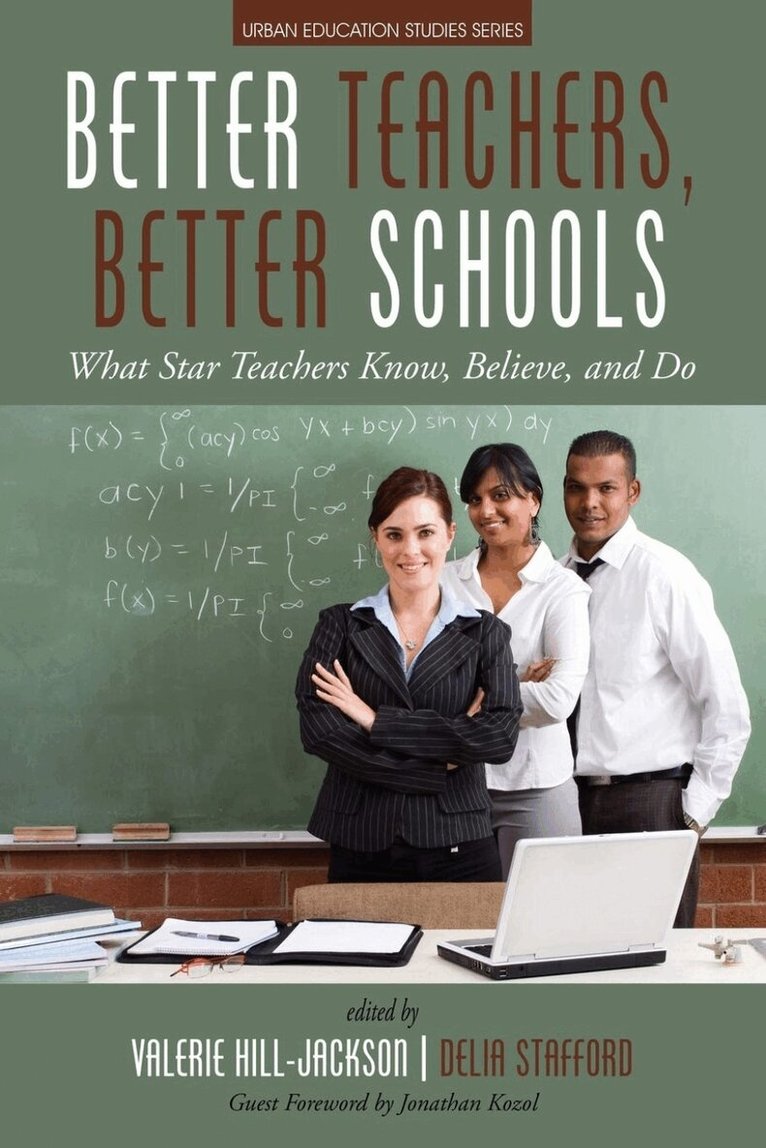
We all know teachers who, in the face of insurmountable district and school level challenges, inspire underserved students to succeed. These teachers are more than good - they are ‘stars’. Haberman maintains that school districts still gamble when selecting teachers as an overwhelming number are not stars and are unprepared or underprepared to work effectively with marginalized students. Haberman explains that teacher selection is more important than teacher training. The ability to identify educators with the necessary social justice or relational characteristics may lead to an increase in academic achievement among learners as well as lower teacher attrition. Consequently, all those who are interested in building America’s teaching force with stars –including human resource managers for K-12 school districts, administrators, teachers, teacher advocates, teacher education faculty and graduate students - will benefit from this book.Better Teachers, Better Schools is a must read for two main reasons. First, the achievement gap between 16 million children in poverty and their mainstream counterparts is continuing to become even wider. Many urban students are constantly subjected to educational barriers, which limits their future opportunities. These learners deserve teachers that know more than content, but who can build relationships in order to leverage learning with greater outcomes. Second, Haberman was one of the most prolific producers of teachers to date. He reminds us that quality school systems, built on the back of quality teachers, benefit our society. Better Teachers, Better Schools offers a refreshing take on what it means to be a star teacher by sharing some of Haberman’s most requested writings as well as new narratives and research that corroborate his star theory. The contributions in this volume give us a window into Haberman’s seven relational dispositions of star teachers; or teachers’ ideology put into behavior. Also, each chapter contains learning outcomes and reflection questions for discussion.
642 kr
Skickas inom 7-10 vardagar
We all know teachers who, in the face of insurmountable district and school level challenges, inspire underserved students to succeed. These teachers are more than good - they are ‘stars’. Haberman maintains that school districts still gamble when selecting teachers as an overwhelming number are not stars and are unprepared or underprepared to work effectively with marginalized students. Haberman explains that teacher selection is more important than teacher training. The ability to identify educators with the necessary social justice or relational characteristics may lead to an increase in academic achievement among learners as well as lower teacher attrition. Consequently, all those who are interested in building America’s teaching force with stars –including human resource managers for K-12 school districts, administrators, teachers, teacher advocates, teacher education faculty and graduate students - will benefit from this book.Better Teachers, Better Schools is a must read for two main reasons. First, the achievement gap between 16 million children in poverty and their mainstream counterparts is continuing to become even wider. Many urban students are constantly subjected to educational barriers, which limits their future opportunities. These learners deserve teachers that know more than content, but who can build relationships in order to leverage learning with greater outcomes. Second, Haberman was one of the most prolific producers of teachers to date. He reminds us that quality school systems, built on the back of quality teachers, benefit our society. Better Teachers, Better Schools offers a refreshing take on what it means to be a star teacher by sharing some of Haberman’s most requested writings as well as new narratives and research that corroborate his star theory. The contributions in this volume give us a window into Haberman’s seven relational dispositions of star teachers; or teachers’ ideology put into behavior. Also, each chapter contains learning outcomes and reflection questions for discussion.
465 kr
Skickas inom 7-10 vardagar
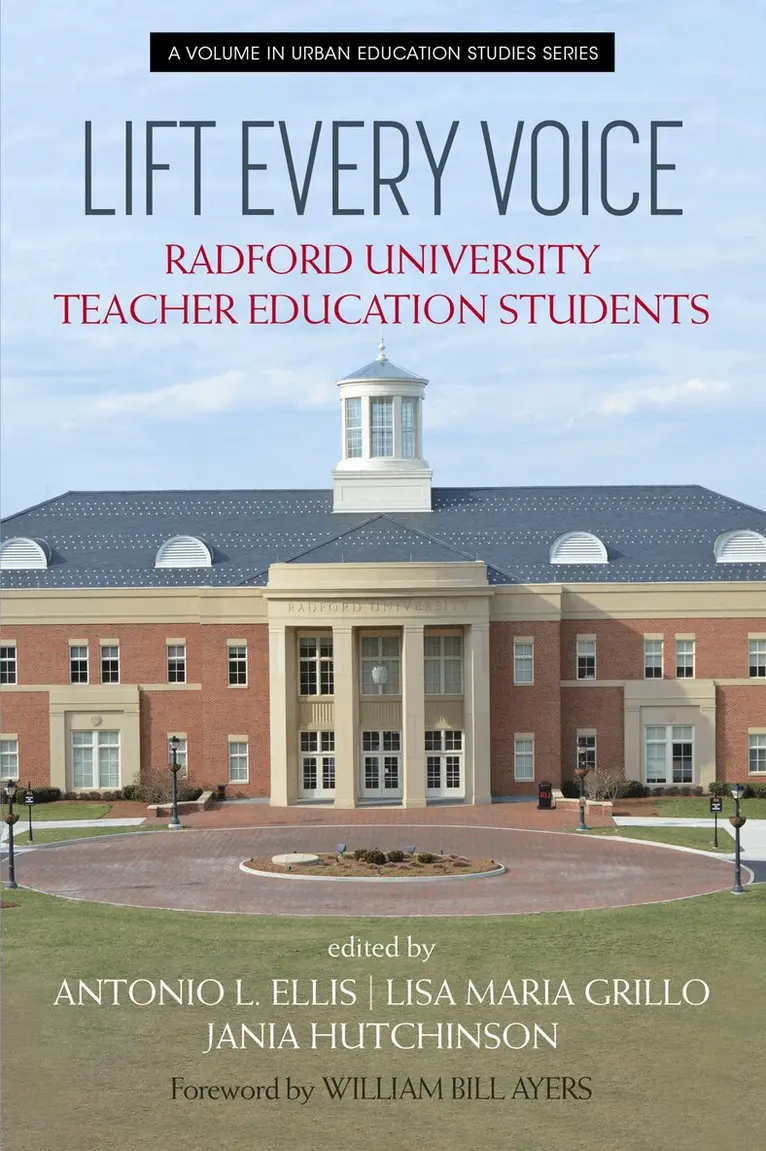
Radford University was founded as a Normal School for teachers in 1910 and has remained a leader in teacher education ever since. Today, the School of Teacher Education and Leadership is defined by our strong partnerships with public schools and our diverse programs that prepare teachers and administrators to serve children from birth through high school. The voices of undergraduate students are often silenced and omitted from scholarly literature beyond serving participants in research studies.This volume legitimizes the voices and life experiences of Radford University undergraduate teacher education students as emerging authorities on the subject of teacher education. Contributors employ a critical storytelling methodology to illuminate the ways in which classroom practices of teachers impacted them academically, socially, and emotionally. The editors hope that these stories, anecdotes, and analysis will be valuable to preservice and classroom teachers who are engaged in educating Pre-K through 12 students.
857 kr
Skickas inom 7-10 vardagar
Radford University was founded as a Normal School for teachers in 1910 and has remained a leader in teacher education ever since. Today, the School of Teacher Education and Leadership is defined by our strong partnerships with public schools and our diverse programs that prepare teachers and administrators to serve children from birth through high school. The voices of undergraduate students are often silenced and omitted from scholarly literature beyond serving participants in research studies.This volume legitimizes the voices and life experiences of Radford University undergraduate teacher education students as emerging authorities on the subject of teacher education. Contributors employ a critical storytelling methodology to illuminate the ways in which classroom practices of teachers impacted them academically, socially, and emotionally. The editors hope that these stories, anecdotes, and analysis will be valuable to preservice and classroom teachers who are engaged in educating Pre-K through 12 students.