Delia Stafford - Böcker
Visar alla böcker från författaren Delia Stafford. Handla med fri frakt och snabb leverans.
5 produkter
5 produkter
487 kr
Skickas inom 3-6 vardagar
453 kr
Skickas inom 7-10 vardagar
'A school is only as good as its principal'. This quip forms the thesis of Better Principals as it provides a bird’s eye view on the enactment of Haberman’s eleven core functions of a star principal. Better Principals is imperative for two main reasons.First, the achievement gap between 20 million children in poverty and their mainstream counterparts is continuing to become even wider. Many students are constantly subjected to inequality of educational opportunity, which limits their future opportunities. Second, Haberman is one of the most prolific producers of administrators of the twentieth century (and into the twenty-first century). He reminds us that quality school systems, with quality leaders, benefit our society. Haberman explained that there is often selection blindness when it comes to identifying school leaders, and this deficiency has many negative consequences for education in general, and learners in particular. Haberman has generated theories, training programs and tools to engender substantive changes needed to produce better schools. Each chapter in this volume contains reflection questions for discussion to remind us all why selecting quality principals must be paramount when hiring school leaders. These illustrative book chapters emphasize the execution of Haberman's star principal ideology.
836 kr
Skickas inom 7-10 vardagar
'A school is only as good as its principal'. This quip forms the thesis of Better Principals as it provides a bird’s eye view on the enactment of Haberman’s eleven core functions of a star principal. Better Principals is imperative for two main reasons.First, the achievement gap between 20 million children in poverty and their mainstream counterparts is continuing to become even wider. Many students are constantly subjected to inequality of educational opportunity, which limits their future opportunities. Second, Haberman is one of the most prolific producers of administrators of the twentieth century (and into the twenty-first century). He reminds us that quality school systems, with quality leaders, benefit our society. Haberman explained that there is often selection blindness when it comes to identifying school leaders, and this deficiency has many negative consequences for education in general, and learners in particular. Haberman has generated theories, training programs and tools to engender substantive changes needed to produce better schools. Each chapter in this volume contains reflection questions for discussion to remind us all why selecting quality principals must be paramount when hiring school leaders. These illustrative book chapters emphasize the execution of Haberman's star principal ideology.
466 kr
Skickas inom 7-10 vardagar
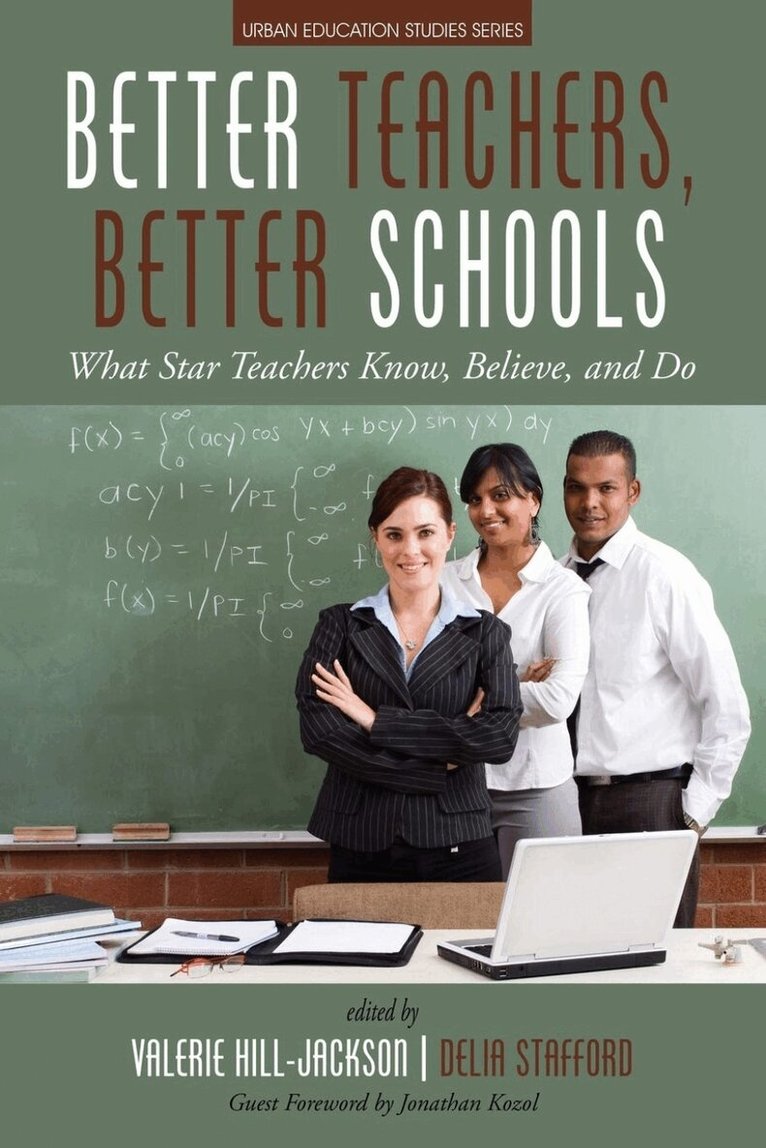
We all know teachers who, in the face of insurmountable district and school level challenges, inspire underserved students to succeed. These teachers are more than good - they are ‘stars’. Haberman maintains that school districts still gamble when selecting teachers as an overwhelming number are not stars and are unprepared or underprepared to work effectively with marginalized students. Haberman explains that teacher selection is more important than teacher training. The ability to identify educators with the necessary social justice or relational characteristics may lead to an increase in academic achievement among learners as well as lower teacher attrition. Consequently, all those who are interested in building America’s teaching force with stars –including human resource managers for K-12 school districts, administrators, teachers, teacher advocates, teacher education faculty and graduate students - will benefit from this book.Better Teachers, Better Schools is a must read for two main reasons. First, the achievement gap between 16 million children in poverty and their mainstream counterparts is continuing to become even wider. Many urban students are constantly subjected to educational barriers, which limits their future opportunities. These learners deserve teachers that know more than content, but who can build relationships in order to leverage learning with greater outcomes. Second, Haberman was one of the most prolific producers of teachers to date. He reminds us that quality school systems, built on the back of quality teachers, benefit our society. Better Teachers, Better Schools offers a refreshing take on what it means to be a star teacher by sharing some of Haberman’s most requested writings as well as new narratives and research that corroborate his star theory. The contributions in this volume give us a window into Haberman’s seven relational dispositions of star teachers; or teachers’ ideology put into behavior. Also, each chapter contains learning outcomes and reflection questions for discussion.
644 kr
Skickas inom 7-10 vardagar
We all know teachers who, in the face of insurmountable district and school level challenges, inspire underserved students to succeed. These teachers are more than good - they are ‘stars’. Haberman maintains that school districts still gamble when selecting teachers as an overwhelming number are not stars and are unprepared or underprepared to work effectively with marginalized students. Haberman explains that teacher selection is more important than teacher training. The ability to identify educators with the necessary social justice or relational characteristics may lead to an increase in academic achievement among learners as well as lower teacher attrition. Consequently, all those who are interested in building America’s teaching force with stars –including human resource managers for K-12 school districts, administrators, teachers, teacher advocates, teacher education faculty and graduate students - will benefit from this book.Better Teachers, Better Schools is a must read for two main reasons. First, the achievement gap between 16 million children in poverty and their mainstream counterparts is continuing to become even wider. Many urban students are constantly subjected to educational barriers, which limits their future opportunities. These learners deserve teachers that know more than content, but who can build relationships in order to leverage learning with greater outcomes. Second, Haberman was one of the most prolific producers of teachers to date. He reminds us that quality school systems, built on the back of quality teachers, benefit our society. Better Teachers, Better Schools offers a refreshing take on what it means to be a star teacher by sharing some of Haberman’s most requested writings as well as new narratives and research that corroborate his star theory. The contributions in this volume give us a window into Haberman’s seven relational dispositions of star teachers; or teachers’ ideology put into behavior. Also, each chapter contains learning outcomes and reflection questions for discussion.