Urbanisation in Developing Countries - Böcker
Visar alla böcker i serien Urbanisation in Developing Countries. Handla med fri frakt och snabb leverans.
6 produkter
6 produkter
428 kr
Skickas inom 7-10 vardagar
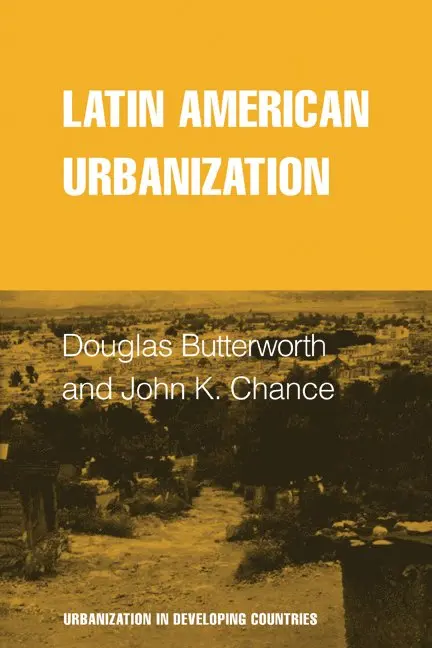
Originally published in 1981 as part of the Urbanization in Developing Countries series, Latin American Urbanization presents an in-depth look at a process of social change in an important region of the Third World. In this study, Professors Butterworth and Chance concentrate on the rural-urban migration of the lower classes and the adaptation of migrants to city life. They examine the rural, peasant and proletarian communities from which the migrants have come and to which they often remain loyal even after many years of urban residence. Drawing together in a coherent manner studies from several disciplines such as demographic, sociocultural, economic and political dimensions of urbanization, this book will interest a variety of scholars in the social sciences and the humanities.
428 kr
Skickas inom 7-10 vardagar
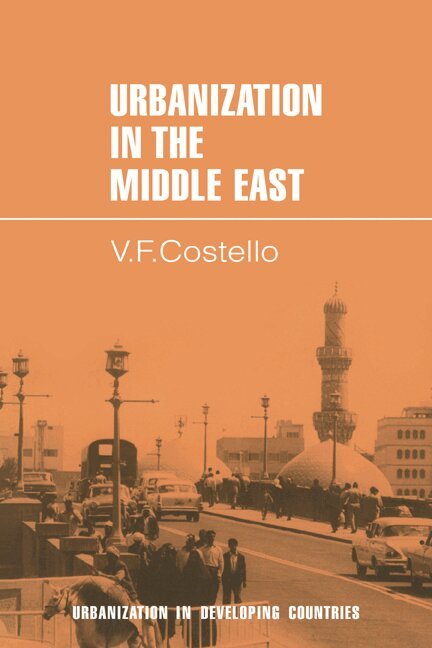
Originally published in 1977 as part of the Urbanization in Developing Countries series, this book studies the social, demographic, political and economic processes involved in the growth of cities in the Middle East. It was the first study of urbanization in this region from a single viewpoint and it draws on the findings of numerous scholars. The main emphasis is on the insights provided by urban geography, sociology and social anthropology, but the work of demographers, economists and historians is also taken into account. Its main purpose is to examine the causes and consequences of the change in the character of the Middle Eastern city from a traditional to a twentieth-century pattern. The book describes the social and environmental background to urban development and the nature of the pre-industrial urban society in the region. The differences between planned urban development in various countries are also studied.
415 kr
Skickas inom 7-10 vardagar
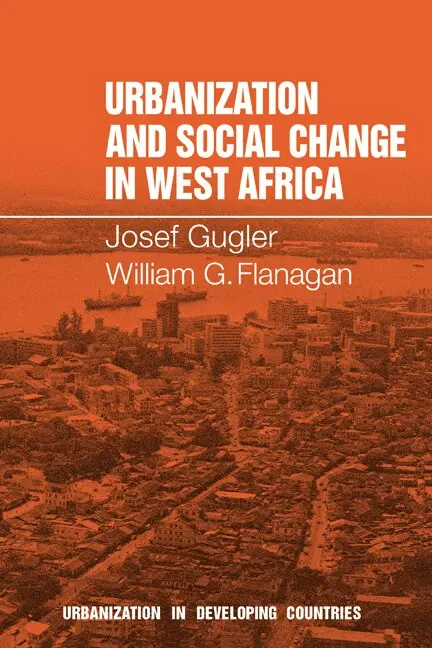
Originally published in 1978 as part of the Urbanization in Developing Countries series, this is an interdisciplinary study of rapid urban growth in West Africa. Gugler and Flanagan first explore the history of the cities of the early West African empires and they draw on the work of social anthropologists and sociologists, as well as demographers, economists, geographers, historians, political scientists and social psychologists. They then describe the urban explosion that the region experienced after World War II. They explore the implications of widespread urban unemployment and underemployment, the housing crisis and the emergence of metropolitan areas such as Lagos. The literature on urbanization and social change in Black Africa in general, and West Africa in particular, expanded at a fast pace in the years preceding publication. This critical review of the disparate findings filled a gap in African Studies and threw light on the understanding of Third World urbanization.
428 kr
Skickas inom 7-10 vardagar
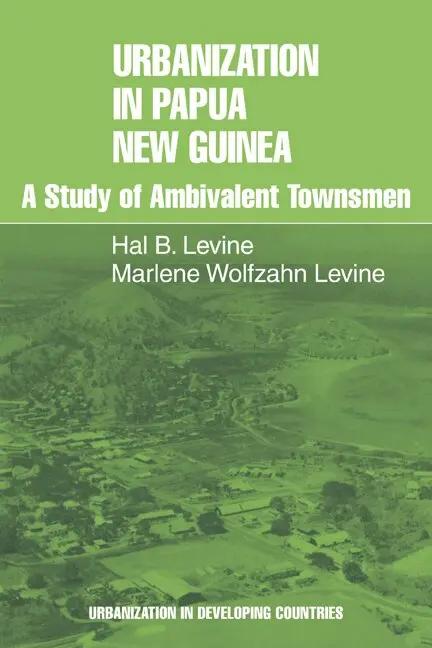
Originally published in 1979 as part of the Urbanization in Developing Countries series, this book is a detailed account of the process of urbanization, and provides a unique perspective on the creation by Papua New Guineans of their own distinctively Melanesian urban centres. The authors synthesized a wide range of material drawn from their own research and that of many scholars. They concentrate their analysis on the subtle modification of rural idioms in the urban social field, the formation and role of urban ethnic units, reactions to emerging class differences within the indigenous population, and the development of patterns of relationships and lifestyles in response to urban employment and residence in 'squatters' settlements, housing estates and barracks. They describe the historical, spatial and demographic development of the towns, and also discuss problematical aspects of indigenous participation in voluntary organizations, business, and urban government. Finally the authors compare Papua New Guinea to other parts of the world.
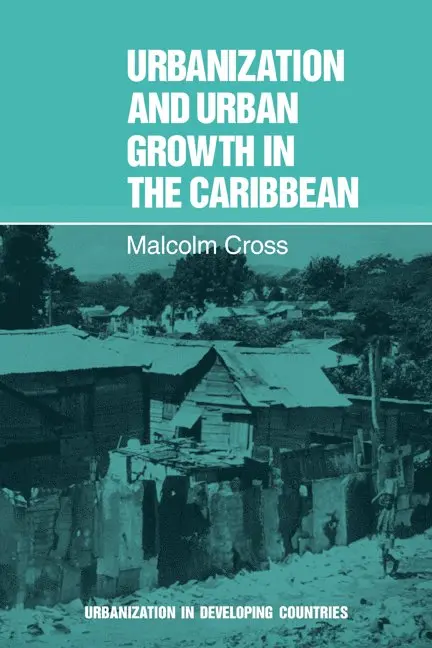
Urbanization and Urban Growth in the Caribbean
An Essay on Social Change in Dependent Societies
Häftad, Engelska, 1979
428 kr
Skickas inom 7-10 vardagar
This book, originally published in 1979, as part of the Urbanization in Developing Countries series, examines the nature and impact of unplanned urban growth in the Caribbean. Unlike other parts of the underdeveloped world, Caribbean societies are unique in having been created by European economic and strategic needs. The original instrument for this domination was the plantation that generated the infamous history of migration from Africa and Asia and which continues to exert an important influence in determining the structure and growth of major urban centres. The book also surveys some distinctive features of Caribbean societies, including family life, religions and social divisions apparently based on race and colour, and concludes by affirming the need to redirect development strategies from Western models towards the creation of a uniquely Caribbean identity based on the redevelopment of land and the revival of agriculture. Examples are drawn from Cuba, Haiti, Puerto Rico and the Commonwealth Caribbean.
415 kr
Skickas inom 7-10 vardagar
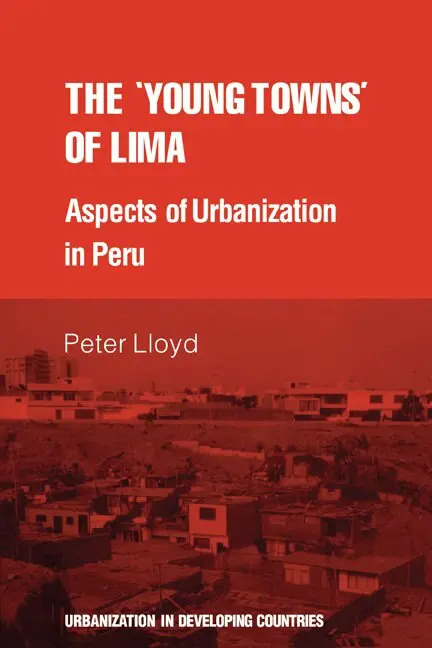
The pueblos jóvenes or 'young towns' of Lima, capital of Peru, are one of the most spectacular phenomena of Latin American urbanization. They were originally formed when poor migrants from the sierra invaded vacant land within the city, initially erecting matting shelters; but latterly governments encouraged the upgrading of these settlements, through the self-help of their residents, and in consequence many older pueblos jóvenes developed into poor working-class suburbs with solidly built houses. In this book, which was originally published in 1980 as part of the Urbanization in Developing Countries series, Professor Lloyd outlines the processes that led to the formation of the pueblos jóvenes. First, the author shows that the settlement is a strongly cohesive community; and second that the term 'marginal', which is applied to both the settlement and its people, is in many senses inappropriate. He also critically examines government policies between the middle class and the poor.