Vietnam: America in the War Years - Böcker
Visar alla böcker i serien . Handla med fri frakt och snabb leverans.
15 produkter
15 produkter
415 kr
Skickas inom 7-10 vardagar
FLAMING DART. COMMANDO HUNT. ROLLING THUNDER.With dramatic names right out of a Hollywood blockbuster, these strike operations conducted by the United States Air Force were part of an aerial campaign that spanned over a decade, sprawled over four countries, and involved the dropping of countless tons of bombs.In this insightful and lively book, distinguished scholar Ronald B. Frankum, Jr. captures the full extent of the struggle. The first brief overview of the air war in Vietnam, Like Rolling Thunder examines each theatre of operation—South Vietnam, North Vietnam, Laos, and Cambodia—and explores the extent to which the aerial campaigns aided U.S. tactics and strategy. Comprehensive yet concise, the work is a fresh look at this conflict's bitterly contested and hard fought air war.
286 kr
Skickas inom 11-20 vardagar
Lyndon Johnson made a life or death bet during his Presidential term, and lost. Intent upon fighting an extended war against a determined foe, he gambled that American society could also endure a vast array of domestic reforms. The result was the turmoil of the 1968 presidential election—a crisis more severe than any since the Civil War. With thousands killed in Vietnam, hundreds dead in civil rights riots, televised chaos at the Democratic National Convention, and two major assassinations, Americans responded by voting for the law and order message of Richard Nixon.In The Deadly Bet, distinguished historian Walter LaFeber explores the turbulent election of 1968 and its significance in the larger context of American history. Looking through the eyes of the year's most important players—including Robert F. Kennedy, Eugene McCarthy, Martin Luther King, Hubert Humphrey, Richard Nixon, George Wallace, Nguyen Van Thieu, and Lyndon Johnson—LaFeber argues that the domestic upheaval had more impact on the election than the war in Vietnam.Clear, concise, and engaging, this work sheds important light on the crucial year of 1968.
269 kr
Skickas inom 10-15 vardagar
Lyndon Johnson made a life or death bet during his Presidential term, and lost. Intent upon fighting an extended war against a determined foe, he gambled that American society could also endure a vast array of domestic reforms. The result was the turmoil of the 1968 presidential election—a crisis more severe than any since the Civil War. With thousands killed in Vietnam, hundreds dead in civil rights riots, televised chaos at the Democratic National Convention, and two major assassinations, Americans responded by voting for the law and order message of Richard Nixon.In The Deadly Bet, distinguished historian Walter LaFeber explores the turbulent election of 1968 and its significance in the larger context of American history. Looking through the eyes of the year's most important players—including Robert F. Kennedy, Eugene McCarthy, Martin Luther King, Hubert Humphrey, Richard Nixon, George Wallace, Nguyen Van Thieu, and Lyndon Johnson—LaFeber argues that the domestic upheaval had more impact on the election than the war in Vietnam.Clear, concise, and engaging, this work sheds important light on the crucial year of 1968.
1 610 kr
Skickas inom 5-8 vardagar
In the midst of the Vietnam War, two titans of the Senate, J. William Fulbright and John C. Stennis, held public hearings to debate the conflict's future. In this intriguing new work, historian Joseph A. Fry provides the first comparative analysis of these inquiries and the senior southern Senators who led them. The Senators' shared aim was to alter the Johnson administration's strategy and bring an end to the war—but from dramatically different perspectives. Fulbright hoped to pressure Johnson to halt escalation and seek a negotiated settlement, while Stennis wanted to prompt the President to bomb North Vietnam more aggressively and secure a victorious end to the war. Publicized and televised, these hearings added fuel to the fire of national debate over Vietnam policy and captured the many arguments of both hawks and doves. Fry details the dramatic confrontations between the Senate committees and the administration spokesmen, Dean Rusk and Robert McNamara, and he probes the success of congressional efforts to influence Vietnam policy. Ultimately, Fry shows how the Fulbright and Stennis hearings provide vivid insight into the debate over why the United States was involved in Vietnam and how the war should be conducted.
526 kr
Skickas inom 5-8 vardagar
In the midst of the Vietnam War, two titans of the Senate, J. William Fulbright and John C. Stennis, held public hearings to debate the conflict's future. In this intriguing new work, historian Joseph A. Fry provides the first comparative analysis of these inquiries and the senior southern Senators who led them. The Senators' shared aim was to alter the Johnson administration's strategy and bring an end to the war—but from dramatically different perspectives. Fulbright hoped to pressure Johnson to halt escalation and seek a negotiated settlement, while Stennis wanted to prompt the President to bomb North Vietnam more aggressively and secure a victorious end to the war. Publicized and televised, these hearings added fuel to the fire of national debate over Vietnam policy and captured the many arguments of both hawks and doves. Fry details the dramatic confrontations between the Senate committees and the administration spokesmen, Dean Rusk and Robert McNamara, and he probes the success of congressional efforts to influence Vietnam policy. Ultimately, Fry shows how the Fulbright and Stennis hearings provide vivid insight into the debate over why the United States was involved in Vietnam and how the war should be conducted.
524 kr
Skickas inom 11-20 vardagar
The Vietnam War affected nearly every aspect of American life. It altered the economy, challenged citizens to reassess their values, and played a key roll in the downfall of two presidential administrations. However, most people's attention remained focused on their daily lives—including the latest movie, the baseball score, and the new group on American Bandstand. But those elements were not immune from the war's effects. American popular culture changed dramatically during the Vietnam era—from Leave it To Beaver to All in the Family and from Bobby Darin to Bob Dylan. In Crossroads, historian Mitchell K. Hall explores the popular culture that shaped the baby boomers and the transformation that generation wrought in movies, television, sports, and music. As he traces the evolution of American culture, Hall looks at the ways in which these cultural elements not only underwent radical structural changes, but also reflected the upheaval and unrest in Vietnam era America.
Cold War Mandarin
Ngo Dinh Diem and the Origins of America's War in Vietnam, 1950–1963
Inbunden, Engelska, 2006
1 383 kr
Skickas inom 10-15 vardagar
For almost a decade, the tyrannical Ngo Dinh Diem governed South Vietnam as a one-party police state while the U.S. financed his tyranny. In this new book, Seth Jacobs traces the history of American support for Diem from his first appearance in Washington as a penniless expatriate in 1950 to his murder by South Vietnamese soldiers on the outskirts of Saigon in 1963. Drawing on recent scholarship and newly available primary sources, Cold War Mandarin explores how Diem became America's bastion against a communist South Vietnam, and why the Kennedy and Eisenhower administrations kept his regime afloat. Finally, Jacobs examines the brilliantly organized public-relations campaign by Saigon's Buddhists that persuaded Washington to collude in the overthrow—and assassination—of its longtime ally. In this clear and succinct analysis, Jacobs details the "Diem experiment," and makes it clear how America's policy of "sink or swim with Ngo Dinh Diem" ultimately drew the country into the longest war in its history.
Cold War Mandarin
Ngo Dinh Diem and the Origins of America's War in Vietnam, 1950–1963
Häftad, Engelska, 2006
605 kr
Skickas inom 5-8 vardagar
For almost a decade, the tyrannical Ngo Dinh Diem governed South Vietnam as a one-party police state while the U.S. financed his tyranny. In this new book, Seth Jacobs traces the history of American support for Diem from his first appearance in Washington as a penniless expatriate in 1950 to his murder by South Vietnamese soldiers on the outskirts of Saigon in 1963. Drawing on recent scholarship and newly available primary sources, Cold War Mandarin explores how Diem became America's bastion against a communist South Vietnam, and why the Kennedy and Eisenhower administrations kept his regime afloat. Finally, Jacobs examines the brilliantly organized public-relations campaign by Saigon's Buddhists that persuaded Washington to collude in the overthrow—and assassination—of its longtime ally. In this clear and succinct analysis, Jacobs details the "Diem experiment," and makes it clear how America's policy of "sink or swim with Ngo Dinh Diem" ultimately drew the country into the longest war in its history.
733 kr
Skickas inom 5-8 vardagar
This book explores how and why Vietnam loomed so large for Humphrey as vice president from 1964 through the 1968 election campaign against Richard Nixon. It assesses how Humphrey’s loyalty to Lyndon B. Johnson, who emerges as the villain of the story in many ways, would negatively affect his political ambitions. And it engages the disconnect between Humphrey’s principles and the intricate politics of his convoluted relationship with the president and his unsuccessful presidential campaign. It is a complex and frustrating narrative, the results of which would be tragic, not only for Humphrey’s presidential aspirations, but also for the war in Southeast Asia and the future of the United States.
526 kr
Skickas inom 5-8 vardagar
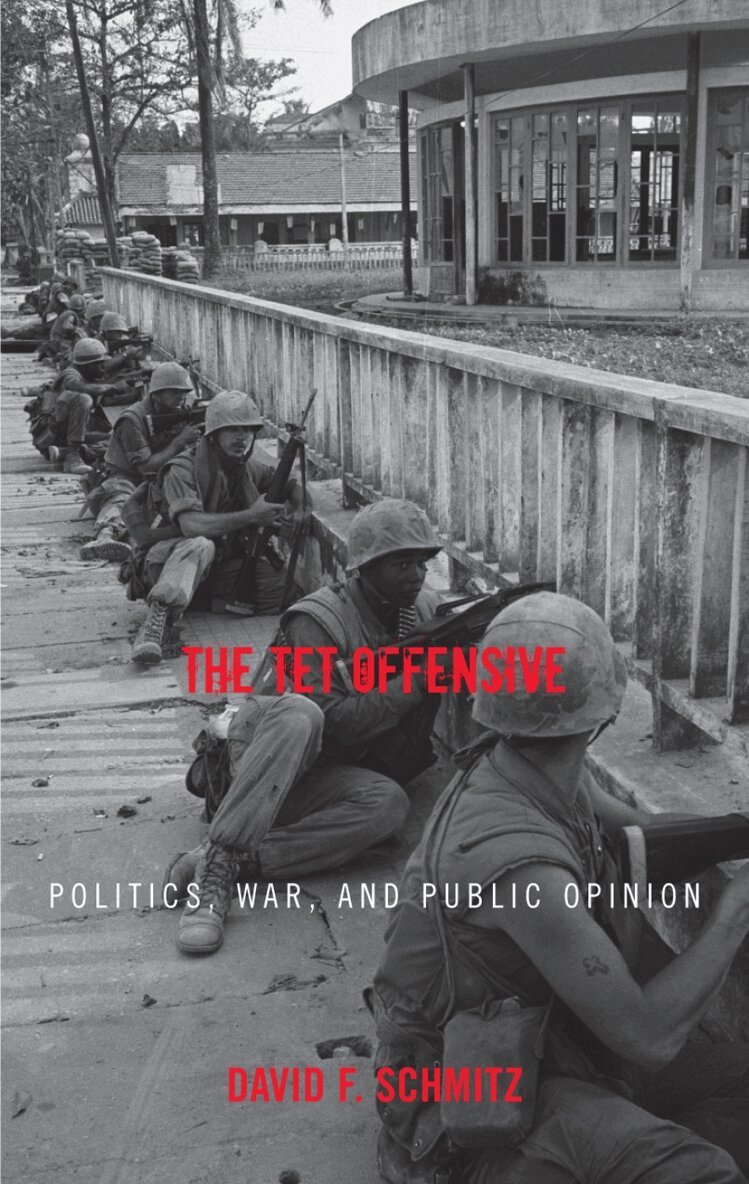
On January 30, 1968 approximately 84,000 North Vietnamese Army and National Liberation Front forces launched nearly simultaneous attacks against over 100 cities and military installations in South Vietnam. The well-coordinated urban attacks came during the most sacred of Vietnamese holidays and caught American commanders by surprise. The results of the Tet Offensive were monumental, tens of thousands were killed and many more wounded. But its importance goes far beyond its military outcome to the powerful political, psychological, and economic impact in the United States. In this new work, historian David F. Schmitz analyzes what is arguably the most important event in the history of the Vietnam conflict. Schmitz situates the Tet Offensive in the context of American foreign policy and the state of the war up to 1968 while carefully considering the impact of the media on American public opinion. Through his up-to-date analysis of recently available sources, Schmitz works to dispel myths and clarify the central debates surrounding this pivotal event that brought an end to American escalation of the war and led to LBJ's decision to withdraw from the presidential race.
447 kr
Skickas inom 10-15 vardagar
Allies at Odds examines America's Vietnam policy from 1961 to 1968 in an international context by focusing on the United States' relationship with its European partners France, West Germany, and Great Britain. The European response to America's Vietnam policy provides a framework to assess this important chapter in recent American history within the wider perspective of international relations. Equally significant, the respective approaches to the "Vietnam question" by the Europeans and Americans reveal the ongoing challenge for nation-states of transcending narrowly defined state-centered policies for a global perspective pursuant of common goals among the trans-Atlantic allies. Blang explores the failure of France, West Germany, and Great Britain to significantly influence American policy-making.
585 kr
Skickas inom 10-15 vardagar
The antiDVietnam War movement marked the first time in American history that record numbers marched and protested to an antiwar tune_on college campuses, in neighborhoods, and in Washington. Although it did not create enough pressure on decision-makers to end U.S. involvement in the war, the movement's impact was monumental. It served as a major constraint on the government's ability to escalate, played a significant role in President Lyndon B. Johnson's decision in 1968 not to seek another term, and was a factor in the Watergate affair that brought down President Richard Nixon. At last, the story of the entire antiwar movement from its advent to its dissolution is available in Antiwarriors: The Vietnam War and the Battle for America's Hearts and Minds . Author Melvin Small describes not only the origins and trajectory of the antiDVietnam War movement in America, but also focuses on the way it affected policy and public opinion and the way it in turn was affected by the government and the media, and, consequently, events in Southeast Asia. Leading this crusade were outspoken cultural rebels including Abbie Hoffman and Jerry Rubin, as passionate about the cause as the music that epitomizes the period. But in addition to radical protestors whose actions fueled intense media coverage, Small reveals that the anti-war movement included a diverse cast of ordinary citizens turned war dissenter: housewives, politicians, suburbanites, clergy members, and the elderly. The antiwar movement comes to life in this compelling new book that is sure to fascinate all those interested in the Vietnam War and the turbulent, tumultuous 1960s.
695 kr
Skickas inom 10-15 vardagar
In Richard Nixon and the Vietnam War, accomplished foreign relations historian David F. Shmitz provides students of US history and the Vietnam era with an up-to-date analysis of Nixon’s Vietnam policy in a brief and accessible book that addresses the main controversies of the Nixon years. President Richard Nixon’s first presidential term oversaw the definitive crucible of the Vietnam War. Nixon came into office seeking the kind of decisive victory that had eluded President Johnson, and went about expanding the war, overtly and covertly, in order to uphold a policy of “containment,” protect America’s credibility, and defy the left’s antiwar movement at home. Tactically, politically, Nixon’s moves made sense. However, by 1971 the president was forced to significantly de-escalate the American presence and seek a negotiated end to the war, which is now accepted as an American defeat, and a resounding failure of American foreign relations. Schmitz addresses the main controversies of Nixon’s Vietnam strategy, and in so doing manages to trace back the ways in which this most calculating and perceptive politician wound up resigning from office a fraud and failure. Finally, the book seeks to place the impact of Nixon’s policies and decisions in the larger context of post-World War II American society, and analyzes the full costs of the Vietnam War that the nation feels to this day.
447 kr
Skickas inom 10-15 vardagar
In Richard Nixon and the Vietnam War, accomplished foreign relations historian David F. Shmitz provides students of US history and the Vietnam era with an up-to-date analysis of Nixon’s Vietnam policy in a brief and accessible book that addresses the main controversies of the Nixon years. President Richard Nixon’s first presidential term oversaw the definitive crucible of the Vietnam War. Nixon came into office seeking the kind of decisive victory that had eluded President Johnson, and went about expanding the war, overtly and covertly, in order to uphold a policy of “containment,” protect America’s credibility, and defy the left’s antiwar movement at home. Tactically, politically, Nixon’s moves made sense. However, by 1971 the president was forced to significantly de-escalate the American presence and seek a negotiated end to the war, which is now accepted as an American defeat, and a resounding failure of American foreign relations. Schmitz addresses the main controversies of Nixon’s Vietnam strategy, and in so doing manages to trace back the ways in which this most calculating and perceptive politician wound up resigning from office a fraud and failure. Finally, the book seeks to place the impact of Nixon’s policies and decisions in the larger context of post-World War II American society, and analyzes the full costs of the Vietnam War that the nation feels to this day.
530 kr
Skickas inom 10-15 vardagar
When he took office in 1969, the term that Richard Nixon embraced to describe his plan for ending the American war in Vietnam was “Vietnamization,” the process of withdrawing US troops and turning over responsibility for the war to the South Vietnamese government. The concept had far reaching implications, both for understanding Nixon’s actions and for shaping U.S. military thinking years after Washington’s failure to ensure the survival of its client state in South Vietnam. In this book, Vietnam War expert David L. Anderson explores the political and strategic implications and assesses its continuing, significant impact on American post-Vietnam foreign policy.