Seth Jacobs - Böcker
Visar alla böcker från författaren Seth Jacobs. Handla med fri frakt och snabb leverans.
6 produkter
6 produkter
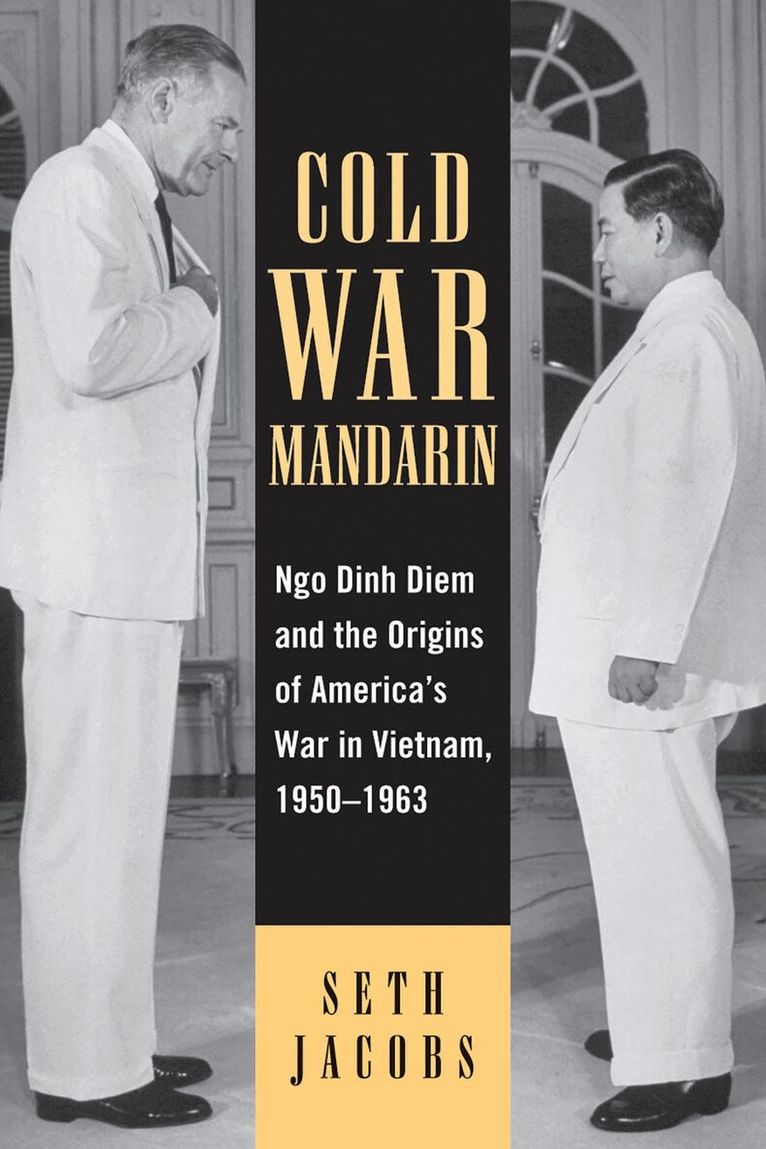
Cold War Mandarin
Ngo Dinh Diem and the Origins of America's War in Vietnam, 1950–1963
Inbunden, Engelska, 2006
1 383 kr
Skickas inom 10-15 vardagar
For almost a decade, the tyrannical Ngo Dinh Diem governed South Vietnam as a one-party police state while the U.S. financed his tyranny. In this new book, Seth Jacobs traces the history of American support for Diem from his first appearance in Washington as a penniless expatriate in 1950 to his murder by South Vietnamese soldiers on the outskirts of Saigon in 1963. Drawing on recent scholarship and newly available primary sources, Cold War Mandarin explores how Diem became America's bastion against a communist South Vietnam, and why the Kennedy and Eisenhower administrations kept his regime afloat. Finally, Jacobs examines the brilliantly organized public-relations campaign by Saigon's Buddhists that persuaded Washington to collude in the overthrow—and assassination—of its longtime ally. In this clear and succinct analysis, Jacobs details the "Diem experiment," and makes it clear how America's policy of "sink or swim with Ngo Dinh Diem" ultimately drew the country into the longest war in its history.
Cold War Mandarin
Ngo Dinh Diem and the Origins of America's War in Vietnam, 1950–1963
Häftad, Engelska, 2006
605 kr
Skickas inom 5-8 vardagar
For almost a decade, the tyrannical Ngo Dinh Diem governed South Vietnam as a one-party police state while the U.S. financed his tyranny. In this new book, Seth Jacobs traces the history of American support for Diem from his first appearance in Washington as a penniless expatriate in 1950 to his murder by South Vietnamese soldiers on the outskirts of Saigon in 1963. Drawing on recent scholarship and newly available primary sources, Cold War Mandarin explores how Diem became America's bastion against a communist South Vietnam, and why the Kennedy and Eisenhower administrations kept his regime afloat. Finally, Jacobs examines the brilliantly organized public-relations campaign by Saigon's Buddhists that persuaded Washington to collude in the overthrow—and assassination—of its longtime ally. In this clear and succinct analysis, Jacobs details the "Diem experiment," and makes it clear how America's policy of "sink or swim with Ngo Dinh Diem" ultimately drew the country into the longest war in its history.
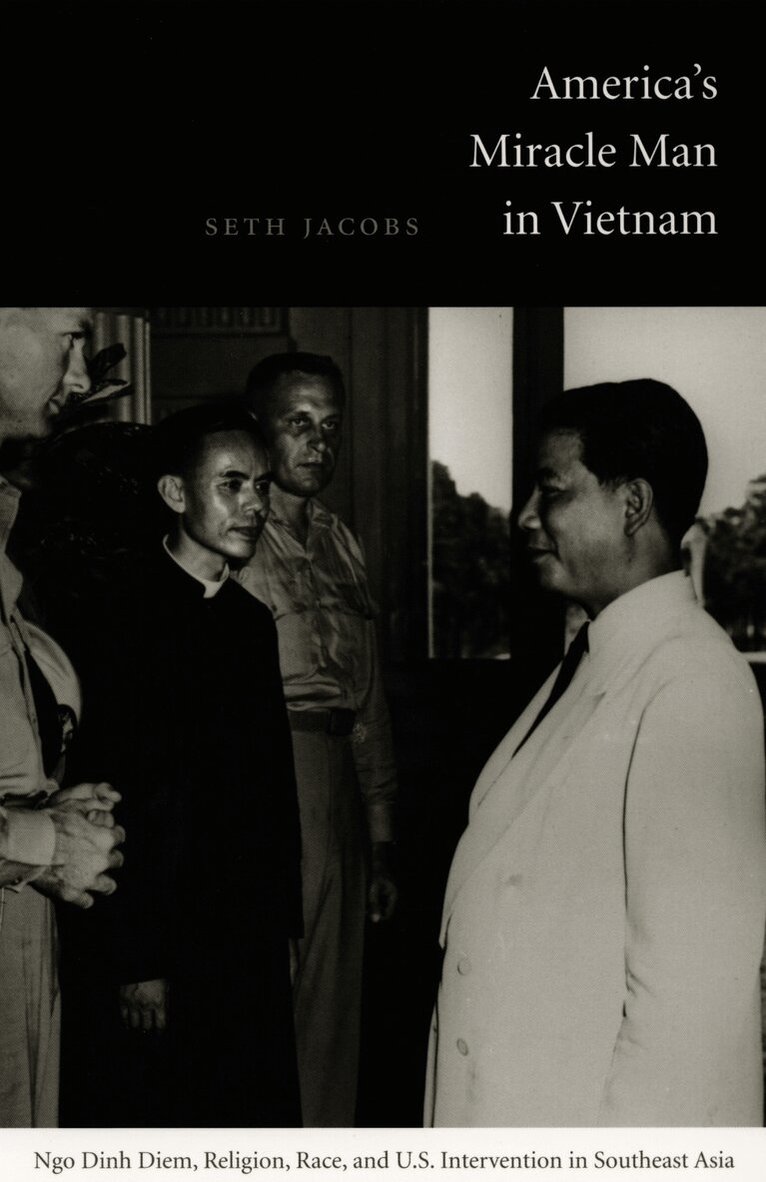
America's Miracle Man in Vietnam
Ngo Dinh Diem, Religion, Race, and U.S. Intervention in Southeast Asia
Inbunden, Engelska, 2005
1 362 kr
Skickas inom 7-10 vardagar
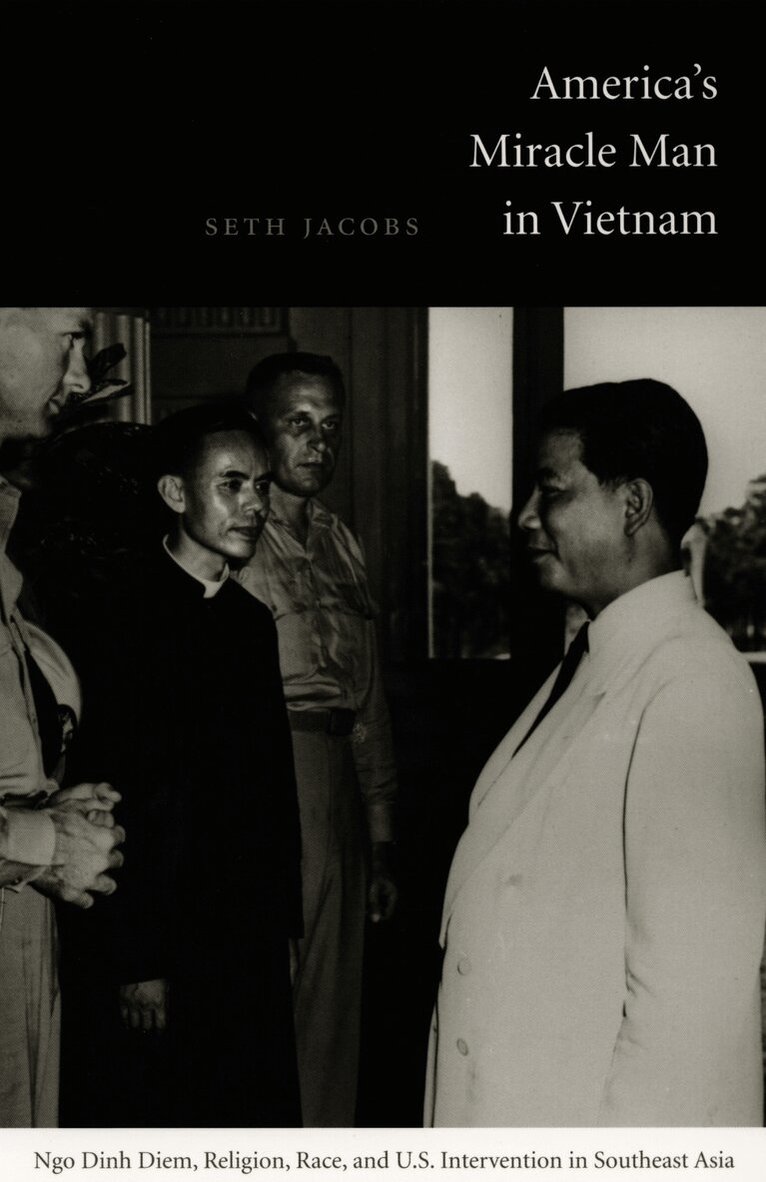
America’s Miracle Man in Vietnam rethinks the motivations behind one of the most ruinous foreign-policy decisions of the postwar era: America’s commitment to preserve an independent South Vietnam under the premiership of Ngo Dinh Diem. The so-called Diem experiment is usually ascribed to U.S. anticommunism and an absence of other candidates for South Vietnam’s highest office. Challenging those explanations, Seth Jacobs utilizes religion and race as categories of analysis to argue that the alliance with Diem cannot be understood apart from America’s mid-century religious revival and policymakers’ perceptions of Asians. Jacobs contends that Diem’s Catholicism and the extent to which he violated American notions of “Oriental” passivity and moral laxity made him a more attractive ally to Washington than many non-Christian South Vietnamese with greater administrative experience and popular support. A diplomatic and cultural history, America’s Miracle Man in Vietnam draws on government archives, presidential libraries, private papers, novels, newspapers, magazines, movies, and television and radio broadcasts. Jacobs shows in detail how, in the 1950s, U.S. policymakers conceived of Cold War anticommunism as a crusade in which Americans needed to combine with fellow Judeo-Christians against an adversary dangerous as much for its atheism as for its military might. He describes how racist assumptions that Asians were culturally unready for democratic self-government predisposed Americans to excuse Diem’s dictatorship as necessary in “the Orient.” By focusing attention on the role of American religious and racial ideologies, Jacobs makes a crucial contribution to our understanding of the disastrous commitment of the United States to “sink or swim with Ngo Dinh Diem.”
America's Miracle Man in Vietnam
Ngo Dinh Diem, Religion, Race, and U.S. Intervention in Southeast Asia
Häftad, Engelska, 2005
427 kr
Skickas inom 7-10 vardagar
America’s Miracle Man in Vietnam rethinks the motivations behind one of the most ruinous foreign-policy decisions of the postwar era: America’s commitment to preserve an independent South Vietnam under the premiership of Ngo Dinh Diem. The so-called Diem experiment is usually ascribed to U.S. anticommunism and an absence of other candidates for South Vietnam’s highest office. Challenging those explanations, Seth Jacobs utilizes religion and race as categories of analysis to argue that the alliance with Diem cannot be understood apart from America’s mid-century religious revival and policymakers’ perceptions of Asians. Jacobs contends that Diem’s Catholicism and the extent to which he violated American notions of “Oriental” passivity and moral laxity made him a more attractive ally to Washington than many non-Christian South Vietnamese with greater administrative experience and popular support. A diplomatic and cultural history, America’s Miracle Man in Vietnam draws on government archives, presidential libraries, private papers, novels, newspapers, magazines, movies, and television and radio broadcasts. Jacobs shows in detail how, in the 1950s, U.S. policymakers conceived of Cold War anticommunism as a crusade in which Americans needed to combine with fellow Judeo-Christians against an adversary dangerous as much for its atheism as for its military might. He describes how racist assumptions that Asians were culturally unready for democratic self-government predisposed Americans to excuse Diem’s dictatorship as necessary in “the Orient.” By focusing attention on the role of American religious and racial ideologies, Jacobs makes a crucial contribution to our understanding of the disastrous commitment of the United States to “sink or swim with Ngo Dinh Diem.”
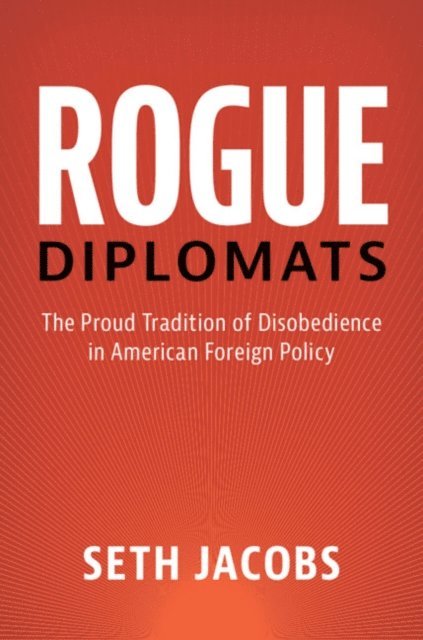
Rogue Diplomats
The Proud Tradition of Disobedience in American Foreign Policy
Inbunden, Engelska, 2020
1 092 kr
Skickas inom 7-10 vardagar
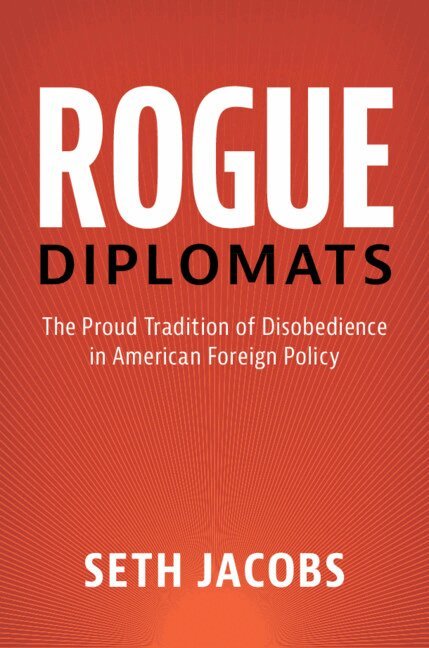
Many of America's most significant political, economic, territorial, and geostrategic accomplishments from 1776 to the present day came about because a U.S. diplomat disobeyed orders. The magnificent terms granted to the infant republic by Britain at the close of the American Revolution, the bloodless acquisition of France's massive Louisiana territory in 1803, the procurement of an even vaster expanse of land from Mexico forty years later, the preservation of the Anglo-American 'special relationship' during World War I-these and other milestones in the history of U.S. geopolitics derived in large part from the refusal of ambassadors, ministers, and envoys to heed the instructions given to them by their superiors back home. Historians have neglected this pattern of insubordination-until now. Rogue Diplomats makes a seminal contribution to scholarship on U.S. geopolitics and provides a provocative response to the question that has vexed so many diplomatic historians: is there a distinctively "American" foreign policy?
254 kr
Skickas inom 7-10 vardagar
Many of America's most significant political, economic, territorial, and geostrategic accomplishments from 1776 to the present day came about because a U.S. diplomat disobeyed orders. The magnificent terms granted to the infant republic by Britain at the close of the American Revolution, the bloodless acquisition of France's massive Louisiana territory in 1803, the procurement of an even vaster expanse of land from Mexico forty years later, the preservation of the Anglo-American 'special relationship' during World War I-these and other milestones in the history of U.S. geopolitics derived in large part from the refusal of ambassadors, ministers, and envoys to heed the instructions given to them by their superiors back home. Historians have neglected this pattern of insubordination-until now. Rogue Diplomats makes a seminal contribution to scholarship on U.S. geopolitics and provides a provocative response to the question that has vexed so many diplomatic historians: is there a distinctively "American" foreign policy?