What is Political Economy? – Serie
Visar alla böcker i serien What is Political Economy?. Handla med fri frakt och snabb leverans.
12 produkter
12 produkter
618 kr
Skickas inom 7-10 vardagar
Few economic phenomena provoke as much confusion as money. From the first measures of value and the physical coins that circulated at the dawn human civilization to the era of ‘virtual’ money transmitted through cyberspace, it is ubiquitous and hugely important, yet economists cannot even agree on what it is. In this pithy, accessible book, Geoffrey Ingham cuts through this tangled web of debate to bring rare clarity. Ingham begins by examining the fundamental debate over the nature of money: is it fundamentally a natural, ‘neutral’ measure of pre-existing value produced by ‘real’ economic forces? Or is it a socially produced and politically manipulated force that creates new value? He proceeds to trace the import of these competing views for how we understand our contemporary monetary systems and their practical and policy-related implications, from their role in financial crises to proposals for reform. Students of political economy, economic sociology and monetary economics will find this book an invaluable primer, as will general readers wishing to understand how money shapes their lives, from the cash in their pocket to the numbers on their computer screen.
211 kr
Skickas inom 7-10 vardagar
Few economic phenomena provoke as much confusion as money. From the first measures of value and the physical coins that circulated at the dawn human civilization to the era of ‘virtual’ money transmitted through cyberspace, it is ubiquitous and hugely important, yet economists cannot even agree on what it is. In this pithy, accessible book, Geoffrey Ingham cuts through this tangled web of debate to bring rare clarity. Ingham begins by examining the fundamental debate over the nature of money: is it fundamentally a natural, ‘neutral’ measure of pre-existing value produced by ‘real’ economic forces? Or is it a socially produced and politically manipulated force that creates new value? He proceeds to trace the import of these competing views for how we understand our contemporary monetary systems and their practical and policy-related implications, from their role in financial crises to proposals for reform. Students of political economy, economic sociology and monetary economics will find this book an invaluable primer, as will general readers wishing to understand how money shapes their lives, from the cash in their pocket to the numbers on their computer screen.
618 kr
Skickas inom 7-10 vardagar
Austerity has been at the center of political controversy following the 2008 financial crisis, invoked by politicians and academics across the political spectrum as the answer to, or cause of, our post-crash economic malaise. However, despite being the cause of debate for more than three centuries, austerity remains a poorly understood concept. In this book, Suzanne J. Konzelmann aims to demystify austerity as an economic policy, a political idea, and a social phenomenon. Beginning with an analysis of political and socioeconomic history from the seventeenth century, she explains the economics of austerity in the context of the overall dynamics of state spending, tax, and debt. Using comparative case studies from around the world, ranging from the 1930s to post-2008, she then evaluates the outcomes of austerity in light of its stated objectives and analyzes the conditions under which it doesn’t – and occasionally does – work. This accessible introduction to austerity will be essential reading for students and scholars of political economy, economics, and politics, as well as all readers interested in current affairs.
211 kr
Skickas inom 7-10 vardagar
Austerity has been at the center of political controversy following the 2008 financial crisis, invoked by politicians and academics across the political spectrum as the answer to, or cause of, our post-crash economic malaise. However, despite being the cause of debate for more than three centuries, austerity remains a poorly understood concept. In this book, Suzanne J. Konzelmann aims to demystify austerity as an economic policy, a political idea, and a social phenomenon. Beginning with an analysis of political and socioeconomic history from the seventeenth century, she explains the economics of austerity in the context of the overall dynamics of state spending, tax, and debt. Using comparative case studies from around the world, ranging from the 1930s to post-2008, she then evaluates the outcomes of austerity in light of its stated objectives and analyzes the conditions under which it doesn’t – and occasionally does – work. This accessible introduction to austerity will be essential reading for students and scholars of political economy, economics, and politics, as well as all readers interested in current affairs.
618 kr
Skickas inom 7-10 vardagar
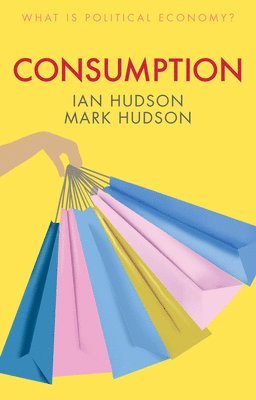
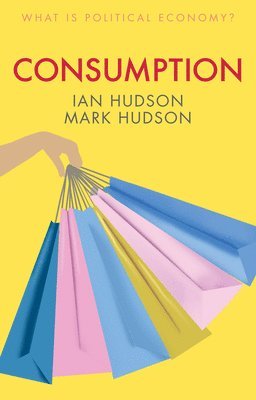
Consumption used to be a disease. Now it is the dominant manner in which most people meet their most basic needs and – if they can afford the price – their wildest desires.In this new book, Ian and Mark Hudson critically examine how consumption has been understood in economic theory before analyzing its centrality to our social lives and function in contemporary capitalism. They also outline the consequences it has for people and nature, consequences routinely made invisible in the shopping mall or online catalogue. Hudson and Hudson show, in an approachable manner, how patterns of consumption are influenced by cultures, individual preferences and identity formation before arguing that underlying these determinants is the unavoidable need within capitalism to realize profit.This accessible and comprehensive book will be essential reading for students and scholars of political economy, economics and economic sociology, as well as any reader who wants to confront their own practices of consumption in a meaningful way.
211 kr
Skickas inom 7-10 vardagar
Consumption used to be a disease. Now it is the dominant manner in which most people meet their most basic needs and – if they can afford the price – their wildest desires.In this new book, Ian and Mark Hudson critically examine how consumption has been understood in economic theory before analyzing its centrality to our social lives and function in contemporary capitalism. They also outline the consequences it has for people and nature, consequences routinely made invisible in the shopping mall or online catalogue. Hudson and Hudson show, in an approachable manner, how patterns of consumption are influenced by cultures, individual preferences and identity formation before arguing that underlying these determinants is the unavoidable need within capitalism to realize profit.This accessible and comprehensive book will be essential reading for students and scholars of political economy, economics and economic sociology, as well as any reader who wants to confront their own practices of consumption in a meaningful way.
618 kr
Skickas inom 7-10 vardagar
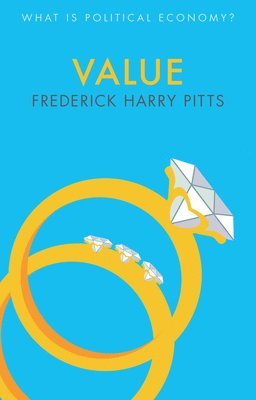
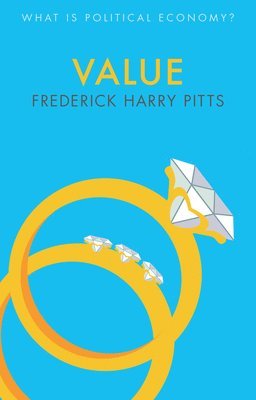
'Value' seems like an elusive and abstract concept. Nonetheless, notions of value underpin how we understand our lives, from discussions about the economic contribution of different kinds of work and productive activity, to the prices we pay for the things we consume. So what is value, and where does it come from?In this new book, Frederick Harry Pitts charts the past, present and future of value within and beyond capitalist society, critically engaging with key concepts from classical and neoclassical political economy. Interrogating the processes and practices that attribute value to objects and activities, he considers debates over whether value lies within commodities or in their exchange, the politics of different theories of value, and how we measure value in a knowledge-based economy.This accessible and intriguing introduction to the complexities of value in modern society will be essential reading for any student or scholar working in political economy, economics, economic sociology or management.
211 kr
Skickas inom 7-10 vardagar
'Value' seems like an elusive and abstract concept. Nonetheless, notions of value underpin how we understand our lives, from discussions about the economic contribution of different kinds of work and productive activity, to the prices we pay for the things we consume. So what is value, and where does it come from?In this new book, Frederick Harry Pitts charts the past, present and future of value within and beyond capitalist society, critically engaging with key concepts from classical and neoclassical political economy. Interrogating the processes and practices that attribute value to objects and activities, he considers debates over whether value lies within commodities or in their exchange, the politics of different theories of value, and how we measure value in a knowledge-based economy.This accessible and intriguing introduction to the complexities of value in modern society will be essential reading for any student or scholar working in political economy, economics, economic sociology or management.
618 kr
Skickas inom 7-10 vardagar
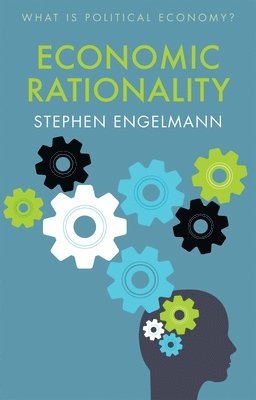
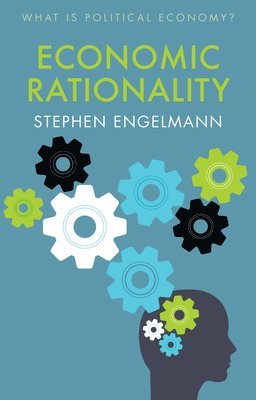
Economics used to be called political economy, and the loss of the “political” tracks the ascendance of the idea of rational choice within the discipline. Where does this idea of economic rationality – choosing to maximize benefits and minimize costs – come from? What are the consequences of its rise?In this new book, Stephen Engelmann assesses these questions through a consideration of the often-hidden links between choice and government, ranging from the Benthamic utilitarianism that inspired modern economics to the contemporary economic psychologists trying to nudge everyone to choose more rationally. Multiple global crises are exposing how deficient economic rationality is as a political theory, since a focus on choice turns actors away from relations in the common. Political economy once targeted aristocratic rule – heralding a politics and ethics of egalitarian self-command and spurring democratic reform – but economics allows domination and forecloses alternatives to it.This accessible volume will be of interest to students and scholars of politics and economics, and to general readers concerned about the various ways that psychology and management have infiltrated our politics.
211 kr
Skickas inom 7-10 vardagar
Economics used to be called political economy, and the loss of the “political” tracks the ascendance of the idea of rational choice within the discipline. Where does this idea of economic rationality – choosing to maximize benefits and minimize costs – come from? What are the consequences of its rise?In this new book, Stephen Engelmann assesses these questions through a consideration of the often-hidden links between choice and government, ranging from the Benthamic utilitarianism that inspired modern economics to the contemporary economic psychologists trying to nudge everyone to choose more rationally. Multiple global crises are exposing how deficient economic rationality is as a political theory, since a focus on choice turns actors away from relations in the common. Political economy once targeted aristocratic rule – heralding a politics and ethics of egalitarian self-command and spurring democratic reform – but economics allows domination and forecloses alternatives to it.This accessible volume will be of interest to students and scholars of politics and economics, and to general readers concerned about the various ways that psychology and management have infiltrated our politics.
618 kr
Skickas inom 7-10 vardagar
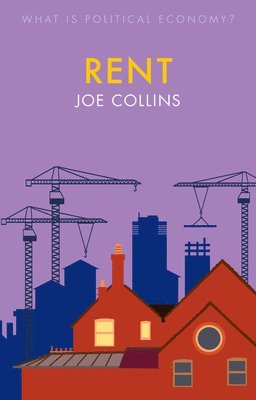
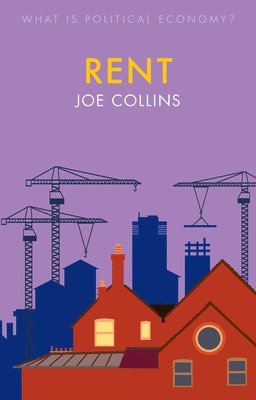
The problem of rent is at the root of vital social concerns in the twenty-first century, ranging from the climate emergency and spiralling economic inequality to the repercussions of global economic crises. But while many of us may be familiar with rent (especially paying it), how should we really understand it?Examining both concrete contexts and complex concepts, in this book Joe Collins provides a comprehensive but concise survey of the theories and debates over rent and rentier capitalism. He examines global gentrification from São Paolo to Dublin, the tyranny of technology from Taipei to San Francisco, and the excesses of extractivism from Sekondi to Karratha. In doing so, he reveals how rent is fundamental to the current dominant form of capitalist social organization across the globe and how we can prevent the next generation from seeing our societies rent asunder.An essential resource for students and scholars alike, this groundbreaking book will be of interest to anyone working on capitalism, property, political economy, economic sociology and contemporary politics.
211 kr
Skickas inom 7-10 vardagar
The problem of rent is at the root of vital social concerns in the twenty-first century, ranging from the climate emergency and spiralling economic inequality to the repercussions of global economic crises. But while many of us may be familiar with rent (especially paying it), how should we really understand it?Examining both concrete contexts and complex concepts, in this book Joe Collins provides a comprehensive but concise survey of the theories and debates over rent and rentier capitalism. He examines global gentrification from São Paolo to Dublin, the tyranny of technology from Taipei to San Francisco, and the excesses of extractivism from Sekondi to Karratha. In doing so, he reveals how rent is fundamental to the current dominant form of capitalist social organization across the globe and how we can prevent the next generation from seeing our societies rent asunder.An essential resource for students and scholars alike, this groundbreaking book will be of interest to anyone working on capitalism, property, political economy, economic sociology and contemporary politics.