What's Wrong? - Böcker
Visar alla böcker i serien What's Wrong?. Handla med fri frakt och snabb leverans.
12 produkter
12 produkter
719 kr
Skickas inom 7-10 vardagar
The European Union seems incapable of undertaking economic reforms and defining its place in the world. Public apathy towards the EU is also increasing, as citizens feel isolated from the institutions in Brussels and see no way to influence European level decisions. Taking a diagnosis and cure approach to the EU’s difficulties, Simon Hix tackles these problems with distinct clarity and open-mindedness. What the EU needs, Hix contends, is more open political competition. This would promote policy innovation, foster coalitions across the institutions, provide incentives for the media to cover developments in Brussels, and enable citizens to identify who governs in the EU and to take sides in policy debates. The EU is ready for this new challenge. The institutional reforms since the 1980s have transformed the EU into a more competitive polity, and political battles and coalitions are developing inside and between the European Parliament, the Council, and the Commission.This emerging politics should be more central to the Brussels policy process, with clearer coalitions and identifiable winners and losers, at least in the short term. The risks are low because the EU has multiple checks-and-balances. Yet, the potential benefits are high, as more open politics could enable the EU to overcome policy gridlock, rebuild public support, and reduce the democratic deficit. This indispensable book will be of great interest to students of the European politics, scholars, policy makers and anyone concerned with the future of the European Union.
244 kr
Skickas inom 7-10 vardagar
The European Union seems incapable of undertaking economic reforms and defining its place in the world. Public apathy towards the EU is also increasing, as citizens feel isolated from the institutions in Brussels and see no way to influence European level decisions. Taking a diagnosis and cure approach to the EU’s difficulties, Simon Hix tackles these problems with distinct clarity and open-mindedness. What the EU needs, Hix contends, is more open political competition. This would promote policy innovation, foster coalitions across the institutions, provide incentives for the media to cover developments in Brussels, and enable citizens to identify who governs in the EU and to take sides in policy debates. The EU is ready for this new challenge. The institutional reforms since the 1980s have transformed the EU into a more competitive polity, and political battles and coalitions are developing inside and between the European Parliament, the Council, and the Commission.This emerging politics should be more central to the Brussels policy process, with clearer coalitions and identifiable winners and losers, at least in the short term. The risks are low because the EU has multiple checks-and-balances. Yet, the potential benefits are high, as more open politics could enable the EU to overcome policy gridlock, rebuild public support, and reduce the democratic deficit. This indispensable book will be of great interest to students of the European politics, scholars, policy makers and anyone concerned with the future of the European Union.
643 kr
Skickas inom 7-10 vardagar
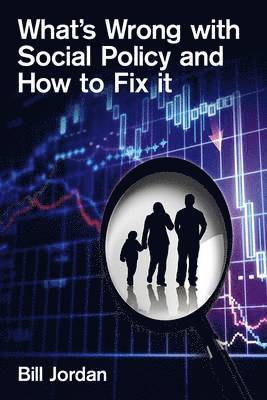
This book argues that the financial crash of 2008-9 has exposed the disastrous consequences of applying economic theory to the collective life of societies. In seeking to manage social relationships through incentives for individual gain, market-like menus of choices and business-style sets of interlocking contracts, the model adopted by the governments of the UK and USA has subverted the basis for social policy in mutuality and membership. This has been demonstrated by growing inequalities, by failures and scandals in the social services, by the flat-lining of measured well-being (even during the boom years), by increases in a wide range of social problems, and by public disillusion over the effectiveness of policy programmes. In the post-crash world, the political culture needs to enable the expression of collective action for the benefits of interdependence, and to overcome the threats of ecological catastrophe and divisive ideology.Only in this way can social policy be part of an inclusive global movement to restore faith in a politics of social justice.Bill Jordan's up-to-date, passionate and engaging argument forges convincing links between a wide range of the troubling phenomena in the public life of our times.
218 kr
Skickas inom 7-10 vardagar
This book argues that the financial crash of 2008-9 has exposed the disastrous consequences of applying economic theory to the collective life of societies. In seeking to manage social relationships through incentives for individual gain, market-like menus of choices and business-style sets of interlocking contracts, the model adopted by the governments of the UK and USA has subverted the basis for social policy in mutuality and membership. This has been demonstrated by growing inequalities, by failures and scandals in the social services, by the flat-lining of measured well-being (even during the boom years), by increases in a wide range of social problems, and by public disillusion over the effectiveness of policy programmes. In the post-crash world, the political culture needs to enable the expression of collective action for the benefits of interdependence, and to overcome the threats of ecological catastrophe and divisive ideology.Only in this way can social policy be part of an inclusive global movement to restore faith in a politics of social justice.Bill Jordan's up-to-date, passionate and engaging argument forges convincing links between a wide range of the troubling phenomena in the public life of our times.
771 kr
Skickas inom 7-10 vardagar
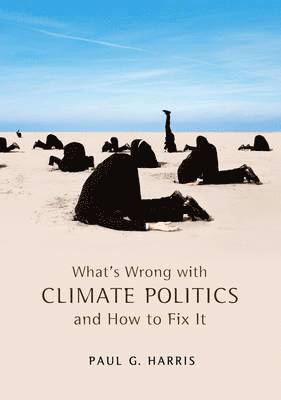
Governments have failed to stem global emissions of carbon dioxide and other greenhouse gases causing climate change. Indeed, climate-changing pollution is increasing globally, and will do so for decades to come without far more aggressive action. What explains this failure to effectively tackle one of the world's most serious problems? And what can we do about it? To answer these questions, Paul G. Harris looks at climate politics as a doctor might look at a very sick patient. He performs urgent diagnoses and prescribes vital treatments to revive our ailing planet before it's too late. The book begins by diagnosing what’s most wrong with climate politics, including the anachronistic international system, which encourages nations to fight for their narrowly perceived interests and makes major cuts in greenhouse pollution extraordinarily difficult; the deadlock between the United States and China, which together produce over one-third of global greenhouse gas pollution but do little more than demand that the other act first; and affluent lifestyles and overconsumption, which are spreading rapidly from industrialized nations to the developing world. The book then prescribes several "remedies" for the failed politics of climate change, including a new kind of climate diplomacy with people at its center, national policies that put the common but differentiated responsibilities of individuals alongside those of nations, and a campaign for simultaneously enhancing human wellbeing and environmental sustainability. While these treatments are aspirational, they are not intended to be utopian. As Harris shows, they are genuine, workable solutions to what ails the politics of climate change today.
325 kr
Skickas inom 5-8 vardagar
Governments have failed to stem global emissions of carbon dioxide and other greenhouse gases causing climate change. Indeed, climate-changing pollution is increasing globally, and will do so for decades to come without far more aggressive action. What explains this failure to effectively tackle one of the world's most serious problems? And what can we do about it? To answer these questions, Paul G. Harris looks at climate politics as a doctor might look at a very sick patient. He performs urgent diagnoses and prescribes vital treatments to revive our ailing planet before it's too late. The book begins by diagnosing what’s most wrong with climate politics, including the anachronistic international system, which encourages nations to fight for their narrowly perceived interests and makes major cuts in greenhouse pollution extraordinarily difficult; the deadlock between the United States and China, which together produce over one-third of global greenhouse gas pollution but do little more than demand that the other act first; and affluent lifestyles and overconsumption, which are spreading rapidly from industrialized nations to the developing world. The book then prescribes several "remedies" for the failed politics of climate change, including a new kind of climate diplomacy with people at its center, national policies that put the common but differentiated responsibilities of individuals alongside those of nations, and a campaign for simultaneously enhancing human wellbeing and environmental sustainability. While these treatments are aspirational, they are not intended to be utopian. As Harris shows, they are genuine, workable solutions to what ails the politics of climate change today.
613 kr
Skickas inom 7-10 vardagar
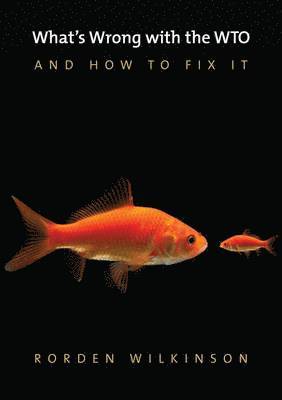
We need a world trade organization. We just don't need the one that we have. By pitching unequally matched states together in chaotic bouts of negotiating the global trade governance of today offers - and has consistently offered - developed countries more of the economic opportunities they already have and developing countries very little of what they desperately need. This is an unsustainable state of affairs to which the blockages in the Doha round provide ample testimony. So far only piecemeal solutions have been offered to refine this flawed system. Radical proposals that seek to fundamentally alter trade governance or reorient its purposes around more socially progressive and egalitarian goals are thin on the ground. Yet we eschew deeper reform at our peril. In What's Wrong with the World Trade Organization and How to Fix It Rorden Wilkinson argues that without global institutions fit for purpose, we cannot hope for the kind of fine global economic management that can put an end to major crises or promote development-for-all. Charting a different path he shows how the WTO can be transformed into an institution and a form of trade governance that fulfils its real potential and serves the needs of all.
200 kr
Skickas inom 7-10 vardagar
We need a world trade organization. We just don't need the one that we have. By pitching unequally matched states together in chaotic bouts of negotiating the global trade governance of today offers - and has consistently offered - developed countries more of the economic opportunities they already have and developing countries very little of what they desperately need. This is an unsustainable state of affairs to which the blockages in the Doha round provide ample testimony. So far only piecemeal solutions have been offered to refine this flawed system. Radical proposals that seek to fundamentally alter trade governance or reorient its purposes around more socially progressive and egalitarian goals are thin on the ground. Yet we eschew deeper reform at our peril. In What's Wrong with the World Trade Organization and How to Fix It Rorden Wilkinson argues that without global institutions fit for purpose, we cannot hope for the kind of fine global economic management that can put an end to major crises or promote development-for-all. Charting a different path he shows how the WTO can be transformed into an institution and a form of trade governance that fulfils its real potential and serves the needs of all.
771 kr
Skickas inom 7-10 vardagar
Seven decades after its establishment, the United Nations and its system of related organizations and programs are perpetually in crisis. While the twentieth-century’s world wars gave rise to ground-breaking efforts at international organization in 1919 and 1945, today’s UN is ill-equipped to deal with contemporary challenges to world order. Neither the end of the Cold War nor the aftermath of 9/11 has led to the “next generation” of multilateral institutions. But what exactly is wrong with the UN that makes it incapable of confronting contemporary global challenges and, more importantly, can we fix it?In this revised and updated third edition of his popular text, leading scholar of global governance Thomas G. Weiss takes a diagnose-and-cure approach to the world organization’s inherent difficulties. In the first half of the book, he considers: the problems of international leadership and decision making in a world of self-interested states; the diplomatic complications caused by the artificial divisions between the industrialized North and the global South; the structural problems of managing the UN’s many overlapping jurisdictions, agencies, and bodies; and the challenges of bureaucracy and leadership. The second half shows how to mitigate these maladies and points the way to a world in which the UN’s institutional ills might be “cured.” Weiss’s remedies are not based on pious hopes of a miracle cure for the UN, but rather on specific and encouraging examples that could be replicated. With considered optimism and in contrast to received wisdom, he contends that substantial change is both plausible and possible.
231 kr
Skickas inom 7-10 vardagar
Seven decades after its establishment, the United Nations and its system of related organizations and programs are perpetually in crisis. While the twentieth-century’s world wars gave rise to ground-breaking efforts at international organization in 1919 and 1945, today’s UN is ill-equipped to deal with contemporary challenges to world order. Neither the end of the Cold War nor the aftermath of 9/11 has led to the “next generation” of multilateral institutions. But what exactly is wrong with the UN that makes it incapable of confronting contemporary global challenges and, more importantly, can we fix it?In this revised and updated third edition of his popular text, leading scholar of global governance Thomas G. Weiss takes a diagnose-and-cure approach to the world organization’s inherent difficulties. In the first half of the book, he considers: the problems of international leadership and decision making in a world of self-interested states; the diplomatic complications caused by the artificial divisions between the industrialized North and the global South; the structural problems of managing the UN’s many overlapping jurisdictions, agencies, and bodies; and the challenges of bureaucracy and leadership. The second half shows how to mitigate these maladies and points the way to a world in which the UN’s institutional ills might be “cured.” Weiss’s remedies are not based on pious hopes of a miracle cure for the UN, but rather on specific and encouraging examples that could be replicated. With considered optimism and in contrast to received wisdom, he contends that substantial change is both plausible and possible.
643 kr
Skickas inom 7-10 vardagar
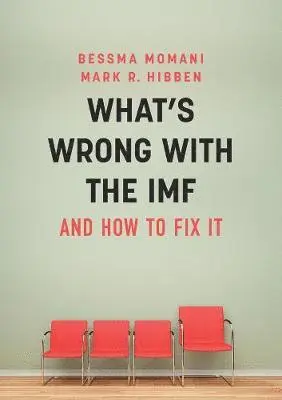
The IMF stands at a crossroad. Derided as increasingly irrelevant in the first decade of the new millennium, the Fund has had its power and prestige restored by the fallout from the 2008 global financial crisis. But will the resurgent IMF assert a more just and sustainable macroeconomic model and provide a voice for poor and marginalized people around the globe? Or will enduring weaknesses within the IMF mean it fails to address these issues? In this book, Bessma Momani and Mark R. Hibben dissect the variables and institutional dynamics at play in IMF governance, surveillance, lending, and capacity development to expose the fundamental barriers to change. Identifying four areas that could “fix” the IMF, they show how these genuine and workable solutions can give the IMF the effectiveness and legitimacy it needs to positively shape twenty-first-century global governance and push back against volatile and regressive forces in the international political economy.
228 kr
Skickas inom 7-10 vardagar
The IMF stands at a crossroad. Derided as increasingly irrelevant in the first decade of the new millennium, the Fund has had its power and prestige restored by the fallout from the 2008 global financial crisis. But will the resurgent IMF assert a more just and sustainable macroeconomic model and provide a voice for poor and marginalized people around the globe? Or will enduring weaknesses within the IMF mean it fails to address these issues? In this book, Bessma Momani and Mark R. Hibben dissect the variables and institutional dynamics at play in IMF governance, surveillance, lending, and capacity development to expose the fundamental barriers to change. Identifying four areas that could “fix” the IMF, they show how these genuine and workable solutions can give the IMF the effectiveness and legitimacy it needs to positively shape twenty-first-century global governance and push back against volatile and regressive forces in the international political economy.