Wick Poetry First Book - Böcker
Visar alla böcker i serien Wick Poetry First Book. Handla med fri frakt och snabb leverans.
6 produkter
6 produkter
239 kr
Skickas inom 3-6 vardagar
174 kr
Skickas inom 7-10 vardagar
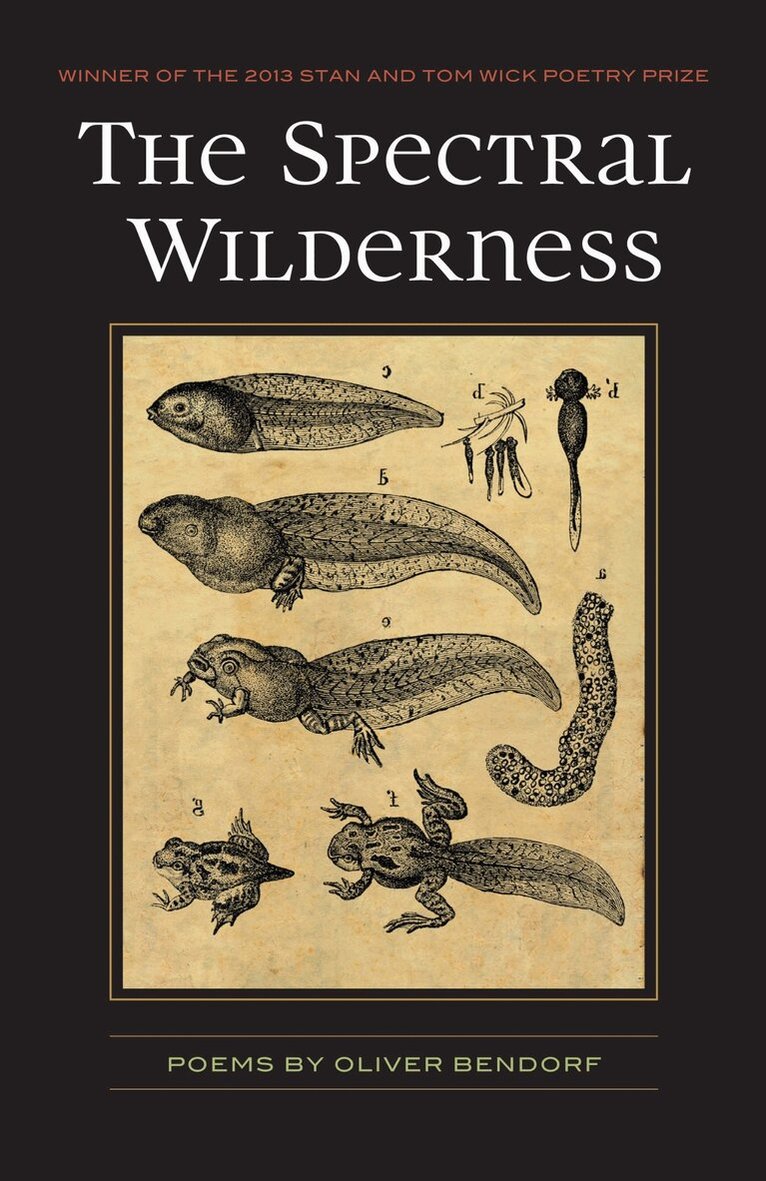
It s a joy. . .to come nearer to a realm of experience little explored in American poetry, the lives of those who are engaged in the complex project of transforming their own gender... Oliver Bendorf writes from a paradoxical, new-world position: the adult voice of a man who has just appeared in the world. A man emergent, a man in love, alive in the fluid instability of any category. – Mark Doty, from the Foreword
192 kr
Skickas inom 10-15 vardagar
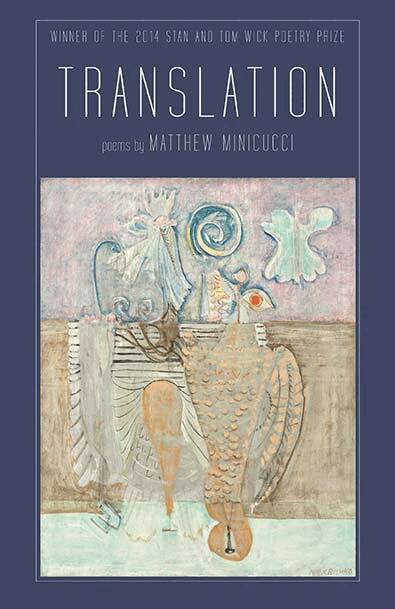
Winner of the 2014 Stan and Tom Wick Poetry PrizeJane Hirshfield, Judge "What are we to do with anger? What are we to do with love? What are we to do with one another, given all that happens and has happened between us? These are a few of the questions that haunt Matthew Minicucci's deeply original and profoundly moving poems. In work personal and learned, steeped in familial life, the natural world, and the culture's storehouse of literature, myth, and history, Minicucci transforms outward knowledge and observation into accurate and deftly navigable vessels of inner life. Whales' hearts and family stories; etymologies, metrics, and syntax; the war machines and fishing lures of past and present worlds—all are harnessed together, hammered together, in this book-long exploration of our shared and particular human fates."—Jane Hirshfield"Matthew Minicucci begins his collection with his prize-winning poem, 'A Whale's Heart,' where in the old world, a rose petal tincture was used to minimize a scar, but never concealed it completely. This is a book of such faint scars, losses almost imperceptible but there, hidden under the hairline, or just above the heart. It is how these losses are transformed, through the alchemy of memory, forgiveness and love, small, intense, painterly studies of a country populated by the human family."—Dorianne Laux"If fate is, as Aurelius contends, a weaver, Matthew Minicucci's remarkable collection Translation stunningly unravels all we have been given: the fate of each species, the fate of each family, the fate of languages, and the fate of the ancient texts which constitute the violent, compelling sea on which so much of our understanding of the present floats and into whose complex amnion we never tire of descending. Translation not only explores what we might call the work and origins of literal translation, but it is itself a beautiful, unflinching, unfolding embodiment of our most essential human translational efforts: the work of translating experience into words, memory into understanding, and anger into forgiveness. Here is a rare collection that must be held in full, a book that deepens its inquiries with the turn of every page. If the metaphor is itself a kind of translation, then Minicucci demonstrates with both imagistic precision and an abiding associative mystery how all things—both the fist and the clasp, the sword and the shield, the hawk and the turtle, and, finally, the lilac bush and the switch fashioned from it—when carefully lifted and turned, implicate us all." —Kathleen Graber
176 kr
Skickas inom 10-15 vardagar
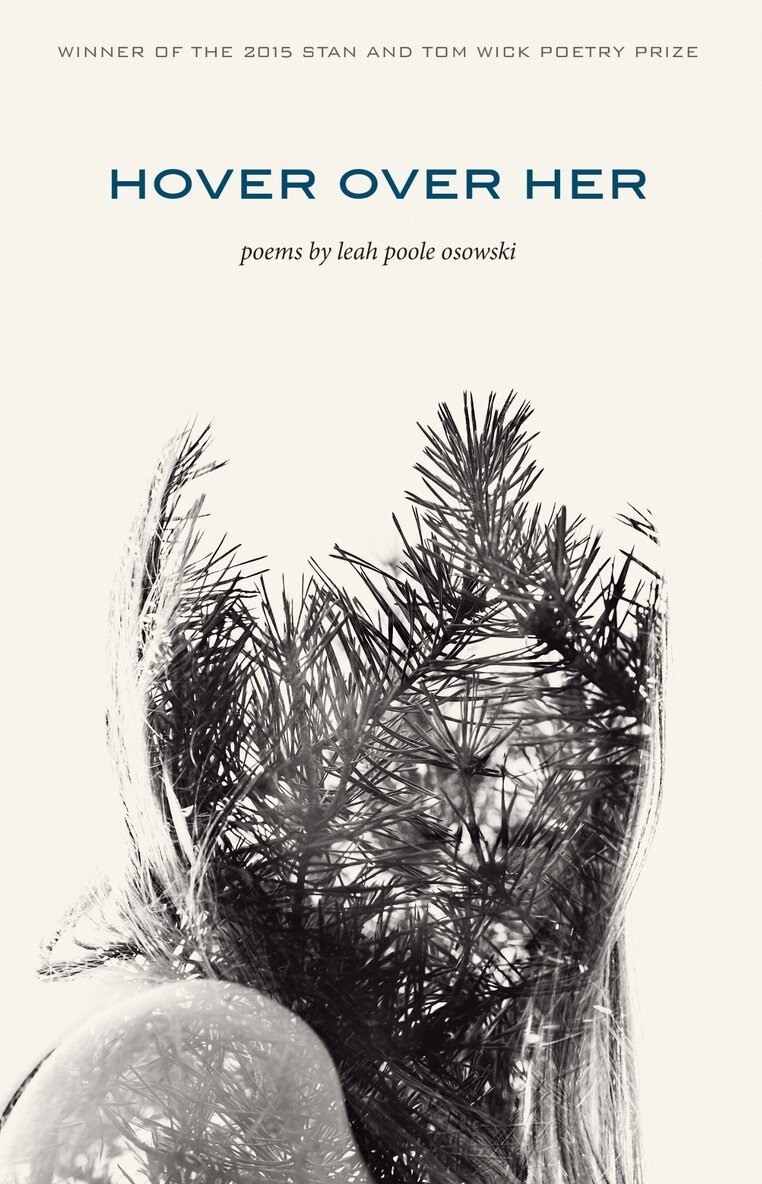
“In Leah Osowski’s exquisite debut, hover over her, the poet immerses us in geographies of unrealized adolescence, where young women are singular amidst their cacophonous backdrops, whether beside a lake, inside a Dali painting, or stretched out in a flower garden. These spaces are turned inside out for us through Osowski’s linguistic curiosity and unforgettable imagistic palate. Negative possibilities hang around every corner as well, showing us the ways in which we are also complicit in the constructions and obstructions of gender. As the speaker in ‘she as pronoun’ says, ‘she’s I and she’s you every / time you hid beneath your own arms.’ But through the evolution and renaissance of Osowski’s speaker, we find affirmation in these shared connections, transparency in the landscapes of growth and escape, and the freedom that comes from the task of unflinchingly examining our whereabouts inside of them.”—Adrian Matejka, author of The Big Smoke
176 kr
Skickas inom 10-15 vardagar
“The poems in Christine Gosnay’s first book, Even Years, speak with a voice that animates and astonishes us as they delineate and explore, trace and explode, the ‘order of shapes in the light’—the order of words, of moments in a life, of shifts in perspective between the ‘cleave and / Cleave’ of language. In these piercing and evocative poems we see, as in the poems of Stevens and Dickinson, ‘The back of the eye / where it has been struck by all things’ (‘N-gram’). ""Surprising and moving, Gosnay’s work shows us what the ‘clean blue sleeve’ of language can do, and we are transformed and held by this book the way the speaker in the final poem is compelled by a ‘photograph of rose baskets in Morocco’: ‘Nothing on earth could keep me from pressing it to my face.’” — Angie Estes, author of Enchantée and winner of the 2015 Kingsley Tufts Poetry Award.
176 kr
Skickas inom 10-15 vardagar
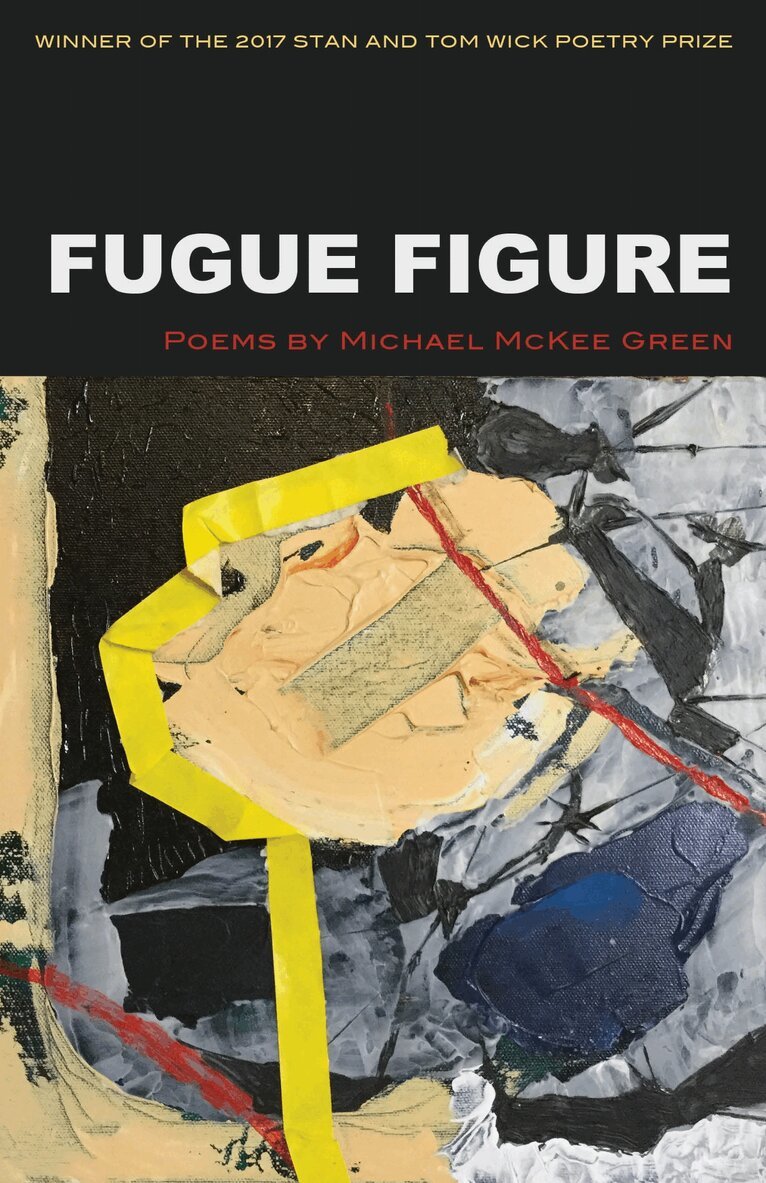
The book states plainly that both its speaker and the speaker’s mother have suffered neardeadly head injuries (“when I woke up in the hospital thirty years after you did,” “my head: / rotting pear”), resulting in loss of memory. However, rather than let a taxonomy like “family curse” sit unquestioned, Green writes toward the fugues (i.e., the condition of having one’s identity questioned) by making a kind of fugue (i.e., interweaving song). Johnathan Culler writes that “the fundamental characteristic of the lyric . . . is not the description and interpretation of a past event, but the iterative and utterable performanceof an event in the lyric present, in the special ‘now’ of lyric articulation.” The lyric in Fugue Figure allows the unspeakable past to be uttered in the lyric present, and the form of diptychs and triptychs through the book place disparate lyric utterances together on the same page. While lyric addresses allow the reader to reach toward the speaker’s unknowns, the triptychs and diptychs allow the reader to reach toward the unnamable place between left and right signifiers, both adding to the vital enigma of the poems.Fugue Figure comes to terms with the self as a permeable thing, already acted upon and laden with self-inflicted presuppositions of curse. And in the wake of all the phenomena acting upon the speaker’s life and family, what else can one do?