Women and Sustainable Business – serie
Visar alla böcker i serien Women and Sustainable Business. Handla med fri frakt och snabb leverans.
8 produkter
8 produkter
564 kr
Skickas inom 10-15 vardagar
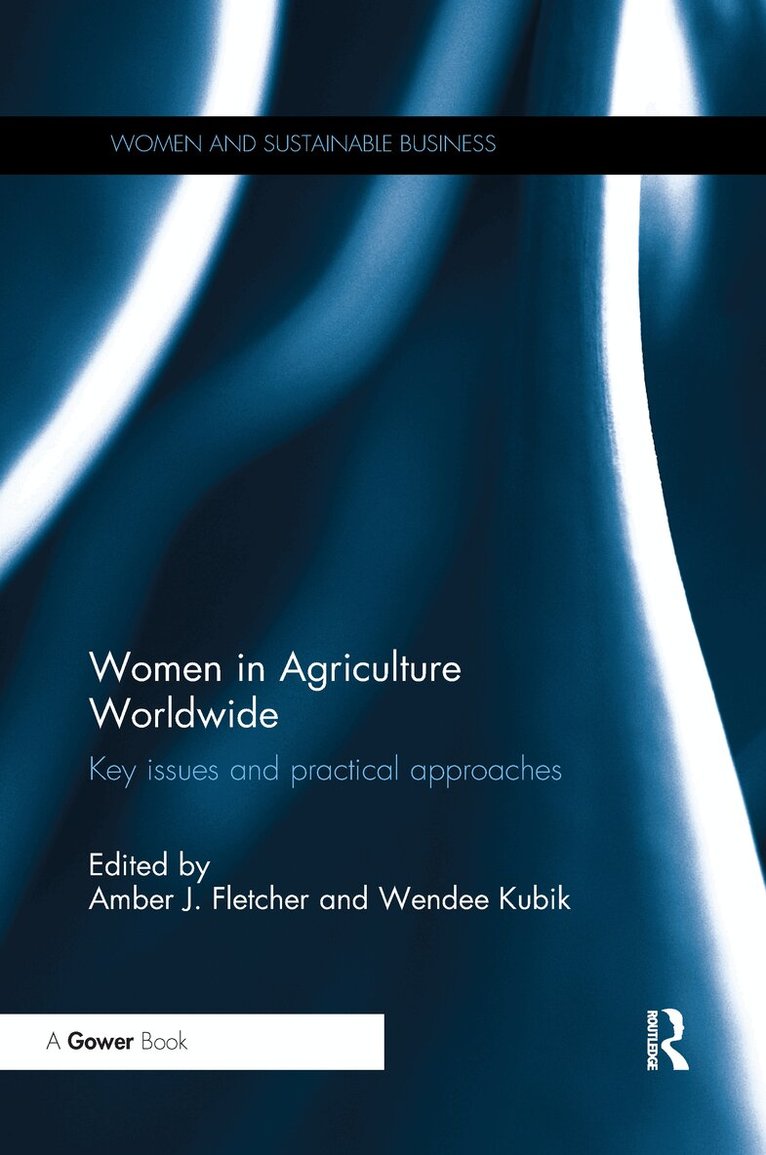
Over the past two decades, existing documentation of women in the agricultural sector has surveyed topics such as agricultural restructuring and land reform, international trade agreements and food trade, land ownership and rural development and rural feminisms. Many studies have focused on either the high-income countries of the global North or the low-income countries of the global South. This separation suggests that the North has little to learn from the South, or that there is little shared commonality across the global dividing line. Fletcher and Kubik cross this political, economic, and ideological division by drawing together authors from 5 continents. They discuss the situation for women in agriculture in 13 countries worldwide, with two chapters that cover international contexts. The authors blur the boundaries between academic and organizational authors and their contributors include university-based researchers, gender experts, development consultants, and staff of agricultural research centers and international organizations (i.e., Oxfam, the United Nations World Food Program). The common thread connecting these diverse authors is an emphasis on practical and concrete solutions to address the challenges, such as lack of access to resources and infrastructure, lack of household decision-making power, and gender biases in policymaking and leadership, still faced by women in agriculture around the world. Ongoing issues in climate change will exacerbate many of these issues and several chapters also address environment and sustainability.This book is of great interest to readers in the areas of gender studies, agriculture, policy studies, environmental studies, development and international studies.
496 kr
Skickas inom 10-15 vardagar
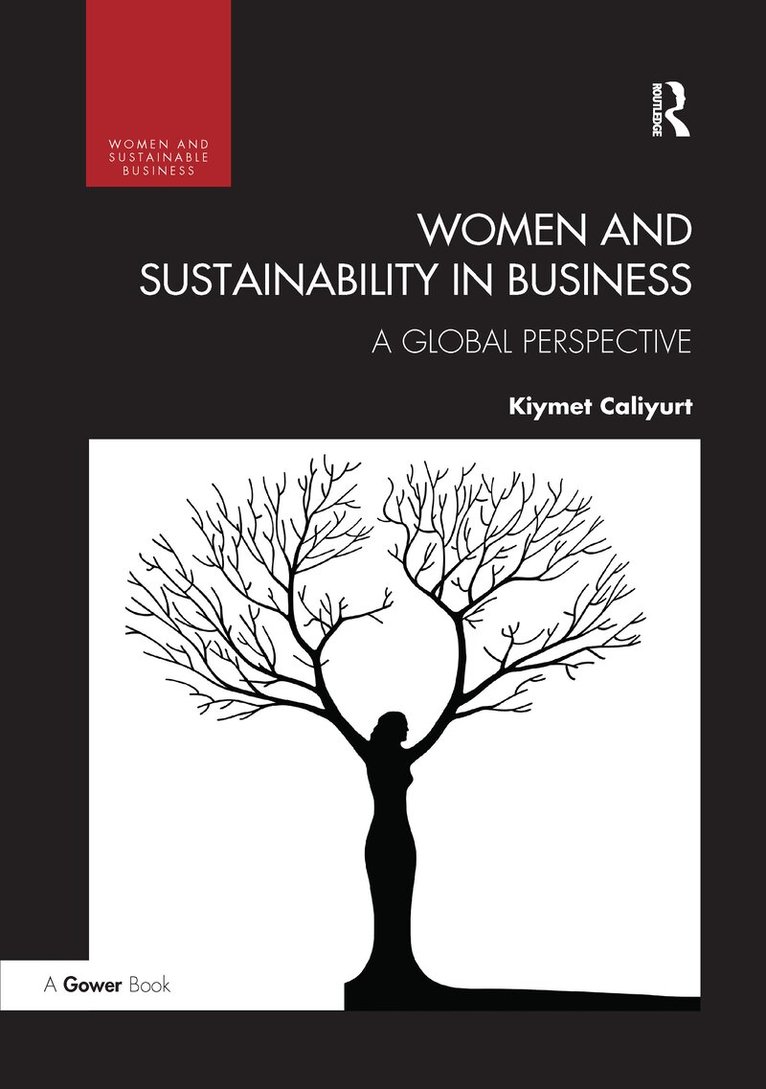
Women and Sustainability in Business: A Global Perspective, brings together original research from a dozen countries, concerning the issues and challenges facing women in sustainable business. This is a recurrent topic among researchers, regulators, companies and rating agencies. Governments pay special attention to how women impact the economy when shaping their strategies on economic sustainability. Women’s contribution to business is fundamental to creating a sustainable economy, such that businesses try to strengthen ‘women’s presence’ within their organisations, especially on their boards. Today, sustainable companies cannot survive without strategies involving women. Stakeholders, regulators, NGOs and rating agencies track both women-focused strategies and the corporate sustainability reports of companies. Well-designed strategies for women workers help companies to develop their financial and social sustainability initiatives progressively. This book analyses the practice of women in sustainable business, in terms of company performance, social responsibility, board management, entrepreneurship, employment, education, management, social sustainability, environmental politics and technology, from a wide range of diverse, regional perspectives and highlights the differences between the underdeveloped, developing and developed world.
2 176 kr
Skickas inom 10-15 vardagar
The Indian Constitution is the largest written constitution that guarantees equality to women and empowers the State to take affirmative actions in favour of women. India has adopted International conventions for protection of rights of women and granting them equality and ratified the Convention on Elimination of All Forms of Discrimination Against Women (CEDAW) in the year 1993. The National Policy for Women Empowerment was presented in 2001, the goal of that policy to bring about the advancement, development and empowerment of women and enable women to become financially independent. Currently, India is the only country where the economic gender gap is larger than the political gender gap. Women are required to understand their own potential and overcome social barriers. With constant support of the government, change in stereotype mindset and skill development in women, India will continue witnessing gradual increase in women entrepreneurship in future. The aim of this book is to show the latest state of knowledge on the topic of women entrepreneurship, the role of women in business and women empowerment in India. Many aspects relating to role of women in business, sustainable business development and aspects going beyond economic empowerment of women are discussed in addition to presenting legal and regulatory frameworks. This book will be of interest to researchers, academics, policymakers, and students in the fields of entrepreneurship, empowerment, gender studies, and law.
618 kr
Skickas inom 10-15 vardagar
The Indian Constitution is the largest written constitution that guarantees equality to women and empowers the State to take affirmative actions in favour of women. India has adopted International conventions for protection of rights of women and granting them equality and ratified the Convention on Elimination of All Forms of Discrimination Against Women (CEDAW) in the year 1993. The National Policy for Women Empowerment was presented in 2001, the goal of that policy to bring about the advancement, development and empowerment of women and enable women to become financially independent. Currently, India is the only country where the economic gender gap is larger than the political gender gap. Women are required to understand their own potential and overcome social barriers. With constant support of the government, change in stereotype mindset and skill development in women, India will continue witnessing gradual increase in women entrepreneurship in future. The aim of this book is to show the latest state of knowledge on the topic of women entrepreneurship, the role of women in business and women empowerment in India. Many aspects relating to role of women in business, sustainable business development and aspects going beyond economic empowerment of women are discussed in addition to presenting legal and regulatory frameworks. This book will be of interest to researchers, academics, policymakers, and students in the fields of entrepreneurship, empowerment, gender studies, and law.
2 113 kr
Skickas inom 10-15 vardagar
When a woman decides to become an ‘entrepreneur,’ she starts her business with a sense of excitement, freedom, wealth, happiness, prestige; however, these feelings can soon turn to fears over debt, difficulties, unpaid invoices, stress, and uncertainty.Being an entrepreneur means taking risks, making decisions, adapting management styles in line with developmental needs, clashing with rivals, being more agile than competitors, negotiating risky scenarios, following business trends, capturing new opportunities before, and being better than the competition.If a woman wants to be successful as an entrepreneur, she needs to have a business education, undergo continued professional development, and have patience and emotional intelligence.Supporting women in their entrepreneurial activities has been shown to positively affect the economy, which is why governments pay special attention to opening new funding opportunities and training programs for women who want to start or develop a business. Female entrepreneurship has individual characteristics because of those aspects of the business which are affected by cultural, technological, legislative, social, and historical developments. This book discusses the relationship between female entrepreneurship and the economy, and academic authors from developing countries such as Brazil, Turkey, Albania, Kosovo, Portugal, and Malaysia analyze the developments encompassing women and entrepreneurship in their respective countries.The authors discuss the regulatory frameworks of each country to show how these either help or hinder female entrepreneurship, and consequently, the place of women in the economy.Women and entrepreneurship is an emerging theme, and this book is a must-read for researchers from both developing and developed countries.
637 kr
Skickas inom 10-15 vardagar
When a woman decides to become an ‘entrepreneur,’ she starts her business with a sense of excitement, freedom, wealth, happiness, prestige; however, these feelings can soon turn to fears over debt, difficulties, unpaid invoices, stress, and uncertainty.Being an entrepreneur means taking risks, making decisions, adapting management styles in line with developmental needs, clashing with rivals, being more agile than competitors, negotiating risky scenarios, following business trends, capturing new opportunities before, and being better than the competition.If a woman wants to be successful as an entrepreneur, she needs to have a business education, undergo continued professional development, and have patience and emotional intelligence.Supporting women in their entrepreneurial activities has been shown to positively affect the economy, which is why governments pay special attention to opening new funding opportunities and training programs for women who want to start or develop a business. Female entrepreneurship has individual characteristics because of those aspects of the business which are affected by cultural, technological, legislative, social, and historical developments. This book discusses the relationship between female entrepreneurship and the economy, and academic authors from developing countries such as Brazil, Turkey, Albania, Kosovo, Portugal, and Malaysia analyze the developments encompassing women and entrepreneurship in their respective countries.The authors discuss the regulatory frameworks of each country to show how these either help or hinder female entrepreneurship, and consequently, the place of women in the economy.Women and entrepreneurship is an emerging theme, and this book is a must-read for researchers from both developing and developed countries.
2 045 kr
Skickas inom 10-15 vardagar
Women and Sustainability in Business: A Global Perspective, brings together original research from a dozen countries, concerning the issues and challenges facing women in sustainable business. This is a recurrent topic among researchers, regulators, companies and rating agencies. Governments pay special attention to how women impact the economy when shaping their strategies on economic sustainability. Women’s contribution to business is fundamental to creating a sustainable economy, such that businesses try to strengthen ‘women’s presence’ within their organisations, especially on their boards. Today, sustainable companies cannot survive without strategies involving women. Stakeholders, regulators, NGOs and rating agencies track both women-focused strategies and the corporate sustainability reports of companies. Well-designed strategies for women workers help companies to develop their financial and social sustainability initiatives progressively. This book analyses the practice of women in sustainable business, in terms of company performance, social responsibility, board management, entrepreneurship, employment, education, management, social sustainability, environmental politics and technology, from a wide range of diverse, regional perspectives and highlights the differences between the underdeveloped, developing and developed world.
2 113 kr
Skickas inom 10-15 vardagar
Over the past two decades, existing documentation of women in the agricultural sector has surveyed topics such as agricultural restructuring and land reform, international trade agreements and food trade, land ownership and rural development and rural feminisms. Many studies have focused on either the high-income countries of the global North or the low-income countries of the global South. This separation suggests that the North has little to learn from the South, or that there is little shared commonality across the global dividing line. Fletcher and Kubik cross this political, economic, and ideological division by drawing together authors from 5 continents. They discuss the situation for women in agriculture in 13 countries worldwide, with two chapters that cover international contexts. The authors blur the boundaries between academic and organizational authors and their contributors include university-based researchers, gender experts, development consultants, and staff of agricultural research centers and international organizations (i.e., Oxfam, the United Nations World Food Program). The common thread connecting these diverse authors is an emphasis on practical and concrete solutions to address the challenges, such as lack of access to resources and infrastructure, lack of household decision-making power, and gender biases in policymaking and leadership, still faced by women in agriculture around the world. Ongoing issues in climate change will exacerbate many of these issues and several chapters also address environment and sustainability.This book is of great interest to readers in the areas of gender studies, agriculture, policy studies, environmental studies, development and international studies.