Worldwatch Environmental Alert Series - Böcker
Visar alla böcker i serien Worldwatch Environmental Alert Series. Handla med fri frakt och snabb leverans.

8 produkter
8 produkter
239 kr
Skickas inom 5-8 vardagar
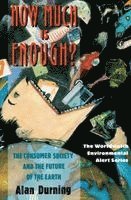
It discusses the use of resources, pollution, and the distortions created in the economies of both wealthy industrialized nations and Third World countries.
Fighting for Survival
Environmental Decline, Social Conflict, and the New Age of Insecurity
Häftad, Engelska, 1996
266 kr
Skickas inom 5-8 vardagar
Accelerating social, economic, and environmental pressures are now undermining the security of societies around the world, according to security expert Michael Renner. Since the end of the Cold War, a volatile mix of environmental degradation, inequitable distribution of land and wealth, ethnic antagonisms, and rapid population growth is producing social and political strife, and even causing the wholesale disintegration of countries.The author argues that true security has less to do with how many tanks or soldiers a country can marshal and more with how well it protects its arable lands and watersheds and how well it manages to meet peoples social and economic needs. Military means are often irrelevant or even counterproductive in this new security equation; they are a depreciating asset. At a time when the United Nations has been devoting a sharply higher share of its resources to peacekeeping, while reducing spending on basic environmental and economic development, this new book provides a wake-up call for policy makers around the world.
239 kr
Skickas inom 5-8 vardagar
Human demands are pressing up against more and more of the Earth's limits. This book from the Worldwatch Institute examines the impacts of population growth on global resources and services, including food, fresh water, fisheries, jobs, education, income, and health. Despite the current hype of a "birth dearth" in parts of Europe and Japan, the fact remains that human numbers are projected to increase by over 3 billion by 2050. Rapidly growing nations are likely to outstrip the carrying capacity of their natural support systems. Governments worn down by several decades of rapid population growth often cannot mobilize the resources necessary to cope with emerging threats such as new diseases, food and water shortages, and mass unemployment. Already, in several African nations, hunger, disease, and social disintegration are leading to rising death rates, checking the rapid growth of population. Either nations with surging populations will quickly shift to smaller families or nature will impose its own, less humane limits to growth. As the world enters the new millennium, no challenge is perhaps so urgent as the need to quickly reduce population growth. Pakistan's population is projected to increase from 148 million to 357 million, surpassing that of the United States before 2050. Zimbabwe, Botswana, Zambia, Namibia, and Swaziland, where over one-fifth of the adult population is infected with HIV, will likely reach population stability shortly after the year 2000, as AIDS-related deaths offset soaring birth rates. A Worldwatch Environmental Alert book. Newsmaking press conference on publication National press and television coverage
238 kr
Skickas inom 3-6 vardagar
Everyone everywhere depends increasingly on long-distance food. Since 1961 the tonnage of food shipped between nations has grown fourfold. In the United States, food typically travels between 1,500 and 2,500 miles from farm to plate—as much as 25 percent farther than in 1980. For some, the long-distance food system offers unparalleled choice. But it often runs roughshod over local cuisines, varieties, and agriculture, while consuming staggering amounts of fuel, generating greenhouse gases, eroding the pleasures of face-to-face interactions, and compromising food security. Fortunately, the long-distance food habit is beginning to weaken under the influence of a young, but surging, local-foods movement. From peanut-butter makers in Zimbabwe to pork producers in Germany and rooftop gardeners in Vancouver, entrepreneurial farmers, start-up food businesses, restaurants, supermarkets, and concerned consumers are propelling a revolution that can help restore rural areas, enrich poor nations, and return fresh, delicious, and wholesome food to cities.
494 kr
Skickas inom 10-15 vardagar
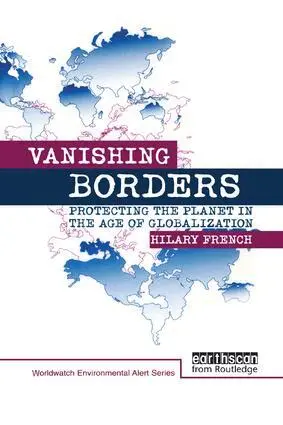
The world is shrinking faster than ever. Goods, money, microbes, pollution, people and ideas are crossing boundaries ever more frequently. The implications for our future and for the health of the planet are profound. Vanishing Borders outlines the ecological challenges posed and then goes on to define the necessary strategies for tackling them. Presently, national governments are singularly ill-equipped for tackling transitional environmental problems-from ozone depletion to soaring trade in commodities such as timbre- problems which are climbing ever higher on the international political agenda. Industrial and developing countries are on a collision course over climate change, and water shortages are creating tensions in several parts of the world. The author argues that only a worldwide commitment to strengthening treaties and institutions needed to integrate ecological considerations into the rules of global commerce holds out hope. Over 200 international environmental treaties exist but most need more stringent conditions and enforcement, and continuing support from NGO and business communities. Significantly, the digital revolution, integral in itself to processes to globalization, offers channels through which powerful coalitions can effect change. The book provides a compelling and accessible analysis and a clear plan of action in pursuit of environmental stability. Originally published in 2000
2 103 kr
Skickas inom 10-15 vardagar
On the bicentennial of Malthus' legendary essay on the tendency of population to grow more rapidly than the food supply, this book examines the impacts of population growth on 19 global resources and services, including food, fresh water, fisheries, jobs, education, income and health. Despite current hype of a 'birth dearth' in parts of Europe and Japan, the fact remains that human numbers are projected to increase by over 3 billion by 2050. Populations in rapidly growing nations are in danger of outstripping the carrying capacity of their natural support systems and governments in such situations will find it increasingly hard to respond to crises such as AIDS, food and water shortages and mass unemployment. Beyond Malthus examines methods such as the expansion of international family planning, investment in educating young people in the developing world and promotion of a shift towards smaller families which will represent the most humane response to the possible ravages of the population explosion.
575 kr
Skickas inom 10-15 vardagar
On the bicentennial of Malthus' legendary essay on the tendency of population to grow more rapidly than the food supply, this book examines the impacts of population growth on 19 global resources and services, including food, fresh water, fisheries, jobs, education, income and health. Despite current hype of a 'birth dearth' in parts of Europe and Japan, the fact remains that human numbers are projected to increase by over 3 billion by 2050. Populations in rapidly growing nations are in danger of outstripping the carrying capacity of their natural support systems and governments in such situations will find it increasingly hard to respond to crises such as AIDS, food and water shortages and mass unemployment. Beyond Malthus examines methods such as the expansion of international family planning, investment in educating young people in the developing world and promotion of a shift towards smaller families which will represent the most humane response to the possible ravages of the population explosion.
2 103 kr
Skickas inom 10-15 vardagar
The world is shrinking faster than ever. Goods, money, microbes, pollution, people and ideas are crossing boundaries ever more frequently. The implications for our future and for the health of the planet are profound. Vanishing Borders outlines the ecological challenges posed and then goes on to define the necessary strategies for tackling them. Presently, national governments are singularly ill-equipped for tackling transitional environmental problems-from ozone depletion to soaring trade in commodities such as timbre- problems which are climbing ever higher on the international political agenda. Industrial and developing countries are on a collision course over climate change, and water shortages are creating tensions in several parts of the world. The author argues that only a worldwide commitment to strengthening treaties and institutions needed to integrate ecological considerations into the rules of global commerce holds out hope. Over 200 international environmental treaties exist but most need more stringent conditions and enforcement, and continuing support from NGO and business communities. Significantly, the digital revolution, integral in itself to processes to globalization, offers channels through which powerful coalitions can effect change. The book provides a compelling and accessible analysis and a clear plan of action in pursuit of environmental stability. Originally published in 2000