Yale Collections - Böcker
Visar alla böcker i serien Yale Collections. Handla med fri frakt och snabb leverans.
3 produkter
3 produkter
237 kr
Skickas inom 7-10 vardagar
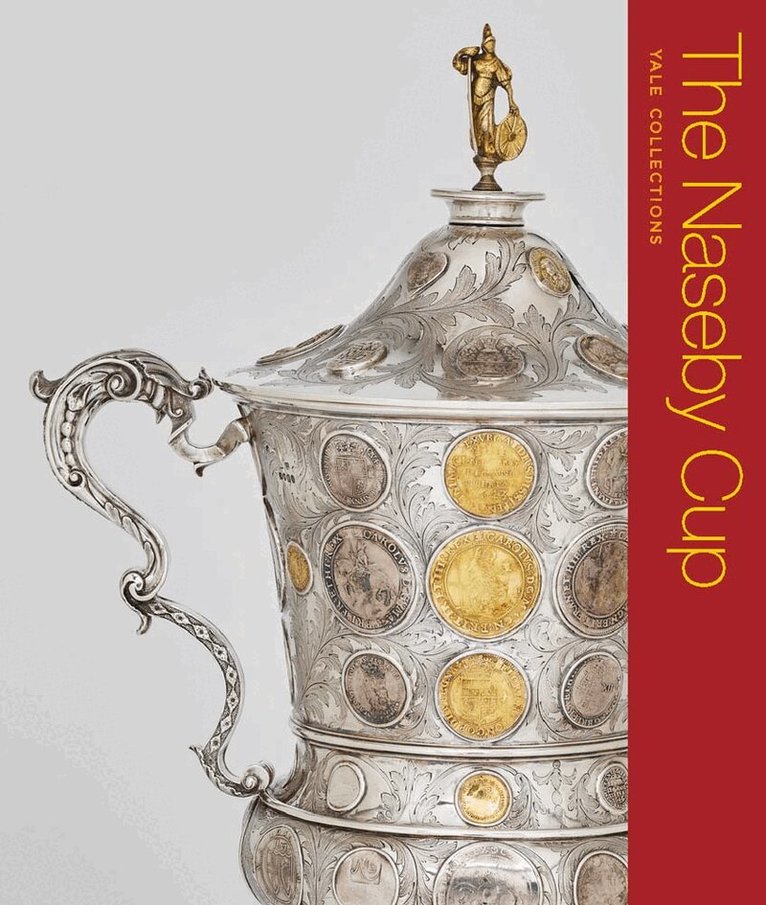
A detailed presentation of the iconic Naseby Cup that illuminates the Victorian vessel’s extraordinary numismatic importance and contextualizes the circumstances surrounding its creation One of the most exceptional numismatic objects in the world, the Naseby Cup in the Yale University Art Gallery was commissioned by John and Mary Frances Fitzgerald, Lord and Lady of the Manor at Naseby, in Northamptonshire, England. It commemorates the Battle of Naseby on June 14, 1645, during which the forces of the English Parliament, led by Oliver Cromwell and Sir Thomas Fairfax, defeated the Royalist army of King Charles I. Crafted by silversmiths Charles Reily and George Storer and completed in 1839, the intricately decorated Victorian cup stands more than two feet tall and features 72 coins, counters, and medals from the English Civil War period (1642–51). Many of these numismatic pieces are extremely rare, such as a New England Shilling from 1652 and a copy of an original 1644 Oxford Crown of Charles I, which depicts the king on horseback and a view of the city. The cup is innovatively designed so that both the front and back of each piece are visible, one on the cup’s exterior, one on its interior. Integrating numismatics into the larger study of both art and history, this publication offers an in-depth look at the Naseby Cup and its many layers of meaning.
237 kr
Skickas inom 7-10 vardagar
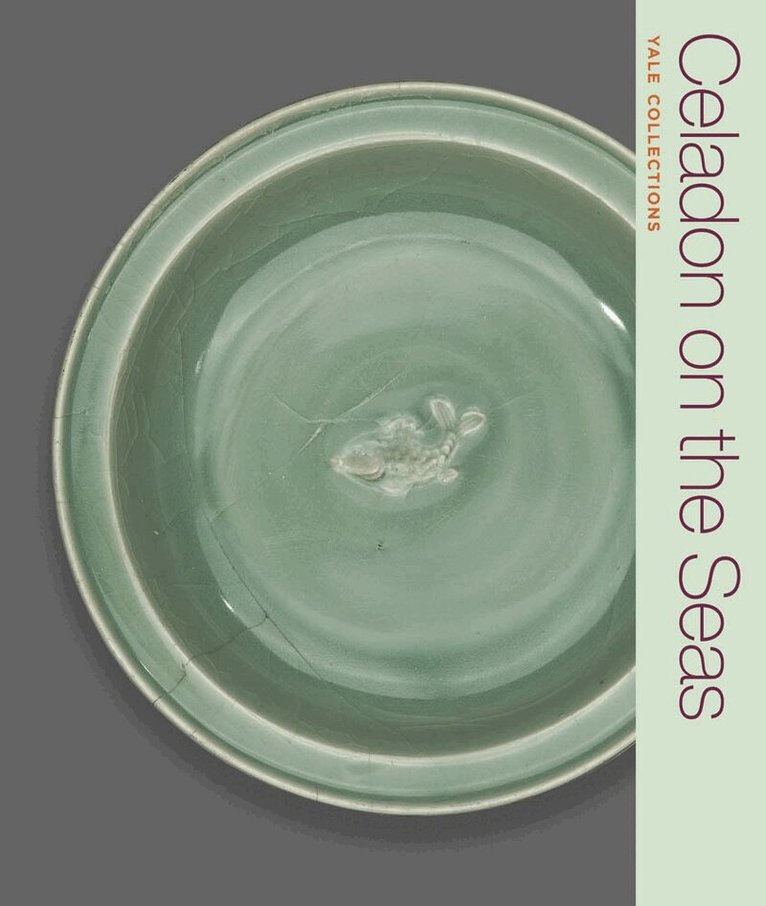
An exploration of southern China’s ceramic industry and its links to Korea, Japan, Southeast Asia, and beyond via the maritime trade Beautifully illustrated and engagingly written, Celadon on the Seas explores the development of the southern Chinese ceramic industry from the ninth to the fourteenth century. Drawing on the collection of the Yale University Art Gallery, it examines the artistic, historical, and technical aspects of dozens of ceramic objects, offering an overview of the industry and its unique relationship to maritime trade. Thousands of kilns throughout China flourished at this time; some produced elegant wares with lush green glazes, known as “celadons,” while others created imaginative pieces in shades of black, brown, or white. The Gallery’s collection includes superb examples of celadons as well as an unusually rich group of the less-studied green, white, and brown wares produced in Hunan, Fujian, and Guangdong Provinces, many of which are previously unpublished. An introduction and seven chapters examine not only the use of these ceramics—primarily as ritual objects and vessels for dining and drinking—but also the exchanges among production centers that contributed to the vibrancy of the southern Chinese industry. Chinese ceramics also influenced competing kiln centers in Vietnam and Thailand, the distinctive Korean celadon tradition, and the evolution of the Japanese ceramic industry and tea ceremony. The broad approach and new research presented in Celadon on the Seas make this book the first of its kind. Distributed for the Yale University Art Gallery
306 kr
Kommande
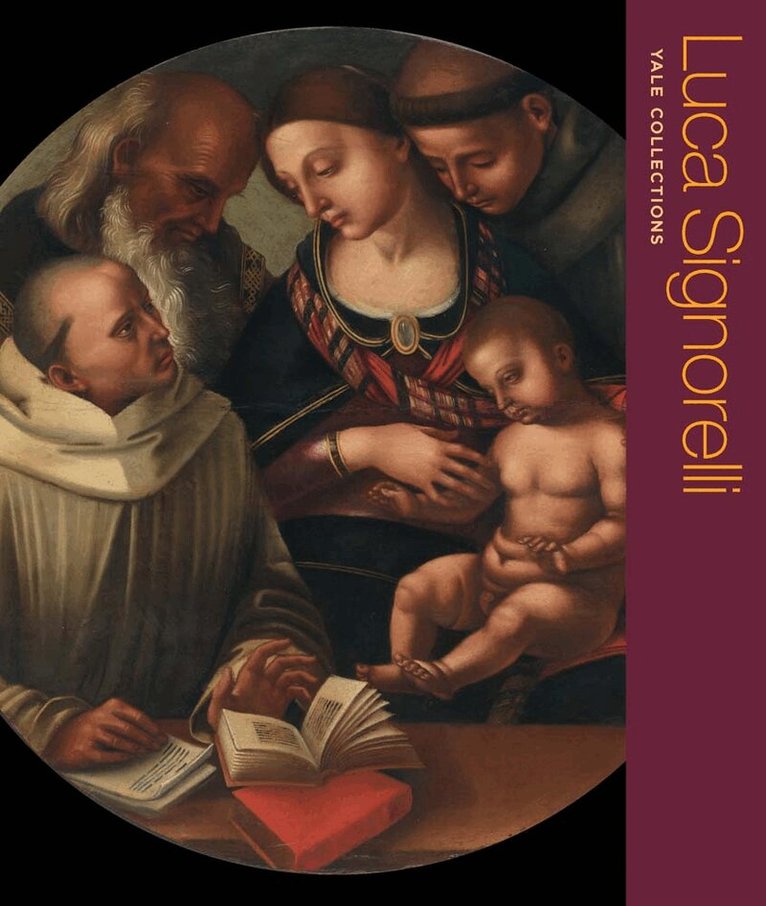
A first look at a newly discovered work by one of the great artists of the Renaissance In January 2020, a previously unrecognized masterpiece by Luca Signorelli (ca. 1445–1523) was discovered by Yale University Art Gallery curators and conservators and freed from multiple layers of grime, regilding, and repainting. The composition—a tondo of the Virgin and Child with saints—was previously known only through two contemporary replicas, one of which was thought to be the original. The discovery of the Gallery’s tondo sheds new light on what is considered the climax of Signorelli’s career at the turn of the sixteenth century, a defining moment in the evolution of Italian painting from the Early to the High Renaissance. Presenting the conserved tondo and its original frame for the first time, this volume investigates the work’s style and dating, the meaning of its enigmatic combination of figures, its probable Sienese patronage, and the implications of its repetition in a second and third version. Laurence Kanter discusses the work in relation to Signorelli’s groundbreaking fresco cycles at the cathedral of Orvieto and the abbey of Monte Oliveto Maggiore, near Siena, and considers the possibility that the alla grottesca decoration of the frame may have been designed, and possibly painted, by Signorelli himself and that this may be the first tondo—a class of object popular in Florence but less common elsewhere—ever painted in Siena. Distributed for the Yale University Art Gallery