Yale Publications in the History of Art – serie
Visar alla böcker i serien Yale Publications in the History of Art. Handla med fri frakt och snabb leverans.
4 produkter
4 produkter
Shingle Style and the Stick Style
Architectural Theory and Design from Downing to the Origins of Wright; Revised Edition
Häftad, Engelska, 1977
733 kr
Skickas inom 5-8 vardagar
As the definitive study of the complex inspirations and cultural influences that were fused in the Shingle Style of wooden suburban and resort buildings of the period 1872 to 1889, Mr. Scully’s book has received much critical acclaim. He presents the published designs and the written statements of the architects, as well as contemporary criticisms of the buildings to analyze the development of the Shingle Style from Richardson’s early work to Wright’s first house in Oak Park. An analysis of the Colonial Revival is central to the work, which is now enhanced by the addition of an extensive related chapter on the “Stick Style” of the mid-century. A new preface has been added and the bibliography and footnotes are brought up to date. “The last section of the book, on the origins and early development of Frank Lloyd Wright, is one of Scully’s best. This chapter…shows a mature understanding and a just handling of the academic tradition and of the early work of one of America’s greatest architects.”—The Art Bulletin“Scully’s research is exhaustive, his scholarship impeccable. His illustrations alone form a gold mine of information on the period.”—Journal of the Society of Architectural Historians
769 kr
Skickas inom 5-8 vardagar
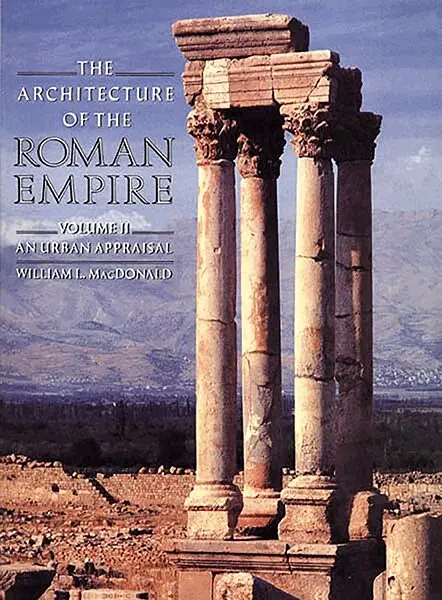
The author of a classic work on the architecture of imperial Rome here broadens his focus to present an original study of urban architecture in Roman market towns, port cities, veterans’ colonies, and major metropolitan centers throughout the empire.“Simply the best book on Roman urbanism [that] I know. . . . A formidable breakthrough. It brings to life the genius of Roman urbanism and reveals its continuing relevance for present urban planning and architecture.”—Leon Krier, Architects Journal“In this very fine book—the successor to his Introductory Study—William L. MacDonald lays before the reader the physical evidence of what a Roman city was like for its inhabitants. . . . The illustrations in An Urban Appraisal, this second volume of The Architecture of the Roman Empire, are superbly chosen, illuminating the text as well as being interesting in themselves. . . . It is a joy to find a book so attractively designed, worthy of both its author and his subject.”—Martin Henig, The Times Literary SupplementWinner of the 1986 Alice Davis Hitchcock Award of the Society of Architectural Historians for the most distinguished work of scholarship in architectural history.
697 kr
Skickas inom 5-8 vardagar
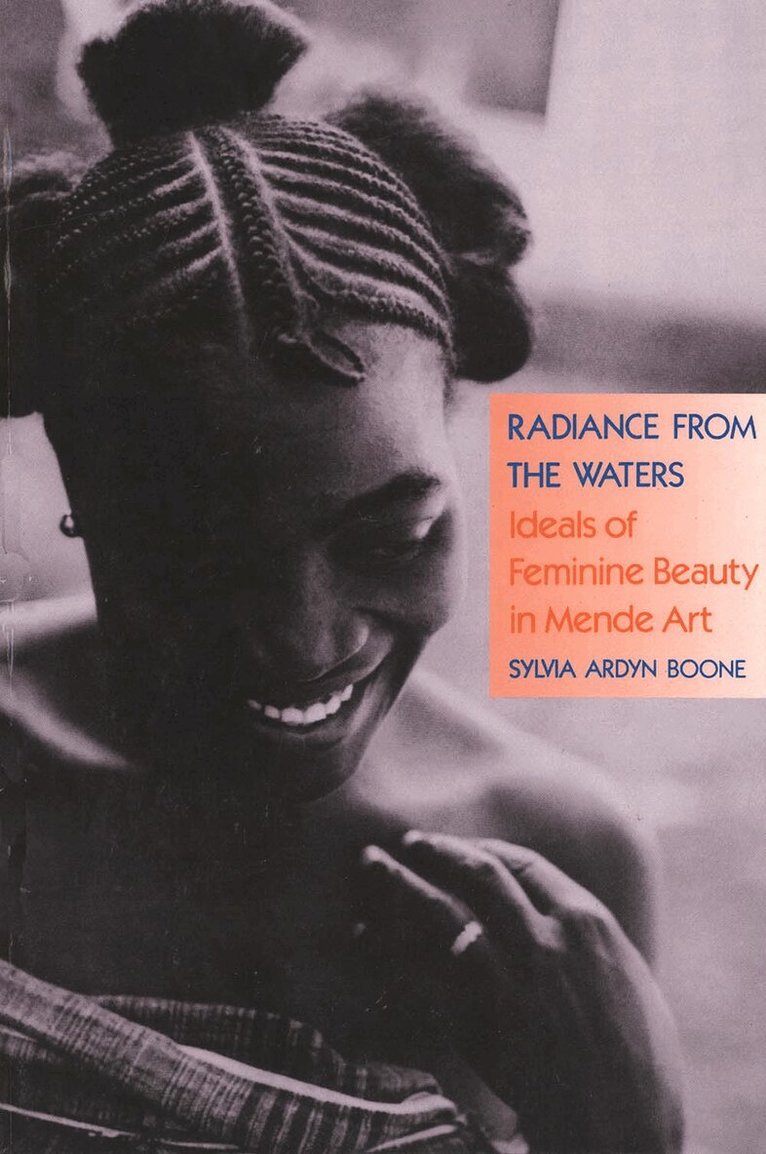
The Sande Society of the Mende people of Sierra Leone is a secret female regulatory society that both guards and transmits the ideals of feminine beauty so fundamental to the aesthetic criteria in Mende culture. In this eloquent and moving book, Sylvia Ardyn Boone describes the Society, its rituals and organization, and the mask worn by its members. Her book is an evocative account of Mende life and philosophy as well as a unique contribution to the study of African art, one based on African conceptions about the person and the human body."This is a beautiful and beautifully written book. … Boone writes in ways that reveal her evident devotion to Mende culture."—John Picton, African Affairs"A major contribution to our ethnographic understanding of Mende culture, and to understanding the way concepts of women’s bodies encode cultural messages about gender relations."—E. Frances White, Women’s Review of Books"A respectful approach to [the mysteries of the Sande], by an art historian who has tiptoed where anthropologists feared to tread. Radiance from the Waters deserves to be read. … It provides something more interesting than esoteric knowledge: an extended meditation on notions of beauty and decorum and the way in which these can be translated simultaneously into art and … advancement for women."—John Ryle, London Review of Books"The first text to illuminate the power of the feminine aesthetic in West African art."—Ms.
572 kr
Skickas inom 7-10 vardagar
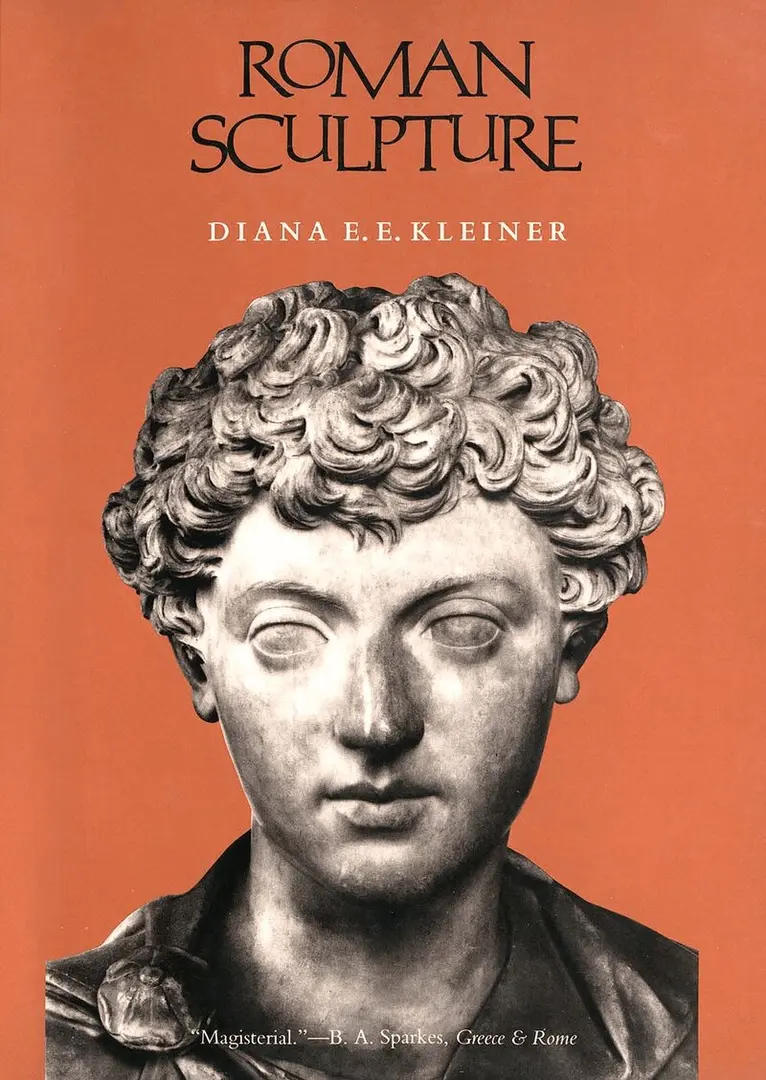
Roman sculpture was an integral part of Roman life, and the Romans placed statues and reliefs in their fora, basilicas, temples, and public baths, as well as in their houses, villas, gardens, and tombs. In this beautifully illustrated book—the first in almost a century devoted solely to Roman sculpture—Diana E. E. Kleiner discusses all the major public and private monuments in Rome, as well as many less well known monuments in the capital and elsewhere in the empire. She examines art commissioned by the imperial elite and by private patrons, including freedmen and slaves, and she also highlights monuments honoring women and children. Kleiner demonstrates that the social, ethnic, and geographical diversity of Roman patronage led to an art that was eclectic and characterized by varying styles, often tied to the social status of the patron. She also examines the interrelations between works produced for different kinds of patrons.Kleiner begins with a long thematic introduction that describes Rome and its empire, characterizes patrons from the capital and the provinces, discusses the position of the artist in Roman society and the materials he used, and presents a history of the study of Roman art. The remaining chapters constitute a chronological examination of Roman sculpture from the foundation of Rome in 753 B.C. to the transfer of the capital to Constantinople in A.D. 330. In each period the monuments are divided by type, for example, portraiture, state relief sculpture, the art of freedmen, and provincial art. Throughout, Kleiner treats Roman sculpture in its cultural, political, and social contexts and, wherever possible, as an element of the architectural complex in which it was set.Published with the assistance of the Getty Grant Program