Inbunden, Engelska, 2027
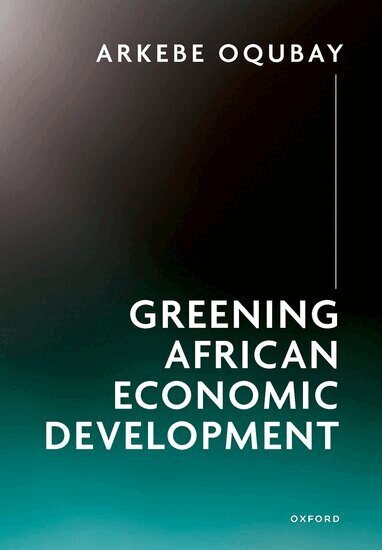
Greening African Economic Development
741 kr
Kommande
Beskrivning
This book reframes the question of how Africa industrializes, and is the first to address a key challenge facing African economies today: achieving structural transformation alongside decarbonization, i.e. industrializing and greening simultaneously, rather than sequentially as earlier developers did. Drawing on primary fieldwork across five national economies - Ethiopia, Mauritius, Morocco, Nigeria, and South Africa - and six strategic sectors, accounting for 40% of Africa's GDP and a third of its population, Arkebe Oqubay advances the concept of Green Productive Transformation, in which structural economic change and decarbonization are treated as mutually constitutive imperatives rather than competing objectives. The comparative evidence demonstrates that where government policy, industrial hubs, and firm capabilities are strategically aligned, productive transformation and green transformation reinforce each other; where they are not, industrial growth follows the path of least environmental resistance, producing carbon lock-in. Just transition and energy transition frameworks are designed primarily with industrialized economies in mind. This book challenges the utility of these frameworks for Africa, and instead advances a domestically-driven alternative, grounded in structural transformation theory, green industrial policy, and the political economy of late development. No single green pathway exists for Africa: the evidence presented here reveals conditional pathways shaped by national context, sectoral configuration, and policy choice. A green, productive Africa is not an inevitable outcome of global technological change, but it is genuinely within reach, and the first step is getting the analysis right.
Produktinformation
- Utgivningsdatum: 2027-01-12
- Mått: 156 x 234 x undefined mm
- Format: Inbunden
- Språk: Engelska
- Antal sidor: 448
- Förlag: OUP OXFORD
- ISBN: 9780197915837
Utforska kategorier
Betyg & recensioner
0 recensioner
Inga recensioner tillgängliga.