• Fri frakt över 249 kr
  • •
  • Snabba leveranser
  • •
  • Billiga böcker
Kundservice

Du är på sajten för privatpersoner.

Företag, bibliotek eller offentlig verksamhet?

Du handlar på classic.bokus.com, där alla dina funktioner finns intakta.
Till classic.bokus.com
Bokus logotyp. Gå till startsidan.
  • Erbjudanden
  • Nyheter
  • Student
  • Topplistor
  • Barn & ungdom
  • Bokus Play
  • E-böcker
  • Pocketböcker
  • Spel & pussel

10% rabatt på allt med kod NYSTART10 →

Sidfot

Mina sidor

    Hjälp

    • Kundservice
    • Vanliga frågor och svar
    • Frakt och leverans
    • Retur vid ångerrätt
    • Reklamera vara
    • Betalning
    • Köpvillkor
    • Allmänna villkor
    • Information om webbplatsens tillgänglighet

    Om Bokus

    • Om oss
    • Pressrum
    • För studenter
    • För företag
    • För bibliotek och offentlig verksamhet
    • För leverantörer
    • Hållbarhet

    Populärt

    • Aktuella erbjudanden
    • Presentkort
    • Studentlitteratur
    • Nya böcker
    • Topplistor
    • Signerade böcker
    • Engelska böcker

    Inspiration

    • Boktips
    • BookTok
    • Populära bokserier
    • Barnbokskaraktärer
    • Populära författare
    Logotyp för Bokus
    Följ oss på Facebook (extern länk)Följ oss på Instagram (extern länk)Följ oss på YouTube (extern länk)Följ oss på TikTok (extern länk)
    bokus @ CookiesAnpassa cookiesIntegritetspolicyKöpvillkor
    Till Citymail hemsida (extern länk)Till Budbee hemsida (extern länk)Till Postnord hemsida (extern länk)Till Schenker hemsida (extern länk)Till Early Bird hemsida (extern länk)Till Walleys hemsida (extern länk)
    1. Ekonomi och Ledarskap
    2. Nationalekonomi
    3. Internationell ekonomi

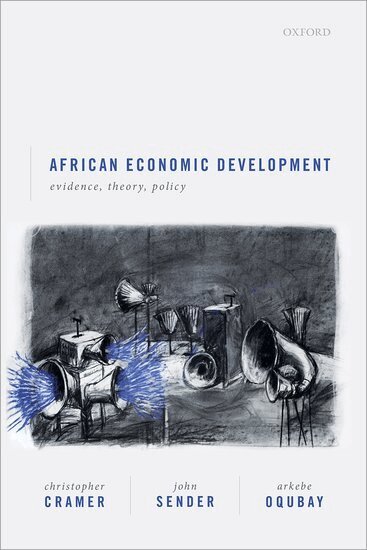
    African Economic Development

    Evidence, Theory, Policy

    AvChristopher Cramer,John Sender

    Inbunden, Engelska, 2020

    749 kr

    . Fri frakt över 249 kr.

    Beskrivning

    This is an open access title available under the terms of a CC BY-NC-ND 4.0 International licence. It is free to read at Oxford Scholarship Online and offered as a free PDF download from OUP and selected open access locations. Unevenness and inequalities form a central fact of African economic experiences. This book challenges conventional wisdoms about economic performance and possible policies for economic development in African countries, using the striking variation in economic performance as a starting point.African Economic Development: Evidence, Theory, and Policy highlights not only difference between countries, but also variation within countries. It focuses on issues relating to gender, class, and ethnic identity, such as neo-natal mortality, school dropout, and horticultural and agribusiness exports. Variations in these areas point to opportunities for changing perfomance, reducing reducing inequalities, learning from other policy experiences, and escaping the ties of structure and the legacies of a colonial past.African Economic Development rejects teleological illusions and Eurocentric prejudice, criticizing a range of orthodox and heterodox economists for their cavalier attitude to evidence. Instead, it shows that seeing the contradictions of capitalism for what they are - fundamental and enduring - may help policy officials protect themselves against the misleading idea that development can be expected to be a smooth, linear process, or that it would be if certain impediments were removed.Drawing on decades of research and policy experience, this book combines careful use of available evidence from a range of African countries with economic insights to make the policy case for specific types of public sector investment.

    Produktinformation

    • Utgivningsdatum:2020-06-11
    • Mått:164 x 241 x 24 mm
    • Vikt:666 g
    • Format:Inbunden
    • Språk:Engelska
    • Antal sidor:334
    • Förlag:OUP OXFORD
    • ISBN:9780198832331

    Utforska kategorier

    • Internationell ekonomi inom Ekonomi och Ledarskap
    • Diskriminering och rättvisa inom Samhälle och politik

    Mer om författaren

    Christopher Cramer is Professor of the Political Economy of Development at SOAS, University of London. He is a vice-chair of the Royal African Society, a Fellow of the Academy of Social Sciences, and chairs the Scientific Committee of the African Programme on Rethinking Development Economics based in South Africa. He is the author of Civil War is Not a Stupid Thing: Accounting for Violence in Developing Countries (2006, C. Hurst) and worked on the Fairtrade, Employment, and Poverty Reduction in Ethiopia and Uganda research project funded by the UK Department for International Development. He co-edited The Oxford Handbook of the Ethiopian Economy (2019, OUP) and The Oxford Handbook on Industrial Policy (2020, OUP).John Sender is an Emeritus Professor of Economics, SOAS, University of London. He began rural fieldwork in the 1970s, while working at the University of Dar es Salaam. Later jobs included: Director of the African Studies Centre, University of Cambridge; Visiting Professor of Political Economy, Witwatersrand University; Senior Research Fellow, African Studies Centre, Leiden. He advised Mandela's Presidential Commissions on Labour and on Rural Credit; Economic Commission for Africa; Federal Government of Nigeria and Federal Democratic Republic of Ethiopia; and he has worked with the Governments of Mozambique, Uganda, Sri Lanka and Vietnam. Early books include: Imperialism (1980, Verso); The Development of Capitalism in Africa (2010, Routledge); Poverty Class and Gender in Africa (2012, Routledge). Many journals publish his work, including: Feminist Economics, Journal of Economic Perspectives, World Development, Cambridge Journal of Economics, and African Affairs.Arkebe Oqubay is a Senior Minister and Special Adviser to the Prime Minister of Ethiopia and has been at the centre of policymaking for over twenty-five years.He is an ODI Distinguished Fellow and holds a PhD in development studies from SOAS, University of London. He is the former mayor of Addis Ababa and winner of the ABN Best African Mayor of 2006, and finalist for the World Mayor Award 2006, for transforming the city. He is a recipient of the Order of the Rising Sun, Gold and Silver Star. His work includesMade in Africa (2015, OUP); How Nations Learn (2019, OUP); The Oxford Handbook of the Ethiopian Economy (2019, OUP); China-Africa and an Economic Transformation (2019, OUP); The Oxford Handbook of Industrial Hubs and Economic Development (2020, OUP); and The Oxford Handbook of Industrial Policy (2020, OUP). He was recognized as one of the 100 Most Influential Africans of 2016, and a 'leading thinker on Africa's strategic development' by the NewAfrican.

    Recensioner i media

    The text offers much to consider regarding the policy decisions still needed for development in African countries.

    Innehållsförteckning

    • Part One: Introduction and Context 1: Introduction: A Fresh Outlook on Evidence, Analysis, and Policy for Economic Development in Africa 2: Uneven, Brutal, and Contradictory Economic Development in Africa 3: Varieties of Common Sense Part Two: Strategies of Economic Development 4: Investment, Wage Goods, and Industrial Policy 5: The Trade Imperative 6: Unbalanced Development Part Three: Poverty, Labour, and Agricultural Productivity 7: Wage Employment in Africa 8: Working Out the Solution to Rural Poverty 9: Technical Change and Agricultural Productivity Part Four: Towards Possibilism in Policy Making 10: High Yielding Variety Policies in Africa 11: References