
The Oxford History of Modern German Theology
Volume 3: 1918-2000
Inbunden, Engelska, 2026
Del i serien The Oxford History of Modern German Theology
2 532 kr
Kommande
Beskrivning
This third volume of The Oxford History of Modern German Theology traces the dramatic reconfiguration of theology in the German-speaking world from the aftermath of the First World War to the end of the twentieth century. Across a century marked by political catastrophe, social upheaval, and ecclesial transformation, theology was repeatedly compelled to rethink its methods, institutions, and public role. Two world wars, the rise and fall of National Socialism, the Holocaust, the division and reunification of Germany, and the reforms of the Second Vatican Council reshaped not only European society but also the very conditions under which theology could speak.Bringing Protestant and Catholic developments into a single narrative, the volume follows theology through four pivotal periods: the ferment of the Weimar Republic, the crises of the Nazi regime, the work of postwar reconstruction, and the pluralistic and global landscape after Vatican II. Along the way, readers encounter dialectical theology, the Confessing Church, ressourcement, political and liberation theologies, new hermeneutical approaches, and the emergence of feminist and interreligious perspectives. Rather than presenting a sequence of great thinkers alone, the volume situates figures such as Karl Barth, Rudolf Bultmann, and Karl Rahner within the institutions, debates, and political pressures that shaped their work. The result is a richly contextualized history that shows theology not as an isolated intellectual enterprise but as a socially embedded practice continually responding to crisis, reform, and global exchange.Comprehensive, critical, and ecumenical in scope, this volume offers the most complete account to date of modern German theology's turbulent and transformative twentieth century.
Produktinformation
Utforska kategorier
Mer om författaren
Innehållsförteckning
Hoppa över listan

Du kanske också är intresserad av
Del 1
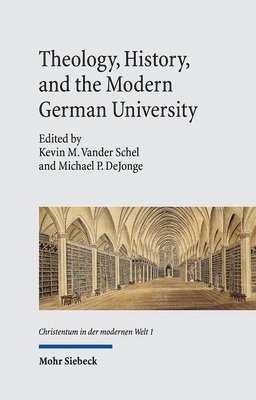
Theology, History, and the Modern German University
Kevin M. Vander Schel, Michael P. DeJonge
Inbunden, 2021
1 417 kr