• Fri frakt över 249 kr
  • •
  • Snabba leveranser
  • •
  • Billiga böcker
Kundservice

Du är på sajten för privatpersoner.

Företag, bibliotek eller offentlig verksamhet?

Du handlar på classic.bokus.com, där alla dina funktioner finns intakta.
Till classic.bokus.com
Bokus logotyp. Gå till startsidan.
  • Erbjudanden
  • Student
  • Topplistor
  • Barn & ungdom
  • Bokus Play
  • E-böcker
  • Ljudböcker
  • Pocketböcker
  • Spel och pussel

5% studentrabatt – använd koden KURSBOK27 →

Sidfot

Mina sidor

    Hjälp

    • Kundservice
    • Vanliga frågor och svar
    • Frakt och leverans
    • Retur vid ångerrätt
    • Reklamera vara
    • Betalning
    • Köpvillkor
    • Allmänna villkor
    • Information om webbplatsens tillgänglighet

    Om Bokus

    • Om oss
    • Pressrum
    • För studenter
    • För företag
    • För bibliotek och offentlig verksamhet
    • För leverantörer
    • Hållbarhet

    Populärt

    • Aktuella erbjudanden
    • Presentkort
    • Studentlitteratur
    • Nya böcker
    • Topplistor
    • Signerade böcker
    • Engelska böcker

    Inspiration

    • Boktips
    • BookTok
    • Barnbokskaraktärer
    • Populära författare
    Logotyp för Bokus
    Följ oss på Facebook (extern länk)Följ oss på Instagram (extern länk)Följ oss på YouTube (extern länk)Följ oss på TikTok (extern länk)
    bokus @ CookiesAnpassa cookiesIntegritetspolicyKöpvillkor
    Till Citymail hemsida (extern länk)Till Budbee hemsida (extern länk)Till Postnord hemsida (extern länk)Till Schenker hemsida (extern länk)Till Early Bird hemsida (extern länk)Till Walleys hemsida (extern länk)
    1. Filosofi och religion
    2. Filosofi
    3. Filosofiska discipliner

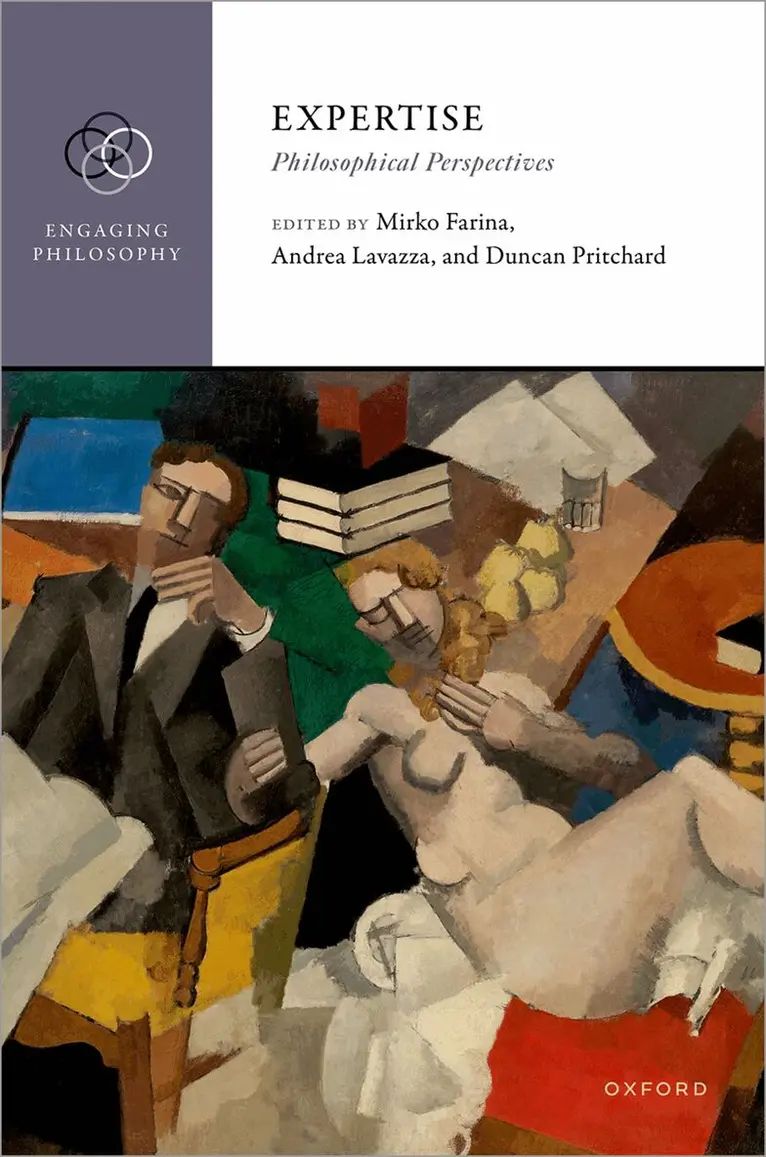
    Expertise

    Philosophical Perspectives

    AvMirko Farina,Andrea Lavazza

    Inbunden, Engelska, 2024

    Del i serien Engaging Philosophy

    1 167 kr

    Beställningsvara. Skickas inom 5-8 vardagar. Fri frakt över 249 kr.

    Beskrivning

    This book offers a collective study of issues to do with experts and expertise, a topic of tremendous contemporary significance. The perspectives are philosophical but draw on relevant work from the sciences and social sciences. In addition, in keeping with other volumes in Oxford University Press's Engaging Philosophy series, many of the papers in the volume have an applied dimension, in that they examine the issues in practical settings. The questions discussed include the following: What is an expert? Who decides who the experts are? Should we always defer to experts? How should expertise inform public policy? What happens when the experts disagree? Must experts be unbiased? Should all experts be treated the same, or does it matter what the source of the expertise is? How should the testimony of experts be reported by the media? The chapters in the volume are organized into six sections: expertise and trust; situated and group expertise; expertise and public policy; expertise and virtue; expertise about value; and new directions. This volume will be of interest to scholars in such fields as philosophy, sociology, political theory, psychology, cognitive science, and bioethics. It will also be of relevance to policy-makers interested in the role that expertise plays in public policy.

    Produktinformation

    • Utgivningsdatum:2024-07-02
    • Mått:164 x 241 x 22 mm
    • Vikt:610 g
    • Format:Inbunden
    • Språk:Engelska
    • Serie:Engaging Philosophy
    • Antal sidor:304
    • Förlag:OUP OXFORD
    • ISBN:9780198877301

    Utforska kategorier

    • Filosofiska discipliner inom Filosofi och religion
    • Naturvetenskapens filosofi inom Naturvetenskap och teknik

    Mer om författaren

    Mirko Farina is a philosopher and a cognitive scientist. He is Professor of Philosophy and Computer Science and Head of Human Machine Interaction Lab at the Institute for Digital Economy and Artificial Systems, jointly established by Xiamen University and Lomonosov Moscow State University. Previously, he was Associate Professor of Philosophy and Computer Science at Innopolis University.Andrea Lavazza is a moral philosopher and a neuroethicist. He is senior research fellow at the Centro Universitario Internazionale, Arezzo, Italy, and adjunct professor in Neuroethics at the University of Milan and at the University of Pavia, Italy, where he also teaches Philosophy of Mind. His main interests are at the intersection among ethics, epistemology, cognitive science, and new technologies. Lavazza has published over 110 papers in peer-reviewed journals and a dozen books both in Italian and in English.Duncan Pritchard is UC Distinguished Professor of Philosophy and Director of the Center for Knowledge, Technology & Society at the University of California, Irvine. He was previously Professor of Philosophy and Director of the Eidyn research center at the University of Edinburgh. His monographs include Epistemic Luck (OUP, 2005), The Nature and Value of Knowledge (OUP, 2010), Epistemological Disjunctivism (OUP, 2012), Epistemic Angst: Radical Skepticism and the Groundlessness of Our Believing (Princeton University Press, 2015), and Scepticism: A Very Short Introduction (OUP, 2019). His academic distinctions include the award of the Philip Leverhulme Prize, election to a Fellowship of the Royal Society of Edinburgh, and delivering the annual Soochow Lectures in Philosophy.

    Recensioner i media

    This anthology considers epistemological, ethical, political, and other issues centering on expertise from a variety of disciplinary perspectives. This variety allows different articles to serve different courses without the entire book perhaps ever serving as the main text of any. A majority of the articles at least touch on issues of scientific expertise.

    Innehållsförteckning

    • Part 1: Introduction 1: Duncan Pritchard, Mirko Farina, & Andrea Lavazza: Expertise Part 2: Expertise and Trust 2: Massimo Pigliucci: The Problem of Pseudoscience: Who Should We Trust When it Comes to Fringe Beliefs? 3: Gloria Origgi: Authority, Legitimacy and the Expert-Layman Problem 4: Daniel DeNicola: Institutionalized Expertise: Trust, Rejection, and Ignorance Part 3: Situated and Group Expertise 5: Lisa Bortolotti, Michael Larkin, and Michele Lim: Expertise as Perspectives in Dialogue 6: John Sutton: Affective, Cognitive, and Ecological Components of Joint Expertise in Collaborative Embodied Skills Part 4: Expertise and Public Policy 7: Rivkah Hatchwell and David Papineau: Expert Judgement Without Values: Credences not Inductive Risks 8: Michela Massimi: From the Right to Science as an Epistemic-Cultural Human Right to the Right to Expertise 9: Harry Collins: Studies of Expertise and Experience' Part 5: Expertise and Virtue 10: Linda Zagzebski: Humility for Experts 11: Andrea Lavazza and Mirko Farina: 1. Expertise-in-Action: The Importance of Intellectual and Moral Virtue(s) to Experts' Epistemic Authority' Part 6: Expertise About Value 12: Dominic McIver Lopes: Experts in Aesthetic Value Practices 13: Emma Gordon: Moral Expertise and Socratic AI Part 7: New Directions 14: Veli Mitova: Decolonising Experts 15: Duncan Pritchard: Public Expertise and Ignorance