Engaging Philosophy - Böcker
Visar alla böcker i serien Engaging Philosophy. Handla med fri frakt och snabb leverans.
14 produkter
14 produkter
1 240 kr
Skickas inom 5-8 vardagar
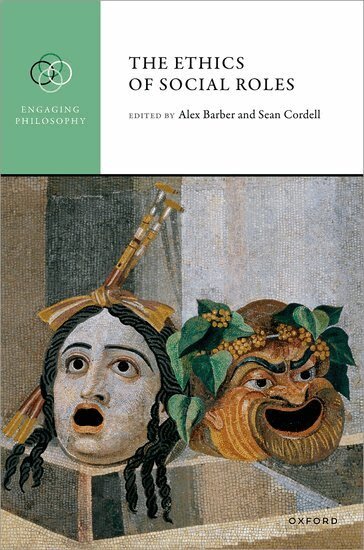
The various social roles we occupy, such as teacher, parent, or friend, shape our ethical lives and colour our perceptions of each other and ourselves. Social roles have long been a central topic in sociology, and specific social roles frequently feature within applied moral philosophy and professional ethics. In striking contrast, the normative significance of social roles per se--the 'ethics of social roles' as a distinct field of philosophical enquiry--has been relatively neglected. Indeed, the view that social roles have genuine ethical bite is often tacitly dismissed as socially regressive, as if the pull of a social role must always be towards 'knowing one's place'. The present collection aims to change this by putting social roles back where they belong: at the centre of normative ethics.After an editors' introduction aimed at readers new to the topic, fourteen original chapters by an international line-up of new and established authors show how the topic of social roles is a kind of missing link between several better-established topics, including collective agency, special obligations, wellbeing, and social and political justice. These contributions are organized into four parts. The first looks at the topic through a historical lens, since philosophers have not always neglected social roles. The second addresses the source of the apparent normative force of social roles. The third examines the relation of a social role's normativity to its wider institutional context. The fourth looks at implications for self and wellbeing.
861 kr
Skickas inom 5-8 vardagar
This is an open access title available under the terms of a CC BY-NC-ND 4.0 International licence. It is free to read on Oxford Academic and offered as a free PDF download from OUP and selected open access locations.The Ethics of Surveillance in Times of Emergency draws from the use of modern surveillance technologies during the COVID-19 pandemic to explore a set of issues and challenges facing decision-makers and designers in times of emergency: how do we respond to emergencies in ways that are both consistent with democratic and community principles, and that are ethically justifiable? Emergencies, like public health pandemics, not only place stress on existing infrastructure and communities, but put significant pressure on our decision-making. The use of surveillance technologies during public health crises is a vital frame to explore the challenge of acting in times of emergency. Moreover, as an exercise in reflective applied ethics, this book does not just seek to apply a given theory or principle to the problem of surveillance in times of emergency, but to use the challenges facing us to critically engage with, reflect upon, and develop those theories and principles. The book's authors recognize this challenge--is it possible to respond to exceptional conditions in ways that either preserve our core values, or must these core values be subsumed under the need to respond to the particular emergency? The book offers responses to this challenge by looking at three interrelated ways in which can manifest: first, the democratic challenges; second, the ethical challenges; and third the design challenges faced in developing ethical solutions.
1 322 kr
Skickas inom 5-8 vardagar
Philosophers have been thinking about lying for several thousand years, yet this topic has only recently become a central area of academic interest for philosophers of language, epistemologists, ethicists, and political philosophers. Lying: Language, Knowledge, Ethics, Politics provides the first dedicated collection of philosophical essays on the emerging topic of lying. Adopting an inter-subdisciplinary approach, this volume breaks new methodological ground in exploring the ways that a better understanding of language can inform the study of knowledge, ethics, or politics - and vice-versa. How can we lie when it is unclear what exactly we believe, or when we have contradictory beliefs? Can corporations lie, and if so how? Is lying always wrong, or always at least prima facie wrong? What can one learn from a liar? Can we lie to mindless machines? These engaging questions and many more are explored at length in this accessible reference text.
Treatment for Crime
Philosophical Essays on Neurointerventions in Criminal Justice
Inbunden, Engelska, 2018
1 532 kr
Skickas inom 5-8 vardagar
Preventing recidivism is one of the aims of criminal justice, yet existing means of pursuing this aim are often poorly effective, highly restrictive of basic freedoms, and significantly harmful. Incarceration, for example, tends to be disruptive of personal relationships and careers, detrimental to physical and mental health, restrictive of freedom of movement, and rarely more than modestly effective at preventing recidivism. Crime-preventing neurointerventions (CPNs) are increasingly being advocated, and there is a growing use of testosterone-lowering agents to prevent recidivism in sexual offenders, and strong political and scientific interest in developing pharmaceutical treatments for psychopathy and anti-social behaviour. Future neuroscientific advances could yield further CPNs; we could ultimately have at our disposal a range of drugs capable of suppressing violent aggression and it is not difficult to imagine possible applications of such drugs in crime prevention. Neurointerventions hold out the promise of preventing recidivism in ways that are both more effective, and more humane. But should neurointerventions be used in crime prevention? And may the state ever permissibly impose CPNs as part of the criminal justice process, either unconditionally, or as a condition of parole or early release? The use of CPNs raises several ethical concerns, as they could be highly intrusive and may threaten fundamental human values, such as bodily integrity and freedom of thought. In the first book-length treatment of this topic, Treatment for Crime, brings together original contributions from internationally renowned moral and political philosophers to address these questions and consider the possible issues, recognizing how humanity has a track record of misguided, harmful and unwarrantedly coercive use of neurotechnological 'solutions' to criminality.The Engaging Philosophy series is a new forum for collective philosophical engagement with controversial issues in contemporary society.
1 469 kr
Skickas inom 3-6 vardagar
What makes a word bad? Bad Words is a philosophical examination of slurs and other derogatory and problematic language, by some of the leading contributors to the field. Slurs are an interesting case for the philosophy of language. On the one hand, they seem to be meaningful in something like the way many other expressions are meaningful - different slurs might seem in some way to refer to different groups, for example. But on the other hand, it's clear that slurs also have distinctive practical effects and roles: they can seem to be just an arbitrary tool for insulting or enabling harm. How are those aspects related? Just how the use of words is related to their significance is of course one of the deepest issues in philosophy of language: slurs not only refine that issue, by presenting a kind of use that presents novel challenges, but also give the issue a compelling practical relevance.The Engaging Philosophy series is a new forum for collective philosophical engagement with controversial issues in contemporary society.
678 kr
Skickas inom 7-10 vardagar
Academic freedom allows members of institutions of higher learning to engage in intellectual pursuits without fear of censorship or retaliation, and lies at the heart of the mission of the university. Recent years have seen growing concerns about threats to academic freedom, many brought about from the changing norms of (and demands on) the university. A wide range of new issues - including content warnings, safe spaces, social media controversies, microaggressions, and no platforming - have given rise to loud cries, in both scholarly and popular contexts, that academic freedom is under serious attack. This volume fills both of these gaps in the current literature by bringing together leading philosophers from a wide range of areas of expertise to weigh in on both traditional issues and timely challenges that involve academic freedom. Divided into four main sections, it covers the rationale of academic freedom, its parameters, the new challenges to academic freedom (ranging from content warnings to political correctness), and the conflicts between academic freedom and the enforcement of laws and regulations governing the university.
1 532 kr
Skickas inom 5-8 vardagar
Climate change is poised to threaten, disrupt, and transform human life, and the social, economic, and political institutions that structure it. Philosophy and Climate Change argues that understanding climate change, and discussing how to address it, should be at the very center of our public conversation. It shows that philosophy can make an enormous contribution to that conversation, but only if both philosophers and non-philosophers understand what it can contribute. The sixteen original articles collected in this volume both illustrate the diverse ways that philosophy can contribute to this conversation, and ways in which thinking about climate change can help to illuminate a range of topics of independent interest to philosophers.
886 kr
Skickas inom 5-8 vardagar
This volume presents new philosophical essays on a topic that's been neglected in most recent philosophy: games, sports, and play. Some contributions address conceptual questions about what games and sports have in common and that distinguishes them from other activities; here many take their start from Bernard Suits's celebrated analysis of game-playing in his book The Grasshopper and either elaborate it or propose an alternative to it. Other essays discuss normative issues that arise within games and sports, such as about fairness, for example in the treatment of male and female athletes. Yet others consider broader evaluative questions about the value of games and sports, which some see as enabling the display of distinctive excellences. Games, Sports, and Play includes a posthumous essay by Suits defending his claim, in The Grasshopper, that life in utopia would consist primarily in playing games. The volume's chapters approach the topic of games, sports, and play from different angles but always in the belief that there is rich terrain here for philosophical investigation.
973 kr
Skickas inom 5-8 vardagar
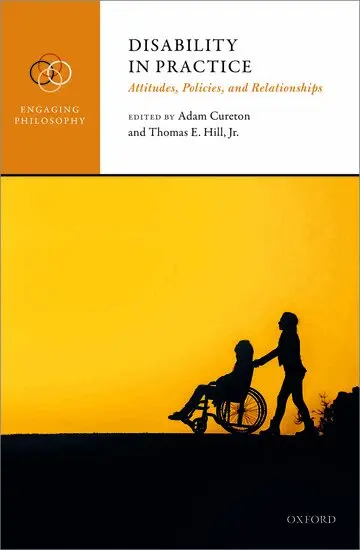
Everyone is disabled in some respect, at least in the sense that others can do things that we cannot. But significant limitations on pursuing major life activities due to severely limited eyesight, hearing, mobility, cognitive functioning and so on pose special problems that fortunately have been recognized (to some extent) in our public policies. Public policy is important, as are the deliberative frameworks that we use to justify them, and the essays in the second and third sections of this volume have significant implications for public policy and offer new proposals for justifying frameworks. Underlying public policies and their assessment, however, are the attitudes, good and bad, that we bring to them, and our attitudes as well deeply affect our interpersonal relationships. The essays here, especially in the first section, reveal how complex and problematic our attitudes towards persons with disabilities are when we are in relationships with them as care-givers, friends, family members, or briefly encountered strangers. Our attitudes towards ourselves as persons with (or without) disabilities are implicated in these discussions as well. Among the special highlights of this volume are its focus on moral attitudes and relationships involving disabilities and its contributors' recognition of the multi-faceted nature of disability problems. The importance of respect for persons as a necessary complement to beneficence is an underlying theme, and a deeper understanding of respect is made possible by considering closely its implications for relationships with persons with disabilities. Awareness of the common and uncommon human vulnerabilities also makes clear the need for modifying traditional deliberative frameworks for assessing policies, and several essays make constructive proposals for the changes that are needed.
2 095 kr
Skickas inom 3-6 vardagar
Applied epistemology brings the tools of contemporary epistemology to bear on particular issues of social concern. While the field of social epistemology has flourished in recent years, there has been far less work on how theories of knowledge, justification, and evidence may be applied to concrete questions, especially those of ethical and political significance. This volume fills this gap in the current literature by bringing together leading philosophers in a broad range of areas in applied epistemology. The potential topics in applied epistemology are many and diverse, and this volume focuses on seven central issues, some of which are general while others are far more specific: epistemological perspectives; epistemic and doxastic wrongs; epistemology and injustice; epistemology, race, and the academy; epistemology and feminist perspectives; epistemology and sexual consent; and epistemology and the internet. Some of the chapters in this volume contribute to, and further develop, areas in social epistemology that are already active, while others open up entirely new avenues of research. All of the contributions aim to make clear the relevance and importance of epistemology to some of the most pressing social and political questions facing us as agents in the world.
973 kr
Skickas inom 5-8 vardagar
This is the first collective study of the thinking behind the effective altruism movement. This movement comprises a growing global community of people who organise significant parts of their lives around the two key concepts represented in its name. Altruism is the idea that if we use a significant portion of the resources in our possession--whether money, time, or talents--with a view to helping others then we can improve the world considerably. When we do put such resources to altruistic use, it is crucial to focus on how much good this or that intervention is reasonably expected to do per unit of resource expended (as a gauge of effectiveness). We can try to rank various possible actions against each other to establish which will do the most good with the resources expended. Thus we could aim to rank various possible kinds of action to alleviate poverty against one another, or against actions aimed at very different types of outcome, focused perhaps on animal welfare or future generations. The scale and organisation of the effective altruism movement encourage careful dialogue on questions that have perhaps long been there, throwing them into new and sharper relief, and giving rise to previously unnoticed questions. In this volume a team of internationally recognised philosophers, economists, and political theorists present refined and in-depth explorations of issues that arise once one takes seriously the twin ideas of altruistic commitment and effectiveness.
1 532 kr
Skickas inom 7-10 vardagar
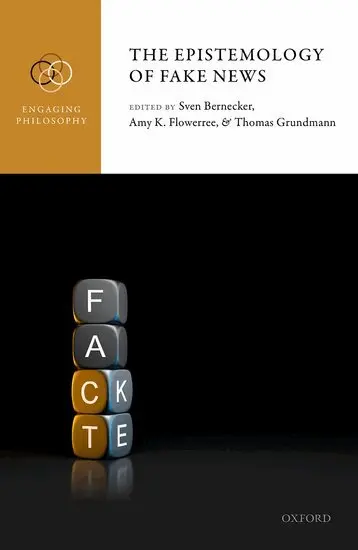
News is vital for a healthy democracy. Collective decision-making requires accurate, reliable information. Nevertheless, much of the information we encounter is inadequate for this task. And some--peddled by politicians, profiteers, bots and algorithms--is fake. Social media platforms and emerging technologies allow fake news to dominate our information landscape. An adequate understanding our current information landscape calls for a new discipline, the epistemology of fake news. The epistemology of fake news studies knowledge communication under imperfect conditions. This book is the first sustained inquiry into the new epistemology of fake news. The chapters, authored by established and emerging names in the field, pursue three goals. First, to analyse the meaning and novelty of 'fake news' and related notions, such as 'conspiracy theory.' Second, to discuss the mechanics of fake news, exploring various practices that generate or promote fake news. Third, to investigate potential therapies for fake news.
1 091 kr
Skickas inom 5-8 vardagar
This book offers a collective study of issues to do with experts and expertise, a topic of tremendous contemporary significance. The perspectives are philosophical but draw on relevant work from the sciences and social sciences. In addition, in keeping with other volumes in Oxford University Press's Engaging Philosophy series, many of the papers in the volume have an applied dimension, in that they examine the issues in practical settings. The questions discussed include the following: What is an expert? Who decides who the experts are? Should we always defer to experts? How should expertise inform public policy? What happens when the experts disagree? Must experts be unbiased? Should all experts be treated the same, or does it matter what the source of the expertise is? How should the testimony of experts be reported by the media? The chapters in the volume are organized into six sections: expertise and trust; situated and group expertise; expertise and public policy; expertise and virtue; expertise about value; and new directions. This volume will be of interest to scholars in such fields as philosophy, sociology, political theory, psychology, cognitive science, and bioethics. It will also be of relevance to policy-makers interested in the role that expertise plays in public policy.
1 008 kr
Skickas inom 5-8 vardagar
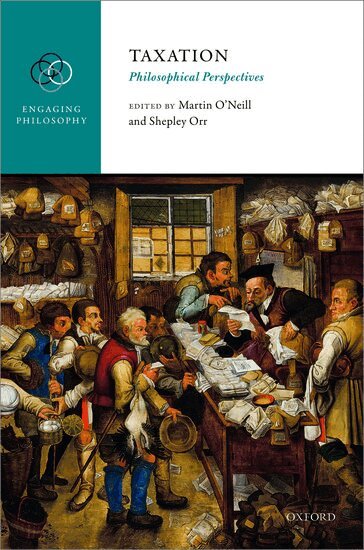
This is the first book to give a collective treatment of philosophical issues relating to tax. The tax system is central to the operation of states and to the ways in which states interact with individual citizens. Taxes are used by states to fund the provision of public goods and public services, to engage in direct or indirect forms of redistribution, and to mould the behaviour of individual citizens. As the contributors to this volume show, there are a number of pressing and thorny philosophical issues relating to the tax system, and these issues often connect in fascinating ways with foundational questions regarding property rights, public justification, democracy, state neutrality, stability, political psychology, and other moral and political issues. Many of these deep and fascinating philosophical questions about tax have not received as much sustained attention as they clearly merit. The aim of advancing the debate about tax in political philosophy has both general and more specific aspects, ranging across both over-arching issues regarding the tax system as a whole and more specific issues relating to particular forms of tax policy. Thinking clearly about tax is not an easy task, as much that is of central importance is missed if one proceeds at too great a level of abstraction, and issues of conceptual and normative importance often only come sharply into focus when viewed against real-world questions of implementation and feasibility. Serious philosophical work on the tax system will often therefore need to be interdisciplinary, and so the discussion in this book includes a number of scholars whose expertise spans across neighbouring disciplines to philosophy, including political science, economics, public policy, and law.