Inbunden, Engelska, 2026
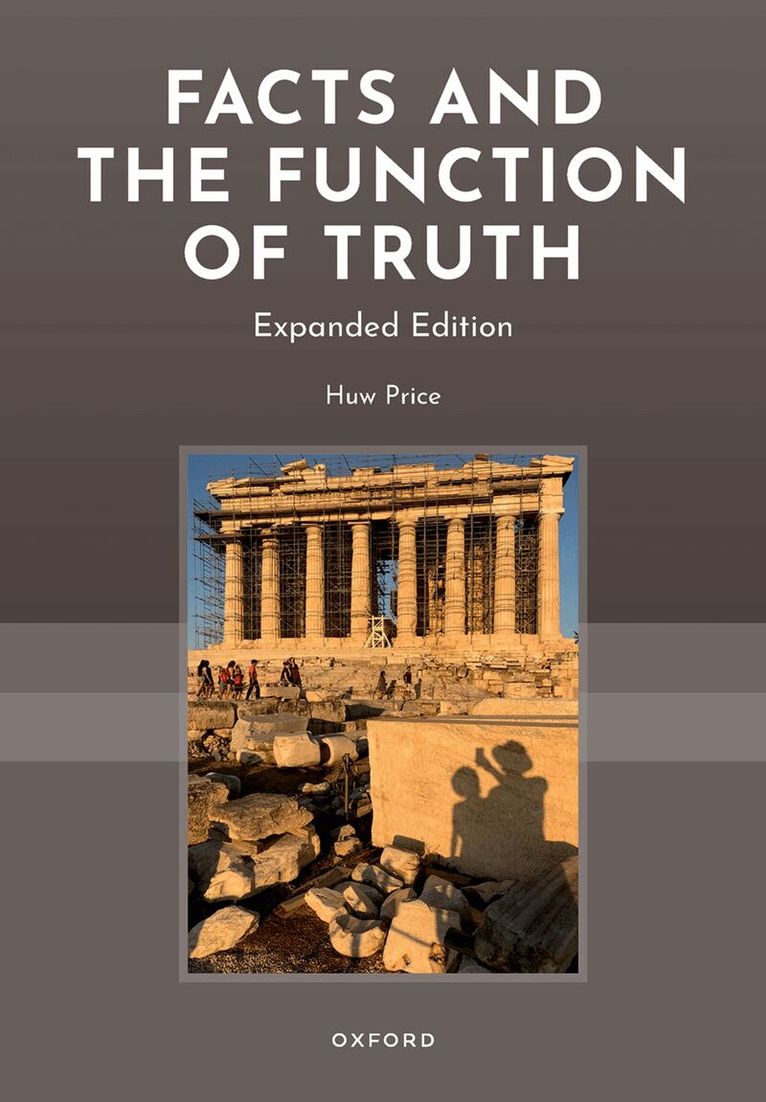
Facts and the Function of Truth
Av Huw Price
1704 kr
Kommande
Beskrivning
Philosophers and linguists often distinguish between fact-stating claims and other uses of language. The distinction is drawn in various ways: descriptive versus expressive, cognitive versus noncognitive, or truth-apt versus non-truth-apt uses, for example. Which of these, if any, is basic? Huw Price examines various attempts to analyse the notion of a factual claim, but argues that all are unsatisfactory. He concludes that the search for a sharp distinction is misconceived.Price proposes an alternative, based on a novel pragmatic genealogy of the notions of truth and falsity. He argues that these notions originate as norms of disagreement. By default, speakers attribute fault to those with whom they disagree, and commend those with whom they agree. This provides an incentive to resolve differences, with long-run advantages. Price argues that this is the origin of our ideas of truth, falsity, and objectivity, and the basis of what we take to be factual uses of language. Importantly, these norms come by degree. Sometimes two speakers can disagree, without either seeming to be mistaken. Price shows that such 'no fault' disagreements arise for reasons specific to particular discourses, explaining our sense that some topics are more factual than others. And in principle, he argues, no discourse is entirely immune. The book thus defends a kind of global nonfactualism. Understood in these pragmatic terms, factuality is an ideal that no actual language meets completely.Almost four decades downstream from the original 1988 edition of Facts and the Function of Truth, Price's pragmatic genealogy of factuality remains both novel and highly relevant to contemporary debates. This new expanded edition adds six newly-written chapters to the original nine. The new Introduction includes a reading guide to original material, while the five chapters in the new Part III connect the conclusions of the first edition to later work by Price himself and many other writers. It will be essential reading for students and practitioners interested in topics such as neopragmatism, expressivism, truth, semantic minimalism, deflationary metaphysics, philosophical genealogy, and conceptual engineering.
Produktinformation
- Utgivningsdatum: 2026-12-04
- Mått: 156 x 234 x undefined mm
- Format: Inbunden
- Språk: Engelska
- Antal sidor: 384
- Upplaga: 2
- Förlag: OUP OXFORD
- ISBN: 9780198956389
Utforska kategorier
Betyg & recensioner
0 recensioner
Inga recensioner tillgängliga.