Huw Price – författare
Visar alla böcker från författaren Huw Price. Handla med fri frakt och snabb leverans.
16 produkter
16 produkter
E-bok
PDF, Engelska, 2017979 kr
Läs direkt efter köp
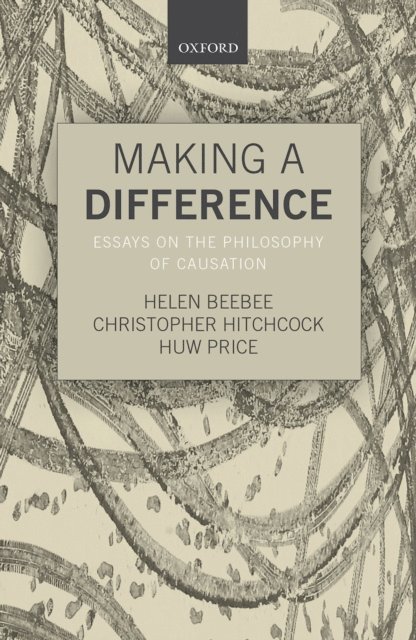
Making a Difference presents fifteen original essays on causation and counterfactuals by an international team of experts. Collectively, they represent the state of the art on these topics. The essays in this volume are inspired by the life and work of Peter Menzies, who made a difference in the lives of students, colleagues, and friends. Topics covered include: the semantics of counterfactuals, agency theories of causation, the context-sensitivity of causalclaims, structural equation models, mechanisms, mental causation, causal exclusion argument, free will, and the consequence argument.
E-bok
PDF, Engelska, 2007519 kr
Läs direkt efter köp
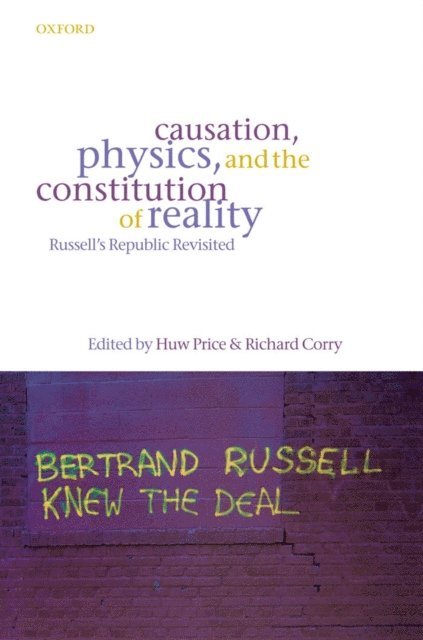
In philosophy as in ordinary life, cause and effect are twin pillars on which much of our thought seems based. But almost a century ago, Bertrand Russell declared that modern physics leaves these pillars without foundations. Russell''s revolutionary conclusion was that ''the law of causality is a relic of a bygone age, surviving, like the monarchy, only because it is erroneously supposed to do no harm''. Russell''s famous challenge remains unanswered. Despite dramatic advances in physics, the intervening century has taken us no closer to an explanation of how to find a place for causation in a world of the kind that physics reveals. In particular, we still have no satisfactory account of the directionality of causation - the difference between cause and effect, and the fact that causes typically precede their effects. In this important collection of new essays, 13 leading scholars revisit Russell''s revolution, in search of reconciliation. The connecting theme in these essays is that to reconcile causation with physics, we need to put ourselves in the picture: we need to think about why creatures in our situation should present their world in causal terms.
Inbunden, Engelska, 2011
1 062 kr
Skickas inom 5-8 vardagar
This volume brings together fourteen major essays on truth, naturalism, expressivism and representationalism, by one of contemporary philosophy's most challenging thinkers. Huw Price weaves together Quinean minimalism about truth, Carnapian deflationism about metaphysics, Wittgensteinian pluralism about the functions of declarative language, and Rortyian skepticism about representation to craft a powerful and sustained critique of contemporary naturalistic metaphysics. In its place, he offers us not nonnaturalistic metaphysics, or philosophical quietism, but a new positive program for philosophy, cast from a pragmatist mold. This collection will be essential reading for anyone interested naturalism, pragmatism, truth, expressivism, pluralism and representationalism, or in deep questions about the direction and foundations of contemporary philosophy. It will be especially important to practitioners of analytic metaphysics, if they wish to confront the presuppositions of their own discipline. Price recommends a modest explanatory naturalism, in the sense of Hume: naturalism about own linguistic behavior, regarded as a behavior of natural creatures in a natural environment. He shows how this viewpoint privileges use and function over truth and reference, and expression over representation, as useful theoretical categories for the core philosophical project; and thereby undermines the semantic presuppositions of contemporary analytic metaphysics. At the same time, it offers an attractive resolution of the so-called "placement problems", that so preoccupy metaphysical naturalists--a global expressivism, with affinities both to the more local expressivism of writers such as Blackburn and Gibbard, and to Brandom's global inferentialism.
Inbunden, Engelska, 1996
839 kr
Skickas inom 5-8 vardagar
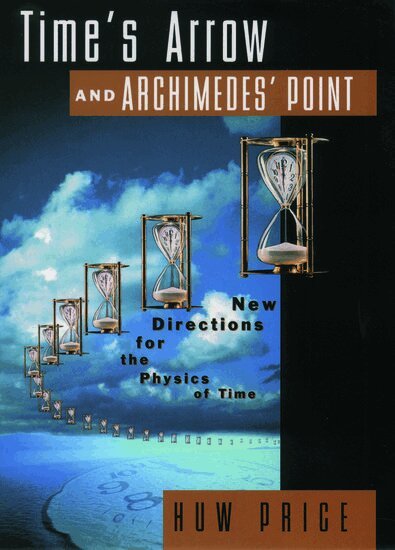
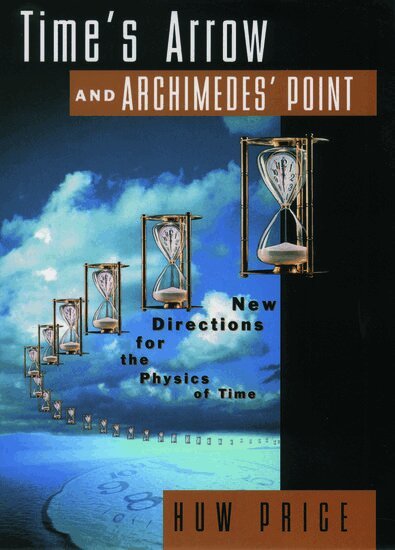
The arrow of time and the meaning of quantum mechanics are two of the great mysteries of modern physics. This important book - written for non-specialist readers, as well as physicists and philosophers - throws a fascinating new light on both issues, and connects them in a wholly original way.In considering attempts to understand the arrow of time in physics, Huw Price shows that for over a century physicists have fallen repeatedly for the same trap: treating the past and future in different ways. To overcome this natural tendency, we need to imagine a point outside time - an Archimedean viewpoint, as Price calls it - from which to think about the arrow of time in an unbiased way.Taking this Archimedean viewpoint, Price asks why we assume that the past affects the future but not vice versa, and argues that causation is much more symmetric in microphysics: to a limited extent, the future does affect the past. Thus he avoids the usual paradoxes of quantum mechanics, without succumbing to the rival paradoxes of causal loops and time travel.
Häftad, Engelska, 1997
274 kr
Skickas inom 5-8 vardagar
`splendidly provocative ... enjoy it as a feast for the imagination.' John Gribbin, Sunday Times Why is the future so different from the past? Why does the past affect the future and not the other way round? The universe began with the Big Bang - will it end with a 'Big Crunch'? This exciting book presents an innovative and controversial view of time and contemporary physics. Price urges physicists, philosophers, and anyone who has ever pondered the paradoxes of time to look at the world from a fresh perspective and he throws fascinating new light on some of the great mysteries of the universe. `a significant contribution, remarkable for its scope ... written with great clarity and conviction.' Ilya Prigogine, THES `a useful addition to the literature on time, particularly as it reveals the influence of modern science on the way a philosopher thinks.' Peter Coveney, New Scientist `the author has done physicists a great service in laying out so clearly and critically the nature of the various time-asymmetry problems of physics.' John Barrow, Nature `a thoughtful (and thought-provoking) analysis of the time-asymmetry problem of physics which is in many ways deeper and more illuminating than accounts to be found elsewhere.' Roger Penrose `Huw Price is one of a handful of philosophers with a thorough grasp of the notorious arrow of time problem ... Price applies critical reasoning and penetrating insight to the current theories of physics and cosmology that have a bearing on this problem. Among the many ideas discussed here is the controversial claim that time's arrow would reverse in a recontracting universe.' Paul Davies
Del 210 - Proceedings of the British Academy
The Practical Turn
Pragmatism in Britain in the Long Twentieth Century
Inbunden, Engelska, 2017
753 kr
Skickas inom 5-8 vardagar
American pragmatism, born in the 1870s in Cambridge, Massachusetts, has as its central insight the idea that our philosophical concepts of truth, knowledge, probability, and so on must start with, and remain linked to, human experience and inquiry. This book traces and assesses the strong influence of American pragmatism on British philosophy, with particular emphasis on Cambridge during the inter-war period, on post-war Oxford, and on recent developments. Most philosophers would say that American pragmatism received only a hostile reception in England when the ideas first travelled across the Atlantic. But this volume argues that the movement of pragmatist ideas in Britain was a strong and important current, cutting new channels to fruitful ways of thinking about philosophy's most profound problems. Its ideas have found a home in the work of Wittgenstein, Ramsey, Anscombe and, more recently, Simon Blackburn and Huw Price.
E-bok
PDF, Engelska, 1997195 kr
Läs direkt efter köp
Why is the future so different from the past? Why does the past affect the future and not the other way around? What does quantum mechanics really tell us about the world? In this important and accessible book, Huw Price throws fascinating new light on some of the great mysteries of modern physics, and connects them in a wholly original way. Price begins with the mystery of the arrow of time. Why, for example, does disorder always increase, as required by the second law of thermodynamics? Price shows that, for over a century, most physicists have thought about these problems the wrong way. Misled by the human perspective from within time, which distorts and exaggerates the differences between past and future, they have fallen victim to what Price calls the "double standard fallacy": proposed explanations of the difference between the past and the future turn out to rely on a difference which has been slipped in at the beginning, when the physicists themselves treat the past and future in different ways. To avoid this fallacy, Price argues, we need to overcome our natural tendency to think about the past and the future differently. We need to imagine a point outside time -- an Archimedean "view from nowhen" -- from which to observe time in an unbiased way. Offering a lively criticism of many major modern physicists, including Richard Feynman and Stephen Hawking, Price shows that this fallacy remains common in physics today -- for example, when contemporary cosmologists theorize about the eventual fate of the universe. The "big bang" theory normally assumes that the beginning and end of the universe will be very different. But if we are to avoid the double standard fallacy, we need to consider time symmetrically, and take seriously the possibility that the arrow of time may reverse when the universe recollapses into a "big crunch." Price then turns to the greatest mystery of modern physics, the meaning of quantum theory. He argues that in missing the Archimedean viewpoint, modern physics has missed a radical and attractive solution to many of the apparent paradoxes of quantum physics. Many consequences of quantum theory appear counterintuitive, such as Schrodinger''s Cat, whose condition seems undetermined until observed, and Bell''s Theorem, which suggests a spooky "nonlocality," where events happening simultaneously in different places seem to affect each other directly. Price shows that these paradoxes can be avoided by allowing that at the quantum level the future does, indeed, affect the past. This demystifies nonlocality, and supports Einstein''s unpopular intuition that quantum theory describes an objective world, existing independently of human observers: the Cat is alive or dead, even when nobody looks. So interpreted, Price argues, quantum mechanics is simply the kind of theory we ought to have expected in microphysics -- from the symmetric standpoint.Time''s Arrow and Archimedes'' Point presents an innovative and controversial view of time and contemporary physics. In this exciting book, Price urges physicists, philosophers, and anyone who has ever pondered the mysteries of time to look at the world from the fresh perspective of Archimedes'' Point and gain a deeper understanding of ourselves, the universe around us, and our own place in time.
Inbunden, Engelska, 2017
1 526 kr
Skickas inom 5-8 vardagar
Making a Difference presents fifteen original essays on causation and counterfactuals by an international team of experts. Collectively, they represent the state of the art on these topics. The essays in this volume are inspired by the life and work of Peter Menzies, who made a difference in the lives of students, colleagues, and friends. Topics covered include: the semantics of counterfactuals, agency theories of causation, the context-sensitivity of causal claims, structural equation models, mechanisms, mental causation, causal exclusion argument, free will, and the consequence argument.
Inbunden, Engelska, 2026
1 597 kr
Kommande
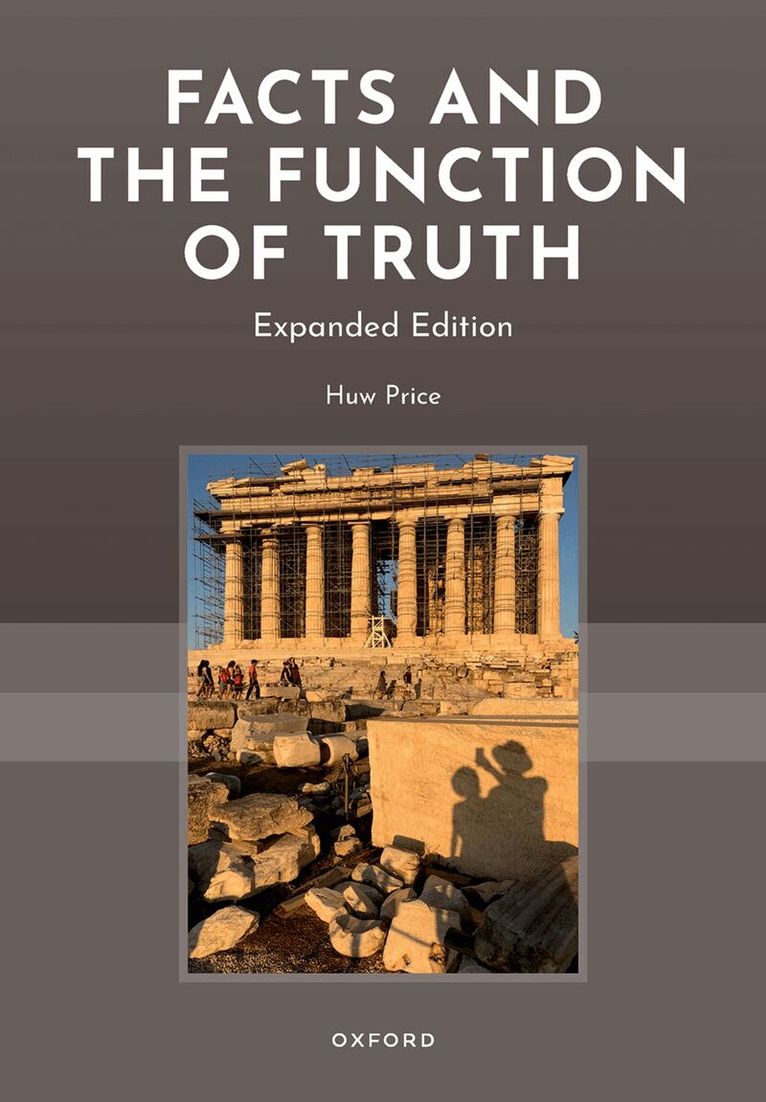
Philosophers and linguists often distinguish between fact-stating claims and other uses of language. The distinction is drawn in various ways: descriptive versus expressive, cognitive versus noncognitive, or truth-apt versus non-truth-apt uses, for example. Which of these, if any, is basic? Huw Price examines various attempts to analyse the notion of a factual claim, but argues that all are unsatisfactory. He concludes that the search for a sharp distinction is misconceived.Price proposes an alternative, based on a novel pragmatic genealogy of the notions of truth and falsity. He argues that these notions originate as norms of disagreement. By default, speakers attribute fault to those with whom they disagree, and commend those with whom they agree. This provides an incentive to resolve differences, with long-run advantages. Price argues that this is the origin of our ideas of truth, falsity, and objectivity, and the basis of what we take to be factual uses of language. Importantly, these norms come by degree. Sometimes two speakers can disagree, without either seeming to be mistaken. Price shows that such 'no fault' disagreements arise for reasons specific to particular discourses, explaining our sense that some topics are more factual than others. And in principle, he argues, no discourse is entirely immune. The book thus defends a kind of global nonfactualism. Understood in these pragmatic terms, factuality is an ideal that no actual language meets completely.Almost four decades downstream from the original 1988 edition of Facts and the Function of Truth, Price's pragmatic genealogy of factuality remains both novel and highly relevant to contemporary debates. This new expanded edition adds six newly-written chapters to the original nine. The new Introduction includes a reading guide to original material, while the five chapters in the new Part III connect the conclusions of the first edition to later work by Price himself and many other writers. It will be essential reading for students and practitioners interested in topics such as neopragmatism, expressivism, truth, semantic minimalism, deflationary metaphysics, philosophical genealogy, and conceptual engineering.
Inbunden, Engelska, 2007
1 904 kr
Skickas inom 5-8 vardagar
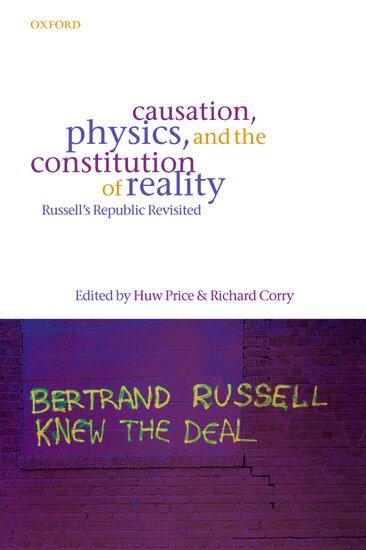
In philosophy as in ordinary life, cause and effect are twin pillars on which much of our thought seems based. But almost a century ago, Bertrand Russell declared that modern physics leaves these pillars without foundations. Russell's revolutionary conclusion was that 'the law of causality is a relic of a bygone age, surviving, like the monarchy, only because it is erroneously supposed to do no harm'.Russell's famous challenge remains unanswered. Despite dramatic advances in physics, the intervening century has taken us no closer to an explanation of how to find a place for causation in a world of the kind that physics reveals. In particular, we still have no satisfactory account of the directionality of causation - the difference between cause and effect, and the fact that causes typically precede their effects. In this important collection of new essays, 13 leading scholars revisit Russell's revolution, in search of reconciliation.The connecting theme in these essays is that to reconcile causation with physics, we need to put ourselves in the picture: we need to think about why creatures in our situation should present their world in causal terms.
Häftad, Engelska, 2007
693 kr
Skickas inom 5-8 vardagar
In philosophy as in ordinary life, cause and effect are twin pillars on which much of our thought seems based. But almost a century ago, Bertrand Russell declared that modern physics leaves these pillars without foundations. Russell's revolutionary conclusion was that 'the law of causality is a relic of a bygone age, surviving, like the monarchy, only because it is erroneously supposed to do no harm'.Russell's famous challenge remains unanswered. Despite dramatic advances in physics, the intervening century has taken us no closer to an explanation of how to find a place for causation in a world of the kind that physics reveals. In particular, we still have no satisfactory account of the directionality of causation - the difference between cause and effect, and the fact that causes typically precede their effects. In this important collection of new essays, 13 leading scholars revisit Russell's revolution, in search of reconciliation.The connecting theme in these essays is that to reconcile causation with physics, we need to put ourselves in the picture: we need to think about why creatures in our situation should present their world in causal terms.
E-bok
Engelska, 1997195 kr
Läs direkt efter köp
Why is the future so different from the past? Why does the past affect the future and not the other way around? What does quantum mechanics really tell us about the world? In this important and accessible book, Huw Price throws fascinating new light on some of the great mysteries of modern physics, and connects them in a wholly original way. Price begins with the mystery of the arrow of time. Why, for example, does disorder always increase, as required by the second law of thermodynamics? Price shows that, for over a century, most physicists have thought about these problems the wrong way. Misled by the human perspective from within time, which distorts and exaggerates the differences between past and future, they have fallen victim to what Price calls the "double standard fallacy": proposed explanations of the difference between the past and the future turn out to rely on a difference which has been slipped in at the beginning, when the physicists themselves treat the past and future in different ways. To avoid this fallacy, Price argues, we need to overcome our natural tendency to think about the past and the future differently. We need to imagine a point outside time -- an Archimedean "view from nowhen" -- from which to observe time in an unbiased way. Offering a lively criticism of many major modern physicists, including Richard Feynman and Stephen Hawking, Price shows that this fallacy remains common in physics today -- for example, when contemporary cosmologists theorize about the eventual fate of the universe. The "big bang" theory normally assumes that the beginning and end of the universe will be very different. But if we are to avoid the double standard fallacy, we need to consider time symmetrically, and take seriously the possibility that the arrow of time may reverse when the universe recollapses into a "big crunch." Price then turns to the greatest mystery of modern physics, the meaning of quantum theory. He argues that in missing the Archimedean viewpoint, modern physics has missed a radical and attractive solution to many of the apparent paradoxes of quantum physics. Many consequences of quantum theory appear counterintuitive, such as Schrodinger''s Cat, whose condition seems undetermined until observed, and Bell''s Theorem, which suggests a spooky "nonlocality," where events happening simultaneously in different places seem to affect each other directly. Price shows that these paradoxes can be avoided by allowing that at the quantum level the future does, indeed, affect the past. This demystifies nonlocality, and supports Einstein''s unpopular intuition that quantum theory describes an objective world, existing independently of human observers: the Cat is alive or dead, even when nobody looks. So interpreted, Price argues, quantum mechanics is simply the kind of theory we ought to have expected in microphysics -- from the symmetric standpoint.Time''s Arrow and Archimedes'' Point presents an innovative and controversial view of time and contemporary physics. In this exciting book, Price urges physicists, philosophers, and anyone who has ever pondered the mysteries of time to look at the world from the fresh perspective of Archimedes'' Point and gain a deeper understanding of ourselves, the universe around us, and our own place in time.
Häftad, Engelska, 2013
378 kr
Skickas inom 7-10 vardagar
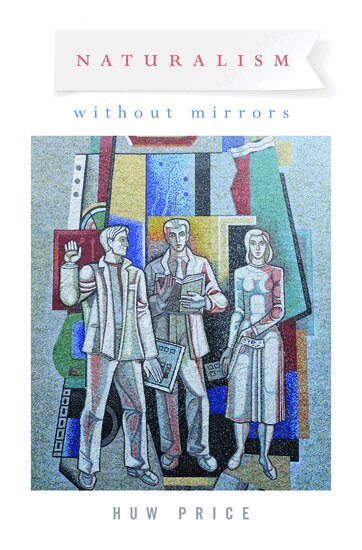
Pragmatists have traditionally been enemies of representationalism but friends of naturalism, when naturalism is understood to pertain to human subjects, in the sense of Hume and Nietzsche. In this volume Huw Price presents his distinctive version of this traditional combination, as delivered in his René Descartes Lectures at Tilburg University in 2008. Price contrasts his view with other contemporary forms of philosophical naturalism, comparing it with other pragmatist and neo-pragmatist views such as those of Robert Brandom and Simon Blackburn. Linking their different 'expressivist' programmes, Price argues for a radical global expressivism that combines key elements from both. With Paul Horwich and Michael Williams, Brandom and Blackburn respond to Price in new essays. Price replies in the closing essay, emphasising links between his views and those of Wilfrid Sellars. The volume will be of great interest to advanced students of philosophy of language and metaphysics.
Inbunden, Engelska, 2013
1 103 kr
Skickas inom 7-10 vardagar
Pragmatists have traditionally been enemies of representationalism but friends of naturalism, when naturalism is understood to pertain to human subjects, in the sense of Hume and Nietzsche. In this volume Huw Price presents his distinctive version of this traditional combination, as delivered in his René Descartes Lectures at Tilburg University in 2008. Price contrasts his view with other contemporary forms of philosophical naturalism, comparing it with other pragmatist and neo-pragmatist views such as those of Robert Brandom and Simon Blackburn. Linking their different 'expressivist' programmes, Price argues for a radical global expressivism that combines key elements from both. With Paul Horwich and Michael Williams, Brandom and Blackburn respond to Price in new essays. Price replies in the closing essay, emphasising links between his views and those of Wilfrid Sellars. The volume will be of great interest to advanced students of philosophy of language and metaphysics.
Inbunden, Engelska, 2022
1 083 kr
Skickas inom 10-15 vardagar
This book appeals to students, researchers and professionals working in philosophy and related fields on decision theory applied to artificial intelligence. These chapters stem from the topical conference series, ‘Decision Theory and the Future of AI’ which began in 2017 as a collaboration between the Leverhulme Centre for the Future of Intelligence (CFI) and the Centre for the Study of Existential Risk (CSER) at Cambridge, and the Munich Center for Mathematical Philosophy (MCMP) at LMU Munich. The range of topics, and even more so the range of authors and their home disciplines and affiliations, are a tribute to the richness of the territory, both in intellectual and in community-building terms. Previously published in Synthese Volume 198, supplement issue 27, November 2021Chapter Approval-directed agency and the decision theory of Newcomb-like problems is available open access under a Creative CommonsAttribution 4.0 International License via link.springer.com.
Häftad, Engelska, 2023
1 083 kr
Skickas inom 10-15 vardagar
This book appeals to students, researchers and professionals working in philosophy and related fields on decision theory applied to artificial intelligence. These chapters stem from the topical conference series, ‘Decision Theory and the Future of AI’ which began in 2017 as a collaboration between the Leverhulme Centre for the Future of Intelligence (CFI) and the Centre for the Study of Existential Risk (CSER) at Cambridge, and the Munich Center for Mathematical Philosophy (MCMP) at LMU Munich. The range of topics, and even more so the range of authors and their home disciplines and affiliations, are a tribute to the richness of the territory, both in intellectual and in community-building terms. Previously published in Synthese Volume 198, supplement issue 27, November 2021Chapter Approval-directed agency and the decision theory of Newcomb-like problems is available open access under a Creative CommonsAttribution 4.0 International License via link.springer.com.