• Fri frakt över 249 kr
  • •
  • Snabba leveranser
  • •
  • Billiga böcker
Kundservice

Du är på sajten för privatpersoner.

Företag, bibliotek eller offentlig verksamhet?

Du handlar på classic.bokus.com, där alla dina funktioner finns intakta.
Till classic.bokus.com
Bokus logotyp. Gå till startsidan.
  • Erbjudanden
  • Student
  • Topplistor
  • Barn & ungdom
  • Bokus Play
  • E-böcker
  • Ljudböcker
  • Pocketböcker
  • Spel och pussel

Pocketfynda! Hundratals böcker för 49 kr/st →

Sidfot

Mina sidor

    Hjälp

    • Kundservice
    • Vanliga frågor och svar
    • Frakt och leverans
    • Retur vid ångerrätt
    • Reklamera vara
    • Betalning
    • Köpvillkor
    • Allmänna villkor
    • Information om webbplatsens tillgänglighet

    Om Bokus

    • Om oss
    • Pressrum
    • För studenter
    • För företag
    • För bibliotek och offentlig verksamhet
    • För leverantörer
    • Hållbarhet

    Populärt

    • Aktuella erbjudanden
    • Presentkort
    • Studentlitteratur
    • Nya böcker
    • Topplistor
    • Signerade böcker
    • Engelska böcker

    Inspiration

    • Boktips
    • BookTok
    • Barnbokskaraktärer
    • Populära författare
    Logotyp för Bokus
    Följ oss på Facebook (extern länk)Följ oss på Instagram (extern länk)Följ oss på YouTube (extern länk)Följ oss på TikTok (extern länk)
    bokus @ CookiesAnpassa cookiesIntegritetspolicyKöpvillkor
    Till Citymail hemsida (extern länk)Till Budbee hemsida (extern länk)Till Postnord hemsida (extern länk)Till Schenker hemsida (extern länk)Till Early Bird hemsida (extern länk)Till Walleys hemsida (extern länk)
    1. Medicin
    2. Andra medicinska specialiteter
    3. Psykiatri

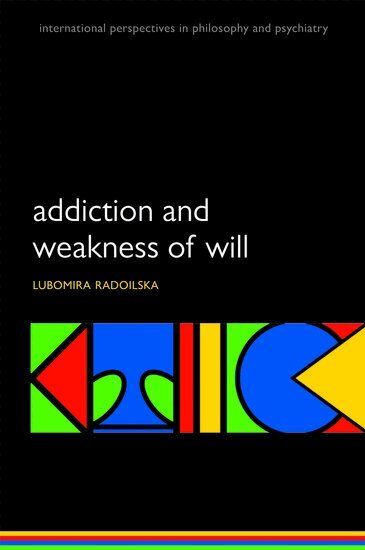
    Addiction and Weakness of Will

    AvLubomira Radoilska

    Häftad, Engelska, 2013

    Del i serien International Perspectives in Philosophy & Psychiatry

    920 kr

    Beställningsvara. Skickas inom 5-8 vardagar. Fri frakt över 249 kr.

    Fler format och utgåvor

    E-bok

    497 kr

    E-bok

    497 kr

    Beskrivning

    The way in which society views addiction underlies how it treats, understands, blames, or even punishes those with addictive behaviours. This thought-provoking new book presents an original philosophical analysis bringing together addiction and weakness of will. Within the book, the author develops an integrated account of these two phenomena, rooted in a classical conception of akrasia as valuing without intending and at the same time intending without valuing. This fascinating and suggestive account addresses a number of paradoxes faced by current thinking about addiction and weakness of will, in particular the significance of control and intention for responsible action.Addiction and Weakness of Will makes an original contribution to central issues in moral psychology and philosophy of action, including the relationship between responsibility and intentional agency, and the nature and scope of moral appraisal. The book is valuable for philosophers, ethicists and psychiatrists with an interest in philosophy.

    Produktinformation

    • Utgivningsdatum:2013-11-28
    • Mått:157 x 234 x 9 mm
    • Vikt:250 g
    • Format:Häftad
    • Språk:Engelska
    • Serie:International Perspectives in Philosophy & Psychiatry
    • Antal sidor:160
    • Förlag:OUP OXFORD
    • ISBN:9780199641963

    Utforska kategorier

    • Psykiatri inom Medicin
    • Filosofiska discipliner inom Filosofi och religion
    • Juridik: metod och teori inom Juridik

    Mer om författaren

    Lubomira Radoilska's research has focused on developing a new theory of autonomous agency and exploring its implications in core areas of philosophy. She holds a doctorate in philosophy from Ecole des Hautes Etudes en Sciences Sociales (EHESS), Paris. Since 2003, she has held the following positions at the University of Cambridge: Research Fellow at Clare Hall, Director of Studies at New Hall and Downing College, and Wellcome Trust Fellow at the Faculty of Philosophy, where she is currently an Affiliated Lecturer. Since September 2003, she also holds a Lectureship in Philosophy at the University of Kent, Canterbury. Lubomira Radoilska is the author of 'Aristotle and the Moral Philosophy of Today' (PUF, 2007) and editor of 'Autonomy and Mental Disorder' (OUP, 2012).

    Recensioner i media

    A dense and serious exploration of foundational issues in moral psychology, with an eye most especially on the conditions under which agents are morally responsible for akratic behaviour... Specialists in moral responsibility and moral psychology will benefit considerably from reading Radoilska's view, especially her sustained criticisms of accounts that currently dominate the landscape

    Innehållsförteckning

    • Introduction: The Moral Philosophy of Addiction and Weakness of Will ; 1. Addiction and Voluntary Control ; 1.1 Wallace on Responsibility and Control ; 1.2 The Disparity of Actions and Attitudes ; 1.3 Responsibility for Addiction: Excuses and Exemptions ; 1.4 Actions and Omissions Revisited ; 1.5 Positive Moral Appraisal ; 2. Addiction and Rational Judgement ; 2.1 Smith on Responsibility for Attitudes ; 2.2 Responsible Irrationality ; 2.2.1 Conflicting Attitudes ; 2.2.2 Implications for Paradigm Cases: Patterns of Awareness and Wholehearted Attitudes ; 2.3 Is Responsibility Best Understood as a Cluster Concept? ; 2.4 Addiction and Agential Evaluative Stance ; 2.4.1 De Quincey: Confessions of an English Opium Eater ; 2.4.2 Dostoevsky: The Gambler ; 3. Weakness of Will and Moral Appraisal ; 3.1 Arplay on Responsibility in the Absence of Control ; 3.2 Standard Akrasia ; 3.3 Inverse Akrasia ; 3.3.1 Inept Burglar ; 3.3.2 Neoptolemus ; 3.3.3 Huckleberry Finn ; 3.4 Strength Versus Goodness of Will ; 3.4.1 Mizogushi ; 4. Before Weakness of Will ; 4.1 Holton on Weakness of Will ; 4.2 Aristotle on Akrasia ; 4.2.1 The Logical Form of Akrasia ; 4.2.2 The Blameworthiness of Akrasia ; 4.2.3 The Pre-Intentionality of Akrasia ; 4.3 Revisting Weakness of Will ; 4.4 Weakness of Will as a Failure to Resist Akrasia ; 5. Addiction and Weakness of Will: An Integrated Account ; 5.1 Actions as Actualization ; 5.2 Success in Action and the Guise of the Good ; 5.3 Less than Successful Actions ; 5.4 Concluding Remarks:The Offspring of Akrasia