E-bok, Engelska, 2013
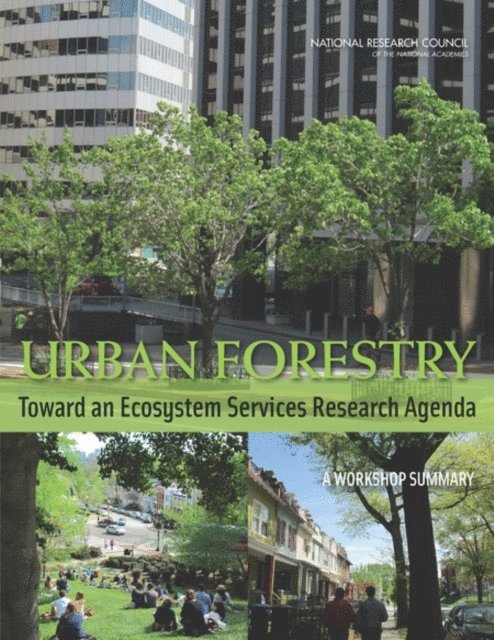
Urban Forestry
Av Board on Atmospheric Sciences and Climate, Division on Earth and Life Studies, National Research Council, Katie Thomas, Laurie Geller
542 kr
Skickas måndag 12/10
Beskrivning
Much of the ecological research in the past decades has focused on rural or wilderness areas. Today, however, ecological research has been taking place in our cities, where our everyday decisions can have profound effects on our environment. This research, or urban ecology, includes an important element, trees. Trees have had a variety of environmental benefits for our environment including the sequestering carbon, reducing urban heat island effects, providing vital habitat for wildlife, and making nature accessible. These benefits have important impacts on the physical, socio-economic, and mental health of humans as well. Being exposed to trees has been shown to enhance social cohesion, improve health and recreational opportunities, and increase real estate values.
In order to gain more knowledge into this urban forestry, the National Academy of Sciences (NAS) held a workshop February 25-26, 2013. The workshop brought together more than 100 people with various interests in urban forestry research to share information and perspectives, foster communication across specific areas of ecosystem service research, and consider integrated approaches that cut across these realms. The workshop specifically examined current capabilities to characterize and quantify the benefits, key gaps in our understanding, the challenges of planning urban forests in a way that optimizes multiple ecosystem services and more.
Produktinformation
- Utgivningsdatum: 2013-08-23
- Format: E-bok
- Språk: Engelska
- Antal sidor: 76
- Förlag: National Academies Press
- ISBN: 9780309287616
Utforska kategorier
Betyg & recensioner
0 recensioner
Inga recensioner tillgängliga.