Häftad, Engelska, 2026
Smart Engineering Approaches to Food Safety and Shelf Life Extension
Av Yogesh K. Ahlawat, Navnidhi Chhikara, Ashutosh Singh
1521 kr
Beställningsvara. Skickas inom 10-15 vardagar. Fri frakt över 249 kr.
Beskrivning
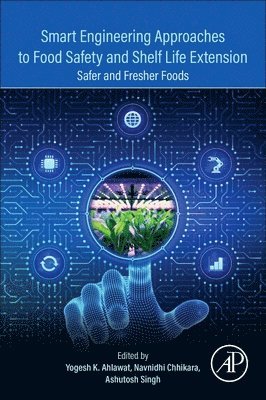
Smart Engineering Approaches to Food Safety and Shelf Life Extension: Safer and Fresher Foods covers revolutionary ways we preserve and process food, ensuring its quality, safety, and sustainability. With a comprehensive exploration of cutting-edge technologies, methodologies, and applications, this book addresses the challenges of current food preservation and processing. Readers will find fresh insights and practical knowledge across various disciplines, with an emphasis on innovation, quality, safety, and sustainability. From novel preservation methods to advanced processing technologies, each chapter presents valuable insights into how engineering principles can be leveraged to enhance food safety, extend shelf life, and preserve nutritional quality.
Alongside sustainable practices, sections also cover high-pressure processing, pulsed electric fields, novel packaging materials designed to minimize spoilage and contamination, intelligent packaging systems, and process optimization techniques. Authored by leading experts in the fields of engineering and food science, this book uniquely integrates both disciplines to provide a comprehensive understanding of the latest advancements in food preservation and processing technologies.
Alongside sustainable practices, sections also cover high-pressure processing, pulsed electric fields, novel packaging materials designed to minimize spoilage and contamination, intelligent packaging systems, and process optimization techniques. Authored by leading experts in the fields of engineering and food science, this book uniquely integrates both disciplines to provide a comprehensive understanding of the latest advancements in food preservation and processing technologies.
- Explores the latest engineering techniques and technologies utilized in food preservation and processing
- Examines the impact of engineering innovations on enhancing the quality, safety, and shelf-life of food products
- Discusses the role of engineering in addressing sustainability challenges in the food industry
Produktinformation
- Utgivningsdatum: 2026-06-17
- Mått: 152 x 229 x 32 mm
- Vikt: 970 g
- Format: Häftad
- Språk: Engelska
- Antal sidor: 612
- Förlag: Elsevier Science
- ISBN: 9780443403972
Utforska kategorier
Betyg & recensioner
0 recensioner
Inga recensioner tillgängliga.