• Fri frakt över 249 kr
  • •
  • Snabba leveranser
  • •
  • Billiga böcker
Kundservice

Du är på sajten för privatpersoner.

Företag, bibliotek eller offentlig verksamhet?

Du handlar på classic.bokus.com, där alla dina funktioner finns intakta.
Till classic.bokus.com
Bokus logotyp. Gå till startsidan.
  • Erbjudanden
  • Student
  • Topplistor
  • Barn & ungdom
  • Bokus Play
  • E-böcker
  • Ljudböcker
  • Pocketböcker
  • Spel och pussel

Pocketfynda! Hundratals böcker för 49 kr/st →

Sidfot

Mina sidor

    Hjälp

    • Kundservice
    • Vanliga frågor och svar
    • Frakt och leverans
    • Retur vid ångerrätt
    • Reklamera vara
    • Betalning
    • Köpvillkor
    • Allmänna villkor
    • Information om webbplatsens tillgänglighet

    Om Bokus

    • Om oss
    • Pressrum
    • För studenter
    • För företag
    • För bibliotek och offentlig verksamhet
    • För leverantörer
    • Hållbarhet

    Populärt

    • Aktuella erbjudanden
    • Presentkort
    • Studentlitteratur
    • Nya böcker
    • Topplistor
    • Signerade böcker
    • Engelska böcker

    Inspiration

    • Boktips
    • BookTok
    • Barnbokskaraktärer
    • Populära författare
    Logotyp för Bokus
    Följ oss på Facebook (extern länk)Följ oss på Instagram (extern länk)Följ oss på YouTube (extern länk)Följ oss på TikTok (extern länk)
    bokus @ CookiesAnpassa cookiesIntegritetspolicyKöpvillkor
    Till Citymail hemsida (extern länk)Till Budbee hemsida (extern länk)Till Postnord hemsida (extern länk)Till Schenker hemsida (extern länk)Till Early Bird hemsida (extern länk)Till Walleys hemsida (extern länk)
    1. Naturvetenskap och teknik
    2. Teknik och industri
    3. Agronomi och lantbruk

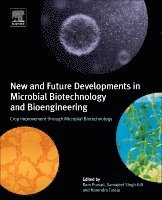
    New and Future Developments in Microbial Biotechnology and Bioengineering

    Crop Improvement through Microbial Biotechnology

    AvRam Prasad,Sarvajeet Singh Gill

    Häftad, Engelska, 2018

    2 244 kr

    Beställningsvara. Skickas inom 10-15 vardagar. Fri frakt över 249 kr.

    Beskrivning

    Crop Improvement through Microbial Biotechnology explains how certain techniques can be used to manipulate plant growth and development, focusing on the cross-kingdom transfer of genes to incorporate novel phenotypes in plants, including the utilization of microbes at every step, from cloning and characterization, to the production of a genetically engineered plant. This book covers microbial biotechnology in sustainable agriculture, aiming to improve crop productivity under stress conditions. It includes sections on genes encoding avirulence factors of bacteria and fungi, viral coat proteins of plant viruses, chitinase from fungi, virulence factors from nematodes and mycoplasma, insecticidal toxins from Bacillus thuringiensis, and herbicide tolerance enzymes from bacteria.


    • Introduces the principles of microbial biotechnology and its application in crop improvement
    • Lists various new developments in enhancing plant productivity and efficiency
    • Explains the mechanisms of plant/microbial interactions and the beneficial use of these interactions in crop improvement
    • Explores various bacteria classes and their beneficial effects in plant growth and efficiency

    Produktinformation

    • Utgivningsdatum:2018-02-22
    • Mått:191 x 235 x undefined mm
    • Vikt:1 000 g
    • Format:Häftad
    • Språk:Engelska
    • Antal sidor:496
    • Förlag:Elsevier Science
    • ISBN:9780444639875

    Utforska kategorier

    • Agronomi och lantbruk inom Naturvetenskap och teknik
    • Biokemisk teknik inom Naturvetenskap och teknik
    • Tillverkningsteknik inom Naturvetenskap och teknik

    Mer om författaren

    Dr. Ram Prasad is an Associate Professor at Mahatma Gandhi Central University, Bihar, India. Dr. Prasad has served as an Assistant Professor Amity University Uttar Pradesh, India; Visiting Assistant Professor, Whiting School of Engineering, Department of Mechanical Engineering at Johns Hopkins University, Baltimore, United States, and Research Associate Professor at School of Environmental Science and Engineering, Sun Yat-sen University, Guangzhou, China. Dr. Prasad has more than two hundred publications to his credit, including research papers, review articles, and book chapters; has edited or authored several books; and has five patents issued or pending. He’s on the editorial boards of a number of journals, and his research interests include plant-microbe interaction, agriculture sustainability, nanobiotechnology, and applied microbiology.Sarvajeet Singh Gill is an Associate Professor at the Centre for Biotechnology, Maharshi Dayanand University, Rohtak, India. His research areas include agricultural plant biotechnology, biotic and abiotic stress biology, plant microbe interaction, and in-silico understanding of plant genomes. He has 12 years of research and 10 years of teaching experience. Dr. Gill has written over 50 book chapters and published over 100 peer reviewed publications in reputed SCI journals and edited around 30 books published by International publishers such Springer-Verlag, Wiley-Blackwell, CRC Press, and Elsevier, among others. He has carried out four R&D projects funded by prominent National funding agencies as Principal Investigator. An elected fellow of numerous national and international academies, Dr. Narendra Tuteja is currently Professor and head at Amity Institute of Microbial Technology, NOIDA, India, and visiting Scientist at International Centre for Genetic Engineering & Biotechnology (ICGEB), New Delhi, India. He has made significant contributions to crop improvement under adverse conditions, reporting the first helicase from plant and human cells and demonstrating new roles of Ku autoantigen, nucleolin and eIF4A as DNA helicases. Furthermore, he discovered novel functions of helicases, G-proteins, CBL-CIPK and LecRLK in plant stress tolerance, and PLC and MAP-kinase as effectors for Gα and Gβ G-proteins. Narendra Tuteja also reported several high salinity stress tolerant genes from plants and fungi and developed salt/drought tolerant plants.

    Innehållsförteckning

    • 1. The Use of Microorganisms for Gene Transfer and Crop Improvement2. Actinomycetes as potential plant growth promoting microbial communities 3. Microbial genes in crop improvement4. Microbial transformations implicit with soil and crop productivity in rice system 5. Application of Microbial Biotechnology in Food Processing 6. Innate immunity engaged or disengaged in plant-microbe interactions7. Novel Strategies for Engineering Resistance to Plant Viral Diseases8. Molecular characterization of sugarcane viruses and their diagnostics9. Cyanobacterial Biodiversity and Biotechnology: A Promising Approach for Crop Improvement10. Pseudomonas flourescens - A Potential Plant Growth Promoting Rhizobacteria (PGPR) and biocontrol agent11. Crop Improvement Through Microbial Technology: a Step Towards Sustainable Agriculture12. Microbial technologies for sustainable crop production13. Trichoderma, its multifarious utility in crop improvement14. Microbe-mediated enhancement of nitrogen and phosphorus content for crop improvement15. Microbiome in Crops: Diversity, distribution and potential role in crops improvements 16. Plant Growth Promoting Rhizobacteria (PGPR): Perspective in Agriculture under Biotic and Abiotic stress17. Rhizosphere metabolite profiling: An opportunity to understand plant–microbe interactions for crop improvement18. Phosphate-solubilizing Pseudomonads for improving crop plant nutrition and agricultural productivity19. Targeted Genome editing for crop improvement in post genome sequencing era20. Endophytic Microorganisms: Their Role in Plant Growth and Crop Improvement 21. Microbes in crop improvement: future challenges and perspective22. Plant-microbe interaction and genome sequencing: an evolutionary insight23. Crop breeding using CRISPR/Cas9