• Fri frakt över 249 kr
  • •
  • Snabba leveranser
  • •
  • Billiga böcker
Kundservice

Du är på sajten för privatpersoner.

Företag, bibliotek eller offentlig verksamhet?

Du handlar på classic.bokus.com, där alla dina funktioner finns intakta.
Till classic.bokus.com
Bokus logotyp. Gå till startsidan.
  • Erbjudanden
  • Student
  • Topplistor
  • Barn & ungdom
  • Bokus Play
  • E-böcker
  • Ljudböcker
  • Pocketböcker
  • Spel och pussel

5% studentrabatt – använd koden KURSBOK27 →

Sidfot

Mina sidor

    Hjälp

    • Kundservice
    • Vanliga frågor och svar
    • Frakt och leverans
    • Retur vid ångerrätt
    • Reklamera vara
    • Betalning
    • Köpvillkor
    • Allmänna villkor
    • Information om webbplatsens tillgänglighet

    Om Bokus

    • Om oss
    • Pressrum
    • För studenter
    • För företag
    • För bibliotek och offentlig verksamhet
    • För leverantörer
    • Hållbarhet

    Populärt

    • Aktuella erbjudanden
    • Presentkort
    • Studentlitteratur
    • Nya böcker
    • Topplistor
    • Signerade böcker
    • Engelska böcker

    Inspiration

    • Boktips
    • BookTok
    • Barnbokskaraktärer
    • Populära författare
    Logotyp för Bokus
    Följ oss på Facebook (extern länk)Följ oss på Instagram (extern länk)Följ oss på YouTube (extern länk)Följ oss på TikTok (extern länk)
    bokus @ CookiesAnpassa cookiesIntegritetspolicyKöpvillkor
    Till Citymail hemsida (extern länk)Till Budbee hemsida (extern länk)Till Postnord hemsida (extern länk)Till Schenker hemsida (extern länk)Till Early Bird hemsida (extern länk)Till Walleys hemsida (extern länk)
    1. Kultur
    2. Arkitektur

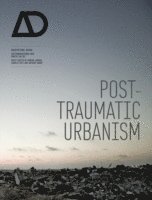
    Post-Traumatic Urbanism

    AvAdrian Lahoud

    Häftad, Engelska, 2010

    Del i serien Architectural Design

    411 kr

    Beställningsvara. Skickas inom 5-8 vardagar. Fri frakt över 249 kr.

    Beskrivning

    POST-TRAUMATIC URBANISM Urban trauma describes a condition where conflict or catastrophe has disrupted and damaged not only the physical environment and infrastructure of a city, but also the social and cultural networks. Cities experiencing trauma dominate the daily news. Images of blasted buildings or events such as Hurricane Katrina exemplify the sense of 'immediate impact'. But how is this trauma to be understood in its aftermath, and in urban terms? What is the response of the discipline to the post-traumatic condition? On the one hand, one can try to restore and recover everything that has passed, or otherwise see the post-traumatic city as a resilient space poised on the cusp of new potentialities. While repair and reconstruction are automatic reflexes, the knowledge and practices of the disciplines need to be imbued with a deeper understanding of the effect of trauma on cities and their contingent realities. This issue will pursue this latter approach, using examples of post-traumatic urban conditions to rethink the agency of architecture and urbanism in the contemporary world. Post-traumatic urbanism demands of architects the mobilisation of skills, criticality and creativity in contexts in which they are not familiar. The post-traumatic is no longer the exception; it is the global condition.

    Produktinformation

    • Utgivningsdatum:2010-09-24
    • Mått:211 x 277 x 10 mm
    • Vikt:562 g
    • Format:Häftad
    • Språk:Engelska
    • Serie:Architectural Design
    • Antal sidor:144
    • Förlag:John Wiley & Sons Inc
    • ISBN:9780470744987

    Utforska kategorier

    • Arkitektur inom Kultur
    • Sociala och etiska frågor inom Samhälle och politik

    Mer om författaren

    Adrian Lahoud is a practicing architect and Senior Lecturer in Architecture at The University of Technology Sydney. His current research addresses issues of conflict with regards to urbanism in the Middle East.Charles Rice is an architectural historian, theorist and critic. He is currently Senior Lecturer and Associate Head of the School of Architecture at the University of Technology Sydney.Anthony Burke is Senior Lecturer and Director of the Master of Digital Architecture course at the University of Technology Sydney, and Director of Offshorestudio.net, a Sydney-based design practice specializing in design and theory related to new media and advanced computational methods.

    Innehållsförteckning

    • Editorial 5Helen CastleAbout The Guest-Editors 6Adrian Lahoud, Charles Rice and Anthony BurkeSpotlight 8Visual highlights of the issueIntroduction 14Post-Traumatic UrbanismAdrian LahoudTrauma Within the Walls: Notes Towards a Philosophy of the City 24Andrew BenjaminThe Space-Time of Pre-emption: An Interview with Brian Massumi 32Charles RiceMaking Dubai: A Process in Crisis 38Todd ReiszChanges of State: Slow Motion Trauma in the Gangetic Plains of India 44Anthony AcciavattiAfter the Event: Speculative Projects in the Aftermath 50Samantha SpurrForensic Architecture 58Eyal Weizman, Paulo Tavares, Susan Schuppli and Situ StudioThe Infrastructure of Stability 64Tarsha FinneyPost-Apocalypse Now 70Mark FisherThe Eighth Day: God Created the World in Seven Days. 74This is The Eighth DayTony ChakarFigures in the Sand 78Christopher Hight and Michael RobinsonThe Urban Complex: Scalar Probabilities and Urban Computation 86Anthony BurkeProject for a Mediterranean Union 92Adrian LahoudFearscapes: Caracas Postcards from a Violent City 102Eduardo KairuzEnergy Territories 108Anthony BurkeArchitecture, Contingency and Crisis: An Interview with Slavoj Žižek 112Adrian LahoudThe Very Mark of Repression: The Demolition Theatre of the Palast der Republik and the New Schloss Berlin 116Khadija Carroll LaOn Message: An Interview with Michael Chertoff 124Charles RiceBorderline Syndrome 126Ole BoumanCOUNTERPOINT Rebuilding from Below the Bottom: Haiti 128Jayne Merkel and Craig Whitaker