• Fri frakt över 249 kr
  • •
  • Snabba leveranser
  • •
  • Billiga böcker
Kundservice

Du är på sajten för privatpersoner.

Företag, bibliotek eller offentlig verksamhet?

Du handlar på classic.bokus.com, där alla dina funktioner finns intakta.
Till classic.bokus.com
Bokus logotyp. Gå till startsidan.
  • Erbjudanden
  • Student
  • Topplistor
  • Barn & ungdom
  • Bokus Play
  • E-böcker
  • Ljudböcker
  • Pocketböcker
  • Spel och pussel

5% studentrabatt – använd koden KURSBOK27 →

Sidfot

Mina sidor

    Hjälp

    • Kundservice
    • Vanliga frågor och svar
    • Frakt och leverans
    • Retur vid ångerrätt
    • Reklamera vara
    • Betalning
    • Köpvillkor
    • Allmänna villkor
    • Information om webbplatsens tillgänglighet

    Om Bokus

    • Om oss
    • Pressrum
    • För studenter
    • För företag
    • För bibliotek och offentlig verksamhet
    • För leverantörer
    • Hållbarhet

    Populärt

    • Aktuella erbjudanden
    • Presentkort
    • Studentlitteratur
    • Nya böcker
    • Topplistor
    • Signerade böcker
    • Engelska böcker

    Inspiration

    • Boktips
    • BookTok
    • Barnbokskaraktärer
    • Populära författare
    Logotyp för Bokus
    Följ oss på Facebook (extern länk)Följ oss på Instagram (extern länk)Följ oss på YouTube (extern länk)Följ oss på TikTok (extern länk)
    bokus @ CookiesAnpassa cookiesIntegritetspolicyKöpvillkor
    Till Citymail hemsida (extern länk)Till Budbee hemsida (extern länk)Till Postnord hemsida (extern länk)Till Schenker hemsida (extern länk)Till Early Bird hemsida (extern länk)Till Walleys hemsida (extern länk)
    1. Kultur
    2. Arkitektur

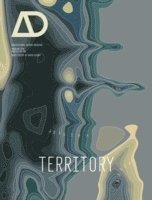
    Territory

    Architecture Beyond Environment

    Häftad, Engelska, 2010

    Del 39 i serien Architectural Design

    411 kr

    Beställningsvara. Skickas inom 5-8 vardagar. Fri frakt över 249 kr.

    Beskrivning

    Advancing a new relationship between architecture and nature, Territory emphasises the simultaneous production of architectural objects and the environment surrounding them. Conceptualised within a framework that draws from physical and human geographical thought, this title of Architectural Design examines the possibility of an architecture that actively produces its external, ecological conditions. The architecture here scans and modifies atmospheres, arboreal zones, geothermal exchange, magnetic fields, habitats and toxicities – enabling new and intense geographical patterns, effects and sensations within architectural and urban experience. Territory charts out a space, a territory, for architecture beyond conceptualisations of context or environment, understood as that stable setting which pre-exists the production of new things. Ultimately, it suggests a role for architecture as a strategy of environmental tinkering versus one of accommodation or balance with an external natural world.

    Produktinformation

    • Utgivningsdatum:2010-04-16
    • Mått:211 x 276 x 9 mm
    • Vikt:572 g
    • Format:Häftad
    • Språk:Engelska
    • Serie:Architectural Design
    • Antal sidor:136
    • Förlag:John Wiley & Sons Inc
    • ISBN:9780470721650

    Utforska kategorier

    • Arkitektur inom Kultur

    Mer om författaren

    David Gissen is a historian, theorist and self-proclaimed ‘experimental’ historian of architecture and urbanism. His work explores histories and theories of nature within architecture, relationships between geographical thought and architecture, and various critical-alternative methodologies within architectural history. His writings and historical projects have been published in books and journals and he has lectured on his research internationally. Much of Gissen’s work examines concepts of nature in architecture, a topic that is becoming increasingly central to architectural thought and practice. His work resists the notion that nature is external to architecture and therefore something architecture can better emulate or mimic. In contrast, his work is formed around a concept of the ‘architectural production of nature’. For Gissen, nature is already laced with architectural historical representations whether we speak of the atmosphere that moves in and out of buildings or the verdant nature within contemporary cities. All of nature has been reworked – literally and conceptually – by the constructs of modern society, including architecture. He believes that what is needed is a new type of architecture and a new type of history that uncovers and projects this reality.In addition to exploring these ideas in Territory, Gissen authored the book Subnature: Architecture’s Other Environments (Princeton Architectural Press, 2009), which examines those denigrated natures codified and examined within the history of architectural thought (dankness, debris, smoke or mud) from the 16th century to the present. He views the sub-natural as a type of nature laced with a specifically architectural presence and history. Among the contemporary projects examined in the book are those that revel in this historical aspect: Tom De Paor’s Irish Pavilion made of murky Irish bog mud (2002) or Jorge Otero-Pailos’ preservations of the pollution and dust on a factory’s walls (2008).Finally, Gissen’s research into architecture and nature lead him to examine how such explorations might be the groundwork for new forms of experimental architectural historical practice. This is the subject of a website he authors (htcexperiments.org) and was the subject of his article in the Energies: New Material Boundaries  issue of AD (May/June 2009). In this latter work, he examines how various historical practices from early modern history – such as architectural reconstructions of architectural environments or various institutional appropriations – might let loose new appearances of architectural history outside the text.Gissen is based in the San Francisco Bay Area where he is an assistant professor and coordinator of the architectural history and theory curriculum at the California College of the Arts. He studied architecture at the University of Virginia, Yale and Columbia Universities, and completed his PhD at University College London under the direction of Matthew Gandy and Adrian Forty.

    Innehållsförteckning

    • Editorial (Helen Castle). About the Guest-Editor (David Gissen).IntroductionTerritory: Architecture Beyond Environment (David Gissen).Eat Me … Drink Me … (Sean Lally/WEATHERS).The Tree Canopy as Blueprint (Mitchell Schwarzer).The Ecological Facades of Patrick Blanc (Matthew Gandy).Bugs, Bats and Animal Estates: The Architectural Territories of ‘Wild Beasts’ (Ben Campkin).The Material Transformations of AMID (cero9) Social Oxygen Balloons (David Gissen).It’s in Your Nature: I’m Lost in Paris (Javier Arbona).Toxic Territories (David Gissen).The Living: Surface Tensions (Jordan Geiger).Amphibious Territories (Ila Berman).The Aurora Project (Jason Kelly Johnson and Nataly Gattegno (Future Cities Lab)).The Perils of Historical Geography: On a Pretended Lost Map to a Legendary Sunken Forest (Edward Eigen).Local Code: Real Estates (Nicholas de Monchaux).What Has Happened to Territory? (Antoine Picon).Interior Eye.Ashmolean Museum, Oxford (Howard Watson).Building Profile.Antwerp Central and Liège-Guillemins, Belgium (David Littlefield).Practice ProfileecoLogicStudio (Terri Peters).Spiller’s Bits.Fiddling While the World Burns (Neil Spiller).Unit Factor.Emergence and the Forms of Cities (Michael Weinstock).Userscape.Relational Interactive Architecture (Valentina Croci).Yeang’s Eco-Files.Green Footstep: A Tool for Evaluating a Building’s Life-Cycle Carbon Footprint and Informing Carbon Decisions During the Building Design Process (Michael Bendewald, Victor Olgyay (RMI) and Ken Yeang).McLean’s Nuggets (Will McLean).Site Lines.MAXXI, Rome: Zaha Hadid Architects (Mark Garcia).