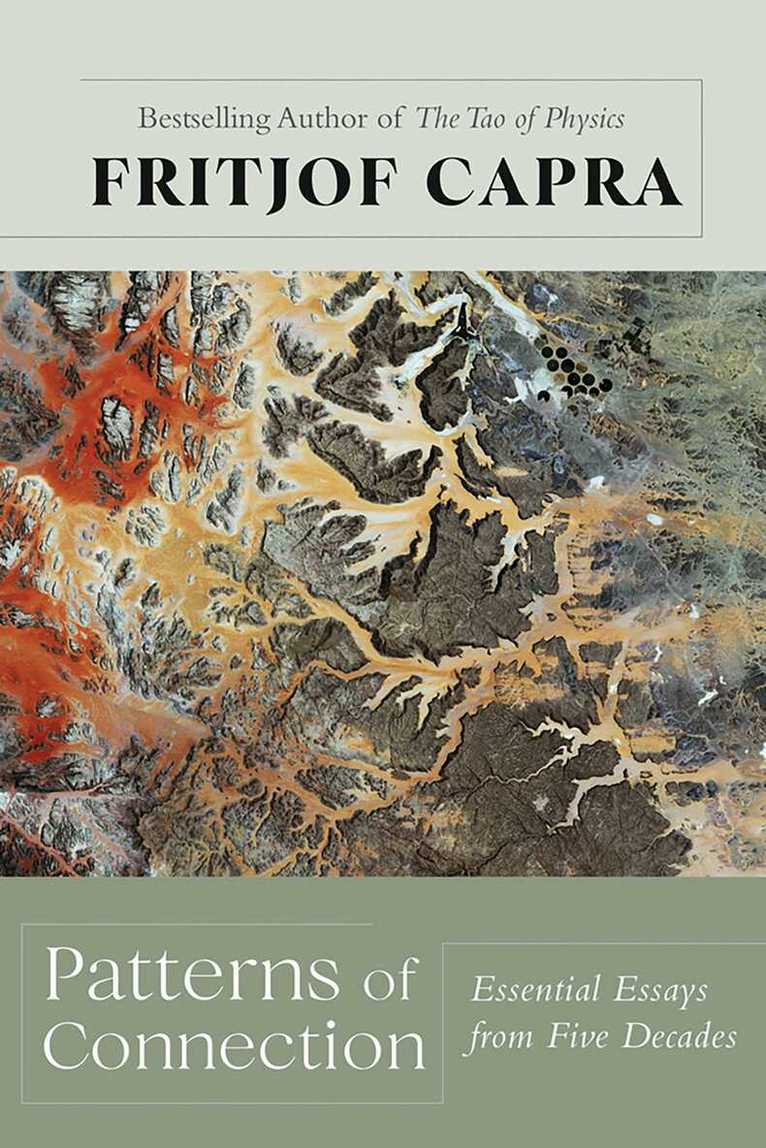
Häftad, Engelska, 2024
Patterns of Connection
325 kr
Beställningsvara. Skickas inom 3-6 vardagar. Fri frakt över 249 kr.
Beskrivning
Winner of the Silver Medal for Environment/Ecology in the 2022 Independent Publisher (IPPY Book Awards
Fritjof Capra, scientist, educator, activist, and accomplished author, presents the evolution of his thought over five decades in Patterns of Connection. First introduced in the late 1950s to the work of Werner Heisenberg, a founder of quantum mechanics, Capra quickly intuited the connections between the discoveries of quantum physics and the traditions of Eastern philosophy - resulting in his first book, the bestselling The Tao of Physics. This synthesis, representative of the change from the mechanistic worldview of Descartes and Newton to a systemic, ecological one, went on to inform Capra's thinking about the life sciences, ecology, and environmental policy. His observations of sustainable communities in nature inspired his work on systems theory - the complex web of interrelated processes that organize everything from biological systems to social, cultural, and political systems.
Today Fritjof Capra remains a major figure at the crossroads of physics, spirituality, environmentalism, and systems theory. Organized thematically and chronologically, the essays in Patterns of Connection document the revolutionary and far-reaching intellectual journey of one of the major public thinkers of the last half-century.
Fritjof Capra, scientist, educator, activist, and accomplished author, presents the evolution of his thought over five decades in Patterns of Connection. First introduced in the late 1950s to the work of Werner Heisenberg, a founder of quantum mechanics, Capra quickly intuited the connections between the discoveries of quantum physics and the traditions of Eastern philosophy - resulting in his first book, the bestselling The Tao of Physics. This synthesis, representative of the change from the mechanistic worldview of Descartes and Newton to a systemic, ecological one, went on to inform Capra's thinking about the life sciences, ecology, and environmental policy. His observations of sustainable communities in nature inspired his work on systems theory - the complex web of interrelated processes that organize everything from biological systems to social, cultural, and political systems.
Today Fritjof Capra remains a major figure at the crossroads of physics, spirituality, environmentalism, and systems theory. Organized thematically and chronologically, the essays in Patterns of Connection document the revolutionary and far-reaching intellectual journey of one of the major public thinkers of the last half-century.
Produktinformation
- Utgivningsdatum: 2024-10-01
- Mått: 152 x 229 x 24 mm
- Vikt: 538 g
- Format: Häftad
- Språk: Engelska
- Antal sidor: 344
- Förlag: University of New Mexico Press
- ISBN: 9780826367242
Utforska kategorier
Betyg & recensioner
0 recensioner
Inga recensioner tillgängliga.