• Fri frakt över 249 kr
  • •
  • Snabba leveranser
  • •
  • Billiga böcker
Kundservice

Du är på sajten för privatpersoner.

Företag, bibliotek eller offentlig verksamhet?

Du handlar på classic.bokus.com, där alla dina funktioner finns intakta.
Till classic.bokus.com
Bokus logotyp. Gå till startsidan.
  • Erbjudanden
  • Student
  • Topplistor
  • Barn & ungdom
  • Bokus Play
  • E-böcker
  • Ljudböcker
  • Pocketböcker
  • Spel och pussel

5% studentrabatt – använd koden KURSBOK27 →

Sidfot

Mina sidor

    Hjälp

    • Kundservice
    • Vanliga frågor och svar
    • Frakt och leverans
    • Retur vid ångerrätt
    • Reklamera vara
    • Betalning
    • Köpvillkor
    • Allmänna villkor
    • Information om webbplatsens tillgänglighet

    Om Bokus

    • Om oss
    • Pressrum
    • För studenter
    • För företag
    • För bibliotek och offentlig verksamhet
    • För leverantörer
    • Hållbarhet

    Populärt

    • Aktuella erbjudanden
    • Presentkort
    • Studentlitteratur
    • Nya böcker
    • Topplistor
    • Signerade böcker
    • Engelska böcker

    Inspiration

    • Boktips
    • BookTok
    • Barnbokskaraktärer
    • Populära författare
    Logotyp för Bokus
    Följ oss på Facebook (extern länk)Följ oss på Instagram (extern länk)Följ oss på YouTube (extern länk)Följ oss på TikTok (extern länk)
    bokus @ CookiesAnpassa cookiesIntegritetspolicyKöpvillkor
    Till Citymail hemsida (extern länk)Till Budbee hemsida (extern länk)Till Postnord hemsida (extern länk)Till Schenker hemsida (extern länk)Till Early Bird hemsida (extern länk)Till Walleys hemsida (extern länk)
    1. Samhälle och politik
    2. Politik och statsskick
    3. Internationella relationer

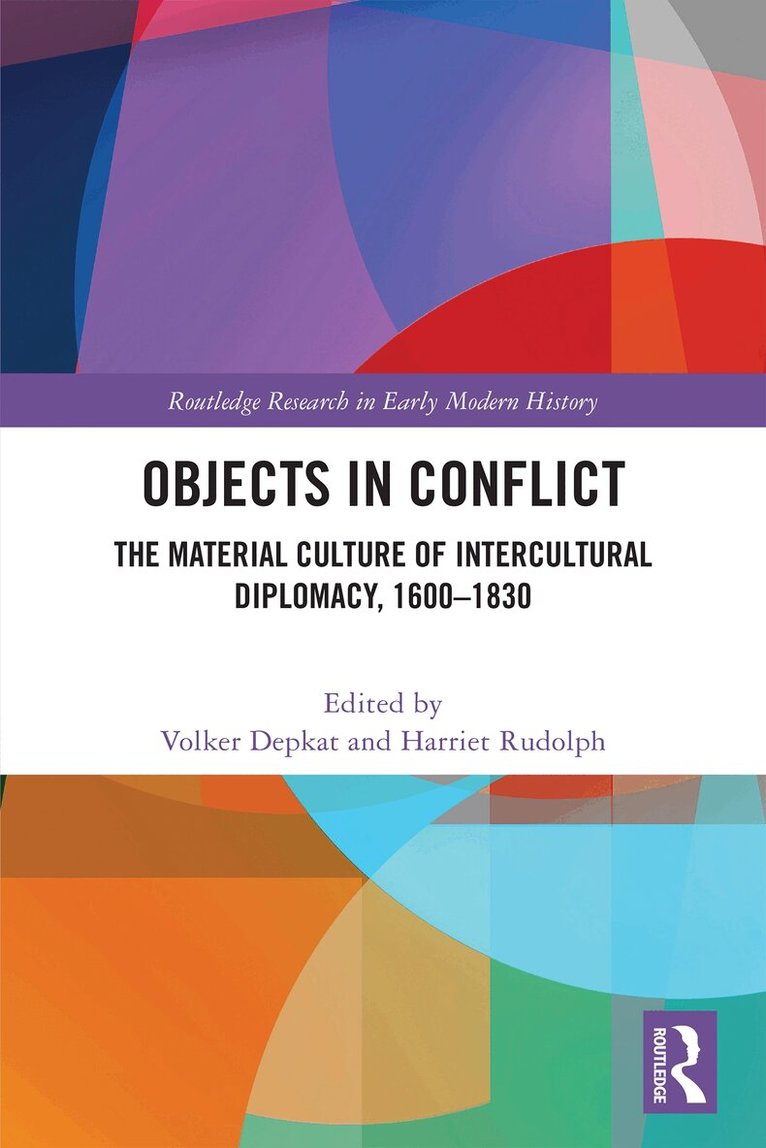
    Objects in Conflict

    The Material Culture of Intercultural Diplomacy, 1600–1830

    AvVolker Depkat,Harriet Rudolph

    Inbunden, Engelska, 2026

    Del i serien Routledge Research in Early Modern History

    2 627 kr

    Kommande

    Beskrivning

    This book presents case studies that analyse the diplomatic uses and functions of robes, furniture, weapons, tools, jewelry, paintings, sculptures, books, food, and other material objects in early modern inter-cultural diplomatic encounters in Europe, Asia, the Americas, and the Pacific world.Readers will gain insights into the material dimensions of early modern diplomacy and the cultural logics and diplomatic rationales of object use in a wide range of regional, political, and imperial contexts spanning the Habsburg Empire, France, Spain, the Ottoman Empire, British and French colonial North America, colonial Mexico, Hawaii, and the South Seas. Transcending the established topic of gift exchanges, the volume aims at an analysis of the overall material settings of early modern diplomatic encounters. With its clear temporal focus on the seventeenth and eighteenth centuries, the source-driven case studies on concrete objects and object groups open multiple paths into the complexities of the early modern era as a formative phase in the history of diplomacy.The book is intended for historians of the early modern period, particularly diplomatic history, political history, art history, cultural history, religious history, and regional history. It is also relevant for scholars in the field of material culture studies, ethnography, and museology.

    Produktinformation

    • Utgivningsdatum:2026-09-22
    • Mått:156 x 234 x undefined mm
    • Format:Inbunden
    • Språk:Engelska
    • Serie:Routledge Research in Early Modern History
    • Antal sidor:354
    • Förlag:Taylor & Francis Ltd
    • ISBN:9781032884691

    Utforska kategorier

    • Internationella relationer inom Samhälle och politik
    • Socialhistoria och kulturhistoria inom Historia och arkeologi
    • Kolonialism och imperialism inom Historia och arkeologi

    Mer om författaren

    Volker Depkat is Professor of American Studies at the University of Regensburg, Germany. His recent publications include American Exceptionalism (2021), A New American Confederation: How German Federalism Inspired the US-Constitution (2024; co-authored), and Representations and Uses of the American Revolution in Past and Present (2025; co-edited).Harriet Rudolph is Professor of Early Modern History at the University of Regensburg, Germany. Her publications include Material Culture in Modern Diplomacy from the 15th to the 20th Century (2016; co-edited) and “Istanbul as a Collection Site: Cross-Cultural Networks of Knowledge in the Alba Amicorum of Ernst Brinck and Wolfgang Leuthkauff” in WissensWelten – Worlds of Knowledge (2026).

    Innehållsförteckning

    • 1. Introduction I. Where are the Objects?: Tracing the Material Culture of Intercultural Diplomacy in European Collections 2. Exotic Gifts – On the Lobbying of Indigenous Elites to Influence European Colonial Policy: Selected Examples from Around the World in European Museums 3. Crafting Diplomacy: Extraordinary Embassies and the Programmatic Display of French Luxury Goods, 1662–1789 4. Immaterial Diplomacy: Dissimulating Muslim Embassies in Habsburg Spain II. Beyond Official Procedures: Individual Material Practices of Diplomatic Actors in a Transcultural Setting 5. Materialities, Spaces, Emotions: The Leuthkauff album amicorum as an Entangled Object and the Challenges of Researching the Material Culture of Diplomacy 6. Diplomatic Homes Abroad: Exploring Ottoman and Habsburg Relations through Furniture and Decoration in the Early Modern Period 7. Material Culture and Practices of Friendship in Intercultural Diplomacy: A Case Study from Late Seventeenth-Century Istanbul III. Material Procedures of Cross-cultural Diplomacy in Imperial and Local Centers of Power 8. Gift Exchange, Marketing, and Memory: The Material Culture of the Moroccan Embassy to Vienna in 1783 9. The Stool, the Curtain, and the Robes of Honour: A Ludic and Material Reading of the Diplomatic Space at Baron Kuefstein’s Reception in Ottoman Hungary (1628) 10. Mere Container or Object of Intrinsic Value?: A Leather Wallet on Diplomatic Mission in the Ottoman-Habsburg Wars IV. Frontier Objects: The Material Culture of Diplomacy on Imperial Peripheries 11. Textile Diplomacy: Tahitian Bark Cloth in the Age of Early Pacific Encounter 12. English Liquor, Indian Corn: Food Diplomacy and Conflict in Eighteenth-Century Anglo-Haudenosaunee Relations 13. Objects, Power, and Anishinaabeg-British Diplomacy at Fort St. Joseph, 1796–1810