Harriet Rudolph – författare
Visar alla böcker från författaren Harriet Rudolph. Handla med fri frakt och snabb leverans.
10 produkter
10 produkter
Inbunden, Engelska, 2026
2 375 kr
Kommande
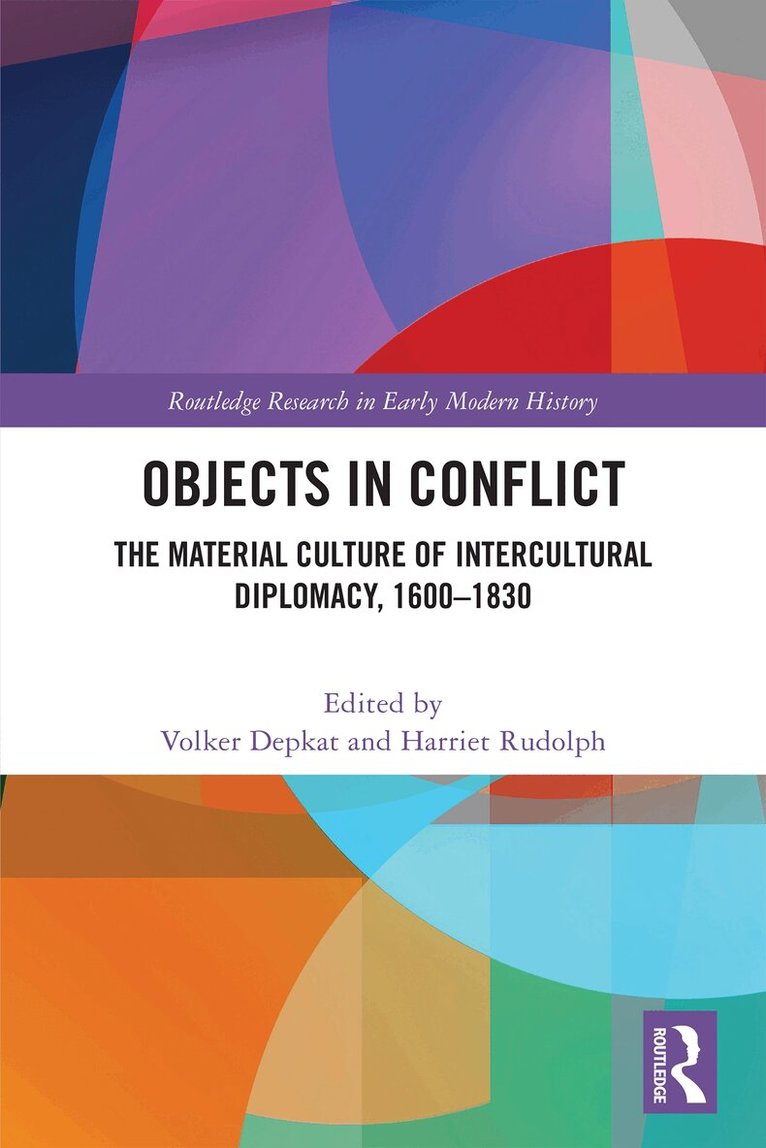
This book presents case studies that analyse the diplomatic uses and functions of robes, furniture, weapons, tools, jewelry, paintings, sculptures, books, food, and other material objects in early modern inter-cultural diplomatic encounters in Europe, Asia, the Americas, and the Pacific world.Readers will gain insights into the material dimensions of early modern diplomacy and the cultural logics and diplomatic rationales of object use in a wide range of regional, political, and imperial contexts spanning the Habsburg Empire, France, Spain, the Ottoman Empire, British and French colonial North America, colonial Mexico, Hawaii, and the South Seas. Transcending the established topic of gift exchanges, the volume aims at an analysis of the overall material settings of early modern diplomatic encounters. With its clear temporal focus on the seventeenth and eighteenth centuries, the source-driven case studies on concrete objects and object groups open multiple paths into the complexities of the early modern era as a formative phase in the history of diplomacy.The book is intended for historians of the early modern period, particularly diplomatic history, political history, art history, cultural history, religious history, and regional history. It is also relevant for scholars in the field of material culture studies, ethnography, and museology.
Häftad, Engelska, 2024
613 kr
Skickas inom 10-15 vardagar
In recent years religion has resurfaced amongst academics, in many ways replacing class as the key to understanding Europe's historical development. This has resulted in an explosion of studies revisiting issues of religious change, confessional violence and holy war during the early modern period. But the interpretation of the European wars of religion still remains largely defined by national boundaries, tied to specific processes of state building as well as nation building. In order to more thoroughly interrogate these concepts and assumptions, this volume focusses on terms repeatedly used and misused in public debates such as "religious violence" and "holy warfare" within the context of military conflicts commonly labelled "religious wars". The chapters not only focus on the role of religion, but also on the emerging state as a driver of the escalation of violence in the so-called age of religious war. By using different methodological and theoretical approaches historians, philosophers, and theologians engage in an interdisciplinary debate that contributes to a better understanding of the religio-political situation of early modern Europe and the interpretation of violent conflicts interpreted as religious conflicts today. By adopting a multi-disciplinary approach, new and innovative perspectives are opened up that question if in fact religion was a primary driving force behind these conflicts.
E-bok
Engelska, 2016690 kr
Läs direkt efter köp
In recent years religion has resurfaced amongst academics, in many ways replacing class as the key to understanding Europe''s historical development. This has resulted in an explosion of studies revisiting issues of religious change, confessional violence and holy war during the early modern period. But the interpretation of the European wars of religion still remains largely defined by national boundaries, tied to specific processes of state building as well as nation building. In order to more thoroughly interrogate these concepts and assumptions, this volume focusses on terms repeatedly used and misused in public debates such as "religious violence" and "holy warfare" within the context of military conflicts commonly labelled "religious wars". The chapters not only focus on the role of religion, but also on the emerging state as a driver of the escalation of violence in the so-called age of religious war. By using different methodological and theoretical approaches historians, philosophers, and theologians engage in an interdisciplinary debate that contributes to a better understanding of the religio-political situation of early modern Europe and the interpretation of violent conflicts interpreted as religious conflicts today. By adopting a multi-disciplinary approach, new and innovative perspectives are opened up that question if in fact religion was a primary driving force behind these conflicts.
E-bok
PDF, Engelska, 2016690 kr
Läs direkt efter köp
In recent years religion has resurfaced amongst academics, in many ways replacing class as the key to understanding Europe''s historical development. This has resulted in an explosion of studies revisiting issues of religious change, confessional violence and holy war during the early modern period. But the interpretation of the European wars of religion still remains largely defined by national boundaries, tied to specific processes of state building as well as nation building. In order to more thoroughly interrogate these concepts and assumptions, this volume focusses on terms repeatedly used and misused in public debates such as "religious violence" and "holy warfare" within the context of military conflicts commonly labelled "religious wars". The chapters not only focus on the role of religion, but also on the emerging state as a driver of the escalation of violence in the so-called age of religious war. By using different methodological and theoretical approaches historians, philosophers, and theologians engage in an interdisciplinary debate that contributes to a better understanding of the religio-political situation of early modern Europe and the interpretation of violent conflicts interpreted as religious conflicts today. By adopting a multi-disciplinary approach, new and innovative perspectives are opened up that question if in fact religion was a primary driving force behind these conflicts.
Inbunden, Engelska, 2015
2 659 kr
Skickas inom 10-15 vardagar
In recent years religion has resurfaced amongst academics, in many ways replacing class as the key to understanding Europe's historical development. This has resulted in an explosion of studies revisiting issues of religious change, confessional violence and holy war during the early modern period. But the interpretation of the European wars of religion still remains largely defined by national boundaries, tied to specific processes of state building as well as nation building. In order to more thoroughly interrogate these concepts and assumptions, this volume focusses on terms repeatedly used and misused in public debates such as "religious violence" and "holy warfare" within the context of military conflicts commonly labelled "religious wars". The chapters not only focus on the role of religion, but also on the emerging state as a driver of the escalation of violence in the so-called age of religious war. By using different methodological and theoretical approaches historians, philosophers, and theologians engage in an interdisciplinary debate that contributes to a better understanding of the religio-political situation of early modern Europe and the interpretation of violent conflicts interpreted as religious conflicts today. By adopting a multi-disciplinary approach, new and innovative perspectives are opened up that question if in fact religion was a primary driving force behind these conflicts.
Häftad, Engelska, 2016
903 kr
Skickas inom 5-8 vardagar
The present volume aims at outlining a new field of research with regard to the history of diplomacy: the material culture of diplomatic interaction in early modern and modern times. The material culture of diplomacy includes all practices in foreign policy communication in which single artifacts, samples of artifacts, or else the whole material setting of diplomatic interaction is supposed to be constitutive for creating an intended effect in terms of diplomatic objectives. The chapters of this volume focus on intercultural diplomacy in different regions of the world wherein diplomatic actors of various kinds might have been confronted by a whole universe of unfamiliar artifacts and artifact-related practices. Most of them concentrate on gift giving as a diplomatic practice that offers multiple insights in the complex dynamics of diplomatic relations between representatives of culturally highly diverse political entities. In doing so, they gainfully apply different theoretical approaches of material culture as an interdisciplinary field of study to the investigation of diplomatic cultures across the globe. As a result, it becomes obvious that future research into the history of diplomacy should take into account material practices much more thoroughly than has been done before.
E-bok
PDF, Tyska, 2015285 kr
Läs direkt efter köp
Inbunden, Tyska, 2011
1 611 kr
Skickas inom 11-20 vardagar
Häftad, Tyska, 2005
288 kr
Skickas inom 10-15 vardagar
Diese Einführung in das Studium der Geschichtswissenschaft richtet sich an alle, die das Fach Geschichte studieren wollen oder das bereits tun. Sie begleitet die Zeit an der Universität von der Immatrikulation bis zur Bewerbung um einen Arbeitsplatz. Es werden zum einen zentrale "handwerkliche" Fähigkeiten vermittelt: Wie man richtig bibliographiert, wie man wissenschaftliche Texte möglichst effizient bearbeitet, wie man eine historische Quelle interpretiert oder wie man Hausarbeiten und Referate verfasst. Zum anderen informiert das Buch über allgemeine Fragen des Studiums, etwa über die Studienfinanzierung, die Fächerwahl, Studien- und Stundenpläne, Formen der Prüfungsvorbereitung oder über den Umgang mit Praktika. Darüber hinaus werden Berufsfelder für Historiker vorgestellt und Tipps für einen erfolgreichen Einstieg in den Beruf gegeben.
E-bok
PDF, Tyska, 2023357 kr
Läs direkt efter köp
Die materielle Kultur vergangener Gesellschaften ist ein boomendes Forschungsfeld, dessen Ansätze auch für die Untersuchung vormoderner Hospitäler zahlreiche neue Erkenntnisse versprechen. Die Beiträge dieses Bandes widmen sich der reichen Ausstattung von Spitälern sowie dem Objektgebrauch samt seinen sozialen, medizinisch-hygienischen, ökonomischen und religiösen Funktionen. In Fallstudien werden methodische Fragen diskutiert und spezifische Objekte oder Objektgruppen analysiert, deren Gestaltung und Gebrauchsweisen Aufschlüsse über Abläufe in Hospitälern sowie die sozialen Beziehungen zwischen den hier lebenden und arbeitenden Menschen zueinander und zur Welt außerhalb des Spitals erlauben.