Inbunden, Engelska, 2026
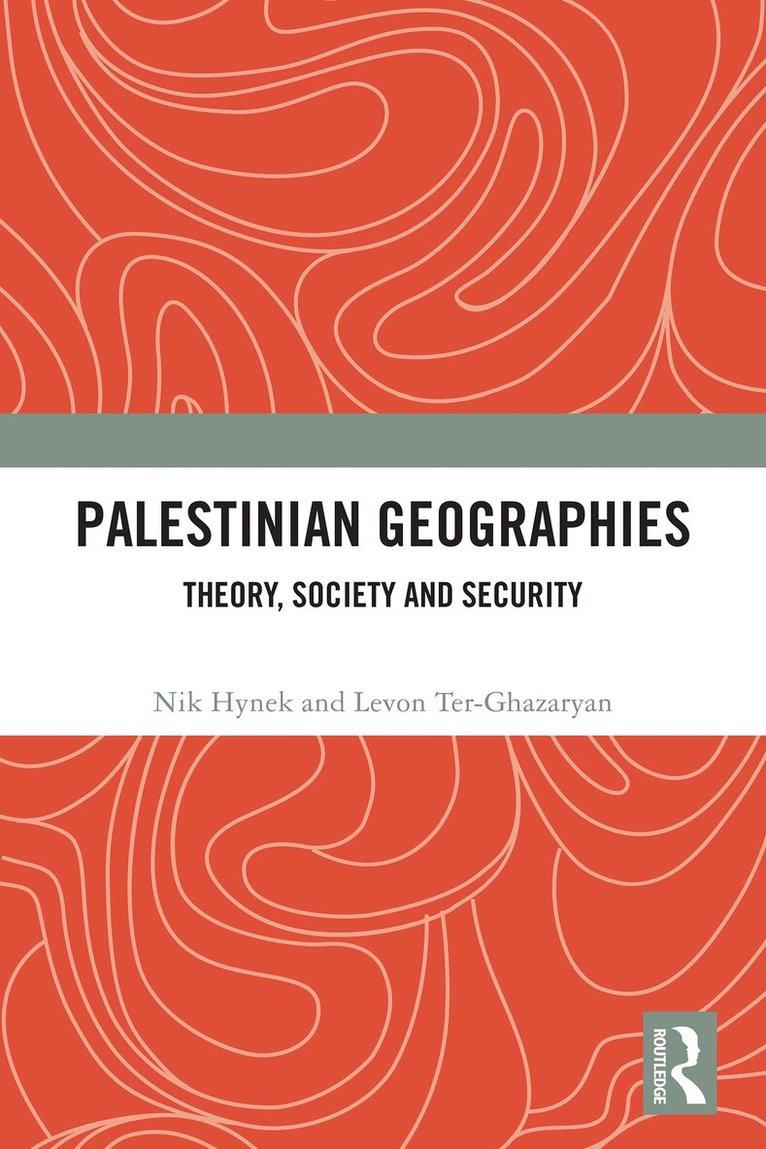
Palestinian Geographies
Av Nik Hynek, Levon Ter-Ghazaryan
2599 kr
Skickas inom 10-15 vardagar
Beskrivning
This book investigates how Palestinians engage in compensatory movements to negotiate political authority, collective identity, and everyday life by opening alternative routes and creating functional spaces.What sets this work apart is its innovative focus on the principle of compensation, which disrupts linear readings of functionality or dysfunction in Palestinian spaces. Rather than viewing Palestinian life through dominant frameworks of resistance, resilience, victimhood, or adaptation to Westphalian norms, this book reveals how refugee camps, humanitarian agencies, pro-Palestinian demonstrations, and underground networks emerge as spaces of co-existential agency where circulatory mobilities take place. By examining Gaza’s heterotopias, tunnel economies, UNRWA’s evolving role, and more-than-human dimensions of Palestinian spaces, the authors demonstrate how compensatory processes sustain Palestinian political, economic, and symbolic life despite what is seen as settler colonialism and oppression. Drawing on spatial analysis, security studies, organization theory, and insights from continental philosophy, this interdisciplinary approach illuminates how Palestinians transcend rigid binaries of functional/dysfunctional spaces and fixed power asymmetries, challenging scholars to see beyond dominant paradigms and recognize compensation as a driving force in forging new spatial possibilities.This book will be of much interest to students, experts, and policy-makers engaged in Human and Political Geography, Postcolonial Studies, Middle East and Palestine, Peace and Conflict Studies, and Anthropology.
Produktinformation
- Utgivningsdatum: 2026-08-17
- Mått: 156 x 234 x 13 mm
- Vikt: 540 g
- Format: Inbunden
- Språk: Engelska
- Antal sidor: 194
- Förlag: Taylor & Francis Ltd
- ISBN: 9781041220626
Utforska kategorier
Betyg & recensioner
0 recensioner
Inga recensioner tillgängliga.