Nik Hynek – författare
1 084 kr
Skickas inom 10-15 vardagar
2 435 kr
Skickas inom 10-15 vardagar
670 kr
Skickas inom 10-15 vardagar
754 kr
Skickas inom 10-15 vardagar
2 193 kr
Skickas inom 10-15 vardagar
2 479 kr
Skickas inom 10-15 vardagar
2 266 kr
Skickas inom 10-15 vardagar
698 kr
Skickas inom 10-15 vardagar
757 kr
Läs direkt efter köp
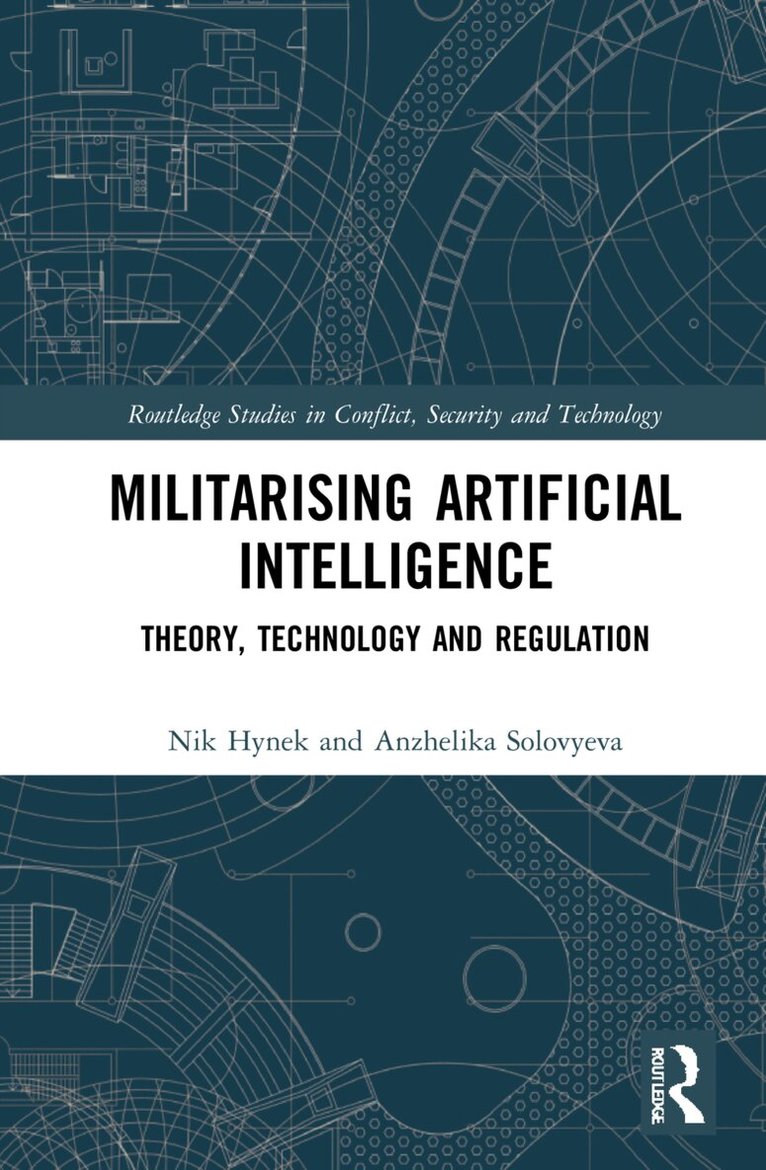
This book examines the military characteristics and potential of Artificial Intelligence (AI) in the new global revolution in military affairs.
Offering an original perspective on the utilization, imagination, and politics of AI in the context of military development and weapons regulation, the work provides a comprehensive response to the question of how we might reflect on the AI revolution in warfare and what can be said about the ways in which this has been handled. In the first part of the book, AI is accommodated, both theoretically and empirically, in the strategic context of the ''Revolution in Military Affairs'' (RMA). The book offers a novel understanding of autonomous weapons as multi-layered composite systems, pointing to a complex, non-linear interplay between evolutionary and revolutionary dynamics. In the second section, the book provides an impartial analysis of the related politics and operations of power, whereby increases in military budgets and R&D of the great powers are met and countered by advocacy networks and scientists campaigning for a ban on lethal autonomous weapons. As such, it moves beyond popular caricatures of ‘killer robots’ and points out some of the problems which result from over-reliance on such imagery.
This book will be of much interest to students of strategic studies, critical security studies, arms control and disarmament, science and technology studies and general International Relations.
757 kr
Läs direkt efter köp
This book examines the military characteristics and potential of Artificial Intelligence (AI) in the new global revolution in military affairs.
Offering an original perspective on the utilization, imagination, and politics of AI in the context of military development and weapons regulation, the work provides a comprehensive response to the question of how we might reflect on the AI revolution in warfare and what can be said about the ways in which this has been handled. In the first part of the book, AI is accommodated, both theoretically and empirically, in the strategic context of the ''Revolution in Military Affairs'' (RMA). The book offers a novel understanding of autonomous weapons as multi-layered composite systems, pointing to a complex, non-linear interplay between evolutionary and revolutionary dynamics. In the second section, the book provides an impartial analysis of the related politics and operations of power, whereby increases in military budgets and R&D of the great powers are met and countered by advocacy networks and scientists campaigning for a ban on lethal autonomous weapons. As such, it moves beyond popular caricatures of ‘killer robots’ and points out some of the problems which result from over-reliance on such imagery.
This book will be of much interest to students of strategic studies, critical security studies, arms control and disarmament, science and technology studies and general International Relations.
706 kr
Läs direkt efter köp
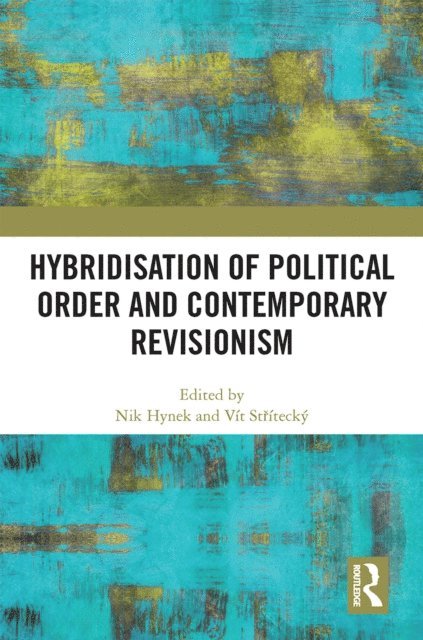
This volume argues that contemporary political and security revisionism should not be considered a homogenous attack against the international order but rather a bag of tailor-made strategies to exploit opportunities found in various, highly localised contexts.
Scholars with backgrounds in Security Studies, Area Studies, International Relations and Political Theory are brought to examine revisionist tendencies in Central Eastern Europe, Post-Soviet Space, China and the Transatlantic Space. In doing so, they try to remedy the existing disciplinary separatism, or ‘policing’, which has obfuscated any theorisation of the connections between international and domestic politics for many decades. Part of the analytical focus is on novel phenomena, especially the utilization of cyberspace and new social media and technological innovation. One of the conclusions of this volume is that the rise in contemporary revisionism shows the oft-forgotten importance of the first image of international politics: political leaders, in other words, do indeed matter. The fact that they matter is only reinforced when they represent regional or even great powers, and especially revisionist regimes and states with the propensity to produce complex effects.
The chapters in this book were originally published as a special issue of the journal Europe-Asia Studies.
688 kr
Läs direkt efter köp
This volume argues that contemporary political and security revisionism should not be considered a homogenous attack against the international order but rather a bag of tailor-made strategies to exploit opportunities found in various, highly localised contexts.
Scholars with backgrounds in Security Studies, Area Studies, International Relations and Political Theory are brought to examine revisionist tendencies in Central Eastern Europe, Post-Soviet Space, China and the Transatlantic Space. In doing so, they try to remedy the existing disciplinary separatism, or ‘policing’, which has obfuscated any theorisation of the connections between international and domestic politics for many decades. Part of the analytical focus is on novel phenomena, especially the utilization of cyberspace and new social media and technological innovation. One of the conclusions of this volume is that the rise in contemporary revisionism shows the oft-forgotten importance of the first image of international politics: political leaders, in other words, do indeed matter. The fact that they matter is only reinforced when they represent regional or even great powers, and especially revisionist regimes and states with the propensity to produce complex effects.
The chapters in this book were originally published as a special issue of the journal Europe-Asia Studies.
2 195 kr
Skickas inom 10-15 vardagar
600 kr
Skickas inom 10-15 vardagar
2 306 kr
Kommande
824 kr
Läs direkt efter köp
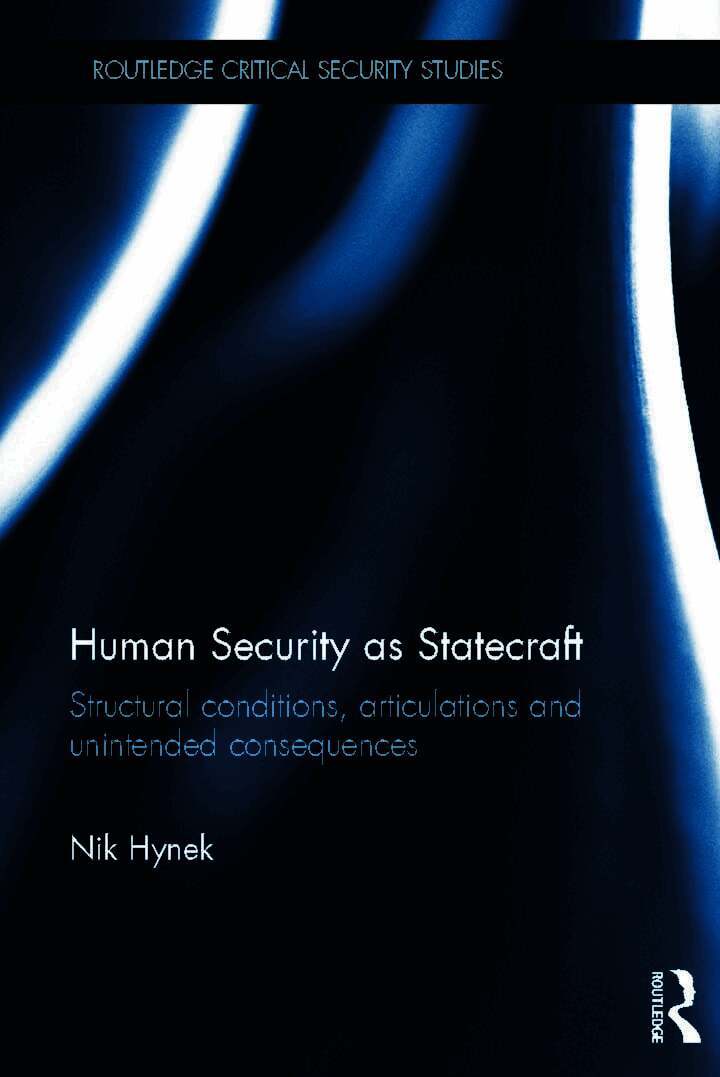
This book critically investigates the discourses and practices of human security and aims to delve below the stereotypical imageries representing them.
Drawing on Foucault and Deleuze, the author approaches human security from a new perspective, with the aim of ascertaining what has been behind and underneath a certain spatio-temporal articulation of human security, and with what political implications and consequences. Each human security assemblage is composed of messy discourses and practices which are loosely related and sometimes even disconnected. This book examines the Canadian and Japanese articulations of human security and establishes the kinds of structural terrains have enabled, shaped, or blocked the unfolding of these versions of human security. The pivotal contention of the book is that Canadian and Japanese articulations of human security have been different because they have grown from completely different domestic economies of power governing the relationship between the state apparatus and the non-profit and voluntary sector. While the Canadian human security assemblage has been shaped by transformations in the country’s advanced liberal model of government, the Japanese has been shaped by the continuities of Japan’s bureaucratic authoritarianism. A novel approach is employed for the related process-tracing: a general series linking structural conditions with actual articulations of the human security projects, and their further development, including analysis of their unintended consequences.
This book will be of much interest to students of Critical Security Studies, human security, global governance, foreign policy and IR/Security studies.
824 kr
Läs direkt efter köp
This book critically investigates the discourses and practices of human security and aims to delve below the stereotypical imageries representing them.
Drawing on Foucault and Deleuze, the author approaches human security from a new perspective, with the aim of ascertaining what has been behind and underneath a certain spatio-temporal articulation of human security, and with what political implications and consequences. Each human security assemblage is composed of messy discourses and practices which are loosely related and sometimes even disconnected. This book examines the Canadian and Japanese articulations of human security and establishes the kinds of structural terrains have enabled, shaped, or blocked the unfolding of these versions of human security. The pivotal contention of the book is that Canadian and Japanese articulations of human security have been different because they have grown from completely different domestic economies of power governing the relationship between the state apparatus and the non-profit and voluntary sector. While the Canadian human security assemblage has been shaped by transformations in the country’s advanced liberal model of government, the Japanese has been shaped by the continuities of Japan’s bureaucratic authoritarianism. A novel approach is employed for the related process-tracing: a general series linking structural conditions with actual articulations of the human security projects, and their further development, including analysis of their unintended consequences.
This book will be of much interest to students of Critical Security Studies, human security, global governance, foreign policy and IR/Security studies.
824 kr
Läs direkt efter köp
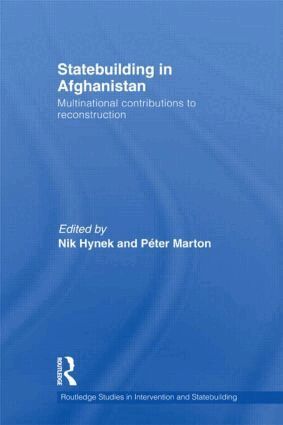
This edited volume empirically maps and theorises NATO-ISAF’s contribution to peacebuilding and reconstruction in Afghanistan. The book provides a contextual framework of the NATO participation in Afghanistan; it offers an outline of the security situation in Afghanistan and discusses geopolitical, historical, and military factors that are related to it.
It argues that a general underlying factor is that although the stated goals of the Afghanistan mission may be similarly formulated across the ISAF coalition, that are a great number of differences in the nature of coalition members’ political calculations, and share of the burden, and that this induces a dynamic of alliance politics that state actors attempt to either mitigate, navigate, or exploit - depending on their interests and views. The book asks why there are differences in countries’ share of the burden; how they manifest in different approaches; and how the actual performance of different members of the coalition ought to be assessed. It argues that understanding this offers clues as to what does not work in current state-building efforts, beyond individual countries’ experiences and the more general critique of statebuilding philosophy and practice.
This book answers key questions through a series of case studies which together form a comparative study of national contributions to the multilateral mission in Afghanistan. In so doing, it provides a uniquely sensitive analysis that can help explain coalition contributions from various countries. It will be of great interest to students of Afghanistan, Asian politics, peacebuilding, statebuilding, war and conflict studies, IR and Security Studies generally.
824 kr
Läs direkt efter köp
This edited volume empirically maps and theorises NATO-ISAF’s contribution to peacebuilding and reconstruction in Afghanistan. The book provides a contextual framework of the NATO participation in Afghanistan; it offers an outline of the security situation in Afghanistan and discusses geopolitical, historical, and military factors that are related to it.
It argues that a general underlying factor is that although the stated goals of the Afghanistan mission may be similarly formulated across the ISAF coalition, that are a great number of differences in the nature of coalition members’ political calculations, and share of the burden, and that this induces a dynamic of alliance politics that state actors attempt to either mitigate, navigate, or exploit - depending on their interests and views. The book asks why there are differences in countries’ share of the burden; how they manifest in different approaches; and how the actual performance of different members of the coalition ought to be assessed. It argues that understanding this offers clues as to what does not work in current state-building efforts, beyond individual countries’ experiences and the more general critique of statebuilding philosophy and practice.
This book answers key questions through a series of case studies which together form a comparative study of national contributions to the multilateral mission in Afghanistan. In so doing, it provides a uniquely sensitive analysis that can help explain coalition contributions from various countries. It will be of great interest to students of Afghanistan, Asian politics, peacebuilding, statebuilding, war and conflict studies, IR and Security Studies generally.
891 kr
Läs direkt efter köp
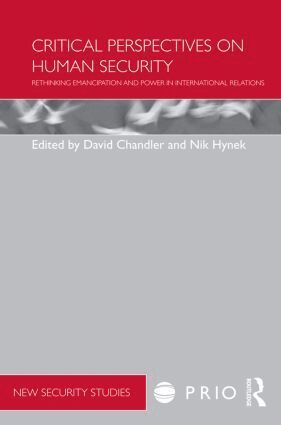
This new book presents critical approaches towards Human Security, which has become one of the key areas for policy and academic debate within Security Studies and IR.
The Human Security paradigm has had considerable significance for academics, policy-makers and practitioners. Under the rubric of Human Security, security policy practices seem to have transformed their goals and approaches, re-prioritising economic and social welfare issues that were marginal to the state-based geo-political rivalries of the Cold War era. Human Security has reflected and reinforced the reconceptualisation of international security, both broadening and deepening it, and, in so doing, it has helped extend and shape the space within which security concerns inform international policy practices. However, in its wider use, Human Security has become an amorphous and unclear political concept, seen by some as progressive and radical and by others as tainted by association with the imposition of neo-liberal practices and values on non-Western spaces or as legitimizing attacks on Iraq and Afghanistan.
This book is concerned with critical perspectives towards Human Security, highlighting some of the tensions which can emerge between critical perspectives which discursively radicalise Human Security within frameworks of emancipatory possibility and those which attempt to deconstruct Human Security within the framework of an externally imposed attempt to regulate and order the globe on behalf of hegemonic power. The chapters gathered in this edited collection represent a range of critical approaches which bring together alternative understandings of human security.
This book will be of great interest to students of human security studies and critical security studies, war and conflict studies and international relations.
891 kr
Läs direkt efter köp
This new book presents critical approaches towards Human Security, which has become one of the key areas for policy and academic debate within Security Studies and IR.
The Human Security paradigm has had considerable significance for academics, policy-makers and practitioners. Under the rubric of Human Security, security policy practices seem to have transformed their goals and approaches, re-prioritising economic and social welfare issues that were marginal to the state-based geo-political rivalries of the Cold War era. Human Security has reflected and reinforced the reconceptualisation of international security, both broadening and deepening it, and, in so doing, it has helped extend and shape the space within which security concerns inform international policy practices. However, in its wider use, Human Security has become an amorphous and unclear political concept, seen by some as progressive and radical and by others as tainted by association with the imposition of neo-liberal practices and values on non-Western spaces or as legitimizing attacks on Iraq and Afghanistan.
This book is concerned with critical perspectives towards Human Security, highlighting some of the tensions which can emerge between critical perspectives which discursively radicalise Human Security within frameworks of emancipatory possibility and those which attempt to deconstruct Human Security within the framework of an externally imposed attempt to regulate and order the globe on behalf of hegemonic power. The chapters gathered in this edited collection represent a range of critical approaches which bring together alternative understandings of human security.
This book will be of great interest to students of human security studies and critical security studies, war and conflict studies and international relations.
783 kr
Skickas inom 10-15 vardagar
719 kr
Skickas inom 10-15 vardagar
2 336 kr
Skickas inom 10-15 vardagar
925 kr
Läs direkt efter köp
This book examines the issue of nuclear disarmament in different strategic, political, and regional contexts.
This volume seeks to provide a rich theoretical and practical insight to one of the major topics in the field of international security: global abolishment of nuclear weapons. Renewed calls for a nuclear weapons-free world have sparked a wide academic debate on both the attainability of such goal and the steps that should be taken. Comparably less attention, however, has been paid to theoretically informed considerations of the consequences of nuclear abolition. Comprising essays from leading scholars and experts within the field, this collection discusses the fundamental theoretical and conceptual foundations of nuclear disarmament and subsequently tries to assess its hypothetical impact in global and regional contexts. The varied methodological approach of the contributors aims to advance a multi-theoretical and multi-perspectival view of the issue. The book is organized in three main sections: ‘Strategic Perspectives’, dealing with the specific constraints and facilitators for the states to achieve their core objectives; ‘Political Perspectives’, with the focus on the power of norms, belief-systems and ideas; and ‘Regional Perspectives’, with the analyses of seven regional and/or state-specific nuclear contexts. As a whole, the volume provides a detailed, complex overview of the risks and opportunities that are embedded in the vision of a nuclear weapon-free world.
This book will be of great interest to students of nuclear proliferation, arms control, war and conflict studies, international relations and security studies.
925 kr
Läs direkt efter köp
This book examines the issue of nuclear disarmament in different strategic, political, and regional contexts.
This volume seeks to provide a rich theoretical and practical insight to one of the major topics in the field of international security: global abolishment of nuclear weapons. Renewed calls for a nuclear weapons-free world have sparked a wide academic debate on both the attainability of such goal and the steps that should be taken. Comparably less attention, however, has been paid to theoretically informed considerations of the consequences of nuclear abolition. Comprising essays from leading scholars and experts within the field, this collection discusses the fundamental theoretical and conceptual foundations of nuclear disarmament and subsequently tries to assess its hypothetical impact in global and regional contexts. The varied methodological approach of the contributors aims to advance a multi-theoretical and multi-perspectival view of the issue. The book is organized in three main sections: ‘Strategic Perspectives’, dealing with the specific constraints and facilitators for the states to achieve their core objectives; ‘Political Perspectives’, with the focus on the power of norms, belief-systems and ideas; and ‘Regional Perspectives’, with the analyses of seven regional and/or state-specific nuclear contexts. As a whole, the volume provides a detailed, complex overview of the risks and opportunities that are embedded in the vision of a nuclear weapon-free world.
This book will be of great interest to students of nuclear proliferation, arms control, war and conflict studies, international relations and security studies.
451 kr
Skickas inom 10-15 vardagar
1 535 kr
Skickas inom 10-15 vardagar
1 541 kr
Kommande
1 191 kr
Skickas inom 10-15 vardagar