Anzhelika Solovyeva - Böcker
Visar alla böcker från författaren Anzhelika Solovyeva. Handla med fri frakt och snabb leverans.
5 produkter
5 produkter
2 103 kr
Skickas inom 10-15 vardagar
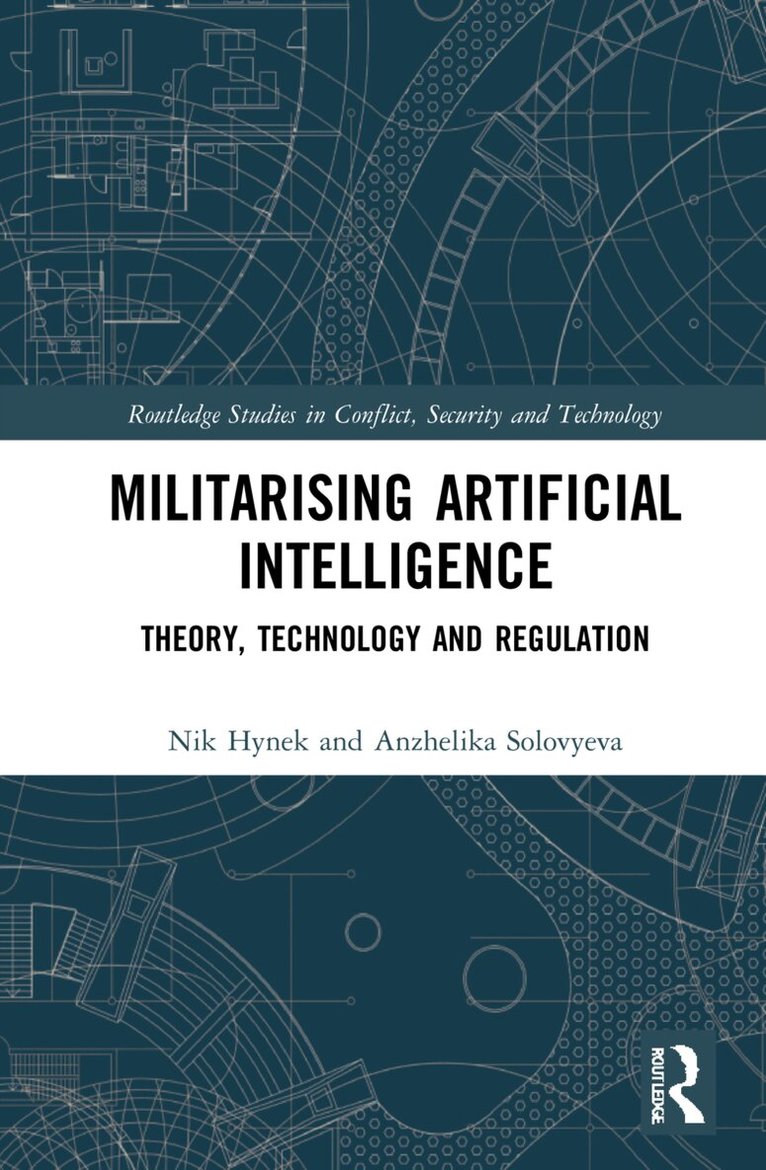
This book examines the military characteristics and potential of Artificial Intelligence (AI) in the new global revolution in military affairs.Offering an original perspective on the utilization, imagination, and politics of AI in the context of military development and weapons regulation, the work provides a comprehensive response to the question of how we might reflect on the AI revolution in warfare and what can be said about the ways in which this has been handled. In the first part of the book, AI is accommodated, both theoretically and empirically, in the strategic context of the 'Revolution in Military Affairs' (RMA). The book offers a novel understanding of autonomous weapons as multi-layered composite systems, pointing to a complex, non-linear interplay between evolutionary and revolutionary dynamics. In the second section, the book provides an impartial analysis of the related politics and operations of power, whereby increases in military budgets and R&D of the great powers are met and countered by advocacy networks and scientists campaigning for a ban on lethal autonomous weapons. As such, it moves beyond popular caricatures of ‘killer robots’ and points out some of the problems which result from over-reliance on such imagery.This book will be of much interest to students of strategic studies, critical security studies, arms control and disarmament, science and technology studies and general International Relations.
621 kr
Skickas inom 10-15 vardagar
This book examines the military characteristics and potential of Artificial Intelligence (AI) in the new global revolution in military affairs.Offering an original perspective on the utilization, imagination, and politics of AI in the context of military development and weapons regulation, the work provides a comprehensive response to the question of how we might reflect on the AI revolution in warfare and what can be said about the ways in which this has been handled. In the first part of the book, AI is accommodated, both theoretically and empirically, in the strategic context of the 'Revolution in Military Affairs' (RMA). The book offers a novel understanding of autonomous weapons as multi-layered composite systems, pointing to a complex, non-linear interplay between evolutionary and revolutionary dynamics. In the second section, the book provides an impartial analysis of the related politics and operations of power, whereby increases in military budgets and R&D of the great powers are met and countered by advocacy networks and scientists campaigning for a ban on lethal autonomous weapons. As such, it moves beyond popular caricatures of ‘killer robots’ and points out some of the problems which result from over-reliance on such imagery.This book will be of much interest to students of strategic studies, critical security studies, arms control and disarmament, science and technology studies and general International Relations.
434 kr
Skickas inom 10-15 vardagar
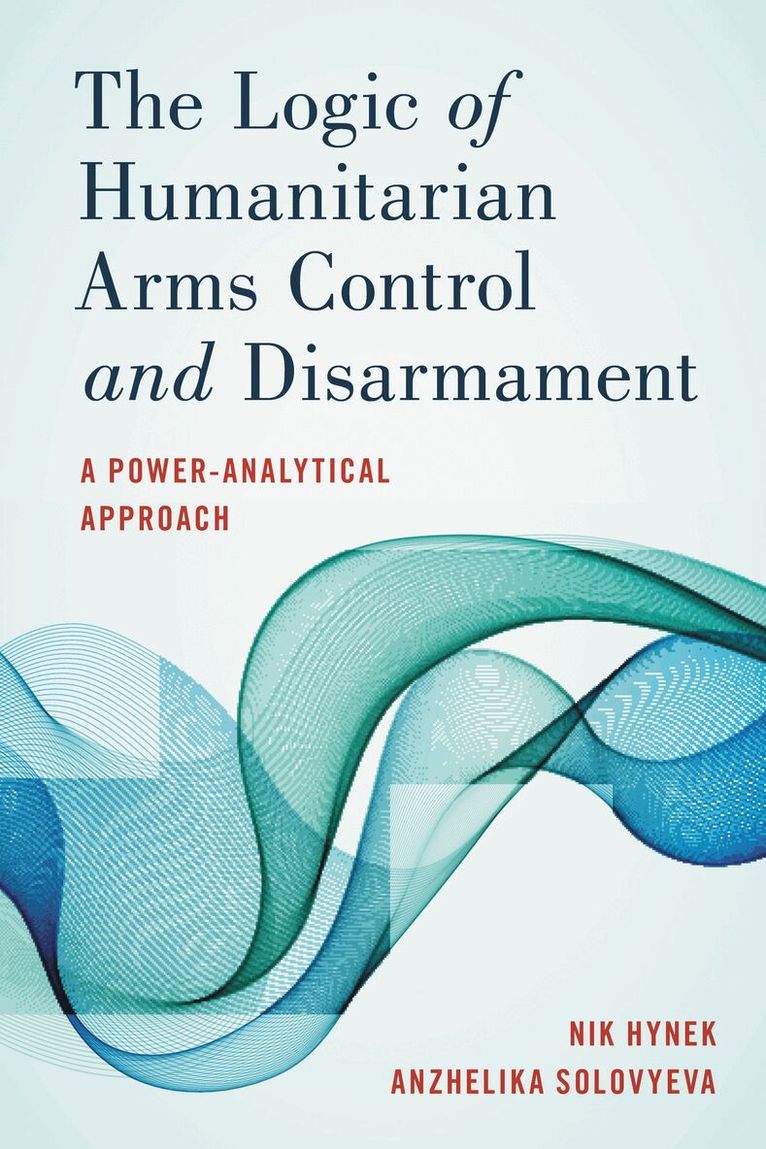
This novel and original book examines and disaggregates, theoretically and empirically, operations of power in international security regimes. These regimes, varying in degree from regulatory to prohibitory, are understood as sets of normative discourses, political structures and dependencies (anarchies, hierarchies, and heterarchies), and agencies through which power operates within a given security issue area with a regulatory effect. In International Relations, regime analysis has been dominated by several generations of regime theory/theorization. As this book makes clear, not only has the IR Regime Theory been of limited utility for security domain due to its heavy focus on economic and environmental regimes, but it, too, heuristically suffered from its rigid pegging to general IR Theory. It is not surprising then that the evolution of IR Regime Theory has largely been mirroring the evolution of IR Theory in general: from the neo-realist/neo-liberal institutionalist convergence regime theory; through cognitivism; to constructivist regime theory. The commitment of this book is to remedy this situation by bringing together robust power analysis and international security regimes. It provides the reader with a theoretically and empirically uncompromising and comprehensive analysis of the selected international security regimes, which goes beyond one or another school of IR Regime Theory. In doing so, it completely abandons existing, and piecemeal, analysis of regimes within the intellectual field of IR based on conventional grand/mid-range theorization.
Logic of Humanitarian Arms Control and Disarmament
A Power-Analytical Approach
Inbunden, Engelska, 2020
1 476 kr
Skickas inom 10-15 vardagar
This novel and original book examines and disaggregates, theoretically and empirically, operations of power in international security regimes. These regimes, varying in degree from regulatory to prohibitory, are understood as sets of normative discourses, political structures and dependencies (anarchies, hierarchies, and heterarchies), and agencies through which power operates within a given security issue area with a regulatory effect. In International Relations, regime analysis has been dominated by several generations of regime theory/theorization. As this book makes clear, not only has the IR Regime Theory been of limited utility for security domain due to its heavy focus on economic and environmental regimes, but it, too, heuristically suffered from its rigid pegging to general IR Theory. It is not surprising then that the evolution of IR Regime Theory has largely been mirroring the evolution of IR Theory in general: from the neo-realist/neo-liberal institutionalist convergence regime theory; through cognitivism; to constructivist regime theory. The commitment of this book is to remedy this situation by bringing together robust power analysis and international security regimes. It provides the reader with a theoretically and empirically uncompromising and comprehensive analysis of the selected international security regimes, which goes beyond one or another school of IR Regime Theory. In doing so, it completely abandons existing, and piecemeal, analysis of regimes within the intellectual field of IR based on conventional grand/mid-range theorization.
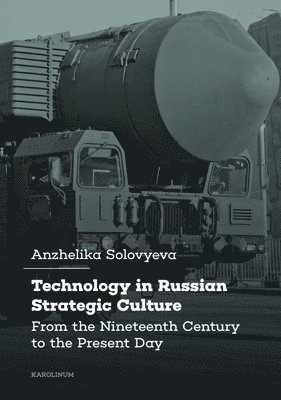
Technology in Russian Strategic Culture
From the Nineteenth Century to the Present Day
Häftad, Engelska, 2025
296 kr
Skickas inom 7-10 vardagar
A history of military-technological innovation in Russia. This book traces the dynamics of military-technological innovation in Russia over the last hundred and fifty years, particularly focusing on three distinct periods: the introduction of rifled breech-loading weapons in Imperial Russia in the nineteenth century, the invention of nuclear weapons in the Soviet Union in the twentieth century, and the development of precision-guided weapons in post-Soviet Russia in the twenty-first century. The analysis relies extensively on primary data obtained from Russian archives, complemented by a series of expert interviews, and deciphers Russia’ s distinct strategic cultural approach to military-technological innovation.