

- Nyhet
Displaced Persons and the Reshaping of American Immigration after World War II
Refuge Denied and Refuge Provided
Häftad, Engelska, 2026
655 kr
Beställningsvara. Skickas inom 10-15 vardagar. Fri frakt över 249 kr.
Fler format och utgåvor
Beskrivning
Displaced Persons and the Reshaping of American Immigration after World War II traces the journey of U.S. policy toward displaced persons (DPs) in post-war Europe, examining how America transformed from a nation resistant to accepting refugees to one that ultimately created a groundbreaking resettlement program.Despite initial public apathy and political resistance, America eventually welcomed roughly 400,000 refugees through a nationwide program, reopening the gates of U.S. immigration that had been largely shuttered since the 1920s. This book meticulously examines the factors that drove this remarkable shift: the persistent advocacy of humanitarian champions, the recognition of DPs' potential contributions as workers and community members, and crucially, President Harry Truman's leadership and commitment to human dignity. Through an exploration of legislative battles, implementation challenges, and varying state and local responses, the narrative reveals how America's refugee policy was shaped by competing interests and perspectives. The author provides a balanced understanding of how public policy evolves through denial, delay, and eventual action. It is an instructive story of the makings, workings, and effects of American public policy and one that provides lessons for the advances and reversals of U.S. efforts on behalf of refugees in more recent years.Essential reading for students of American history, immigration policy, and humanitarian affairs, this book offers valuable insights into the historical precedents of today's refugee debates and the complex interplay between American ideals and practices.
Produktinformation
Utforska kategorier
Mer om författaren
Recensioner i media
Innehållsförteckning
Hoppa över listan



Mer från samma författare
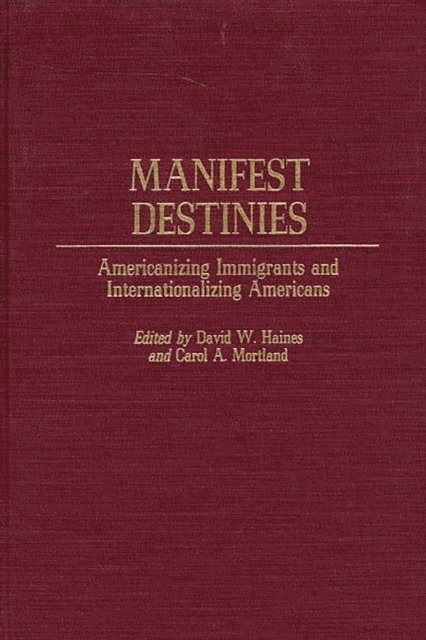
Manifest Destinies
David W. Haines, Carol Mortland, David W. Haines, Carol A. Mortland
Inbunden, 2000
842 kr
Hoppa över listan

Du kanske också är intresserad av

- Nyhet
Displaced Persons and the Reshaping of American Immigration after World War II
David W. Haines
E-bok
2026760 kr
Manifest Destinies
David W. Haines, Carol Mortland, David W. Haines, Carol A. Mortland
Inbunden, 2000
842 kr