• Fri frakt över 249 kr
  • •
  • Snabba leveranser
  • •
  • Billiga böcker
Kundservice

Du är på sajten för privatpersoner.

Företag, bibliotek eller offentlig verksamhet?

Du handlar på classic.bokus.com, där alla dina funktioner finns intakta.
Till classic.bokus.com
Bokus logotyp. Gå till startsidan.
  • Erbjudanden
  • Student
  • Topplistor
  • Barn & ungdom
  • Bokus Play
  • E-böcker
  • Ljudböcker
  • Pocketböcker
  • Spel och pussel

Pocketfynda! Hundratals böcker för 49 kr/st →

Sidfot

Mina sidor

    Hjälp

    • Kundservice
    • Vanliga frågor och svar
    • Frakt och leverans
    • Retur vid ångerrätt
    • Reklamera vara
    • Betalning
    • Köpvillkor
    • Allmänna villkor
    • Information om webbplatsens tillgänglighet

    Om Bokus

    • Om oss
    • Pressrum
    • För studenter
    • För företag
    • För bibliotek och offentlig verksamhet
    • För leverantörer
    • Hållbarhet

    Populärt

    • Aktuella erbjudanden
    • Presentkort
    • Studentlitteratur
    • Nya böcker
    • Topplistor
    • Signerade böcker
    • Engelska böcker

    Inspiration

    • Boktips
    • BookTok
    • Barnbokskaraktärer
    • Populära författare
    Logotyp för Bokus
    Följ oss på Facebook (extern länk)Följ oss på Instagram (extern länk)Följ oss på YouTube (extern länk)Följ oss på TikTok (extern länk)
    bokus @ CookiesAnpassa cookiesIntegritetspolicyKöpvillkor
    Till Citymail hemsida (extern länk)Till Budbee hemsida (extern länk)Till Postnord hemsida (extern länk)Till Schenker hemsida (extern länk)Till Early Bird hemsida (extern länk)Till Walleys hemsida (extern länk)
    1. Samhälle och politik
    2. Samhälle och kultur
    3. Kultur och medier
    4. Referensverk och tvärvetenskap

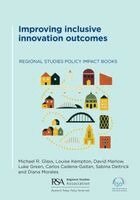
    Improving inclusive innovation outcomes

    Lessons from post-industrial and post-conflict cities

    AvMichael R. Glass,Louise Kempton

    Häftad, Engelska, 2026

    Del i serien Regional Studies Policy Impact Books

    525 kr

    Kommande

    Beskrivning

    This book describes the Improving Inclusive Innovation Outcomes (i3o) research programme (2022–25). This work recognises that place-based economic growth in the 21st century is called to deliver more equitable and sustainable outcomes that address social challenges.The i3o programme focuses on inclusive innovation in urban innovation districts: geographical concentrations of assets and amenities designed to deliver economic growth for their host cities. i3o engaged with four cities in post-industrial (Newcastle, Pittsburgh) and post-conflict (Medellín, Belfast) cities. Each city’s innovation district express commitments to inclusive growth and is shifting towards a new model – what the authors define here as Innovation Districts 2.0. This emerging model repositions innovation policy around purposeful leadership, community engagement and place-based strategic alignment. The authors argue that these cities reflect steps toward a new best-practice model that other existing and potential innovation districts can learn from and integrate in their own cities. An Innovation District 2.0 will be characterised by purposeful inclusive innovation: leadership and management; by proactive community engagement and placemaking; and by strategic alignment and territorial equity awareness of their contributions to relevant city growth strategies. All three characteristics of the framework will deliver inclusion-rich local strengths that enable Innovation Districts 2.0 to look beyond copying orthodox global best practice to be the best innovation district they can be for their city-region.This work will be accessible and actionable for all members of urban innovation ecosystems, whether from the community, government, academia or industry. It sets out what the authors intend to be a broader research agenda to assist innovation districts deliver broader social outcomes. Innovation has always been in the forefront of delivering change; this book seeks to ensure that all places have the methods and tools available to deliver that change inclusively and successfully.

    Produktinformation

    • Utgivningsdatum:2026-10-14
    • Mått:174 x 248 x undefined mm
    • Format:Häftad
    • Språk:Engelska
    • Serie:Regional Studies Policy Impact Books
    • Antal sidor:96
    • Förlag:Taylor & Francis Ltd
    • ISBN:9781041341932

    Utforska kategorier

    • Referensverk och tvärvetenskap inom Samhälle och politik
    • Mikroekonomi inom Ekonomi och Ledarskap
    • Regional planering inom Naturvetenskap och teknik

    Mer om författaren

    Michael R. Glass is an Assistant Professor of Sociology and Director of the Urban Studies Program at the University of Pittsburgh.Louise Kempton is Professor of Urban and Regional Policy and Director of the Center for Urban and Regional Development Studies (CURDS) at Newcastle University, UK.David Marlow is Chief Executive of Third Life Economics and Visiting Professor of Practice at Newcastle University, UK.Luke Green is a Research Associate at Insights North East, and holds a doctorate from Newcastle University, UK.Carlos Cadena-Gaitan is an Associate Professor of Policy and Development at EAFIT University, Medellín.Sabina Deitrick is an Associate Professor and Co-Director of the Urban and Regional Program at the University Center for Social and Urban Research (UCSUR) at the University of Pittsburgh.Diana Morales is University Assistant (postdoctoral) at the Department of Geography and Regional Research at the University of Vienna.

    Recensioner i media

    “…Perhaps the most important aspect of the book is that it shows that innovation and equity need not be in tension. By including workers from across deprived neighbourhoods who come from different backgrounds, efforts to make innovation more inclusive can result in more innovation overall. This book can help make this happen.” — Neil Lee, Professor of Economic Geography Department of Geography and Environment London School of Economics, UK“This book matters because it reminds us that innovation is not an abstract aspiration – it is something that unfolds in real spaces, with real people, and with real and complex power dynamics. For those of us committed to building more just and inclusive systems, it offers both clarity and hope.” — Ana María Ortega, Full Professor and Researcher, Innovation Systems and Community-Based Adaptation (CBA), EAFIT University, Medellín; Policy Advisor, Entrepreneurship and Regional Innovation Systems

    Innehållsförteckning

    • 1. Improving inclusive innovation outcomes for innovation districts 2. What are inclusive innovation districts? The conceptual and policy foundations 3. A methodology for diagnosing inclusion in innovation districts: the i3o toolkit 4. Comparing inclusive innovation in post-industrial and post-conflict innovation districts 5. How to build an Innovation District 2.0 6. Policy and practice insights for innovation districts