Inbunden, Engelska, 2026
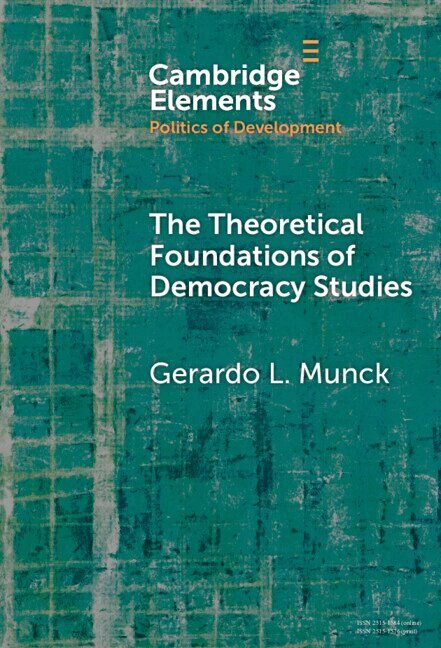
The Theoretical Foundations of Democracy Studies
884 kr
Kommande
Beskrivning
Focusing on democracy studies, this Element considers the different ways in which scholars have responded to fundamental conceptual and theoretical choices in the field and, drawing mainly on various metatheoretical ideas, suggests that some positions are better justified than others. It emphasizes the perils of maximalist definitions of democracy and argues against an aggregative, additive conception of democracy that does not recognize qualitative distinctions. It questions the assignment of causal primacy to economic, cultural, or political factors in explanations of democracy, and stresses the importance of causal interactions and reciprocal causation. It makes a case for modeling the temporal heterogeneity of causal relations. It favors explanations that incorporate causal mechanisms through multi-level models. It also sees the integration of specific models of democracy as a promising path to theoretical unification. In short, it scrutinizes several foundational ideas in democracy studies and proposes a reconstruction of the field's theoretical foundations.
Produktinformation
- Utgivningsdatum: 2026-11-30
- Format: Inbunden
- Språk: Engelska
- Serie: Elements in the Politics of Development
- Antal sidor: 75
- Förlag: Cambridge University Press
- ISBN: 9781047783545
Utforska kategorier
Betyg & recensioner
0 recensioner
Inga recensioner tillgängliga.