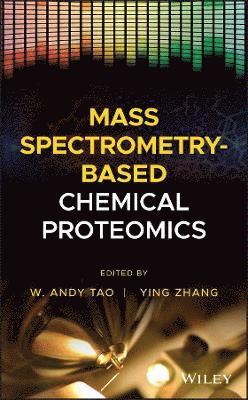
1 857 kr
Beställningsvara. Skickas inom 7-10 vardagar. Fri frakt över 249 kr.
Beskrivning
Produktinformation
- Utgivningsdatum:2019-09-13
- Mått:155 x 231 x 28 mm
- Vikt:816 g
- Format:Inbunden
- Språk:Engelska
- Antal sidor:448
- Förlag:John Wiley & Sons Inc
- ISBN:9781118969557
Utforska kategorier
Mer om författaren
W. ANDY TAO, PHD, is a Professor in the Department of Biochemistry at Purdue University. He is also the Founder and Chief Scientific Officer at Tymora Analytical Operations, LLC, which provides lab R&D products for life sciences. Dr. Tao is the recipient of awards, such as the American Society of Mass Spectrometry Research Award, and author of more than 140 articles and book chapters on proteomics and mass spectrometry. YING ZHANG, PHD, is a Professor at Fudan University. Her research focuses on the development of mass spectrometry-based new approaches for the analysis of low abundant proteins and posttranslational proteins.
Innehållsförteckning
- Preface xv1 Protein Analysis by Shotgun Proteomics 1Yu Gao and John R. Yates III1.1 Introduction 11.1.1 Terminology 11.1.2 Power of Shotgun Proteomics 11.1.3 Advantage of Shotgun Proteomics 21.2 Overview of Shotgun Proteomics 21.3 Sample Preparation 41.3.1 Protein Separation 41.3.1.1 Overview 41.3.1.2 2D‐Gel Approach 41.3.1.3 Separation of Membrane Protein 51.3.1.4 Subcellular Fractionation 51.3.1.5 Protein Enrichment 61.3.1.6 Phosphoprotein 61.3.1.7 Glycoprotein 61.3.1.8 AP–MS and Interactome 71.3.2 Protein Modification 81.3.2.1 Overview 81.3.2.2 Reduction of Disulfide Bond and Alkylation 81.3.2.3 Chemical Crosslinking 81.3.2.4 Proximity Labeling 91.3.3 Protein Digestion 91.4 Peptide Separation and Data Acquisition 111.4.1 Peptide Separation 111.4.1.1 Reversed Phase (RP) 111.4.1.2 HILIC 111.4.1.3 MudPIT 111.4.1.4 Capillary Electrophoresis 131.4.2 Peptide Ionization 131.4.3 Mass Analyzer 131.4.4 Peptide Fragmentation Method 151.4.4.1 CID/HCD 151.4.4.2 ETD/ECD 161.4.4.3 IRMPD/UVPD 161.4.5 Acquisition Mode 171.5 Informatics 171.5.1 Peptide Identification 181.5.1.1 Database Search 181.5.1.2 Spectral Library Search 211.5.1.3 De novo Sequencing 221.5.1.4 Peptide‐Centric Analysis 231.5.2 Peptide/Protein Quantitation 231.5.2.1 Labeled Quantitation 231.5.2.2 Label‐Free Quantitation 271.5.3 Protein Inference 29References 312 Quantitative Proteomics for Analyses of Multiple Samples in Parallel with Chemical Perturbation 39Amanda Rae Buchberger, Jillian Johnson, and Lingjun Li2.1 Introduction 392.2 Relative and Absolute Label‐Free Quantitation Strategies 402.3 Stable Isotope‐Based Quantitative Proteomics 422.3.1 Relative Quantitation 422.3.2 Absolute Quantitation 472.4 Conclusion 482.5 Methodology 502.6 Notes 52Acknowledgments 55References 563 Chemoproteomic Analyses by Activity‐Based Protein Profiling 67Bryan J. Killinger, Kristoffer R. Brandvold, Susan J. Ramos‐Hunter, and Aaron T. Wright3.1 Introduction 673.2 How ABPP Works 683.3 ABPP Probe Design 713.3.1 Mechanism‐Based Probes 723.3.2 Reactivity‐Based Probes 743.3.3 Photoaffinity Probes 743.4 ABPP and Mass Spectrometry for Chemoproteomics 753.4.1 Determining ABP Target Identity 753.4.2 Considerations for Analyzing ABP Targets with MS 773.4.3 Determining the Site of ABP Labeling 783.4.4 Quantification of ABPP Probe Targets 803.4.4.1 Label‐Free Methods 803.4.4.2 Isotopic Methods 813.5 ABPP Applications and Recent Advances 833.5.1 Using ABPs for Functional Protein Annotation 833.5.2 ABPPs Applied to Microbes and Their Communities 843.6 ABPP Applied to Drug Discovery 883.7 Comparative, Competitive, and Convolution ABPP 903.8 Conclusions and The Outlook of ABPP 91Acknowledgements 91References 914 Activity‐Based Probes for Profiling Protein Activities 101Kasi V. Ruddraraju and Zhong‐Yin Zhang4.1 Introduction 1014.2 Design of Activity‐Based Probes 1024.2.1 The Reactive Group 1024.2.2 The Linker 1044.2.3 The Tag 1044.3 Analytical Platforms for ABPP 1054.3.1 Gel‐Based Platforms 1054.3.2 Mass Spectrometry Platforms for ABPP 1064.3.3 Microarray Platform for ABPP 1074.3.4 Capillary Electrophoresis Platform for ABPP 1074.4 Classes of Enzymes Studied by ABPP 1084.4.1 Serine Hydrolases 1084.4.2 Cysteine Proteases 1094.4.3 Metallohydrolases 1104.4.4 Glycosidases 1114.4.5 Protein Kinases 1144.4.6 Protein Phosphatases 1164.5 Conclusions 119Acknowledgment 120References 1205 Chemical Probes for Proteins and Networks 127Scott Lovell, Charlotte L. Sutherell, and Edward W. Tate5.1 Introduction 1275.1.1 Probe Design and Validation 1285.1.2 Application to a Proteomics Workflow 1295.1.3 Quantitative Chemical Proteomics 1315.2 Application of Metabolic Chemical Probes to Lipidated Protein Networks 1325.2.1 Chemical Probes for N‐Myristoylation 1335.2.2 Chemical Probes for Hedgehog Proteins 1365.3 Chemical Probes for Target Identification 1375.3.1 Identifying New Target Profiles of Sulforaphane in Breast Cancer Cells 1385.3.2 Target Profiling of Zerumbone Using a Novel Clickable Probe 1405.4 Protocol 1435.4.1 Introduction 1435.4.2 Materials 1435.4.2.1 Chemical Tools 1435.4.2.2 Cell Culture 1435.4.2.3 Cell Lysis, Enrichment and Sample Preparation 1445.4.2.4 Click Chemistry and Enrichment 1445.4.2.5 Proteomics Sample Preparation 1445.4.2.6 Proteomics Analysis 1445.4.3 Method 1445.4.3.1 HeLa Cell Culture and Preparation of Spike‐in Standard 1445.4.3.2 Preparation of Cell Lysates for Protein Enrichment 1455.4.3.3 Pull‐Down Experiments and Sample Preparation 1455.4.3.4 LC–MS/MS Analysis 1475.4.3.5 Data Analysis 1475.4.3.6 Identification of N‐Terminal Myristoylated Peptides 1515.5 Notes 152References 1536 Probing Biological Activities with Peptide and Peptidomimetic Biosensors 159Laura J. Marholz, Tzu-Yi Yang, and Laurie L. Parker6.1 Introduction 1596.2 Peptide Biosensors for Assignment and Characterization of Enzymatic Reactions and Substrate Specificity 1606.3 Screening Inhibitors and Detecting Ligand Interactions 1656.4 Diagnostic and Clinical Applications 1686.5 Profiling Enzymatic Activity 1726.6 Protocol 178Materials 179Methods 1806.7 Conclusion 182References 1827 Chemoselective Tagging to Promote Natural Product Discovery 187Emily J. Tollefson and Erin E. Carlson7.1 Introduction 1877.2 Nonreversible Mass Spectrometry Tags 1897.2.1 Azides and Alkynes 1897.2.2 Thiols 1927.2.3 Aminooxy 1947.3 Reversible Enrichment Tags 1957.3.1 Boronic Acids 1957.3.2 Hydrazines 1967.3.3 Silanes 1967.3.4 Disulfides 1977.4 Conclusions 1987.5 Protocol for Enrichment of Carboxylic‐Acid‐Containing Natural Products 1987.5.1 Dialkylsiloxane Resin Synthesis 1987.5.2 Production of S. rochei Extract 2007.5.3 Chemoselective Capture 2007.5.4 Release of Carboxylic‐Acid‐Containing Compounds from Resin 201References 2018 Identification and Quantification of Newly Synthesized Proteins Using Mass‐Spectrometry Based Chemical Proteomics 207Suttipong Suttapitugsakul, Haopeng Xiao, and Ronghu Wu8.1 Introduction 2078.2 Protein Labeling to Study Newly Synthesized Proteins 2098.2.1 Radioactive Labeling 2098.2.2 Protein Labeling with Fluorescent Probes 2098.2.3 SILAC Labeling 2108.2.4 Protein Labeling with Noncanonical Amino Acids 2108.3 Global Identification of Newly Synthesized Proteins by Noncanonical Amino Acids and MS 2128.4 Comprehensive Quantification of Newly Synthesized Proteins by MS 2138.5 Materials 2178.5.1 Cell Culture and AHA Labeling 2178.5.2 Cell Lysis 2188.5.3 Enrichment of Newly Synthesized Proteins Using Click Chemistry 2188.5.4 On‐Bead Protein Reduction, Alkylation, and Digestion 2188.5.5 Peptide Desalting 2188.5.6 TMT Labeling 2198.5.7 Peptide Fractionation 2198.5.8 StageTips 2198.5.9 LC–MS/MS Analysis 2198.5.10 Database Searches and Data Filtering 2208.6 Methods 2208.6.1 Cell Culture with AHA Labeling 2208.6.2 Cell Lysis and Protein Extraction 2208.6.3 Enrichment of Newly Synthesized Proteins 2208.6.4 On‐Bead Reduction, Alkylation, and Digestion 2218.6.5 Peptide Desalting 2218.6.6 TMT Labeling 2228.6.7 Peptide Fractionation 2228.6.8 StageTip Purification 2228.6.9 LC–MS/MS Analysis 2238.6.10 Database Searches, Data Filtering, and Half‐Life Calculation of Newly Synthesized Proteins 223Acknowledgements 224References 2249 Tracing Endocytosis by Mass Spectrometry 231Mayank Srivastava, Ying Zhang, Linna Wang, and W. Andy Tao9.1 Introduction 2319.2 Clathrin‐Mediated Endocytosis 2329.2.1 Proteins Involved in the Formation of Clathrin‐Coated Vesicles 2339.2.2 Molecular Mechanism for CCV Formation 2349.2.3 Vesicle Uncoating and Fusion with Endosomal Compartments 2379.3 Mass Spectrometry as a Tool to Study Endocytosis 2379.3.1 Isolation of Clathrin‐Coated Vesicles and Analysis Using Mass Spectrometry 2389.3.2 Chemical Proteomic Approaches for Studying the Endocytosis 2409.3.2.1 Identification of Receptor by Ligand‐based–Receptor Capture (LRC) Technology 2409.3.2.2 Studying the Entry and Trafficking of Nanoparticles Using Time‐Resolved Chemical Proteomic Approach 2419.4 Protocols for TITAN 2439.4.1 Materials 2439.4.2 Dendrimer Functionalization 2459.4.2.1 Synthesis of Masked Aldehyde Handle 2459.4.2.2 Functionalization of Dendrimer 2459.4.3 Internalization of Dendrimer by HeLa and MS Sample Preparation 2479.4.4 Mass Spectrometry and Data Analysis 2499.5 Conclusion and Future Directions 250References 25110 Functional Identification of Target by Expression Proteomics (FITExP) 257Massimiliano Gaetani and Roman A. Zubarev10.1 Introduction 25710.2 FITExP Protocol 26110.2.1 Cell Line(s) and Drugs/Compounds Selection 26110.2.2 Drug Treatments of Cell Cultures 26110.2.3 Cell Lysis and Protein Extraction 26210.2.4 Estimation of Protein Concentration and Protein Sample Processing 26310.2.5 Protein Digestion 26310.2.6 Peptide TMT (Tandem Mass Tag) Labeling and Desalting 26310.2.7 High pH Fractionation TMT 26410.2.8 Mass Spectrometry Analysis 26410.2.9 Data Analysis 265References 26511 Target Discovery Using Thermal Proteome Profiling 267Sindhuja Sridharan, Ina Günthner, Isabelle Becher, Mikhail Savitski, and Marcus Bantscheff11.1 Introduction 26711.2 Thermodynamics of Ligand Binding as a Measure of Target Engagement 27011.3 Thermal Proteome Profiling – Proteome‐wide Detection of Drug–Target Interactions 27311.3.1 Overview 27311.3.2 Distinguishing Direct Drug Targets from Downstream Effectors of Drug Action 27311.4 Experimental Formats 27511.4.1 Temperature‐Range Experiment (TPP‐TR) 27511.4.2 Compound Concentration‐Range Experiment (TPP‐CCR) 27711.4.3 Two‐Dimensional TPP (2D‐TPP) 27811.5 Experimental Protocol 27811.6 Reagents 28011.6.1 Step 1: Compound Treatment 28011.6.2 Step 2: Temperature Treatment 28111.6.3 Step 3: Protein Digestion and Labeling 28211.6.4 Step 4: Mass Spectrometric Analysis of Samples 28311.6.5 Step 5: Peptide and Protein Identification and Quantification 28311.6.6 Step 6: Data Handling and Analysis 28411.7 Present Challenges with TPP 28411.8 CETSA to TPP – Where are We Heading? 285References 28712 Chemical Strategies to Glycoprotein Analysis 293Joseph L. Mertz, Christian Toonstra, and Hui Zhang12.1 Introduction 29312.2 Sample Preparation Strategies for Glycoproteomics 29712.2.1 Enzymatic/Chemical Modification for Glycopeptide Enrichment 29712.2.2 Enrichment of Glycans or Glycopeptides by Physical–Chemical Approaches 30012.3 MS Analysis 30212.3.1 Glycoproteomic Analysis by Mass Spectrometry 30212.3.2 Bioinformatics and Data Analysis 30412.4 Conclusions 306References 30713 Proteomic Analysis of Protein–Lipid Modifications: Significance and Application 317Kiall F. Suazo, Garrett Schey, Chad Schaber, Audrey R. Odom John, and Mark D. Distefano13.1 Introduction 31713.2 Chemical Proteomic Approach to Identify Lipidated Proteins 31813.2.1 Fatty Acylation 32213.2.1.1 N‐Myristoylation 32313.2.1.2 S‐Palmitoylation 32513.2.2 Prenylation 32813.2.3 Modification with Cholesterol and GPI Anchors 33013.3 Protocol for Proteomic Analysis of Prenylated Proteins 33113.3.1 Materials 33213.3.1.1 Reagents 33213.3.1.2 Equipment 33313.3.1.3 Reagents and Instrument Setup 33313.3.2 Procedure 33413.3.2.1 Labeling with Probe 33413.3.2.2 Isolating Parasites via Saponin Lysis 33513.3.2.3 In‐gel Fluorescence Analysis 33513.3.2.4 Biotinylation and Streptavidin Pull‐down 33613.3.2.5 Sample Preparation for LC–MS/MS Analysis 33713.3.2.6 LC–MS/MS Analysis 33713.3.2.7 Proteomic Data Analysis Using Spectral Counting 33813.3.3 Results 338References 34114 Site‐Specific Characterization of Asp‐ and Glu‐ADP‐Ribosylation by Quantitative Mass Spectrometry 349Shuai Wang, Yajie Zhang, and Yonghao Yu14.1 Introduction 34914.2 Materials 35314.2.1 Cell Culture 35314.2.2 Generation of Stable Cell Lines Expressing shPARG 35314.2.3 Sample Preparation for Mass Spectrometry 35314.2.4 Mass Spectrometry Analysis 35414.2.5 Equipment 35414.3 Methods 35414.3.1 Generation of shPARG‐Expressing Cell Line 35414.3.2 SILAC Cell Culture 35514.3.3 Cell Lysis 35514.3.4 Reduction, Alkylation, and Precipitation of Proteins 35514.3.5 Protein Digestion and Enrichment of the PARylated Peptides 35614.3.6 Cleanup of the Peptide 35714.3.7 Mass Spectrometry Analysis and Data Processing 35714.4 Notes 357Acknowledgements 358References 35815 MS‐Based Hydroxyl Radical Footprinting: Methodology and Application of Fast Photochemical Oxidation of Proteins (FPOP) 363Ben Niu and Michael L. Gross15.1 Introduction 36315.1.1 General Approaches for Mapping Protein Conformations 36315.1.2 MS‐Based Approaches 36415.2 Generation of Hydroxyl Radicals 36515.2.1 Fenton and Fenton‐like Chemistry 36515.2.2 Electron-Pulse Radiolysis 36815.2.3 High‐Voltage Electrical Discharge 37015.2.4 Synchrotron X‐ray Radiolysis of Water 37115.2.5 Plasma Formation of OH Radicals 37215.2.6 Photolysis of Hydrogen Peroxide 37415.3 Fast Photochemical Oxidation of Proteins (FPOP) 37515.3.1 FPOP Footprints Faster than Protein Folding/Unfolding 37715.3.2 FPOP Dosimetry 37815.3.3 Primary Radical Lifetime and Adjustment of Radical Scavengers 37915.3.4 Radical Lifetimes Can Be Milliseconds 38115.3.5 Differential Scavenging and Use of a Reporter Peptide in FPOP 38115.3.6 New Reactive Reagents for the FPOP Platform 38315.4 Applications of FPOP 38415.4.1 FPOP for Protein–Protein Interactions and Epitope Mapping 38415.4.2 FPOP for Protein Aggregation/Oligomerization 38715.4.3 FPOP for Protein Dynamics 39015.4.4 FPOP for Protein Folding 39115.4.5 FPOP for Characterizing Membrane Proteins 39415.5 Conclusions 395References 396Index 417
Du kanske också är intresserad av
Software Foundations for Data Interoperability and Large Scale Graph Data Analytics
Lu Qin, Wenjie Zhang, Ying Zhang, You Peng, Hiroyuki Kato, Wei Wang, Chuan Xiao
550 kr
Intelligent Machining of Complex Aviation Components
Dinghua Zhang, Ming Luo, Baohai Wu, Ying Zhang
1 800 kr
Reconstruction Of China's Low-carbon City Evaluation Indicator System: A Methodological Guide For Applications
Jiahua Pan, Guiyang Zhuang, Shouxian Zhu, Ying Zhang
1 533 kr