170 kr
Beställningsvara. Skickas inom 7-10 vardagar. Fri frakt över 249 kr.
Beskrivning
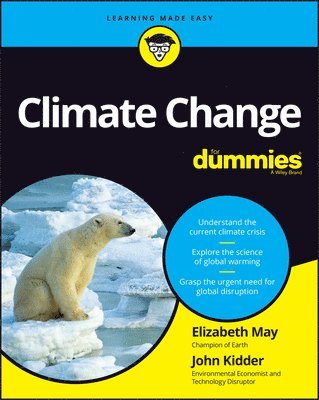
Get clear about why climate change is so complicated and discover how you can help reverse itMore and more frequent extreme weather events occur each year, and planet Earth is in danger of developing more climates where life — whether animal, vegetable, or human — is unsustainable. Climate Change For Dummies explains how rising temperatures, shrinking lakes, rising oceans, and shifting weather patterns affect your life on a daily basis. And of course the book goes a step further and offers suggestions about how you can take steps to limit your impact on the environment and help to reverse climate change.This straightforward guide demystifies the impact of climate’s No. 1 enemy — carbon dioxide — and breaks down the many sources of this damaging but inescapable gas. From there, the book reveals how rising CO2 levels affect the weather, water levels, plant and animal species around the world, the food you eat, and your health. But the situation isn’t hopeless! Climate Change For Dummies outlines actions governments, industries, and you can take to fight global warming and turn the tide to live in a cooler world. Discover details about* Short- and long-term effects of climate change* How some actions contribute to climate change and others reduce it* The many options for renewable energy and the pros and cons of nuclear energy* Actions nongovernmental organizations (NGOs) are taking to draw attention to the climate crisis* The debate around whether climate change even needs to be addressedClimate change won’t be easy to overcome, but when you’re armed with the facts, you can do your best to make a difference. Let Climate Change For Dummies point you in the right direction.
Produktinformation
- Utgivningsdatum:2022-06-13
- Mått:185 x 231 x 28 mm
- Vikt:499 g
- Format:Häftad
- Språk:Engelska
- Antal sidor:384
- Förlag:John Wiley & Sons Inc
- ISBN:9781119703105
Utforska kategorier
Mer om författaren
Elizabeth May is the former leader of the Green Party of Canada. She founded and served as the Executive Director of the Sierra Club Canada from 1989 to 2006. May has been the Member of Parliament in Canada since May 2011.John Kidder was a founding member of the Green Party in British Columbia. He has been a cowboy, miner, fisher, range management specialist, technology entrepreneur, small farmer, and governance practitioner since then. The authors married on Earth Day 2019.
Innehållsförteckning
- Introduction 1About This Book 1Foolish Assumptions 2Icons Used in This Book 3Beyond This Book 3Where to Go from Here 4Part 1: Understanding Climate Change 5Chapter 1: Covering the Basics of Climate Change 7Getting a Basic Overview — Global Warming 101 8Heating things up with GHGs 8Investigating other causes of global warming 9Tapping into The Roots of Global Warming 12Fueling global warming 12Heating up over deforestation 13Examining the Effects of Global Warming around the World 13The United States and Canada 14Latin America 16Europe 17Africa 18Asia 18Australia and New Zealand 19Small islands 20Polar regions 20Positive Politics: Governments and Global Warming 22Making a difference from city hall to the nation’s capital 22Working with a global government 23Helping developing countries 23Solving the Problem 24Changing to alternative energies 24Getting down to business 25Making it personal 26Chapter 2: Looking Closely at Greenhouse Earth 27Examining Greenhouse Effect 101 28Focusing On Carbon Dioxide: Leader of the Pack 30Looking at the carbon cycle 31Investigating humanity’s impact on the carbon cycle 36Checking Out the Other GHGs 39Methane (CH4) 40Nitrous oxide (N2O) 42Hexafluoro-what? 42Other players on the GHG bench 43Chapter 3: Recognizing the Big Deal about Carbon 47Considering Other Causes of Global Warming 48Solar cycles — Irradiance and Milankovitch 49Cloud cover 49Long-term climate trends 50Making the Case for Carbon 51Geologic and prehistoric evidence 52Modeling and forecasting 53A few degrees is a lot 55Going, going, gone The tipping point 56Eyeballing the Consequences of Continued Carbon Dioxide Increases 57What happens when the mercury rises 58Cutting back on carbon 58Part 2: Tracking Down the Causes 61Chapter 4: Living in the Dark Ages of Fossil Fuels 63From Fossils to Fuel — How Fossil Fuels Came to Be 64Examining the Different Types of Fossil Fuels 66Coal 67Oil 68Natural gas 71Fueling Civilization’s Growth: Adding to the Greenhouse Effect 73A growing world population’s impact 73Growing economies also play a role 74Chapter 5: Getting Right to the Source: The Big Emitters 77Power to the People: Energy Use 77Producing electricity 78Using up energy in buildings 79Powering industry 81The Road to Ruin: Transportation and GHGs 84Cheap goods at a high price to the climate 85Keep on truckin’ 85Draining the Carbon Sinks: Land Use 87Timber! Deforestation 87Down on the farm: Agriculture and livestock 88Chapter 6: Taking It Personally: Individual Sources of Emissions 91Driving Up Emissions: Transportation and GHGs 92Driving 93Flying 94Using Energy around the House 95Controlling the climate in your home 96Operating electric appliances 98You Are What You Eat: Food and Carbon 99Wasting Away 99Part 3: Examining the Effects of Climate Change 101Chapter 7: Focusing on Not-So-Natural Disasters 103H2 Oh No: Watery Disasters 104Rising sea levels 104Melting mountain glaciers 106Putting a brake on the Gulf Stream 109Rainfall (or lack thereof) 111Flooding 111Freshwater contamination 113Stormy Weather: More Intense Storms and Hurricanes 113Forest Fires and Wildfires: Trees and Grasses as Fuel 114Considering the costs 115Recognizing how they start and how to prevent them 115Turning Up the Heat 116Examining the Negative Side Effects of Positive Feedback Loops 117Chapter 8: Risking Flora and Fauna: Impacts on Plants and Animals 121Understanding the Stresses on Ecosystems 122Ecosystems can adapt to some climate change 122Some species have limitations for adapting 123Warming the World’s Waters: Threats to the Underwater World 124Under the sea 125Lakes, rivers, wetlands, and bogs 129Risking Earth’s Forests 130Tropical 131Boreal 131Preparing for Mass Extinctions 133Life’s no beach: Endangered tropical species 134Thin ice: Polar bears and other polar animals 135Chapter 9: Hitting Home: Global Warming’s Direct Effect on People 137Focusing on the Health Scare — Outbreaks and Diseases 138Dengue fever 139Lyme disease 140Other diseases and problems worsened by global warming 140Putting Pressure on the Fields 143Affecting farmers 143Hurting the global food supply 144Paying the Price for Global Warming 145Highways, waterworks, and the other stuff humans build 146An unfair split: Costs to the industrialized and developing nations 147Feeling the Heat First: Unequal Effects 149Northern Hemisphere communities 150People in poverty 152Women (and children) 152Part 4: Political Progress: Fighting Global Warming Nationally and Internationally 155Chapter 10: Voting for Your Future: What Governments Can Do 157If They Had a Million Dollars (Wait — They Do! —Funding Measures 159Creating incentives 160Planning for emissions trading 161Putting Programs into Place 164Research 164Education and awareness 165Adaptation 166Cleaning Up Transportation 171Bringing back the bike 171Investing in public transportation 172Greening cars 172Dealing with personal vehicles 173Redefining Long-Term Investments 174Considering the lack of progress 175Focusing on the good news 175Recognizing the countries leading the way 176Laying Down the Law 178Improving building regulations 178Regulating energy use 179Taxing the polluters 180Identifying Some Success Stories 182Cities and towns 182States, provinces, and territories 183Countries 185Chapter 11: Beyond Borders: Progress on a Global Level 187Understanding Why Global Agreements Are Important 188Examining the U.N. Framework Convention on Climate Change 189Recognizing what the Convention does 190Establishing a game plan 191Dividing up the parties 192Looking At the Paris Agreement 193Setting targets 193Adding flexibility 196Ratifying climate pacts 197Introducing the World’s Authority on Global Warming: The IPCC 198Getting to know the IPCC 199Reading the reports 199Chapter 12: Developing in the Face of Climate Change 201Identifying Challenges Faced by Developed and Developing Nations 202Promising Developments: Looking at Progress in China, Brazil, and India 204China 205Brazil 208India 211Choosing Sustainable Development 213Understanding what sustainable development is 213Expressing what developing countries can do 214How industrialized countries can help 216Part 5: Solving the Problem 221Chapter 13: Powering the World — Renewable Green Energy 223Addressing Energy Demand 224Being more efficient 224Combining heat and power 226Changing How to Handle Fossil Fuel’s Emissions 227Capturing and storing carbon dioxide 228Considering carbon capture cons 230Reducing Energy Demand 231Investigating Renewable Energy Options 232Blowin’ in the wind 233Here comes the sun 235Heat from the ground up 238Hydropower 239Ocean power 240From plants to energy 241Nothing wasted 242Exploring Another Nonrenewable Energy Source: Nuclear Power 245Understanding nuclear power 245Looking at the positives 246Weighing the negatives 246Chapter 14: Show Me the Money: Business and Industrial Solutions 249Processing and Manufacturing Efficiently 250Taking steps to conserve energy 251Using energy efficiently 252Considering individual industries 253Trading Carbon between Manufacturers — The Carbon Market 254Constructing Greener Buildings 256Cutting back on heating and cooling 256Exploring energy alternatives 257Certifying new buildings 257Identifying Corporate Success Stories 258Recognizing Corporate Nonsuccess Stories 259Focusing on Support from the Professional Service Sector 261Banking on the environment 261Stranding assets and liabilities 262Insuring against climate change 263Making it legal 264Looking At Farming and Forestry 264Supplying biofuels 265Improving land management 265Reducing rice farms’ emissions 268Chapter 15: Activists without Borders: Nongovernmental Organizations 271Understanding What NGOs Do 272Educating people 272Keeping watch 273Getting the word out 274Working with industry and government 275Meeting This Generation 278The importance of youth 279Groups that speak up 279Getting Involved 280Seeking out groups 280Helping out 281Chapter 16: Lights, Camera, Action: The Media and Climate Change 285Growing News Coverage 285Bias and balance: Distorting the story 286Consider the source: Being an informed media consumer 286Focusing on Science on the Red Carpet 288Movies: Facts and (science) fiction 288For the kids (and adults, too) 291Following the stars 292Worldwide Warming: Climate Change Blogs 293Bestselling Books: Reading between the Lines 294True stories 294Fiction and fairytales 296Chapter 17: Figuring Out How to Change before Global Warming Is Unstoppable 297Asking Tough Questions 297Making the Changes in Limited Time 298Staying within the carbon budget: Is it possible? 299Getting to net zero — Is it possible? 300Staying below “1.5 to stay alive” — Is it possible? 300Addressing What Needs to be Done 301Forecasting a path to 1.5 degrees 301Understanding Disruption 303Predicting what disruption of fossil fuels looks like 303Recognizing the cost of disruption 304Considering other benefits to disruption 306Ending the Dominance of Fossil Fuels as Humanity’s Main Source of Energy 308Changing the ways humans use energy and power to get things done 308Changing what political leaders see the best interests of humanity 309Understanding How Disruption Can Be Accelerated 311Getting There from Here: A Conversation among Citizens 312Part 6: The Part of Tens 315Chapter 18: Ten (Plus One) Things You Can Do to Fight Climate Change 317Greening Your Car 318Upgrading Major Appliances 319Buttoning Up Your House 319Making Your Daily Living More Energy Efficient 319At home 320On the road 320At work 321Going Vegetarian or Vegan (Sort of) 322Reducing Food Waste 322Supporting Clean, Renewable Energy 323Being a Smart Investor and Encouraging Smart Disinvestment 324Getting (or Making) a Green Collar Job 324Helping To Make Change Where You Live 326Spreading the Word 327Chapter 19: Ten (Plus Three) Inspiring Leaders in the Fight 329Arnold Schwarzenegger 330Angela Merkel 330Mia Amor Mottley 331Bill McKibben 331George Monbiot 331Sheila Watt-Cloutier 332Elizabeth Wathuti 332Greta Thunberg 333Michael Mann 333Katharine Hayhoe 334James Hansen 334Bill Gates 335Nandita Bakhshi 335Chapter 20: Top Ten Myths about Climate Change Debunked 337Knowing That a Debate Doesn’t Exist among Scientists 338Recognizing That Human Activity Has Caused Current Global Warming 339Looking into the Danger of Increased Carbon Dioxide Concentrations 340Discovering the Truth about Sunspots 340Understanding That Scientists Don’t Exaggerate to Get More Funding 341Grasping the Misconceptions about the Science of Global Warming 341Thinking It’s All Your Fault 342Considering You Can’t Do Anything about It 343Pinning the Blame on Developing Countries Isn’t Realistic 343Living with Climate Change — and Doing Something about It 344Chapter 21: Ten (Plus One) Online Climate Change Resources 345National Geographic 346Three Other Kid-Friendly Sites 346Intergovernmental Panel on Climate Change 347Climate Analysis Indicators Tool 347Canada’s Environment and Climate Change 347The U.K.’s Climate Challenge 348Environmental Protection Agency 348The International Energy Agency 349Gateway to the UN System’s Work on Climate Change 350Index 351